
Johnny Carson still owns the late-night hour

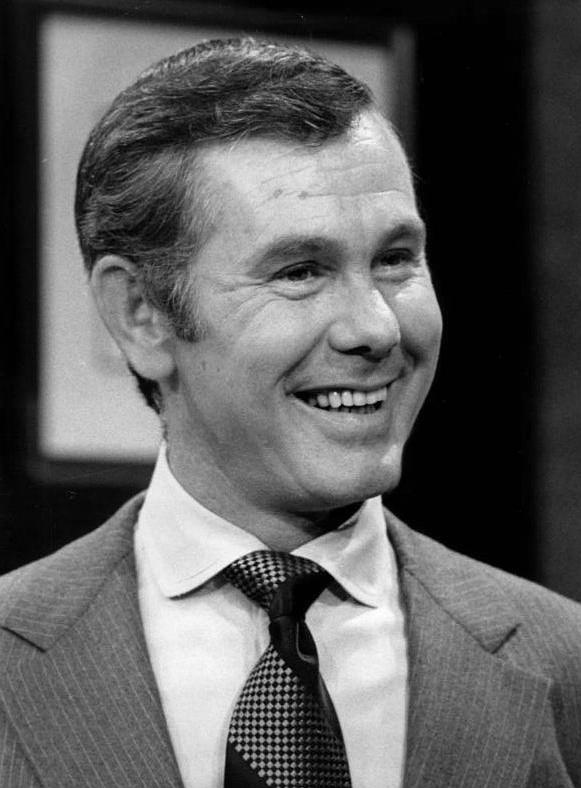
Some television hosts fill time. Johnny Carson made time feel lighter, quicker and a little more glamorous. The Tonight Show Starring Johnny Carson was not simply a talk show that happened to air late at night; it became a nightly ritual, a place where comedy, conversation and show-business sparkle met in one easy, unhurried hour.
Watching Carson now, you can see why generations of viewers stayed up “just for a few minutes” and somehow ended up watching the whole thing. He had that rare quality every great radio presenter and every great television host hopes for: he made the audience feel included. You were in on the joke, in on the moment, and occasionally in on the magic when something delightfully unpredictable happened.
The king of the desk, but never trapped behind it
Carson hosted The Tonight Show from 1962 to 1992, and over those three decades he turned the late-night format into a polished art form. The ingredients seem familiar now because so many others borrowed them: the opening monologue, the sidekick, the band, celebrity chats, comedy pieces, oddball guests and those wonderfully loose moments that felt as if they could drift anywhere.
But Carson’s gift was in the balance. He could be crisp and elegant one moment, then wonderfully silly the next. He never looked as though he was forcing the laugh. Instead, he let it arrive with a raised eyebrow, a tiny pause, a half-smile, or one of those perfectly timed lines that landed as smoothly as a drummer hitting the snare on beat four.
That rhythm matters. Like a great classic hit, Carson understood timing. He knew when to hold back, when to punch the line, and when to let the room do the work. There was music in his pacing, and perhaps that is one reason his show still feels so pleasurable to revisit.
Why it felt so good to watch
The atmosphere of Carson’s Tonight Show was a huge part of its appeal. This was late-night television with a sense of occasion. The curtain, the band, the applause, the desk, the polished suits, the studio lights—everything shimmered with just enough show-business glow to feel special, but not so much that it became stiff.
And then there was Carson himself: cool without seeming distant, funny without appearing desperate, sharp without becoming cruel. He could tease a guest, but he almost always knew where the line was. That made the programme feel warm, even when the jokes had a little bite.
The monologue as nightly conversation
Many hosts tell jokes. Carson made the monologue feel like a shared release at the end of the day. He took the headlines, the absurdities of public life, the little irritations everyone recognised, and turned them into a knowing exchange with the audience.
His style was especially effective because it looked effortless. Of course, behind the scenes there was a writing staff, careful preparation and the constant pressure of producing fresh material night after night. Yet Carson delivered it with such ease that it felt as if he had simply wandered out and thought of the lines in the moment.
The pause that sold the laugh
One of Carson’s great secrets was restraint. He did not bulldoze his way through a joke. He trusted silence. He trusted the camera. He trusted the audience to catch up. That confidence gave the show a relaxed sophistication that many later programmes chased but rarely matched.
Johnny Carson understood that comedy is not only about what you say. It is about when you say it, how long you wait, and what your face is doing while the audience catches the joke.
Behind the scenes, the machine was beautifully tuned
What looked easy on screen came from a remarkably disciplined production. The Tonight Show was a major network institution, and Carson sat at the centre of a very busy operation. Writers shaped the monologue. Producers booked the guests. Stage managers kept the evening moving. The band gave the show its pulse. And through it all, Carson had to make every transition feel natural.
That is one of the most impressive things about revisiting the programme: the craftsmanship. The show moved with confidence, but it never felt rushed. Even the chaos had shape. If a guest told a rambling story, Carson could gently steer it back. If a bit fell flat, he could rescue it with a look or a line. If something unexpected happened, he often became even better.
Ed McMahon and the joy of the familiar
No review of Carson is complete without Ed McMahon, whose booming introductions and easy laughter helped define the show’s personality. McMahon was more than a sidekick. He was part of the rhythm section. His presence gave Carson someone to bounce off, someone to react to, and someone who helped make the whole enterprise feel like a nightly gathering of old friends.
That familiarity mattered. Viewers did not just tune in for the celebrity bookings. They tuned in for the feeling of returning to a world they knew: Carson at the desk, McMahon nearby, the band ready, and the promise that the next hour might contain anything from a movie star’s awkward anecdote to a piece of comedy so simple and so well played that it stayed with you for years.
Guests, glamour and glorious unpredictability
Carson excelled with major stars, but he was just as memorable with unusual guests and eccentric personalities. That range gave the show a wonderful texture. One night you might get old Hollywood polish. Another night, a comic oddball. Another, a performer who was not entirely sure how to handle the room. Carson could work with all of them.
He also had the confidence not to dominate every exchange. Some hosts interview as if they are in competition with the guest. Carson understood that the real pleasure came from chemistry. He could lead, step back, react, nudge, and let the moment breathe. It sounds simple. It is not.
- With comedians, he could play straight man or co-conspirator.
- With actors, he created a space that felt elegant but relaxed.
- With unusual guests, he balanced curiosity with gentle control.
- With the audience, he always kept the room involved.
That flexibility is a huge part of why the programme still sparkles. Carson was not trying to win every second. He was trying to make the whole hour work.
The style of an era
There is also something deeply nostalgic about the show’s look and feel. This was television before everything became louder, faster and more self-conscious. The set design, the formal dress, the orchestra, the measured pace—together they created a mood that now feels almost luxurious.
For fans of classic entertainment, that mood is irresistible. It captures a period when stars still arrived with a certain mystique, when network television could gather enormous audiences around a shared nightly experience, and when a host could become part of the household routine in a way that feels nearly impossible now.
Yet the show is not merely a museum piece. Its best moments still play beautifully because Carson’s instincts were human rather than trendy. He knew embarrassment was funny. He knew confidence was funny. He knew a raised eyebrow could be funnier than a speech. Those instincts do not age.
What holds up, and what belongs to its time
An honest review should say this: not every element feels modern. Some interview styles, some jokes and some assumptions clearly belong to an earlier television culture. That is part of revisiting any long-running institution. You are not only watching entertainment; you are watching the manners and habits of another era.
But even with that in mind, the central achievement remains striking. Carson made hosting look like an art of ease. He was polished without becoming cold, famous without becoming unreachable, and authoritative without losing the twinkle in his eye.
The lasting influence
Nearly every late-night host who followed worked in a house Carson helped build. The structure, the tone, the expectation that the host should be funny, welcoming and in command of the room—those are part of his legacy. Even hosts who deliberately moved away from his style were still responding to the standard he set.
That is the mark of a true original. He became the reference point.
Final thoughts
The Tonight Show Starring Johnny Carson remains a delight because it combines professionalism with charm, polish with playfulness, and star power with genuine ease. It is nostalgic in the best sense: not simply old, but enduringly pleasurable.
For viewers discovering it for the first time, Carson offers a masterclass in timing and presence. For those returning to it, the pleasure is deeper still. You remember the feeling of the hour opening up, the band kicking in, the desk waiting under the lights, and Carson stepping into view as if he had been there forever.
Some hosts chase the moment. Johnny Carson knew how to own it.