
Prairie Lights, Sunday Nights

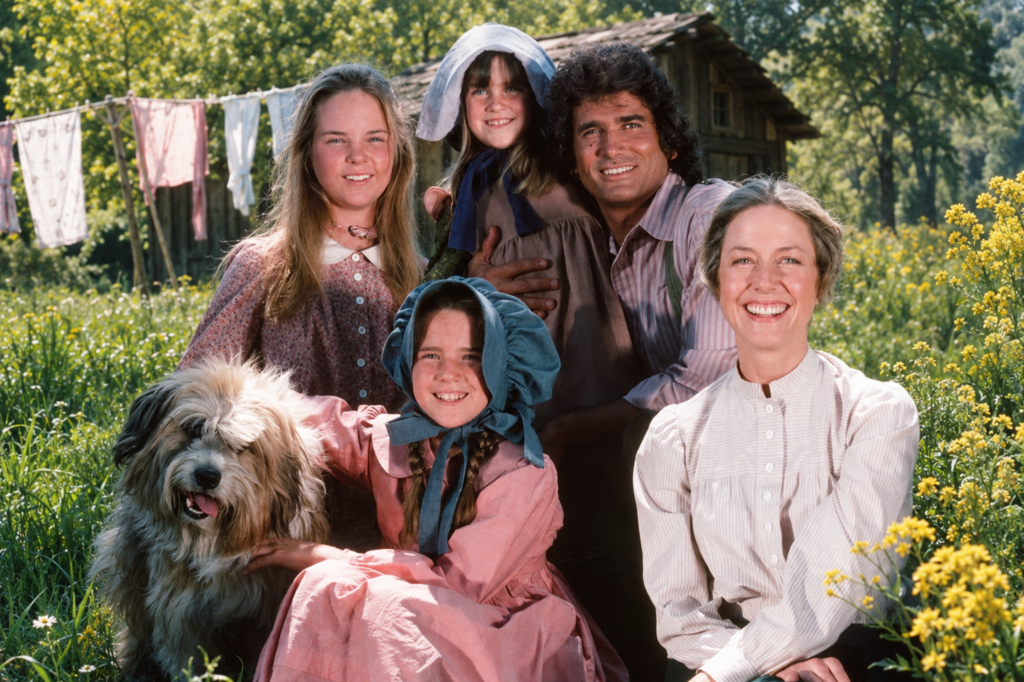
There are television shows that entertain, and then there are shows that seem to settle into family life like a favourite record on a familiar turntable. Little House on the Prairie, which ran from 1974 to 1983, belongs firmly in that second group. Warm, earnest, sometimes heartbreaking and often quietly funny, it brought Laura Ingalls Wilder’s frontier world to the screen with a kind of sincerity that felt rare even in its own time.
For many viewers, this was not just a weekly drama. It was an appointment. You could almost picture the scene: the living room lamp glowing, the theme music beginning, and Michael Landon striding into another hour of hope, hardship and homespun wisdom. Decades later, the series still has that pull. It remains one of television’s great comfort watches, even when it is tackling grief, prejudice, poverty or loss.
A television series with heart in every frame
Based loosely on the books by Laura Ingalls Wilder, Little House on the Prairie followed the Ingalls family as they built a life in and around Walnut Grove, Minnesota. At the centre were Charles Ingalls, played by Michael Landon, Caroline Ingalls, played by Karen Grassle, and their daughters Mary, Laura and Carrie, with the cast expanding over the years as the community grew.
On paper, it sounds simple: family life on the American frontier. On screen, it became something richer. The series understood that everyday struggles could carry real dramatic weight. A failed crop, a long winter, a schoolroom misunderstanding, a neighbour in trouble, a child learning a hard lesson: these were the building blocks of the show. It did not need flashy twists to keep people watching. It trusted character, emotion and moral clarity.
That trust is a big part of why the programme endured. Little House was sentimental, certainly, but rarely empty. It believed in kindness, resilience and community, and it presented those values without cynicism. In the modern television landscape, that can feel almost radical.
Michael Landon’s guiding hand
If the series had a heartbeat, it was Michael Landon. Already familiar to audiences from Bonanza, Landon did far more than star as Charles Ingalls. He was an executive producer, frequent writer and director, and his creative fingerprints were all over the show. That matters, because Little House on the Prairie has a remarkably consistent tone for a long-running series. It feels personal, shaped by someone who knew exactly what emotional notes he wanted to hit.
Landon had a gift for broad accessibility. He knew how to make a story feel intimate even when it was built for a mass audience. One week he could deliver gentle comedy; the next, he could steer viewers into genuinely devastating territory. He was never afraid of emotion, and that gave the series its sweeping, old-fashioned appeal.
There is also something unmistakably star-driven about the way Charles Ingalls is presented. He is loving, strong, flawed in a noble way and almost mythic in his dependability. Yet Landon usually gave him enough humanity to keep him from becoming a statue. Charles could be stubborn, proud, impulsive and overprotective. Those edges helped.
The cast around him made Walnut Grove feel real
For all of Landon’s importance, the show would not have lasted without its ensemble. Melissa Gilbert’s Laura is the soul of the series: spirited, observant, impulsive and deeply felt. She grows before the audience’s eyes, and that gives the show one of its most satisfying long arcs. Melissa Sue Anderson brought gravity and sensitivity to Mary, while Karen Grassle gave Caroline a quiet strength that anchored the household beautifully.
Then there was the wider world of Walnut Grove. Alison Arngrim’s Nellie Oleson became one of television’s great troublemakers, all curls, smirks and perfectly timed cruelty. Richard Bull and Katherine MacGregor as Nels and Harriet Oleson provided comic spark and social friction. Victor French as Isaiah Edwards added rough warmth, while Dabbs Greer’s Reverend Alden and Kevin Hagen’s Doc Baker helped round out the town’s moral and emotional centre.
This supporting cast gave the series texture. Walnut Grove felt lived in. It had gossips, schemers, saints, fools, workers and dreamers. Like any memorable radio line-up, each personality had a role to play.
Behind the scenes on the prairie
One of the pleasures of looking back at Little House on the Prairie is discovering how carefully constructed its rustic world really was. The show may have evoked the 1870s and 1880s, but it was made with the disciplined machinery of 1970s television. Outdoor scenes were filmed largely at Big Sky Ranch in California, where rolling hills and open land helped create that expansive prairie feeling. The result was visually inviting, with golden light, long horizons and enough dust, wood and homespun fabric to make viewers believe they had stepped into another century.
That contrast between rough-hewn setting and polished production is part of the charm. The series looked natural, but it was carefully managed. Costumes, wagons, schoolhouse interiors and general store details all worked together to create a world that felt coherent and comforting. It was not documentary realism. It was television storytelling with a soft glow around the edges.
There were also stories behind the camera that have become part of the show’s legend. Landon was known for running a fast, professional set, and cast members have often spoken about the intense pace of production. Child actors had to balance emotional scenes with schoolwork and long days, while the adults carried a series that regularly shifted from light family material to deeply serious drama.
That ambition is worth noting. Little House was not content to stay cosy all the time. It tackled addiction, disability, racism, grief, illness and faith. Sometimes it did so with great sensitivity; sometimes with the broad strokes of network television. But it kept reaching beyond simple nostalgia.
Little House on the Prairie succeeded because it offered comfort without pretending life was easy.
Why it connected so deeply
Part of the series’ magic lies in its rhythm. Like a much-loved classic hit, it knew when to go big and when to hold back. There were episodes built around laughter and mischief, especially when Laura and Nellie were on a collision course. There were also episodes that landed with surprising force, leaving viewers stunned by how much emotion a family drama could carry in a single hour.
The show’s values were plain, but not simplistic. Work mattered. Family mattered. Neighbours mattered. Pride could get you into trouble, but compassion could pull you through. Those themes may sound old-fashioned, yet they remain timeless because they speak to basic human needs: belonging, dignity, love and hope.
Just as importantly, the series gave audiences a community they wanted to revisit. Walnut Grove was idealised, yes, but not lifeless. It felt like a place where people knew one another’s flaws and still showed up when it counted. That is a powerful fantasy, and perhaps an even more powerful memory for those who watched it in its original run.
The emotional range was wider than many remember
It is easy to remember the sunshine, the bonnets and the opening credits with Laura tumbling down the hill. But revisit the series and another quality stands out: it could be surprisingly intense. Some episodes remain genuinely moving, even difficult. The writers were willing to test the characters, and viewers responded because the emotional stakes felt real.
That breadth helped the programme avoid becoming merely sweet. It had sweetness, absolutely, but it also had sorrow, conflict and moral complexity. For a family series on mainstream television, that was no small achievement.
A few rough edges, and why they barely matter
No long-running show escapes criticism, and Little House on the Prairie has its share of uneven moments. Historical accuracy was often flexible. Some stories leaned heavily into melodrama. Certain episodes now feel very much of their era in structure and tone, with lessons delivered more directly than modern audiences might expect.
Yet those flaws are part of the package rather than fatal wounds. This is a show that wears its heart openly. It wants to move you, and usually it does. Even when it overreaches, it does so with conviction.
- Best remembered for: heartfelt family storytelling and unforgettable community characters
- Secret strength: its willingness to mix comfort with serious drama
- Still works today because: sincerity never goes out of style
The lasting glow of Walnut Grove
More than forty years after its debut, Little House on the Prairie still feels like a programme people do not merely watch, but keep. They carry it with them. It lives in memory through theme music, moral lessons, tearful episodes, comic villains and that enduring sense of home built under difficult skies.
In classic hits radio terms, this is one of those songs that never leaves the playlist because it still means something every time it comes on. It reminds people where they were, who they watched with, and how television once made room for gentleness without giving up emotional power.
As a review, the verdict is simple: Little House on the Prairie remains a deeply appealing, beautifully performed and surprisingly ambitious family drama. It is nostalgic, certainly, but not trapped by nostalgia. Behind the scenes, it was the work of disciplined professionals shaping a very specific emotional world. On screen, it became something that felt effortless: a place viewers could visit, believe in and miss when the credits rolled.
That is no small legacy. Walnut Grove still glows.