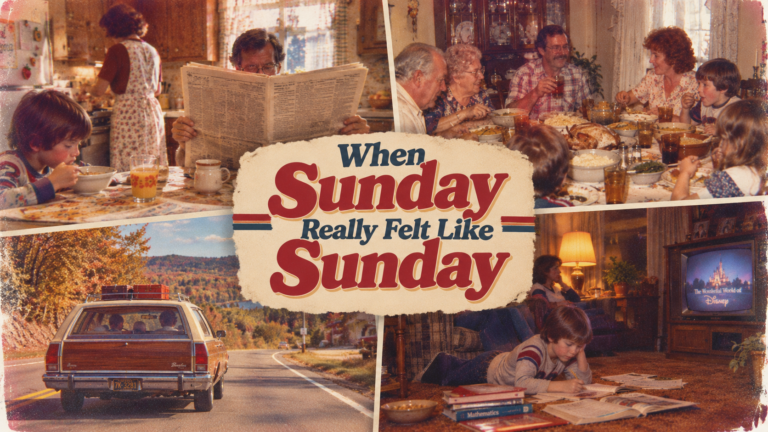
Why Sunday Nights Felt Different
Sunday nights used to feel softer, quieter, and somehow more meaningful.
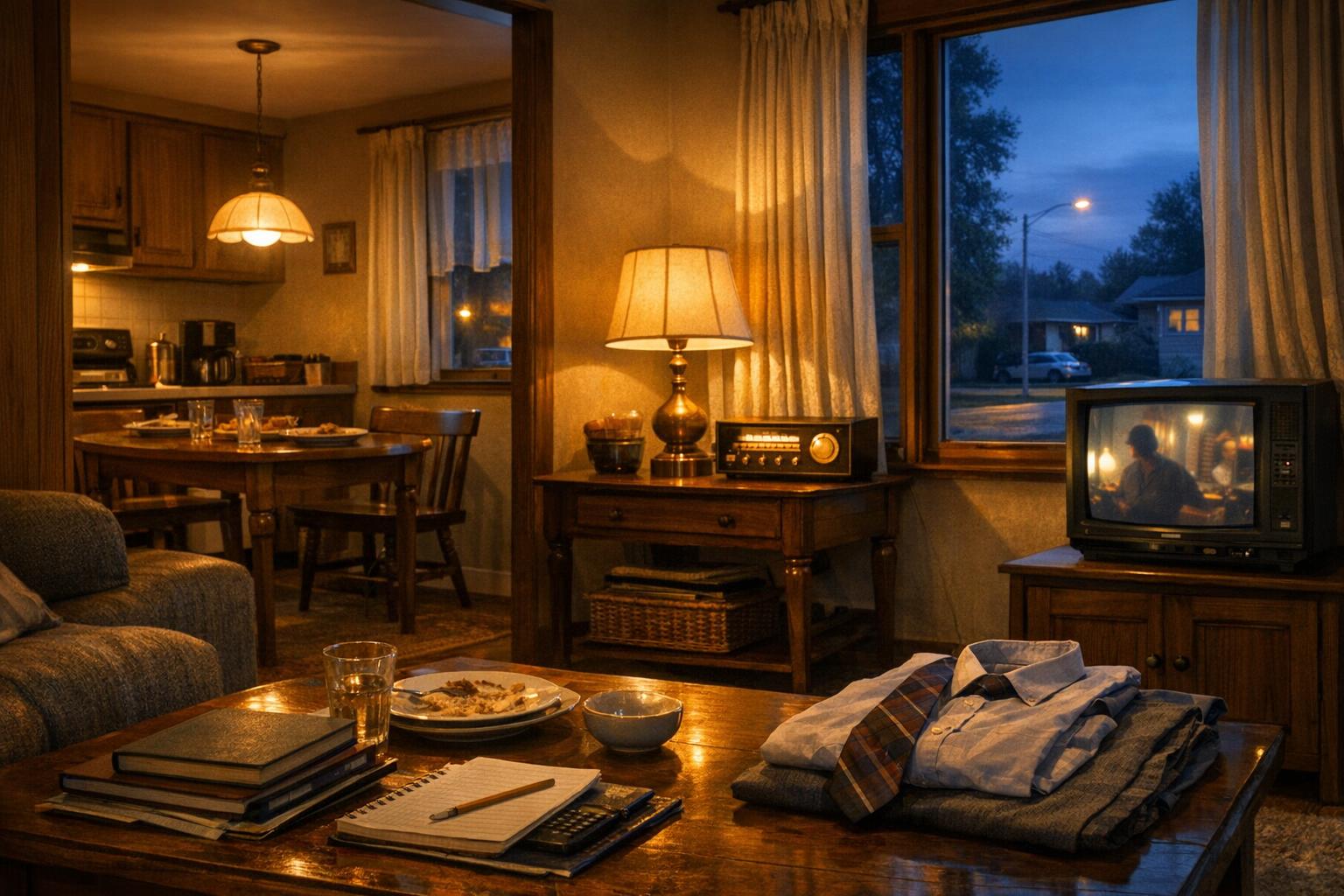
There was something unmistakable about Sunday night in the 1980s and 1990s. It arrived with a softer volume than the rest of the week, carrying a mix of comfort, routine, and that small ache that meant the weekend was slipping away. For many of us, it was the sound of plates being cleared after dinner, the glow of the television in the corner, the quiet hum of the radio after dark, and the familiar thought that school or work was waiting just over the horizon.
It was not always exciting, and that is exactly why it remains so memorable. Sunday nights had their own rhythm. They felt slower, gentler, and more reflective. In a world before constant notifications and endless streaming choices, the evening asked us to settle in, take stock, and prepare ourselves for Monday in simple, familiar ways.
A Different Kind of Quiet
If Friday night felt full of possibility and Saturday belonged to fun, Sunday night lived in a more thoughtful mood. Streets seemed calmer. The traffic thinned out. The weekend energy faded into a hush that felt almost shared, as if whole neighbourhoods were taking a deep breath at the same time.
You could sense it outside. The air often felt cooler. Curtains were drawn. Kitchen lights glowed warmly. Somewhere nearby, a lawn mower had finally gone silent, a bath was running, or someone was putting the bins out before bedtime. It was ordinary life, but it had a texture all its own.
That quiet mattered. It made everything else stand out: the clink of cutlery at the dinner table, the signature tune of a television programme, the low voice of a late-night radio presenter. Sunday nights did not demand attention. They invited it.
The Radio Sounded Better After Dark
For music lovers, Sunday night radio had a special magic. Maybe it was because the day had slowed down enough for songs to really land. Maybe it was the way presenters seemed calmer, warmer, and a little more reflective themselves. Whatever the reason, records often felt richer on a Sunday evening.
There was something deeply comforting about hearing a familiar voice introduce a much-loved song just as the weekend drew to a close. Ballads seemed more emotional. Soft rock felt more expansive. Even upbeat pop had a bittersweet edge, as if it knew the fun was nearly over.
For teenagers especially, radio could feel like a private companion on a Sunday night. Homework might be spread across the table, school uniform hanging ready nearby, but in the background came those songs that made the evening feel less lonely. A great presenter could turn that in-between moment into something memorable, linking records with just enough warmth and wisdom to make you feel understood.
And for adults, too, there was comfort in it. The radio filled the house without overwhelming it. It sat alongside the ironing, the dishwashing, the final check of the week ahead. Music did not stop the clock, but it made the transition gentler.
The songs matched the mood
Sunday nights seemed built for songs with atmosphere. Power ballads, soulful slow numbers, reflective singer-songwriters, and those polished adult pop records of the 80s and 90s all found a natural home there. Even now, hearing certain tracks can instantly bring back that feeling of being half-relaxed and half-preparing for tomorrow.
A Sunday night song was never just background. It often became part of the memory of the room, the season, and the person you were then.
The Television Ritual
Before entertainment became endless and on-demand, Sunday evening television carried real weight. Families often watched together, not because an algorithm suggested it, but because that was what was on, and that shared experience mattered. There was comfort in the routine of it.
The programmes themselves often suited the mood. Some were warm and familiar, others dramatic and gently serious, but many had that unmistakable Sunday feeling: a little calmer, a little more polished, a little more communal. You knew millions of other people were probably watching the same thing at the same time.
That sense of occasion is easy to miss now. Sunday television was not just about the show. It was about where you sat, who had the best chair, what snacks were left, and whether anyone was already sighing about Monday morning. The room had its own choreography.
Sometimes the television marked the final chapter of the weekend. Once the closing credits rolled, the evening seemed to shift. Baths were mentioned. Bags were packed. Alarm clocks were checked. The fun had not vanished, exactly, but it had become quieter and more practical.
Family Dinners and the Shape of the Evening
Sunday nights often began at the table. In many homes, the evening meal felt more fixed than on other days, whether it was a proper family dinner, leftovers from lunch, or something simple eaten together before the week began again. The details varied, but the feeling was familiar: one more shared pause before routine returned.
These meals had their own atmosphere. There might be talk about school, work, weather, football, or what needed to be done in the morning. Someone would mention packed lunches. Someone else would remember a permission slip, a missing book, or a shirt that still needed ironing. It was domestic, practical, and oddly reassuring.
That is part of what made Sunday nights so memorable. They were full of small acts of care. Uniforms laid out neatly. Shoes found and placed by the door. Notes written. Lunches prepared. Hair washed. These were not glamorous moments, but they were part of the emotional architecture of family life.
Preparation was part of the feeling
Even the things we did not enjoy had a strange warmth in hindsight. Getting ready for school was never thrilling, but it gave Sunday night its shape. Without that sense of anticipation, the evening would not have felt quite so distinct.
- School bags packed and checked
- Clothes folded over a chair
- Homework finished at the last possible moment
- Bath time and early bed warnings
- The quiet mental countdown to Monday morning
Those rituals made the evening feel important. They signalled that one chapter was ending and another was about to begin.
A Slower Life, Measured in Moments
Part of the nostalgia for Sunday nights in the 80s and 90s comes from the pace of life itself. The evening was not usually fractured by dozens of screens, constant messages, or the pressure to keep up with everything all at once. There was more space for boredom, but also more space for feeling.
You noticed things more. The sound of the washing machine finishing. The smell of clean clothes. The opening theme of a favourite radio show drifting through the house. The sight of a school timetable pinned to the fridge. The weekend was ending, and everyone knew it, but there was a calm acceptance in that knowledge.
That slower pace gave Sunday night an emotional clarity. It was a time for daydreaming, mild dread, comfort, and reflection all at once. Children felt it. Teenagers definitely felt it. Adults, though perhaps in different ways, felt it too.
In many homes, the evening carried a gentle contradiction. It was peaceful, yet tinged with anticipation. It was cosy, yet slightly melancholy. And somehow that mixture made it beautiful.
Why the Feeling Still Lasts
So why do Sunday nights from that era still glow so brightly in memory? Because they gathered together so many of the things that stay with us: music, routine, family, comfort, and time passing. They were not spectacular evenings, but they were deeply human ones.
When people look back on the 80s and 90s, they often remember the big pop moments, the fashion, the films, the chart hits. But just as powerful are these quieter scenes: a radio playing in the next room, a parent calling time on the weekend, a television flickering in a darkened living room, a school bag waiting by the door.
Those moments remind us that nostalgia is not only about major events. Very often, it is about mood. It is about the way a certain evening felt in your chest. Sunday night had that feeling in abundance.
A shared memory across generations
Ask almost anyone who grew up in the 80s or 90s about Sunday evenings, and chances are they will smile before they answer. They may remember different songs, different shows, different family routines, but the emotional weather is often remarkably similar.
That is what makes the memory so powerful. Sunday nights belonged to ordinary life, and ordinary life is where some of our strongest feelings are formed. The details change from house to house, but the mood remains recognisable: warm lights, quiet streets, music in the background, and the sense that tomorrow was already beginning.
And perhaps that is why those evenings still feel so vivid. They taught us that even the gentlest moments can leave a lasting echo. A Sunday night in the 80s or 90s was never just the end of the weekend. It was a mood, a ritual, and for many of us, a little world of its own.