A Funk Spark on the Air
That bass line still leaps out of the speakers like it was recorded yesterday. In one playful, powerhouse single, Sly and the Family Stone captured the adventurous spirit of the late 1960s while pointing funk toward the decade ahead.
Few records announce themselves with as much swagger as “Thank You (Falettinme Be Mice Elf Agin)”, better known in everyday conversation as “Thank You (For Letting Me Be Myself Again)”. It is playful, loose, razor-tight and impossibly alive all at once. When Sly and the Family Stone released it at the end of 1969, the song felt like a celebration, a wink, a challenge and a victory lap packed into just a few minutes.
It was also much more than a catchy hit. This was a record that captured a band at a creative peak, bottling the freedom, tension, joy and grit of a fast-changing musical era. More than half a century later, its elastic groove still jumps out of the speakers, and Larry Graham’s bass line still sounds like it has a pulse of its own.
A band riding high
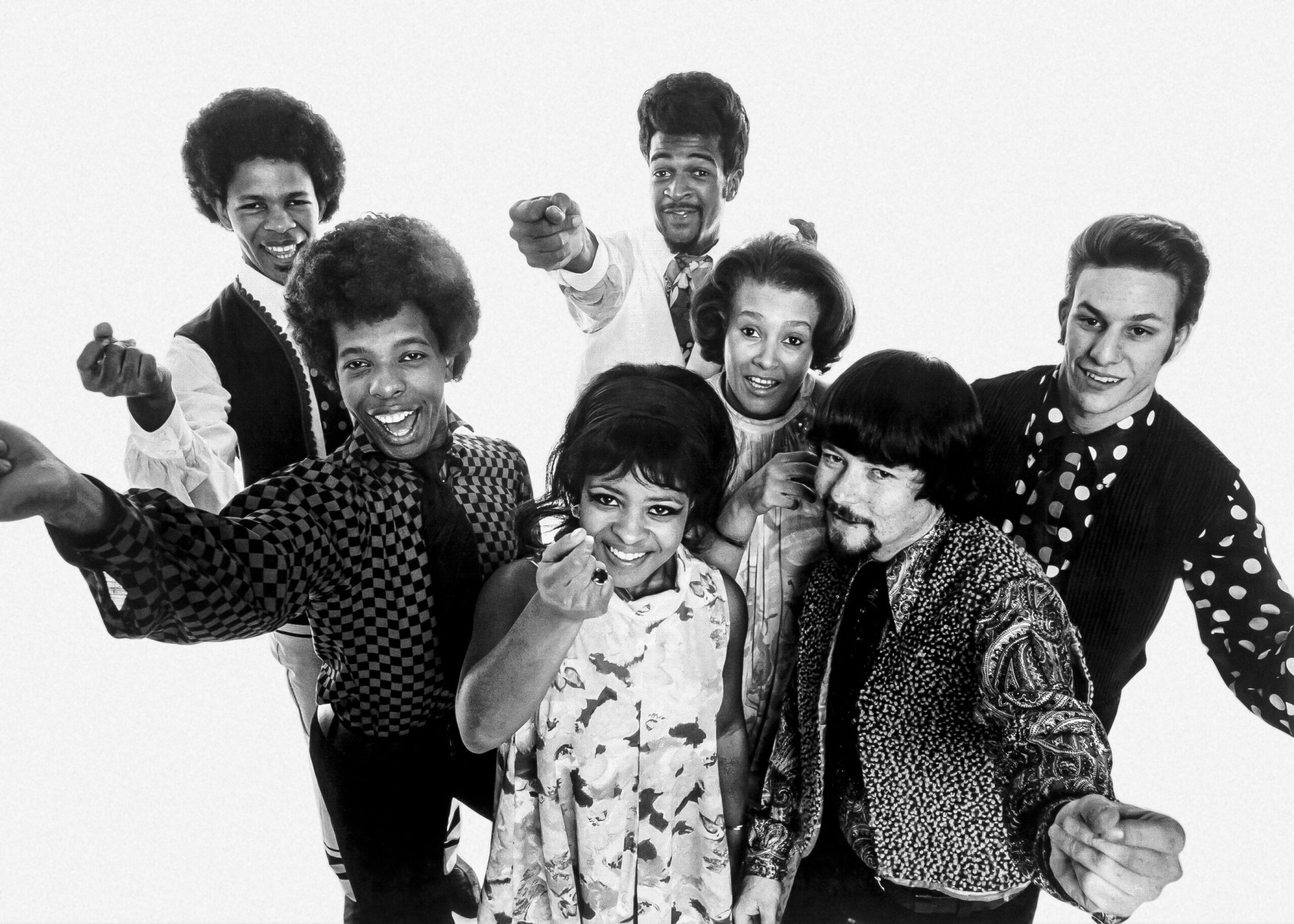
By 1969, Sly and the Family Stone were no ordinary hitmakers. Led by the inventive, charismatic Sylvester Stewart, known to the world as Sly Stone, the group had already built a reputation as one of the most exciting acts in American music. They mixed soul, rock, gospel, psychedelia and funk with a sense of freedom that felt genuinely new.
The band itself looked and sounded like the future: racially integrated, men and women sharing the spotlight, every member bringing a distinct personality. In a year marked by social upheaval, that mattered. Their music did not merely reflect the times; it suggested another way of being.
They had already scored major hits with songs such as “Dance to the Music”, “Everyday People” and “Hot Fun in the Summertime”. Then came “Thank You,” released as a single in late 1969, backed with another landmark track, “Everybody Is a Star.” That pairing alone tells you how strong Sly’s songwriting was at the time.
How the song came together
Sly’s voice, Sly’s concept
Sly Stone wrote and produced the song, and it carries his fingerprints everywhere. Even the title tells the story. The deliberately misspelled phrase “Falettinme Be Mice Elf Agin” turns a simple thank-you into something mischievous and memorable, as if the song is speaking in its own private language. It sounds relaxed, but that looseness was crafted with great care.
Lyrically, the song is part gratitude, part self-assertion. Sly is thanking the audience, the culture, maybe even the moment itself, for allowing him to be fully himself. But he is also declaring that individuality is non-negotiable. That message fit perfectly with the spirit of the late 1960s, when artists were pushing against old categories and listeners were eager for something more honest, more direct and more personal.
Built on groove
If the lyric gives the song its grin, the rhythm section gives it its backbone. The most famous element is Larry Graham’s bass, one of the defining performances in funk history. Graham had been developing a style that would become hugely influential: the percussive thumb-and-pop attack later widely known as slap bass. On “Thank You,” he does not just keep time. He turns the bass into a lead instrument, answering the vocals, driving the beat and adding a physical jolt to every section.
That bass line is one reason the record still feels modern. It is muscular without being heavy, intricate without sounding busy. Around it, the band locks in beautifully. Greg Errico supplies the crisp, propulsive drums. Freddie Stone adds guitar textures that help the groove breathe. Rose Stone, Cynthia Robinson and Jerry Martini contribute to the band’s full, colourful attack, with the horns giving the track extra punch and personality.
Like many great funk recordings, “Thank You” sounds spontaneous, but that is part of the trick. Sly understood arrangement as well as atmosphere. He knew when to stack the parts and when to leave space. The record swings because every player sounds free, yet no one is wasting a note.
In the studio
Sly Stone was famously exacting in the studio, even when the final result sounded carefree. He produced the sessions himself, shaping the group’s records with a sharp ear for rhythm, texture and vocal blend. By this stage, he was moving toward a denser, more controlled studio approach, one that would become even more pronounced in the early 1970s.
One of the pleasures of “Thank You” is that it sits right on the edge between the band’s bright, communal late-1960s sound and the tougher, deeper funk they would soon explore. You can hear the sunshine, but you can also hear the shadows gathering around the edges. That tension gives the record extra bite.
The people behind the magic
Core contributors
- Sly Stone – writer, producer, lead creative force, vocals, keyboards and overall arranger
- Larry Graham – bass, creator of the song’s unforgettable central groove
- Greg Errico – drums, helping give the record its clipped, dancing momentum
- Freddie Stone – guitar, adding rhythmic shape and drive
- Rose Stone – keyboards and vocals, part of the group’s rich vocal blend
- Cynthia Robinson and Jerry Martini – horn power, bringing snap and colour to the arrangement
Unlike many pop hits of the era, this was not a case of outside songwriters handing material to a group. The song came from inside the band’s own world, with Sly Stone as the central architect. That self-contained quality is part of why the record feels so personal and so distinctive.
A smash on the charts
Commercially, “Thank You” was enormous. Released by Epic Records, it became a number one hit on the Billboard Hot 100 in early 1970 and also reached number one on the Billboard soul chart. It was exactly the kind of crossover success Sly and the Family Stone made look easy: embraced by pop audiences, treasured by soul listeners and admired by musicians across genres.
Its success was no fluke. Radio loved its energy, listeners loved its hook, and dancers loved its groove. Even better, it did not sound like a compromise record built for broad appeal. It was strange in places, slyly funny, rhythmically aggressive and unmistakably itself. That may be the most impressive part of its chart story: a truly individual record became one of the biggest hits in the country.
The single’s flip side, “Everybody Is a Star,” was so strong that the release is often remembered as one of the great double-sided statements of the era. Together, the two songs showed just how broad Sly’s range could be, from earthy funk to radiant uplift.
Behind the scenes and on the bandstand
A title you never forget
The playful spelling in the title has delighted listeners for decades. It is funny on sight and even better when spoken aloud. But it also reflects something essential about Sly Stone’s art: he loved bending language, twisting expectations and making familiar phrases feel new. That offbeat title helped the single stand out in record shops and on radio playlists, and it perfectly matched the band’s anything-goes personality.
The bass line that changed the game
Ask musicians about “Thank You,” and many will go straight to Larry Graham. His bass work on the track became a blueprint for generations of players in funk, soul, R&B and even pop. The line has been studied, borrowed, celebrated and imitated for decades. It is one of those rare parts that is both technically influential and instantly enjoyable to casual listeners.
Graham himself often spoke about developing his style in practical terms, finding ways to fill rhythmic space and make the instrument hit harder. On this record, that innovation became part of mainstream popular music. Once you hear it, you understand why so many later bass players treated the song like required listening.
Why it mattered in 1969
The late 1960s were full of musical cross-pollination. Rock bands were borrowing from soul, soul artists were experimenting with psychedelic textures, and rhythm sections were becoming bolder and more central. “Thank You” sits right in the middle of that moment. It is dance music, but it is also a statement of identity. It is polished enough for radio, but raw enough to feel dangerous.
Sly and the Family Stone were especially important because they brought different strands of American music together without sanding away their edges. You can hear gospel spirit, James Brown-style rhythmic focus, rock volume, pop concision and a distinctly West Coast sense of colour. Yet the result sounds like nobody else.
In that sense, “Thank You” helped point toward the 1970s. Funk would soon become a dominant force, and countless artists would build on the kind of bass-driven, rhythm-first approach heard here. The song did not just belong to its time. It nudged popular music forward.
Legacy that still crackles
Enduring influence
“Thank You” remains one of Sly and the Family Stone’s signature recordings and one of the cornerstones of classic funk. It has appeared on compilations, oldies radio playlists, film soundtracks and endless lists of essential songs from the period. More importantly, it still works exactly as a great single should: it grabs your attention in seconds and leaves a mark long after it ends.
Its influence reaches far beyond its original chart run. Funk bands absorbed its rhythmic language. Bass players treated it like a masterclass. Pop and rock artists admired its economy and confidence. Hip-hop producers and crate-diggers later recognised in Sly’s records a deep well of groove and attitude.
A joyful record with depth
Part of the song’s staying power comes from its balance of fun and substance. It sounds like a party record, and in many ways it is. But underneath the bounce is a powerful statement about selfhood, gratitude and creative freedom. That combination gives it emotional weight without slowing it down.
There is also something timeless in the performance itself. The band sounds connected, alert and delighted by what it is doing. That feeling travels across decades. You do not need a history lesson to enjoy “Thank You,” but once you know the story, the record becomes even richer.
One last spin
If you want to hear what made Sly and the Family Stone so special, “Thank You” is one of the best places to start. It has the wit, the groove, the daring and the communal electricity that made the group unforgettable. It captures a remarkable band in a remarkable year, but it never feels trapped in the past.
Turn it up now, and it still does what the best classic hits always do: it lights up the room, makes you move, and reminds you that being fully yourself can sound absolutely glorious.