Why Laugh-In Still Feels Electric
What keeps Laugh-In alive for classic hits fans is not just the nostalgia — it is the pace, colour, and pop-culture sparkle that still feel wonderfully alive. Look a little closer, and you can see a show reinventing television comedy in real time.
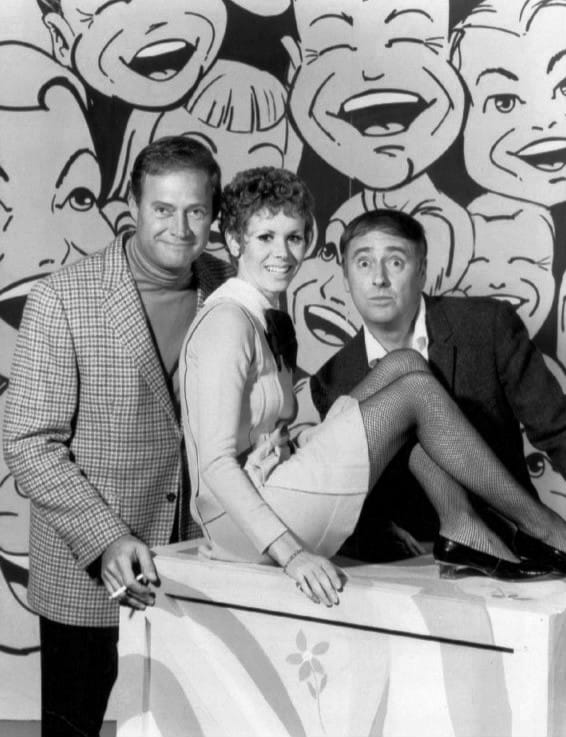
Some television shows age into museum pieces. Rowan & Martin’s Laugh-In does something much more exciting: it still jumps off the screen. Bright colours, fast edits, cheeky one-liners, political jabs, dancing, catchphrases, surprise guest stars — it arrives with the energy of a hit single bursting out of a transistor radio.
For anyone who loves the spirit of classic hits, Laugh-In feels instantly familiar. It has that same late-1960s spark you hear in the records of the era: playful, rebellious, stylish, and just a little bit unpredictable. Watching it now, you can see why it became a cultural phenomenon almost overnight.
A comedy series that moved like pop music
When Laugh-In debuted in 1968, television comedy still often looked neat and orderly. Then along came this show, hosted by Dan Rowan and Dick Martin, exploding with mod sets, rapid-fire sketches, split-second cutaways, and jokes that barely paused for breath. It was less like a traditional variety show and more like flipping across the dial and finding every exciting thing at once.
That pace is one reason it still works. The structure feels modern even now. Instead of long scenes with careful setup, Laugh-In throws out jokes in quick bursts — some brilliant, some silly, some gloriously absurd. If one gag misses, another is already on the way. It has the rhythm of a great radio hour: momentum, surprise, and personality.
And then there is the look of it. The show is drenched in the visual language of the late 1960s: neon colours, psychedelic patterns, go-go style movement, and a sense that television had suddenly decided to loosen its tie and join the party.
Episode one and the thrill of a format being invented
The first episode is especially fascinating because you can feel the programme discovering its own voice in real time. The ingredients are already there: Rowan’s dry authority, Martin’s lovable mischief, the wall of jokes, the recurring bits, and the sense that almost anything can happen next.
What stands out in that opening episode is confidence. Even when the show is still settling into its groove, it knows exactly what kind of world it wants to create. It is satirical without becoming heavy, glamorous without becoming stiff, and chaotic without losing control. That balance is harder than it looks.
There is also a behind-the-scenes thrill in seeing a television language being sharpened. Laugh-In helped redefine what sketch comedy could be on American television. Its use of speed, visual overload, and recurring catchphrases would echo for decades. You can trace a line from this show to later sketch series, topical comedy, music television presentation, and even the rapid editing style of modern entertainment programming.
The secret ingredient: everyone looks like they are in on the joke
One of the great pleasures of Laugh-In is that the cast never feels trapped inside a polished machine. They feel alive. There is mischief in the timing, a twinkle in the delivery, and the sense that performers are enjoying the mayhem as much as the audience. That looseness gives the show warmth.
Even at its most outrageous, it never feels cold. It is clever, yes, but also inviting. That matters. A lot of satirical television can become smug with age. Laugh-In, by contrast, still feels like a party you are welcome to join.
Goldie Hawn, Cher, Sonny Bono and pure star power
If you want to see how brilliantly the show used famous faces, the episode featuring Sonny Bono, Cher, and Goldie Hawn is a joy. This is where Laugh-In really shows its gift for mixing pop culture glamour with comic anarchy.
Cher, already magnetic, brings that cool, self-aware presence that made her such a compelling television figure. Sonny Bono, with his understated comic timing, fits neatly into the show’s playful rhythm. And Goldie Hawn — well, Goldie Hawn does what she so often did in that era: she lights up the screen.
It is easy to forget just how important Laugh-In was to Hawn’s rise. The series turned her into one of the defining faces of late-1960s television. Her persona on the show was bubbly and seemingly carefree, but there was craft underneath it. She understood exactly how to play innocence, surprise, and comic timing in a way the camera adored.
That is one of the behind-the-scenes pleasures of revisiting the series: seeing future icons in the process of becoming icons. Laugh-In was not just a comedy showcase. It was a star-making machine.
The guest list was half the fun
Part of the excitement of watching Laugh-In was never knowing who might turn up. The show welcomed film stars, musicians, politicians, and television personalities, often placing them in settings that gently poked fun at their public image. That gave the programme a special charge. It was not just comedy; it was a running conversation with popular culture.
The episode featuring a young Sally Field alongside John Wayne, Jerry Lewis, and Goldie Hawn is a perfect example of that wide-open booking spirit. Those names alone tell you how broad the show’s appeal had become. Sally Field brought youthful charm, John Wayne carried his towering screen legend into a comic setting, and Jerry Lewis added his unmistakable elastic energy.
Because no direct video ID was supplied for that episode, here is a search link for viewers who want to explore it further:
Search for the Laugh-In episode with Sally Field, John Wayne, Jerry Lewis and Goldie Hawn
That blend of guests says a great deal about the show’s place in the culture. Laugh-In could host old Hollywood, rising youth stars, broad comedy, and pop-modern cool all in the same hour. It was a meeting place, and that made it feel essential.
John Wayne on Laugh-In? That was the point
One of the clever things the producers understood was that contrast creates comedy. Put a larger-than-life screen legend in a bright, fast, youth-oriented sketch show and the result is instantly interesting. The same goes for musicians, dramatic actors, and public figures stepping into this candy-coloured comic universe. The show thrived on surprise.
That spirit also made it feel current. Laugh-In was tuned into the culture around it, and audiences could sense that. It reflected a moment when entertainment was changing quickly, and instead of resisting that change, it danced right into the middle of it.
What most people miss about Laugh-In
People often remember the catchphrases first: the quick jokes, the recurring bits, the famous one-liners. Those are certainly part of the fun. But what really keeps the show alive is the craftsmanship underneath the apparent chaos.
- Its editing was revolutionary for mainstream television comedy. The speed created excitement and gave the humour a musical pulse.
- The ensemble cast was carefully balanced. Different comic styles bounced off one another, from dry wit to broad silliness.
- It captured the mood of its era without becoming trapped by it. The references are of their time, but the energy is timeless.
- It treated television as a visual playground. Sets, costumes, graphics, and movement all became part of the joke.
That is why it still connects with audiences who love classic hits. It shares the same qualities as the best records of the period: confidence, immediacy, colour, and a sense of joyful invention.
Laugh-In did not simply tell jokes. It created a mood — bright, busy, mischievous, and unmistakably 1960s.
The lasting echo
Today, Laugh-In feels like a time capsule, but it is a lively one. It preserves the fashions, faces, and comic attitudes of a fast-changing era, yet it also reminds us how daring network television could be when it trusted style and personality.
For fans of classic entertainment, that is the real pleasure of revisiting it. You are not just watching an old comedy series. You are stepping into a room full of cultural electricity — where pop music swagger, television experimentation, and star charisma all meet under one flashing sign.
And maybe that is the best way to understand Laugh-In. It plays like a great oldies radio set on television: a little wild, full of memorable voices, packed with personality, and impossible to mistake for anything else.
Turn it on now, and the years fall away. The colours still pop. The jokes still fly. The famous faces still sparkle. And for a while, television feels young again.