Can a Duet Get Any More Joyful?
What most people miss about “Don't Go Breaking My Heart” is how carefully built its carefree sparkle really is. That is exactly why it remains such a dependable classic hits favourite: every playful moment is backed by first-rate pop craftsmanship.
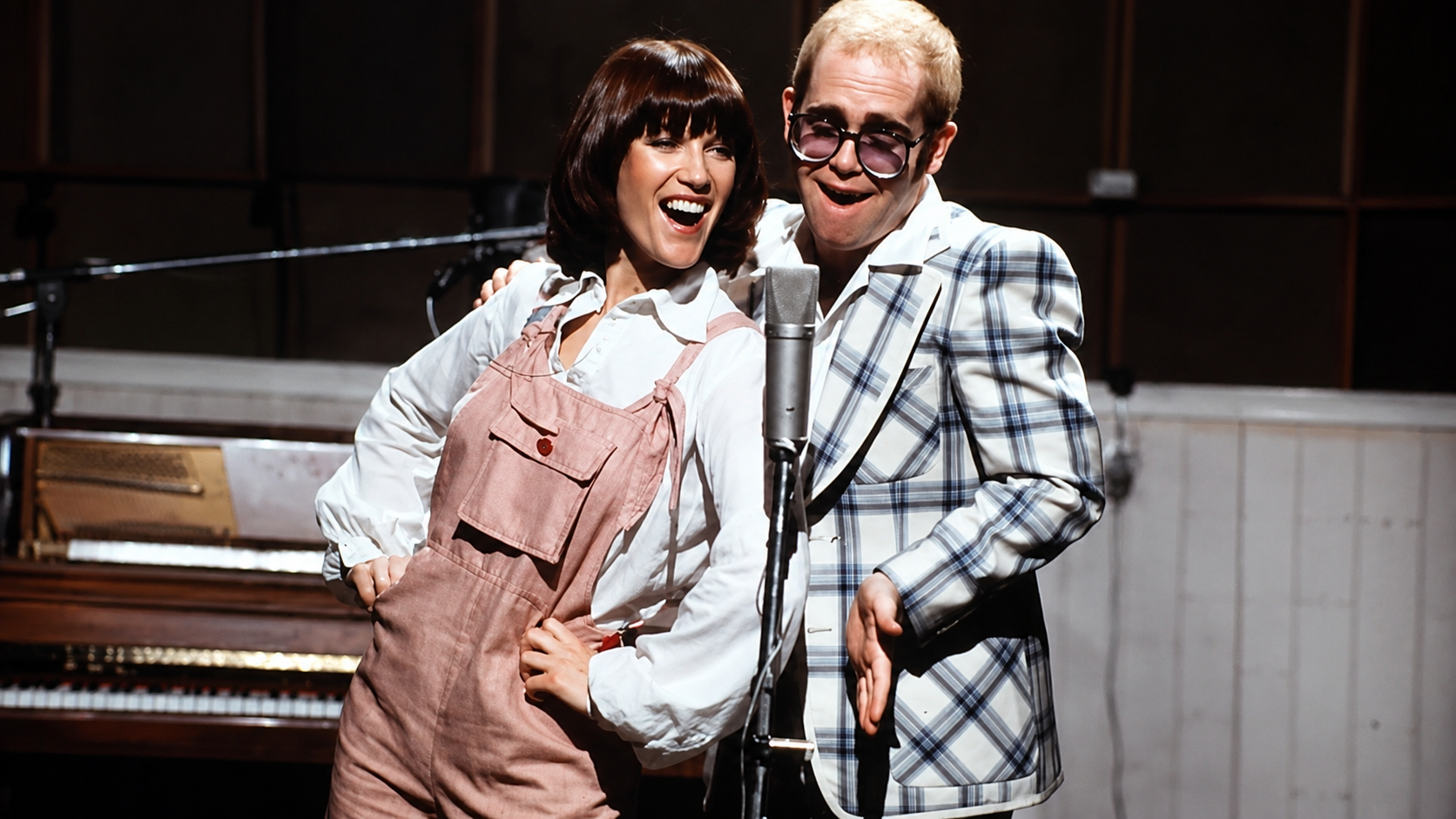
Some records seem to grin the moment they begin. “Don’t Go Breaking My Heart” is one of them: bright piano, a playful beat, two voices teasing each other like old friends, and a chorus that feels built for car radios, dance floors, and kitchen sing-alongs alike. Released in 1976, not 1972, the duet brought Elton John and Kiki Dee together for one of the most irresistible pop hits of the decade.
It is easy to hear the song as pure fun — and it is — but there is a lot going on beneath that sparkling surface. It was a clever throwback, a perfectly judged collaboration, and a reminder that in the middle of the 1970s, pop could look backward with affection while still sounding completely alive in the present.
A loving throwback with a wink
By the time “Don’t Go Breaking My Heart” arrived, Elton John was already one of the biggest stars in the world. He had conquered radio with grand ballads, glam pop, piano rock, and emotionally rich songwriting with lyricist Bernie Taupin. But this single took a slightly different route. Rather than aiming for epic drama, Elton leaned into something lighter: a duet that affectionately echoed the great male-female soul pairings of the 1960s.
The song was written by Elton John and Bernie Taupin, though they used the pseudonyms Ann Orson and Carte Blanche. That detail alone tells you something about the spirit of the project. There was mischief in it. It was not presented as a weighty artistic statement, but as a joyous pop confection made by people who knew exactly what they were doing.
The Motown inspiration
Elton had a deep love for American soul and R&B, especially the classic duet style associated with Motown and similar labels. You can hear that influence all over the record: the call-and-response structure, the buoyant rhythm, the conversational lyrics, and the sense that romance is being acted out in real time. It feels like a stage set in miniature, with each singer stepping forward for a line before joining forces in the chorus.
That was part of the song’s charm. In the mid-1970s, nostalgia was already becoming a creative tool in pop music. Artists were borrowing the emotional directness and melodic punch of earlier eras, then polishing them with contemporary production. “Don’t Go Breaking My Heart” is a perfect example of that balance. It tips its hat to the past without sounding dusty for a second.
Why Kiki Dee was the perfect partner
A duet like this lives or dies on chemistry, and Elton found the ideal partner in Kiki Dee. She was not just a guest voice brought in for convenience. She was a genuine artist in her own right and, importantly, part of Elton’s professional circle: she was signed to The Rocket Record Company, Elton’s label.
Kiki Dee had a warm, expressive voice that could sound tender one moment and spirited the next. She did not merely answer Elton’s lines; she matched his energy and sharpened the song’s personality. Her performance gives the record its balance. Without that poise and sparkle, the track might have felt like a novelty. With her, it feels effortless.
A duet built on personality
One reason the song remains so lovable is that neither singer overwhelms the other. Elton brings bounce, charm, and that unmistakable piano-led exuberance. Kiki Dee brings clarity, warmth, and just enough cool control to keep the whole thing from spinning off into camp. Together, they sound as if they are enjoying a private joke that listeners are lucky enough to overhear.
That playful equality matters. Great duets often work because they create a little world of tension and release, flirtation and reassurance. “Nobody knows it,” one sings. “When I was down, I was your clown,” says the other. It is sweet, theatrical, and instantly memorable.
Inside the recording
The recording was produced by Gus Dudgeon, one of the key architects of Elton John’s classic sound. Dudgeon had a real gift for making records feel expansive and radio-ready without losing their human energy. On “Don’t Go Breaking My Heart,” he keeps everything crisp, colourful, and moving forward. Nothing drags. Nothing feels overworked.
Also central, of course, was Bernie Taupin, whose lyrics understood the brief perfectly. This was not meant to be a tortured love song. It was meant to be direct, playful, and full of emotional shorthand. Taupin delivered lines that were simple enough to sing after one listen, yet vivid enough to stick.
The musicians and the sound
As with many Elton John recordings of the era, the musicianship is deceptively strong. The arrangement sounds easy because it is so well built. Elton’s piano gives the track its spring and shape, while the rhythm section keeps it dancing lightly on its feet. The backing vocals and handclap-friendly pulse help create that communal, celebratory feeling that makes the chorus explode from the speakers.
One of the cleverest things about the production is its restraint. This was the age of increasingly elaborate studio possibilities, but the record never gets buried under decoration. It stays clean, punchy, and open, leaving room for the two lead voices to carry the drama.
- Elton John – co-writer, lead/co-lead vocals, piano
- Kiki Dee – co-lead vocals
- Bernie Taupin – co-writer, under a pseudonym
- Gus Dudgeon – producer
- The Rocket Records team and session players – helping shape the polished, upbeat final sound
A chart smash on both sides of the Atlantic
Commercially, “Don’t Go Breaking My Heart” was enormous. It reached number one in the United Kingdom and number one on the Billboard Hot 100 in the United States, becoming one of the defining pop singles of 1976. For Elton John, who was already no stranger to the top of the charts, it was another major triumph. For Kiki Dee, it was a career-defining international hit.
The single also performed strongly in many other territories, proving that its appeal was truly broad. You did not need to know anything about pseudonyms, label politics, or stylistic references to enjoy it. You just needed ears and, ideally, a little room to move.
Why listeners responded so quickly
Part of the success came down to timing. By 1976, radio audiences were hearing a rich mix of styles: disco was rising, singer-songwriters were still strong, soul remained influential, and polished pop was thriving. “Don’t Go Breaking My Heart” slipped beautifully into that landscape. It had the rhythmic lift people wanted, the melody programmers loved, and the star power to make it unavoidable.
It also offered uncomplicated pleasure. Not every hit needs mystery or heartbreak. Sometimes the biggest records are the ones that sound like they are inviting everyone into the party.
Behind-the-scenes touches that make it even better
One of the most charming stories around the song is that Elton had reportedly wanted to record it with Dusty Springfield, another singer he deeply admired, though that version did not happen. Kiki Dee stepping into the role turned out to be inspired. Rather than sounding like an imitation of 1960s soul royalty, the finished recording found its own identity.
Then there are the pseudonyms. Elton and Bernie using Ann Orson and Carte Blanche gave the single an extra layer of playfulness. It suited the mood of the song: bright, cheeky, and not too self-important. For artists of their stature, that kind of light touch can be surprisingly powerful.
A performance piece as much as a recording
Another reason the track has lasted is that it works visually and socially, not just sonically. It invites performance. Two people can sing it at a party. A crowd can shout the chorus. A television appearance can turn it into a mini-drama. Those qualities helped the song live beyond its original release and become a perennial favourite.
Some hits are admired. This one is joined in.
Its place in the wider 1970s picture
To understand the song’s legacy, it helps to place it in the broader musical moment. The 1970s were wonderfully fluid. Pop stars borrowed from soul, rock borrowed from gospel, disco borrowed from everything, and nostalgia itself became a creative colour. “Don’t Go Breaking My Heart” sits right in the middle of that exchange.
It is a pop record with soul manners, glam-era confidence, and radio-perfect craftsmanship. It reflects a decade when artists were increasingly aware of pop history and happy to remix it for contemporary audiences. Elton John, in particular, was one of the great musical magpies of the era, able to absorb influences and turn them into something immediately his own.
Classic hits gold
On classic hits radio, the song still works because it delivers instant recognition and instant uplift. There is no slow build to wait for. Within seconds, the mood is set. Listeners know the chorus, know the voices, and know they are in safe hands. That kind of familiarity is not a weakness; it is part of the magic.
And yet the record is not just a nostalgia trigger. It remains a model of smart pop construction: economical, melodic, well cast, and full of personality. Beneath the cheerful surface is a lesson in how to make a record feel spontaneous while controlling every detail.
The legacy of a feel-good classic
Nearly half a century on, “Don’t Go Breaking My Heart” still sounds like pure sunshine in single form. It remains one of Elton John’s most beloved collaborations and the song most closely associated with Kiki Dee around the world. More than that, it stands as proof that craftsmanship and fun are not opposites. Sometimes the records that feel the easiest are the ones made with the surest touch.
What endures is the sense of delight. The song does not strain for importance, yet it has become important through sheer staying power. It captures two gifted performers, a top-class production team, and a moment in pop when joy itself could top the charts.
Turn it up today and it does exactly what it did in 1976: it brightens the room, lifts the mood, and makes you want to sing the other part.