Super Friends at 8:00 — why 1979 Saturday mornings felt like magic
Four hours, three networks, one weekly ritual — and if you missed it, you really missed it.
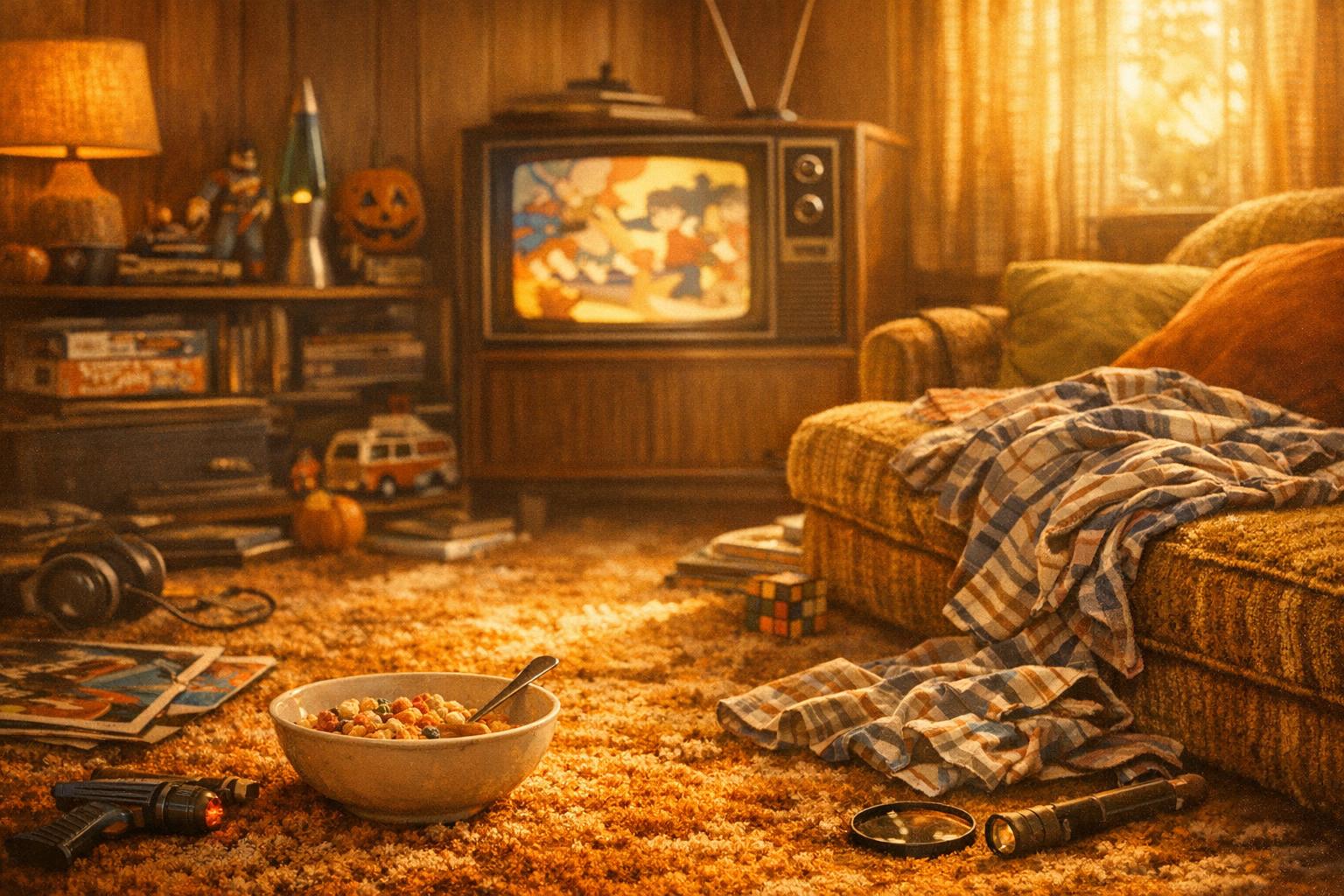
There was a special kind of excitement in the air on a Saturday morning in the fall of 1979. Long before on-demand entertainment, before endless channels and personalised playlists, children across America had a weekly appointment with the television set. It was not casual viewing. It was an event.
You could almost set your watch by it: cereal bowl in hand, pyjamas still on, eyes fixed on the screen while the networks rolled out four glorious hours of cartoons, adventure, comedy, and music. ABC, CBS, and NBC each had their own line-up, and every household had its loyalties. For many people who grew up then, that stretch of television still glows in memory like a favourite old 45 spinning on the turntable.
Three networks, one big morning
In 1979, the rules were very different. There were no 24-hour cartoon channels. Cable had not reached most homes. Streaming was decades away. In many places, there were really only three major network choices on a Saturday morning.
That scarcity made the experience feel bigger. If your favourite programme aired at 9:00, you needed to be there at 9:00. Miss an episode of Super Friends or Scooby-Doo and Scrappy-Doo, and you might be waiting a very long time to catch it again. That gave these shows a kind of importance that is hard to explain to anyone raised in the age of instant replay.
Saturday morning television was not background noise. It was a ritual.
The line-up that made the weekend
ABC: superheroes, mysteries, and a dance floor finish
ABC offered a line-up with real variety. At 8:00 AM came Super Friends, bringing together DC heroes in bright, action-packed adventures that made the day feel heroic before most families had even finished breakfast.
At 9:00 AM, the mood shifted into laughs and spooky fun with Scooby-Doo and Scrappy-Doo. Scrappy was still a fresh addition then, full of fearless energy and little-dog bravado. For children watching at home, it was a lively new twist on a formula they already loved.
Then came The Plastic Man Comedy Adventure Show at 9:30 AM, delightfully strange and rubbery in all the best ways. Plastic Man was not the most polished superhero on television, but that was part of his charm. He felt playful, unpredictable, and a little bit wild.
By 11:00 AM, ABC made a sharp but memorable turn with American Bandstand. Suddenly the world of cartoons gave way to pop culture cool: dancing, current music, and a glimpse of what older kids were wearing, hearing, and talking about. It was a bridge between the childlike and the teenage, all before lunchtime.
CBS: classic characters and cartoon royalty
CBS had a line-up that leaned heavily on familiar faces. Tarzan and the Super 7 kicked things off at 8:00 AM, serving up a package of adventure and variety that felt fast-moving and full of surprises.
At 9:00 AM, The New Fred and Barney Show brought Stone Age comfort from two of television’s most recognisable cartoon neighbours. Fred Flintstone and Barney Rubble had already become household names, and their Saturday morning return gave younger viewers a chance to claim them as their own.
Then at 10:00 AM came one of the true giants: The Bugs Bunny/Road Runner Hour. If Saturday morning had royalty, Bugs Bunny wore the crown. Wisecracks, chase scenes, perfect comic timing, and those unforgettable Looney Tunes personalities made this an essential stop in the morning. Even children too young to understand every joke could feel the rhythm of it.
CBS closed its main run at 11:00 AM with Fat Albert and the Cosby Kids, a show that mixed humour with warmth and a clear moral centre. It had music, personality, and a sense of community that gave it a different texture from the more frantic cartoon fare around it.
NBC: space adventures, familiar favourites, and a little blue preview
NBC had its own distinct flavour. At 8:00 AM, Fred and Barney Meet the Thing was one of those marvellously odd titles that only Saturday morning television could produce. It paired the Flintstones world with superhero action in a way that sounds improbable now, but in that era, it simply felt like part of the fun.
At 9:00 AM, The New Adventures of Flash Gordon took viewers into outer space with a more serial, adventurous mood. It gave the morning a dash of science-fiction excitement, and for children who liked their cartoons with rockets and danger, it was a strong draw.
At 10:00 AM, NBC aired The Smurfs in special form, before the little blue characters became one of the defining animated sensations of the early 1980s. Looking back, that slot feels like a fascinating preview of a phenomenon just waiting to happen.
Then at 11:00 AM came The Jetsons in reruns, beaming viewers into a cheerful future of flying cars, moving sidewalks, and push-button convenience. Seen from 1979, it was tomorrow; seen now, it is a lovely time capsule of how yesterday imagined the future.
The rhythm of the perfect morning
Part of the magic was the structure. Saturday morning had a flow all its own, almost like a carefully sequenced radio show.
- 7:30 — the cereal is poured, the household is quieter than usual, and the television warms up
- 8:00 — the first big opening theme announces that the weekend has properly begun
- 9:00 — the real momentum kicks in, with heroes, mysteries, or laughs depending on your network
- 10:00 — the sweet spot of the morning, when everyone is fully awake and the biggest favourites arrive
- 11:00 — one last stop, whether it is American Bandstand, Fat Albert, or The Jetsons
- Noon — just like that, it is over, and the day moves outside
That final moment mattered too. Cartoons did not run all day. The spell broke at noon. Children were expected to go and do something else: ride bikes, head to the park, invent backyard adventures, or simply disappear until lunch. The limited window made the whole experience feel self-contained and complete, like a hit single that leaves you wanting one more play.
Why it still hits the nostalgia button
Ask people of a certain generation about Saturday mornings, and watch how quickly the details come back. The clink of the spoon against the cereal bowl. The glow of the television in a dim living room. The network logos. The jingles. The commercials for toys and sugary breakfast treats. It is memory with a soundtrack.
There is also something touching about how shared the experience was. Millions of children were watching many of the same programmes at the same time. On Monday, there was something to talk about. Not because an algorithm served it up, but because the whole country had tuned in together.
That shared culture is part of what makes the era so powerful in hindsight. These shows were not just entertainment. They were common reference points, woven into schoolyard conversations and family routines.
Behind the scenes of a vanished television tradition
Network Saturday mornings were built with remarkable care. Executives knew they were programming for a highly loyal audience, and animation studios understood the importance of strong opening themes, memorable characters, and broad, immediate storytelling. You had to grab a child’s attention quickly and keep it.
There was also an intriguing blend of old and new. Established names like Bugs Bunny, Fred Flintstone, Barney Rubble, Scooby-Doo, and The Jetsons sat alongside newer concepts and evolving franchises. That mix gave the line-ups a comforting familiarity while still making room for fresh ideas.
And then there was American Bandstand, standing slightly apart from the cartoons while still belonging to the morning. On a classic hits station blog, it is impossible not to smile at that detail. There, tucked into a children’s television block, was one of America’s most enduring music institutions, connecting the world of Saturday cartoons to the wider pulse of popular culture.
In 1979, Saturday morning was not just something to watch. It was something to keep.
A four-hour kingdom of its own
Looking back now, the fall 1979 line-up feels like a compact little kingdom: superheroes on ABC, cartoon legends on CBS, futuristic adventures on NBC, and a nation of children moving through the same four-hour window together.
It was simple. It was limited. And that was exactly why it mattered so much.
For one morning each week, the television belonged to kids. The grown-up world could wait. The cereal got soggy, the theme songs blared, and for a few bright hours, everything felt possible.
That is why the memory lasts. Not because every show was perfect, but because the ritual was. Saturday morning in 1979 was a little weekly festival of colour, sound, and anticipation — and if you were there, you probably still feel it when you hear those titles.