
Chicago found a different kind of magic with If You Leave Me Now
Here's what made Chicago's If You Leave Me Now impossible to resist in 1976: a tender Peter Cetera ballad, immaculate production, and a surprising change of pace that turned into the band's first US number one. Nearly fifty years later, it still feels like a deep breath on the radio.
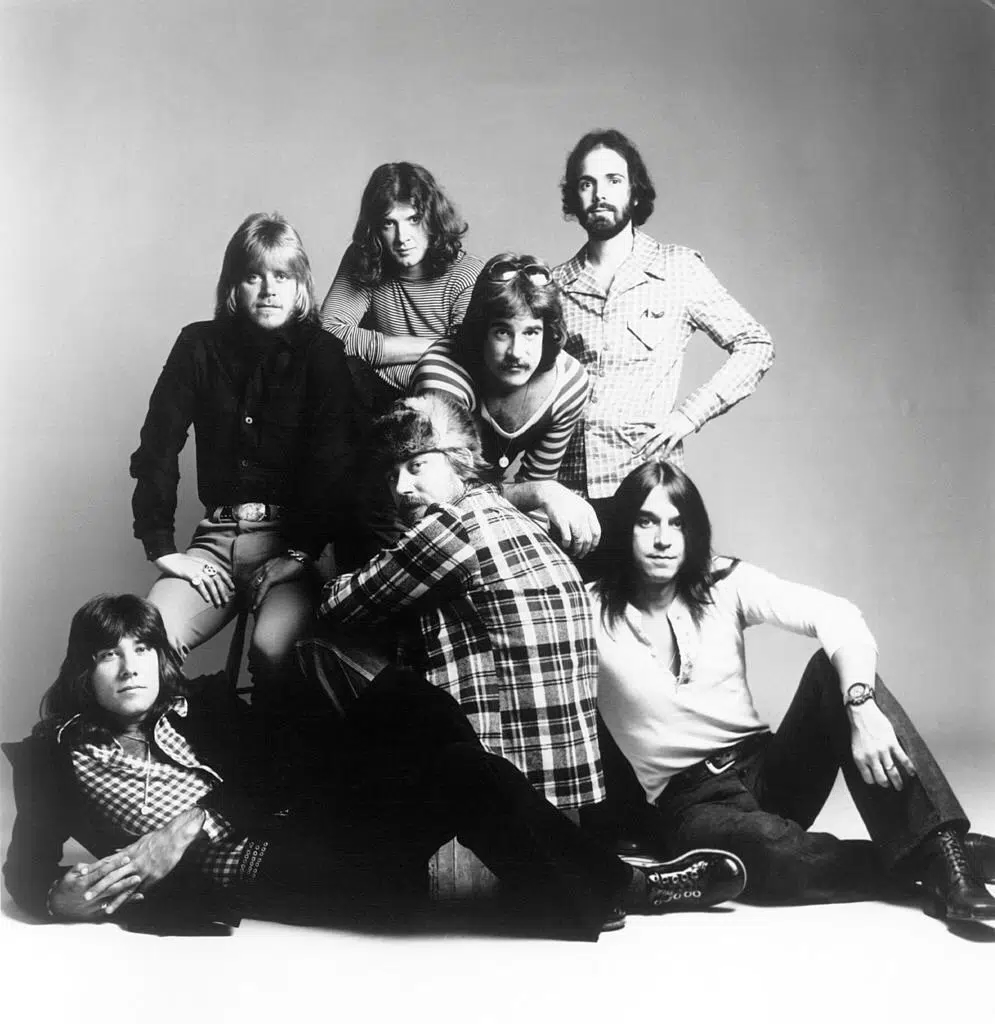
Some songs arrive like a grand entrance. Others seem to float in quietly, then stay with you for decades. “If You Leave Me Now”, released by Chicago in 1976, belongs firmly in that second group: a tender, almost weightless ballad that stood out from the band’s brass-powered reputation and became one of the defining soft-rock records of the era.
For listeners, it is still one of those records that changes the temperature of a room. The opening acoustic guitar, the soft vocal, the careful arrangement, the ache in every line — it all feels intimate, even when it is coming through a car radio or across a crowded kitchen. Behind that elegance, though, is a fascinating story about a band taking a creative turn, a songwriter stepping into the spotlight, and a recording that captured the mood of its time with remarkable precision.
A ballad that changed Chicago’s course
By the mid-1970s, Chicago were already a major force in popular music. Formed in the late 1960s, the group had built its reputation on a bold mixture of rock, jazz, pop, and horn-driven arrangements. Their records were ambitious, muscular, and often expansive, with a sound that could shift from hard-charging brass to reflective songwriting in the space of a single album side.
But If You Leave Me Now revealed a gentler side of the band to a truly global audience. It appeared on Chicago X, the band’s 1976 album, and it did something remarkable: it became Chicago’s first number-one single in the United States. For a group already famous for albums, concerts, and a string of hits, this was still a major milestone.
The song also helped redefine how many casual listeners heard Chicago. They were no longer just the energetic horn-rock band with complex arrangements and big live power. They were also the group behind one of the most emotionally direct ballads of the decade.
Peter Cetera’s song, voice, and moment
The writer at the centre of it
Peter Cetera wrote If You Leave Me Now, and that matters enormously to the song’s identity. He had already been an important member of Chicago as bassist, singer, and songwriter, but this track brought his writing and especially his voice into unusually sharp focus. Cetera’s high, vulnerable tenor is the emotional engine of the record. The lyric is simple and conversational, but its restraint is part of the song’s power.
Rather than overcomplicate the idea, Cetera built the song around a plea that feels immediate and human. There is no dramatic twist, no elaborate storytelling device — just heartbreak, hope, and the fear of losing someone. That directness helped the song travel widely across formats and audiences.
Why the song felt so different
Chicago had recorded ballads before, but this one had a particular softness and clarity. It leaned away from the denser, more aggressive side of the group’s identity and toward a style that fit perfectly with the mid-1970s rise of polished, melodic adult pop. The result was not a betrayal of the band’s sound, but an expansion of it.
That balance is one reason the song has lasted. It still sounds like Chicago — especially in its careful arrangement and ensemble discipline — but it also feels open, delicate, and almost suspended in air.
Inside the recording of Chicago X
James William Guercio’s guiding hand
The producer most closely associated with Chicago’s classic early run was James William Guercio, who played a central role in shaping the band’s sound during this period. Guercio understood how to present a large ensemble without losing detail, and that skill is all over If You Leave Me Now. The recording never feels crowded. Every element has room to breathe.
That is especially important because this is a song built on atmosphere. The arrangement relies on control, dynamics, and sonic space rather than sheer force. Guercio’s production helped turn the performance into something elegant rather than sentimental.
The musicians who made it glow
Although Cetera is the clear focal point, If You Leave Me Now is very much a Chicago record, shaped by the contributions of the full band. The group’s classic lineup in this era included:
- Peter Cetera – lead vocals, bass, songwriter
- Robert Lamm – keyboards, vocals, songwriter
- Terry Kath – guitar, vocals
- Lee Loughnane – trumpet, flugelhorn
- James Pankow – trombone, arranger
- Walter Parazaider – woodwinds
- Danny Seraphine – drums
One of the song’s great pleasures is hearing how tastefully those players serve the material. Chicago were famous for their brass section, yet here the horns are used with extraordinary finesse. Instead of punching through the arrangement, they soften it, colour it, and add emotional shading. The textures feel almost orchestral.
There are also vocal layers that give the chorus its signature lift. The harmonies do not overwhelm Cetera’s lead; they cradle it. That is a big reason the record feels so warm on repeated listens.
Anecdotes and small details that matter
One of the enduring stories around the song is how much it surprised people who knew Chicago mainly for their bigger, brassier side. Even within a catalogue full of strong songs, this was a left turn in mood and presentation. Yet that contrast became its advantage. On radio, it caught the ear immediately because it did not compete by being louder — it stood out by being gentler.
Another often-mentioned point in discussions of the track is that its success elevated Cetera’s profile within the band. His songwriting and vocal style became even more central to Chicago’s commercial path in the years that followed. In that sense, If You Leave Me Now was not just a hit; it was a signpost.
Chart triumph and a worldwide breakthrough
The song that gave Chicago their first US number one
Commercially, If You Leave Me Now was a phenomenon. In the United States, it reached number one on the Billboard Hot 100, giving Chicago their first chart-topper on that listing. It also performed strongly on adult contemporary radio, where its polished, emotional style made it a natural fit.
Its success did not stop there. The song became a major international hit, reaching number one in several countries and helping broaden Chicago’s audience far beyond their already impressive base. For many listeners outside North America, this may well have been the song that made the band feel immediately familiar.
A Grammy-winning moment
The industry noticed too. If You Leave Me Now won Grammy Awards, including recognition connected to its vocal performance and arrangement, confirming that this was not only a commercial success but also a critically admired recording. It was the kind of crossover triumph artists dream about: beloved by listeners, embraced by radio, and respected by peers.
Why it fit the 1976 moment so perfectly
To understand the song’s impact, it helps to place it in the broader musical landscape of the mid-1970s. This was an era of rich variety. Disco was rising fast, singer-songwriters remained influential, album-oriented rock was thriving, and soft rock was becoming one of the most commercially powerful sounds on radio.
If You Leave Me Now landed right in that sweet spot. It had the emotional openness listeners wanted, the studio polish radio loved, and the musicianship that made it stand out from more disposable pop. It was sophisticated without sounding distant.
There is also something unmistakably 1970s about its craftsmanship. This was a period when artists and producers paid close attention to arrangement as storytelling. The spaces between notes mattered. Instrument choices mattered. Vocal phrasing mattered. Chicago’s recording captures that discipline beautifully.
At the same time, the song helped shape the era as much as it reflected it. Its success encouraged the idea that a major rock band could score enormous hits with a tender, adult ballad. That lesson would echo through late-1970s and early-1980s pop.
Legacy on radio, in film, and in memory
A permanent place on classic hits playlists
Few songs from the decade have remained as dependable on radio as If You Leave Me Now. It has the kind of melody that listeners recognise within seconds, and its emotional tone is timeless. On classic hits and adult contemporary formats especially, it continues to work because it is both soothing and memorable.
For radio presenters, it is also a perfect mood-setter. It can slow the pace without draining the energy from a programme. It invites listeners in. That is not as easy as it sounds.
Beyond its original release
The song has been covered, referenced, and reused in popular culture over the years, introducing it to younger audiences who may first encounter it in a film, television scene, or curated retro playlist. Each revival tends to confirm the same thing: the record’s emotional core remains intact.
It also stands as one of the clearest examples of Chicago’s range. For longtime fans, it is a reminder that the band could be forceful and tender, technically impressive and emotionally direct. For newer listeners, it often serves as a gateway into a much broader catalogue.
The enduring pull of a gentle classic
There is a lovely paradox at the heart of If You Leave Me Now. It is one of the softest records Chicago ever made, yet it had an enormous impact. It does not demand attention with volume or drama. Instead, it wins people over with grace, control, and sincerity.
That is why it still feels special nearly half a century later. Peter Cetera’s songwriting gave the band a jewel of a ballad. James William Guercio’s production gave it shape and shine. The musicians gave it depth and warmth. And listeners gave it a life far beyond 1976.
When it comes on today, it still has that same effect: the room softens, the melody rises, and for a few minutes everything slows down. Some hits belong to their era. This one still belongs to the moment you are in.