POW on the Screen, Capes in the Living Room
The punch lands, the screen explodes with “POW!”, and suddenly the living room feels like a comic book come to life. Long before digital effects took over, superhero television won hearts with bright costumes, catchy themes, and heroes who felt unforgettable the moment they appeared.
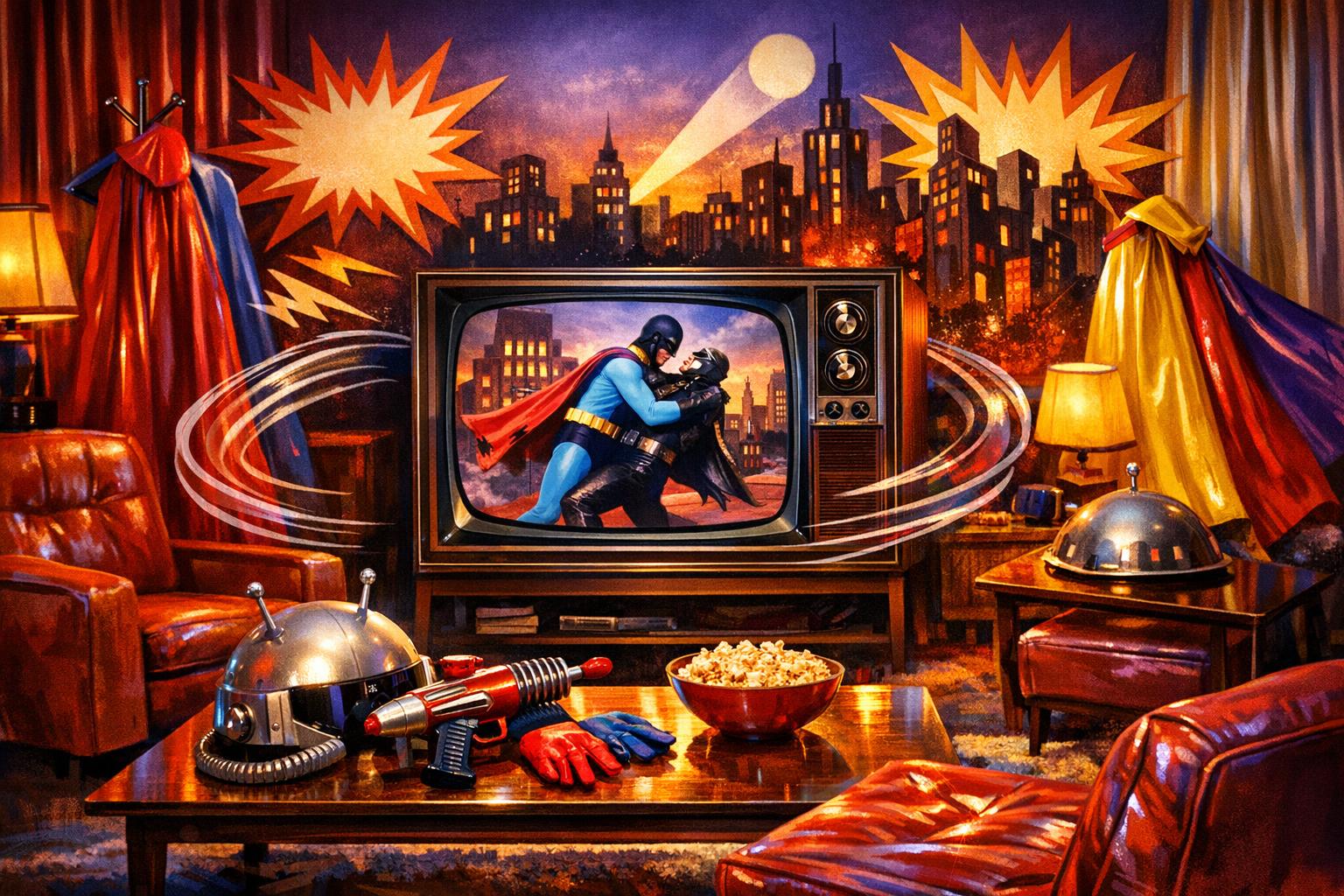
Before computer graphics could make entire cities crumble in perfect digital detail, superhero television had to win us over with something else: style, heart, imagination, and a little bit of glorious nerve. These were the days of spinning transformations, painted backdrops, practical stunts, and theme tunes that could lodge themselves in your head for decades. And honestly, that is a big part of the magic.
For generations of viewers, superhero TV was not about realism. It was about racing to the sofa, hearing that opening music, and entering a world where good and evil were brightly drawn, gadgets gleamed, and heroes always seemed larger than life. Long before CGI did the heavy lifting, these shows built their legends with charisma, clever tricks, and pure entertainment value.
When capes were colourful and villains stole the show
Batman (1966–1968)
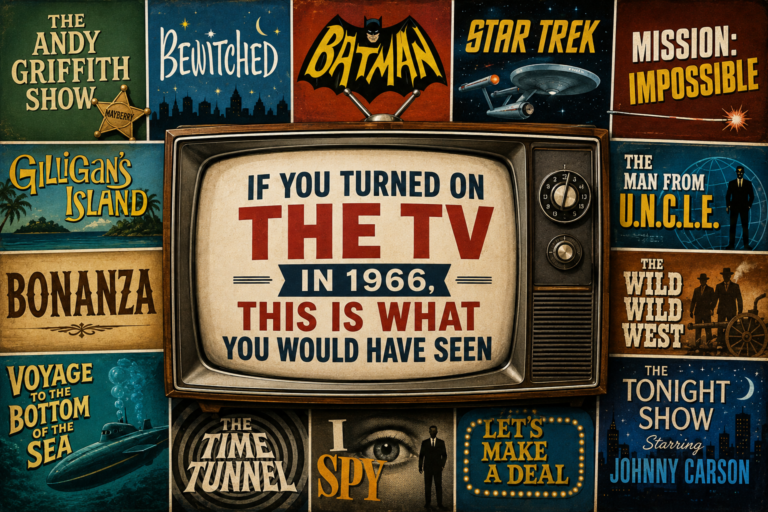
If one series defines the pre-CGI superhero era, it is Batman. Adam West and Burt Ward turned Gotham City into a pop-art playground, where every punch landed with a comic-book caption and every villain entered like a star performer. Cesar Romero’s Joker, Burgess Meredith’s Penguin, and Julie Newmar’s Catwoman all understood the assignment perfectly: go big, then go bigger.
What made the show unforgettable was its confidence. It never apologised for being bright, outrageous, and funny. The Batmobile, the Batphone, the Batcave, the dead-serious delivery of utterly ridiculous lines, it all added up to television that still feels instantly recognisable. Even now, one glimpse of those “POW!” and “BAM!” graphics and you can almost hear the audience grinning.
The Adventures of Superman
Although it began in the 1950s, The Adventures of Superman remained a towering presence well into the 1960s through reruns and sheer cultural staying power. George Reeves gave viewers a Superman who felt noble, reassuring, and completely dependable. He was the kind of hero who seemed able to step into any crisis and restore order with calm certainty.
There is something wonderfully direct about this version of Superman. No tortured mythology, no elaborate visual effects, just a hero in a cape standing for truth and justice with total conviction. For many viewers, Reeves was Superman, full stop.
Spider-Man (1967 animated series)
Sometimes one theme song can secure a show’s immortality. Spider-Man did exactly that. The animation was famously limited, but the charm was unlimited. That catchy opening, those bold colours, and Peter Parker’s wall-crawling adventures made this cartoon a lasting favourite.
It is a perfect reminder that superhero television did not need lavish budgets to leave a mark. A strong character, a memorable tune, and a sense of fun could do the job beautifully. Decades later, people still sing that opening line with a smile.
The 1970s brought muscle, mystery, and Saturday morning heroics
Wonder Woman (1975–1979)
When Wonder Woman arrived, television found one of its most iconic heroes in one of its most iconic stars. Lynda Carter brought grace, strength, warmth, and star quality to the role, making Diana Prince feel both mythic and approachable. The spinning transformation alone became a piece of television history.
What still stands out is how confidently the series presented a powerful female hero at the centre of the action. It had glamour, patriotism, adventure, and a knowing sense of fun, but it also gave audiences a hero with real presence. Carter did not just play Wonder Woman. She defined her for millions.
The Incredible Hulk (1978–1982)
Then came a very different kind of superhero story. The Incredible Hulk traded campy spectacle for loneliness and emotion. Bill Bixby’s David Banner wandered from town to town carrying heartbreak with him, while Lou Ferrigno’s Hulk embodied rage, pain, and raw power.
This series had one of the most distinctive moods in superhero television. It could be dramatic, melancholy, and surprisingly moving, and that famous closing piano theme gave it an emotional signature all its own. It proved that comic-book characters could work not only as colourful adventure, but as human drama too.
The Six Million Dollar Man (1974–1978)
Strictly speaking, Steve Austin was not a caped crusader, but in spirit he absolutely belongs in this conversation. The Six Million Dollar Man gave us Lee Majors as the bionic action hero, complete with enhanced strength, speed, and that unforgettable slow-motion running effect.
The series captured a very 1970s fascination with technology and possibility. It was sleek, exciting, and just futuristic enough to feel thrilling. Every time the sound effects kicked in and Austin launched into action, television found a new kind of hero: part man, part machine, all star.
The Bionic Woman (1976–1978)
The Bionic Woman took that formula and gave it another jolt of charisma. Lindsay Wagner’s Jaime Sommers brought intelligence, empathy, and quiet strength to the screen, and audiences responded immediately. She was capable and cool without ever losing her humanity.
That balance helped the show stand out. It was action-packed, certainly, but it also had heart. Wagner made Jaime Sommers feel like someone viewers could admire and root for every week.
Shazam! and The Amazing Spider-Man
Saturday mornings and weekend afternoons had their own superhero rhythm, and Shazam! fit it perfectly. Earnest, wholesome, and unmistakably of its era, it brought DC’s magical hero to life for younger viewers with sincerity and charm.
Meanwhile, The Amazing Spider-Man gave Marvel fans a live-action Peter Parker in Nicholas Hammond. By modern standards the effects were modest, but that was part of the appeal. There is a special affection reserved for these ambitious early adaptations, where imagination often had to do as much work as the budget.
Saturday morning legends and cult favourites of the 1980s
Super Friends
For countless children, Super Friends was the Justice League. Batman, Superman, Wonder Woman, Aquaman, and a rotating roster of heroes turned up each week to save the day in bright, energetic animated adventures. It was simple, moral, and endlessly inviting.
There is a reason it remains beloved. It made the DC universe feel huge and welcoming at the same time. You did not need to know decades of comic-book history. You just needed to hear the announcer and settle in.
He-Man and the Masters of the Universe
Yes, it leans fantasy and science fiction, but He-Man and the Masters of the Universe absolutely belongs in the wider superhero television family. Prince Adam raising that sword and declaring, “I have the power!” is one of the great transformation moments in 1980s TV.
The series was bold, toyetic, and larger than life in the best possible way. Castle Grayskull, Skeletor, Battle Cat, it all felt enormous to young viewers. He-Man was less about subtlety and more about sheer mythic fun, and that was exactly the point.
ThunderCats and Spider-Man and His Amazing Friends
ThunderCats brought a different flavour of heroism, mixing science fiction, fantasy, and action into one stylish animated package. The characters looked fantastic, the villains were memorable, and the opening sequence promised adventure before a single scene had even started.
At the same time, Spider-Man and His Amazing Friends gave Marvel fans a wonderfully upbeat team-up series. Pairing Spider-Man with Iceman and Firestar was a smart move, and the show became one of the most warmly remembered superhero cartoons of its era.
The Greatest American Hero (1981–1983)
And then there was The Greatest American Hero, one of television’s most charming superhero twists. A regular schoolteacher receives an alien super-suit and promptly loses the instruction manual. That premise alone deserves a round of applause.
William Katt made Ralph Hinkley an endearing, accidental hero, and the series found comedy in all the right places without losing its affection for the genre. It also gave us one of those theme songs that instantly transports listeners back to the early 1980s.
The joy of heroes built without digital wizardry
Part of the enduring affection for these shows comes from their handmade quality. You can see the wires sometimes. You can sense the studio sets. You know the transformations and flights required some creative television trickery. But instead of breaking the illusion, that often strengthens the charm.
These series asked viewers to meet them halfway, and audiences happily did. In return, they got heroes who felt vivid, distinct, and deeply memorable. Some were campy, some were dramatic, some were aimed squarely at children, but all of them understood the basic promise of superhero storytelling: when the music swells and trouble appears, someone extraordinary will rise to meet it.
Honourable mentions worth another spin
- Electra Woman and Dyna Girl – pure colourful fun with a devoted cult following
- The Secrets of Isis – a smart and influential heroine series
- Plastic Man – delightfully oddball animated energy
- Space Ghost – sleek, mysterious, and unforgettable in design
- The Tick – a later arrival, but a brilliant send-up of superhero traditions
- Captain America – not the most famous adaptation, but part of the era’s growing comic-book television legacy
Before digital effects changed the game, superhero television relied on personality, imagination, and the power of a great entrance. That is why these shows still matter. They were not trying to look perfect. They were trying to be exciting, funny, heroic, and memorable.
Mission accomplished.