A Saturday Morning Lightning Bolt in Philadelphia
What keeps Shazam! alive for classic TV fans is not just the cape and the magic word. It is the show’s open-hearted warmth, clever road-trip format, and the quietly inventive way it turned limited budgets into memorable family adventure.
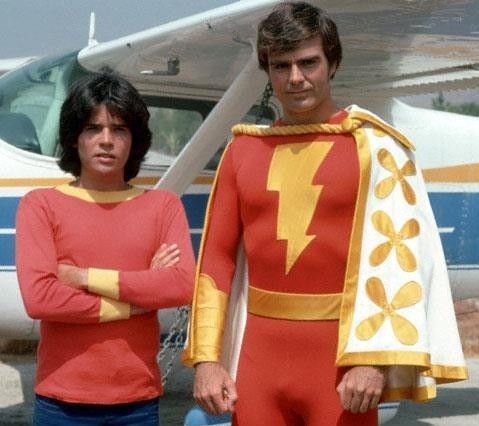
There was something delightfully direct about Shazam!. It did not arrive with the polished mythology of a prime-time superhero epic, and it did not need to. Debuting in 1974, this live-action CBS series brought Captain Marvel to television with bright skies, open roads, moral lessons, and a sincere sense of wonder that made it feel instantly at home with young viewers. For many people, it is remembered as a weekend ritual: the television on, cereal in hand, and that unmistakable feeling that adventure could begin before lunch.
Running from 1974 to 1976, Shazam! now stands as a fascinating time capsule from a very particular television era. It was family-friendly without being smug, earnest without becoming too heavy, and simple in a way that now feels almost refreshing. Looking back, the show is more than a nostalgic curio. It is a revealing chapter in superhero history, made at a moment when comic-book adaptations still had to invent the rules as they went along.
A hero in a motorhome
The basic setup was wonderfully unusual. Young Billy Batson, played by Michael Gray, travelled across America in a motorhome with an elder mentor known simply as Mentor, played by Les Tremayne. Whenever danger appeared or a lesson needed to be learned the hard way, Billy could speak the magic word and transform into Captain Marvel, played by Jackson Bostwick in the first season and later by John Davey.
That travelling format gave the series its own identity. Instead of being tied to one city, one school, or one secret lair, Shazam! could drop into a different community each week. One episode might revolve around jealousy, another around dishonesty, another around recklessness. The series used its superhero premise less as a machine for huge action scenes and more as a framework for modern fables.
That may sound modest by today’s standards, but it was also part of the charm. The show understood its audience. It invited children into the story by making Billy approachable. He was not a distant, invincible figure. He was a teenager trying to do the right thing, learning as he went, and occasionally making mistakes before calling on extraordinary power.
Behind the scenes: television on a careful budget
One of the most interesting things about Shazam! is how clearly you can see the realities of 1970s television production at work. This was not an effects-heavy fantasy in the modern sense. It was a live-action family series built within the limits of weekly network budgets, location schedules, and practical stunt work. And in a way, those limits helped define its personality.
The transformation scenes, the flying illusions, the bursts of action, all had to be handled with ingenuity rather than digital wizardry. That gives the series a handmade quality. You can feel the crew solving problems in real time: how to suggest superhuman power, how to stage a rescue, how to make a roadside setting feel mythic enough for a superhero to appear in full costume.
Filmation, the company behind the series, was already known for animation, and that background mattered. There was a strong sense of clear moral structure and accessible storytelling. The episodes often moved with the confidence of a parable, with Mentor acting almost like a guide from an older storytelling tradition. His presence gave the show a gentle, reflective tone that set it apart from many action programmes of the period.
The cast changes that fans still talk about
No review of Shazam! is complete without mentioning one of its most discussed behind-the-scenes turns: the change in the actor playing Captain Marvel. Jackson Bostwick originated the role on screen and brought a bright, easy confidence to the part. After the first season, John Davey took over. Davey’s interpretation was slightly different, but he fit the series well, projecting calm authority and warmth.
For fans watching at the time, the switch was noticeable. For viewers revisiting the series now, it adds an intriguing layer to the show’s history. It also reminds us how television worked then. Programmes could change shape season to season, not always with grand announcements, but simply because production realities demanded it.
Michael Gray, meanwhile, remained the emotional anchor. His Billy Batson was earnest without becoming bland, and that balance was essential. If the audience did not believe in Billy, the whole concept would wobble. Gray gave the series its centre of gravity.
What most people miss about its appeal
When people remember Shazam!, they often focus on the costume, the magic word, or the novelty of a superhero cruising around America in a motorhome. All of that is part of the fun. But what really made the show work was its tone.
It was optimistic in a completely unembarrassed way. The series believed that people could learn, improve, and choose decency. That sounds simple, but it is harder to pull off than it looks. Too much sweetness, and a programme becomes preachy. Too much action, and the moral core disappears. Shazam! usually found a comfortable middle ground.
That is also why it still fits the classic hits sensibility so well. Like a great familiar song on the radio, it delivers something immediate and emotionally clear. There is no need for irony, no need for elaborate explanation. It knows its hook, it knows its heart, and it gets there with confidence.
Shazam! was never trying to be the loudest show on television. It aimed to be reassuring, adventurous, and memorable — and that is exactly why it lingers.
A Saturday morning cousin to the era’s pop culture warmth
Seen in the broader context of the mid-1970s, Shazam! belongs to a period when family entertainment often carried a sunny belief in guidance, community, and second chances. There is a kinship between this series and the easy emotional accessibility that defined so much music and television of the era. It was made for broad audiences, and it wanted to leave them feeling better than it found them.
That does not mean it was artistically slight. In fact, there is real skill in making something this open-hearted feel credible. The landscapes, the pacing, the guest characters, and the weekly dilemmas all contribute to a world where heroism is not just about strength. It is about judgment, restraint, and kindness.
For classic television fans, that warmth is part of the lasting pleasure. For newer viewers, it can come as a surprise. In a crowded superhero landscape, Shazam! feels almost radical in its gentleness.
The road-trip structure gave it room to breathe
One of the smartest creative choices was keeping Billy and Mentor on the move. That road-trip design gave the series flexibility and rhythm. Every town brought a fresh setting, a new group of supporting characters, and a different moral puzzle. It also made the show feel distinctly American in its imagery: highways, small communities, local troubles, wide-open daylight.
There is a lovely looseness to that approach. The motorhome itself became part of the show’s identity, almost like a travelling stage. It was practical, memorable, and perfectly suited to a hero who did not live in a fortress or patrol a skyline. He arrived, helped, and moved on.
Does it still hold up?
Yes, with the right expectations. If you come to Shazam! looking for modern spectacle, you will be measuring it by the wrong scale. But if you meet it on its own terms, as a sincere and inventive 1970s family adventure, there is a great deal to enjoy.
- The performances remain appealing and grounded.
- The format keeps episodes varied and easy to dip into.
- The moral focus gives the show a distinctive identity.
- The period detail makes it a rich slice of television history.
Some elements are undeniably of their time, and that is part of the pleasure too. The pacing is gentler, the lessons are more explicit, and the production methods are visible in ways modern television often hides. Instead of weakening the experience, those qualities make the series feel human.
Final thoughts
Shazam! may not have had the budget or cultural weight of later superhero franchises, but it had something just as valuable: clarity. It knew exactly what kind of show it wanted to be. Week after week, it offered young viewers a hero who could be mighty without being intimidating, and wise without losing his sense of fun.
That is why the series still glows in memory. It carries the atmosphere of a simpler television age, yes, but it also carries craftsmanship, sincerity, and a generous spirit. In the crowded history of comic-book adaptations, Shazam! remains a bright little lightning strike — modest in scale, big in heart, and impossible to mistake for anything else.