Why Thunderbirds Still Takes Off
Some television shows never lose their spark, and Thunderbirds is one of them. Its mid-1960s vision of the future still feels thrilling today, thanks to ingenious effects, unforgettable machines and a spirit of adventure that never goes out of style.
Few television series make you smile before a single line is spoken, but Thunderbirds does exactly that. The countdown, the music, the gleaming machines, the calm authority of International Rescue — it all arrives with the confidence of a show that knows it is giving viewers something special. Decades after its first broadcast, Thunderbirds remains one of the most charming, imaginative and visually distinctive adventure series ever made.
For anyone who grew up with it, the appeal is immediate. For anyone discovering it later, the surprise is how fresh it still feels. This is a programme built with miniatures, puppets, practical effects and sheer creative nerve, and that handmade brilliance gives it a character many modern productions would love to bottle.
A world built to thrill
Created by Gerry and Sylvia Anderson, Thunderbirds first appeared in the mid-1960s and introduced viewers to the Tracy family, a team dedicated to saving lives with extraordinary machines hidden on a secret island base. It is a premise with the clean, irresistible power of a great pop hook: danger strikes, the call comes in, and one of the most exciting rescue operations in television history begins.
What makes the series so enjoyable is the sincerity of its mission. There is no wink to the audience, no attempt to undercut the drama. Thunderbirds believes in heroism, teamwork and ingenuity, and that belief gives the stories real momentum. Whether the crisis involves a trapped crew, a runaway craft or a disaster unfolding under impossible conditions, the series treats every rescue as if the whole world is holding its breath.
That earnestness is one of its great strengths. The Tracys are not cynical action heroes. They are capable, calm and deeply committed to helping others. In a television landscape that often celebrates anti-heroes and chaos, there is something wonderfully refreshing about a series where the central idea is simply this: if people are in trouble, we go.
The machines are the stars too
Let us be honest: part of the magic of Thunderbirds is hearing the names alone. Thunderbird 1. Thunderbird 2. Thunderbird 3. Thunderbird 4. Thunderbird 5. Each vehicle has its own shape, purpose and personality, and each one is introduced with the sort of dramatic flourish usually reserved for chart-topping stars walking onto a concert stage.
Thunderbird 2, with its heavy-lift power and unforgettable green body, may be the fan favourite, and for good reason. It feels monumental. When it rises from its hidden launch bay beneath the palm trees, the series delivers one of television’s great visual pay-offs. Thunderbird 1 is sleek and urgent, Thunderbird 3 has a glorious retro-futurist elegance, Thunderbird 4 turns underwater rescues into high adventure, and Thunderbird 5 watches over the planet like a patient guardian in orbit.
This was design with flair. The vehicles are not just props; they are icons. They were built to fire the imagination, and they still do. You can see why generations of viewers wanted the toys, the model kits and the annuals. The craft are so memorable because they reflect a bigger dream: that technology, in the right hands, can be noble, daring and humane.
That unforgettable launch sequence
If you want a perfect example of how Thunderbirds turns engineering into theatre, look no further than the launch scenes. Pools slide away. Palm trees tilt. runways emerge. Rockets rise. Everything moves with rhythmic precision, as if the island itself is performing a well-rehearsed routine. It is mechanical choreography, and it never gets old.
There is also the music, of course. Barry Gray’s score does a tremendous amount of work, driving the action with brass, tension and swagger. Like the best classic hits, it knows when to punch, when to glide and when to let a melody stamp itself into your memory.
Behind the scenes, the craft was extraordinary
One of the real joys of revisiting Thunderbirds is appreciating just how much skill went into making it. This was not a series that relied on digital shortcuts. Its world had to be physically built, lit, framed and filmed. The miniatures had scale and texture. The explosions had weight. The sets felt tangible because they were tangible.
The production technique known as Supermarionation has often been discussed for its novelty, but the achievement goes much deeper than that. Yes, the puppets are distinctive, with their stylised faces and precise movements, but the real triumph is how the production team created a believable action universe around them. The camera angles are ambitious, the model work is intricate, and the effects sequences are staged with remarkable energy.
There is a lovely kind of inventiveness at work in every episode. A runway is not just a runway; it becomes a dramatic reveal. A control room is not just a set; it becomes a command centre pulsing with urgency. A model explosion is not simply spectacle; it is part of a carefully timed rescue sequence. You can feel the crew solving problems creatively, often with a level of craft that still inspires admiration today.
Thunderbirds is one of those rare series where the behind-the-scenes story adds even more pleasure to the viewing. Knowing how much artistry went into every shot only deepens the fun.
That sense of craftsmanship is a major reason the show has lasted. Viewers respond to care. They respond to detail. And Thunderbirds is full of both.
Nostalgia with real staying power
Nostalgia can sometimes be a soft glow that fades on close inspection. Thunderbirds is not like that. The warm memories are deserved because the show genuinely delivers. It has style, pace, invention and a strong central identity. You remember the vehicles, the music and the island base, but you also remember the feeling: excitement mixed with reassurance.
That emotional combination matters. The world of the series can be dangerous, but International Rescue brings order, intelligence and hope. There is comfort in that rhythm. A crisis appears, the team assembles, the machines launch, and somehow the impossible starts to look manageable. It is an uplifting formula without ever becoming dull.
The series also captures a particularly appealing vision of the future. This is tomorrow as imagined in the 1960s: bold, streamlined, optimistic and just a little glamorous. It is full of control panels, monorails, towering buildings and elegant uniforms. Even when the predictions are charmingly off target, the spirit remains irresistible. It is a future powered by belief in progress.
The human touch beneath the spectacle
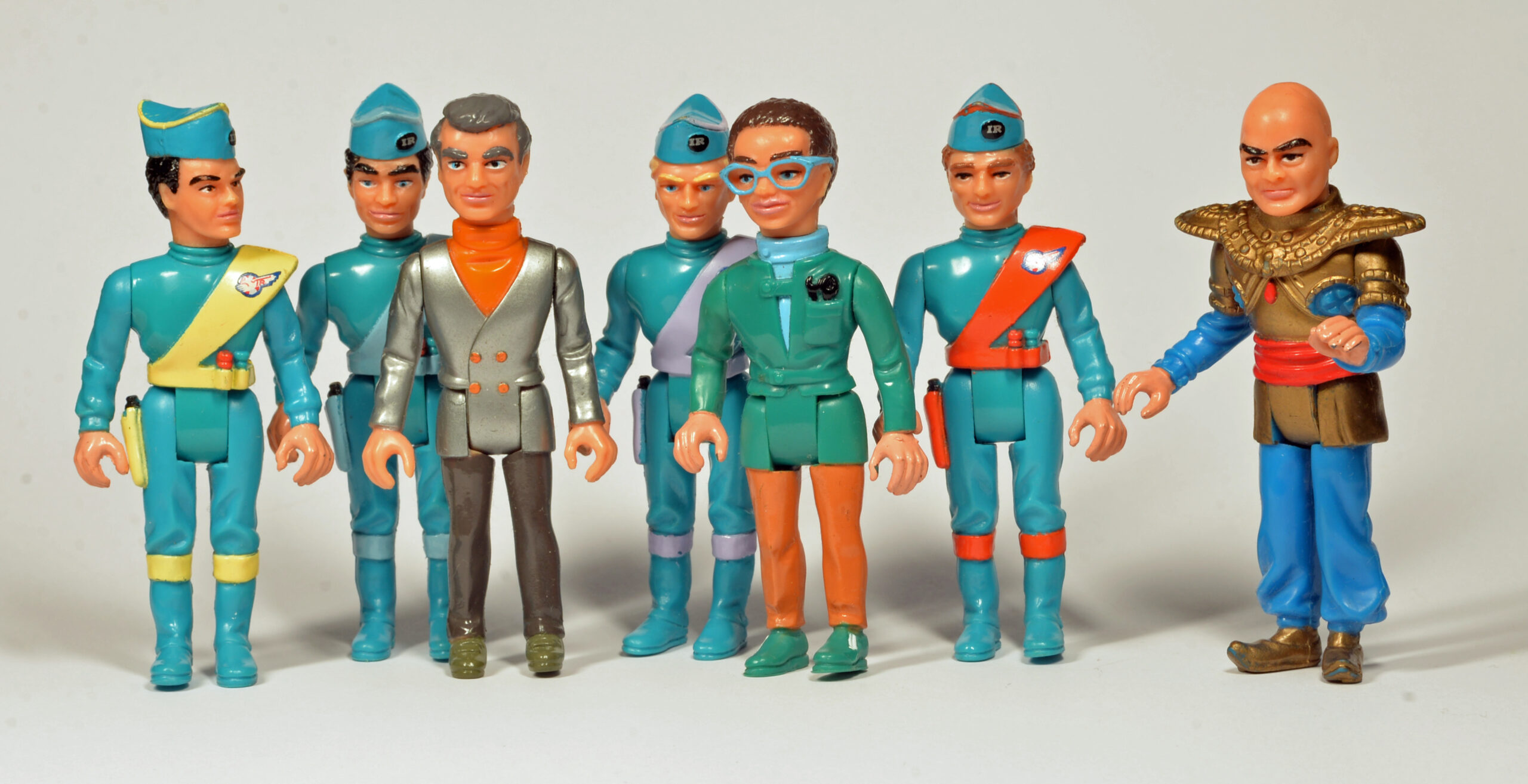
Although the machines often get the loudest applause, the characters give the show its heart. Jeff Tracy is a strong centre, while Scott, Virgil, Alan, Gordon and John each bring their own role to the operation. Lady Penelope, meanwhile, is one of the great scene-stealers of classic television — poised, witty and impossible to forget. Alongside Parker, she adds a dash of style that makes the series even richer.
These characters may be broad rather than deeply psychological, but that suits the tone perfectly. Thunderbirds is a grand adventure serial, and its figures are designed to be clear, colourful and instantly recognisable. Like members of a great band, each one has a place in the arrangement.
A series that still knows how to entertain
What is especially pleasing about Thunderbirds today is that it does not need to be treated like a museum piece. It still works as entertainment. The episodes are brisk, imaginative and full of visual rewards. Younger viewers can enjoy the peril and the hardware, while older viewers can savour the design, the music and the astonishing ingenuity of the production.
It also deserves praise for its tone. This is family adventure done properly: exciting without becoming mean-spirited, dramatic without losing its sense of wonder. There is peril, certainly, but there is also decency. That balance is one reason the series has remained so beloved across generations.
And then there is that very special pleasure of watching a show that knows exactly what it is. Thunderbirds does not drift, apologise or overcomplicate itself. It offers high-stakes rescues, memorable characters, marvellous machines and a world you want to revisit. In radio terms, it is a record with no wasted notes.
A quick look back
If you want a flavour of the show’s enduring appeal, this clip is a fine reminder of why Thunderbirds has stayed airborne in popular culture for so long.
Final verdict
Thunderbirds is a triumph of imagination, design and old-fashioned storytelling drive. It is upbeat, inventive and crafted with a level of care that still shines through every launch sequence and every daring rescue. More than a nostalgic favourite, it is a genuinely excellent series — one that reminds us how powerful television can be when artistry and adventure meet.
For longtime fans, returning to it is like hearing a treasured classic hit on the radio: instantly recognisable, deeply comforting and every bit as enjoyable as you hoped. For first-time viewers, it is a chance to discover a show that earned its legend the proper way — by being unforgettable.
- Best for: viewers who love practical effects, retro-futurist design and heroic adventure
- Standout quality: spectacular miniature work and iconic vehicle design
- Overall feeling: nostalgic, exciting and warmly optimistic