
Click. Cereal. Cartoons.

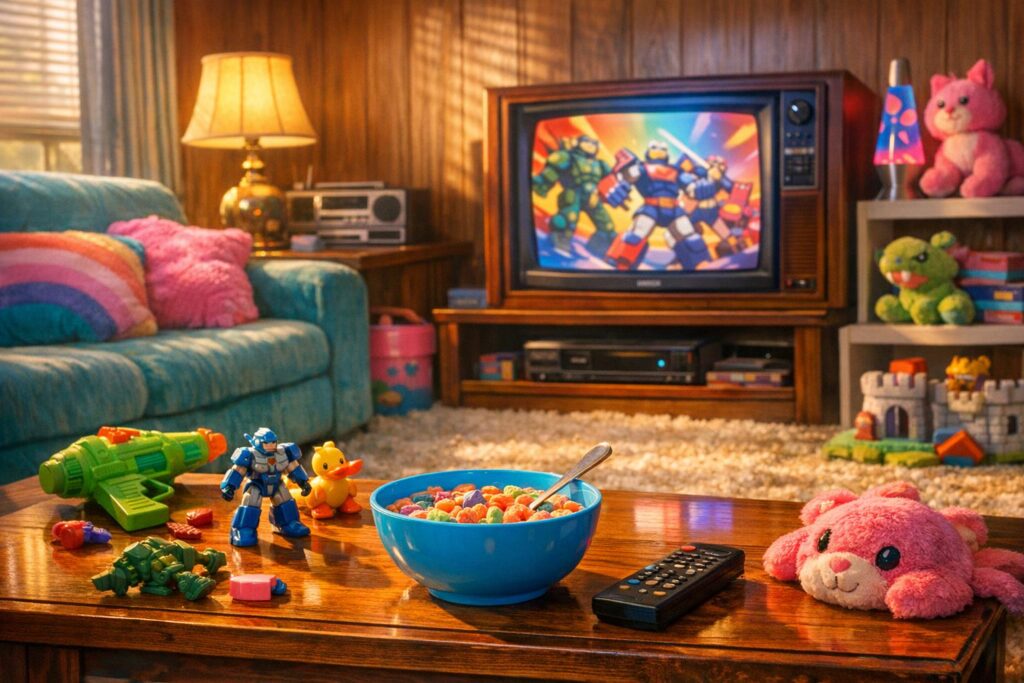
Before streaming menus and endless scrolling, Saturday morning in 1987 had a very different rhythm in American homes. The television clicked on, the cereal bowl landed on the coffee table, and for a few golden hours the big three broadcast networks battled for the attention of kids across the country. ABC, CBS, and NBC each built their own personality-packed lineup, mixing toy-inspired cartoons, comedy, adventure, and a few genuinely strange little gems that only could have existed in the 1980s.
For anyone who grew up with classic hits on the radio and cartoons on the television, this was part of the same cultural pulse. The songs were bright, the colours were brighter, and Saturday mornings felt like appointment viewing in the purest sense. You did not just watch whatever was available. You planned your morning around it.
The big picture in 1987
By 1987, Saturday morning television in the USA was still one of the most important showcases for children’s programming. Cable was growing, but the major broadcast networks still had enormous reach. That meant these lineups mattered. They shaped playground conversations, toy sales, catchphrases, and the weekly routine of millions of families.
There was also a very specific flavour to the era. Many shows were linked to toy lines, licensed characters, or existing family brands. At the same time, networks still tried to balance that commercial energy with comedy, educational specials, and familiar favourites that could appeal to both kids and parents in the room.
ABC Saturday Morning in 1987
ABC’s 1987 Saturday block was colourful, busy, and very much in step with the toy-shelf culture of the decade. It had a little bit of everything: plush characters, fantasy worlds, slapstick comedy, and dependable classics.
A typical ABC lineup
- 8:00 — The Care Bears
- 8:30 — My Pet Monster
- 9:00 — Little Clowns of Happytown
- 9:30 — Little Wizards
- 10:00 — Pound Puppies
- 10:30 — The Real Ghostbusters
- 11:00 — The Flintstone Kids
- 11:30 — The Bugs Bunny & Tweety Show
- 12:00 — Animal Crack-Ups
- 12:30 — ABC Weekend Special
What made ABC stand out
ABC felt like the network most willing to lean into the bright plastic imagination of the era. The Care Bears, My Pet Monster, and Pound Puppies all carried that unmistakable 1980s blend of softness, merchandising, and cheerful life lessons. Even the titles sound like a toy store aisle brought to life.
Then there was The Real Ghostbusters, which added some genuine energy to the morning. It had action, comedy, and just enough spooky edge to make it feel a little cooler than the more cuddly shows around it. For many viewers, this was one of the crown jewels of the block.
The Flintstone Kids gave ABC a clever spin on a familiar property, tapping into the decade’s love of turning established characters into younger versions of themselves. And once The Bugs Bunny & Tweety Show arrived, the lineup shifted into a different gear. Those classic Warner cartoons brought a dose of old-school comic timing that linked generations. Parents knew Bugs and Daffy. Kids quickly learned why they were still stars.
The later part of the block also had variety. Animal Crack-Ups worked as a game show, while ABC Weekend Special gave the network room for more thoughtful family-oriented storytelling. That helped ABC feel broader than just a straight cartoon conveyor belt.
ABC’s identity in 1987: toy-driven, fast-moving, and packed with familiar characters.
CBS Saturday Morning in 1987
CBS offered one of the most distinctive lineups of the three networks. It was playful, slightly off-centre, and full of shows that still spark instant recognition among people who were there. If ABC looked like a toy catalogue and NBC leaned on big franchise comfort, CBS often felt like the network with the quirky streak.
Typical CBS lineup
- Hello Kitty’s Furry Tale Theater
- Muppet Babies
- Pee-wee’s Playhouse
- Mighty Mouse: The New Adventures
- Popeye and Son
- Teen Wolf
- CBS Storybreak
- Kidd Video
The CBS personality
Muppet Babies was a major attraction. It had warmth, imagination, and that polished Jim Henson charm that made it feel bigger than the average cartoon. The animation style was lively, and the show’s fantasy sequences gave it a sense of constant surprise.
Then came Pee-wee’s Playhouse, which was not just a children’s show but a full-blown cultural event. Surreal, inventive, and visually unforgettable, it felt like somebody had opened a toy chest inside an art studio. On a Saturday morning in 1987, it stood out immediately. Nothing else on television looked quite like it.
Mighty Mouse: The New Adventures brought a sharper, more modern cartoon sensibility, while Popeye and Son tried to refresh a classic name for a newer audience. Teen Wolf, adapted from the hit film title, fit neatly into the era’s habit of turning popular movies into animated franchises.
CBS Storybreak added something important to the network’s image. Based on children’s books, it gave the lineup a literary and educational note without draining away the fun. That kind of balance mattered in the 1980s, when networks still wanted to reassure parents that not every minute of Saturday morning was pure sugar rush television.
And then there was Kidd Video, one of the most wonderfully 1980s concepts imaginable: music, animation, live-action energy, and a style that felt tuned to the MTV generation at kid-friendly volume. It is exactly the kind of show that feels right at home in the memory bank of a classic hits audience.
CBS’s identity in 1987: inventive, slightly eccentric, and anchored by a few true originals.
NBC Saturday Morning in 1987
NBC in 1987 still carried the glow of one of the decade’s biggest Saturday morning successes: The Smurfs. Even as the television landscape shifted, that little blue franchise remained a powerful draw. Around it, NBC built a lineup that mixed comfort food viewing with newer animated entries.
NBC’s lineup in 1987 included
- The Smurfs
- ALF: The Animated Series
- The New Archies
- Foofur
- Other family-oriented animated programming during the block
NBC’s Saturday formula
The Smurfs was the giant here. By 1987, it was already a defining Saturday morning brand, and NBC wisely kept it front and centre. The show had a fantasy setting, easy-to-follow stories, and a cast of characters simple enough for younger children to love instantly. It was dependable television in the best sense.
ALF: The Animated Series gave NBC a connection to one of prime-time television’s most recognisable characters. That crossover mattered. Kids who knew ALF from the family TV set during the week could now spend part of Saturday morning in his animated world.
The New Archies was another classic-property refresh, updating the long-running comic and cartoon brand for the decade’s younger audience. Foofur, meanwhile, added a gentler note, with its blue dog lead fitting neatly into the era’s affection for friendly, toy-like animal characters.
NBC perhaps felt a little less eclectic than CBS and a little less toy-shelf aggressive than ABC, but that was part of its appeal. It knew the value of recognisable comfort. If ABC was bright and busy, and CBS was quirky and surprising, NBC was often the easiest place to settle in and stay put for a while.
NBC’s identity in 1987: familiar franchises, broad appeal, and the enduring pull of The Smurfs.
Why these blocks still matter
There is a reason people remember these lineups so vividly. They were not just lists of programmes. They were a weekly ritual. You knew what time your favourite show started. You knew when to switch channels. You knew when to refill the cereal. That structure gave Saturday morning television a kind of magic that on-demand viewing simply does not recreate.
There is also a strong connection to the wider pop culture of the era. These shows lived alongside hit songs, blockbuster films, toy crazes, and shopping mall culture. For a classic hits audience, remembering 1987 is never just about one thing. It is about the whole atmosphere. The music on the radio, the jingles between shows, the bright network logos, and the feeling that the weekend had officially begun.
A final channel check
If you were parked in front of the television on a Saturday morning in 1987, each network offered its own invitation.
- ABC gave you toy-inspired colour, action, and classic cartoon backup.
- CBS delivered creativity, oddball charm, and one of the era’s most unforgettable live-action kids shows.
- NBC leaned on trusted favourites and family-friendly animated comfort.
And that is what made the morning so much fun. One remote, three networks, and a few hours that felt like they belonged entirely to kids. For many Americans, that was not just television. It was a weekly event, as memorable in its own way as any hit song climbing the charts in 1987.