A Soft Piano, a Summer Chart Climb, and Bread’s Breakthrough
A soft piano, a close-miked voice, and a melody that seemed to float out of the radio — Bread’s Make It with You turned quiet confidence into a number one hit. Here is the story behind the song that helped define a gentler side of 1970.
Some songs arrive with a bang. Make It with You arrived like a warm evening breeze through an open studio door. Released by Bread in 1970, it became the group’s first major smash and one of the defining gentle pop records of its time — intimate, melodic, and quietly confident. Beneath that easygoing surface, though, is a story full of sharp songwriting instincts, careful studio craft, and a turning point for a band that suddenly found itself at the center of popular music.
The song that opened the door
By the time Bread recorded Make It with You, the group was still building its identity. They had formed in Los Angeles, blending pop, folk, soft rock, and a polished studio sensibility that reflected the city’s fertile late-1960s music scene. At the center of the band was David Gates, a songwriter with a gift for melodies that sounded simple at first listen but revealed careful construction underneath.
Gates wrote Make It with You himself. Unlike many major hits of the era built around dramatic hooks or psychedelic flourishes, this song leaned into tenderness. Its message was direct: optimism, romance, and the possibility of building something lasting with another person. “I want to make it with you” is plain language, but that plainness is exactly what gave the lyric its power. It felt conversational, almost like a private confession set to music.
That emotional clarity helped the song stand out. In an era packed with louder statements and rapidly changing styles, Bread offered something more personal. The song did not need to shout. It trusted the listener to lean in.
Inside the writing and recording
David Gates and the craft of understatement
David Gates had already built a strong reputation in the music business before Bread’s breakthrough. He was not simply a singer in a band hoping for luck; he was an experienced songwriter, arranger, and producer-minded musician who understood how records worked. That background mattered enormously on Make It with You.
The song’s structure is elegant. Gates built it around a relaxed, flowing melody and a chord progression that feels reassuring rather than restless. There is movement in it, but no strain. That balance — emotional sincerity without melodrama — became one of Bread’s signatures.
Vocally, Gates delivered the song in a soft, intimate style that matched the lyric perfectly. He did not oversing it. In fact, much of the record’s charm comes from restraint: the pauses, the gentle phrasing, the sense that he is singing directly to one person rather than performing to the back row of an arena.
The studio team and the Bread sound
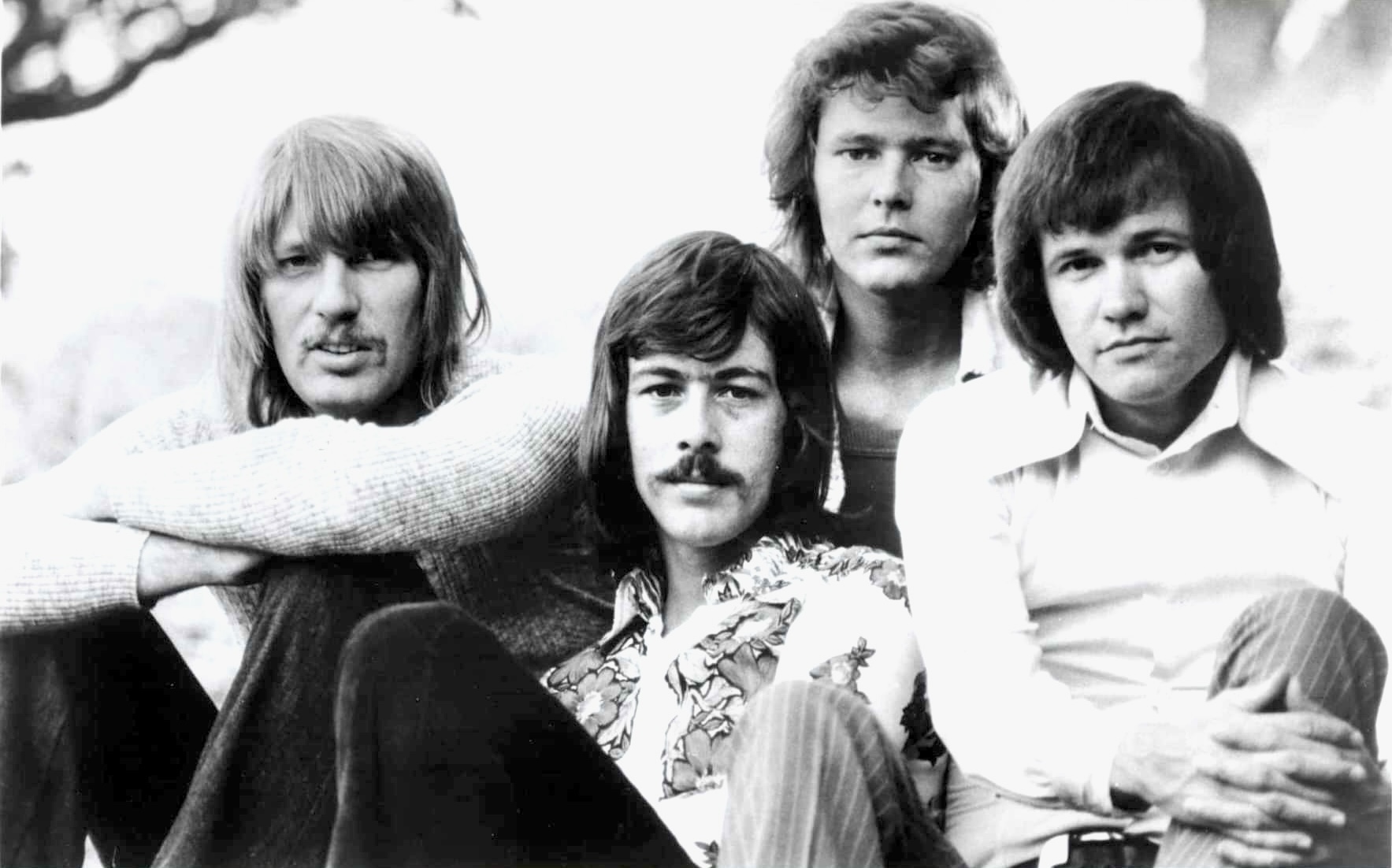
Bread was made up of highly capable musicians, and that musicianship gave the recording its smooth, unforced feel. The classic lineup around this period included David Gates, James Griffin, Robb Royer, and Mike Botts. Royer soon departed and Larry Knechtel would become an important part of Bread’s best-known lineup, but during the breakthrough moment, the group’s collaborative musicianship was already central to the result.
The record was produced with a clean, uncluttered touch, allowing the song itself to lead. Gates played a major role in shaping Bread’s recordings, and the sessions reflected his preference for precision and warmth over excess. The arrangement on Make It with You is a textbook example of how to make a record feel full without crowding it. Acoustic textures, subtle rhythm support, and tasteful keyboard colors all sit exactly where they need to be.
One of the most appealing things about the recording is that it never sounds busy. Every instrument serves the song. That may sound obvious, but it is harder than it looks. In the studio world of Los Angeles in 1970, where many players and producers were capable of dazzling complexity, choosing simplicity was often the more sophisticated move.
Anecdotes in the margins
One of the enduring stories around Bread is just how much they were underestimated at first by listeners who heard only softness and missed the craftsmanship. Make It with You helped change that. Musicians and industry insiders could hear the discipline in the arrangement, the control in the vocal, and the confidence in the pacing. It was not a casual performance captured by accident. It was a carefully built record designed to feel effortless.
Another interesting detail is how naturally the song crossed audience lines. It appealed to pop listeners, adult listeners, and fans of singer-songwriter material all at once. That broad reach was not always easy to achieve in 1970, when radio formats were becoming more defined. Bread found a way to sound current without sounding trendy.
Who made it happen
The key players
- David Gates — songwriter, lead vocalist, and the primary creative force behind the track’s melodic and studio direction.
- James Griffin — guitarist, vocalist, and an essential member of Bread’s harmonic identity and group chemistry.
- Robb Royer — bassist, guitarist, flautist, and founding member during Bread’s early period.
- Mike Botts — drummer whose controlled, tasteful playing helped give Bread’s records their steady pulse.
- Larry Knechtel — though more associated with Bread’s classic later lineup, he became a crucial contributor to the band’s enduring studio sound and is often linked with the group’s polished musicianship in this era.
While Make It with You is closely identified with Gates, the record’s success also reflects the strength of Bread as a unit. This was not simply a singer with backing players. It was a band built from experienced musicians who understood space, dynamics, and song-first arrangement.
The charts heard it too
A number one breakthrough
Make It with You became Bread’s first and biggest breakthrough hit, reaching number one on the Billboard Hot 100 in the United States in 1970. That was a major achievement, especially in a period crowded with formidable competition from rock bands, soul artists, singer-songwriters, and the last waves of 1960s pop experimentation.
The song also performed strongly internationally and established Bread as a major commercial act rather than a promising studio-oriented group. Once it began climbing, it became clear that listeners were connecting deeply with its calm sincerity. Radio embraced it, record buyers embraced it, and Bread suddenly had a signature song.
Commercially, the success of Make It with You helped drive interest in the album On the Waters, and it opened the way for a string of future Bread hits. In many ways, this was the record that turned the band from respected craftsmen into household names.
Why it fit 1970 so perfectly
The softer side of a changing era
Music in 1970 was wonderfully diverse. Hard rock was growing heavier, soul was evolving in rich new directions, and singer-songwriters were beginning to dominate with more personal material. Make It with You sits beautifully at the intersection of those shifts.
It carried some of the intimacy that would define the singer-songwriter boom of the early 1970s. At the same time, it retained the melodic discipline of classic pop and the warm textures of late-1960s folk-pop. That combination made Bread part of a larger movement toward emotionally direct, carefully crafted songs that felt close to everyday life.
If the late 1960s often reached for revelation, many early-1970s records reached for connection. Make It with You belongs firmly in that second category. It is not trying to change the world. It is trying to speak honestly within it. That shift helps explain why the song felt so timely.
Legacy that never had to force itself
A lasting radio favourite
Decades later, Make It with You remains one of Bread’s most beloved recordings and a staple of classic hits and soft rock radio. Its appeal has lasted because it captures a mood that never really goes out of style: hopeful, romantic, and unguarded without being sentimental to excess.
The song has also been covered by other artists over the years, a sign of how sturdy the writing is. A well-written song can survive changes in arrangement and style, and Make It with You has proved exactly that. Strip it down, dress it up, sing it with a different voice — the heart of it remains intact.
The reputation of Bread
Bread’s legacy has grown stronger with time. For years, some critics treated soft rock as lesser music simply because it was gentle. But listeners never stopped loving songs like this one, and later generations have become more willing to appreciate the sophistication behind them. Bread’s best records are full of melodic intelligence, emotional clarity, and studio discipline. Make It with You is one of the finest examples.
What sounds easy on the radio is often the result of very hard choices in the studio. Bread made those choices with remarkable grace.
The quiet confidence of a classic
There is something especially satisfying about a hit that does not chase attention but earns it. Make It with You did exactly that. David Gates wrote a song with a simple promise at its center, Bread recorded it with taste and patience, and listeners responded in huge numbers.
More than half a century later, the record still glows. Its melody is inviting, its performance is beautifully measured, and its sentiment feels timeless. In a year when pop music was moving in many directions at once, Bread found a lane of their own — soft, sincere, and impossible to forget.
That is why Make It with You still feels special. It is not only a hit from 1970. It is a reminder that sometimes the gentlest records leave the deepest mark.