The Story Behind “Rhinestone Cowboy”: How Glen Campbell Rode to the Top
Flashy title, deeply human song: "Rhinestone Cowboy" turned Glen Campbell's comeback into one of the 1970s' most enduring records.
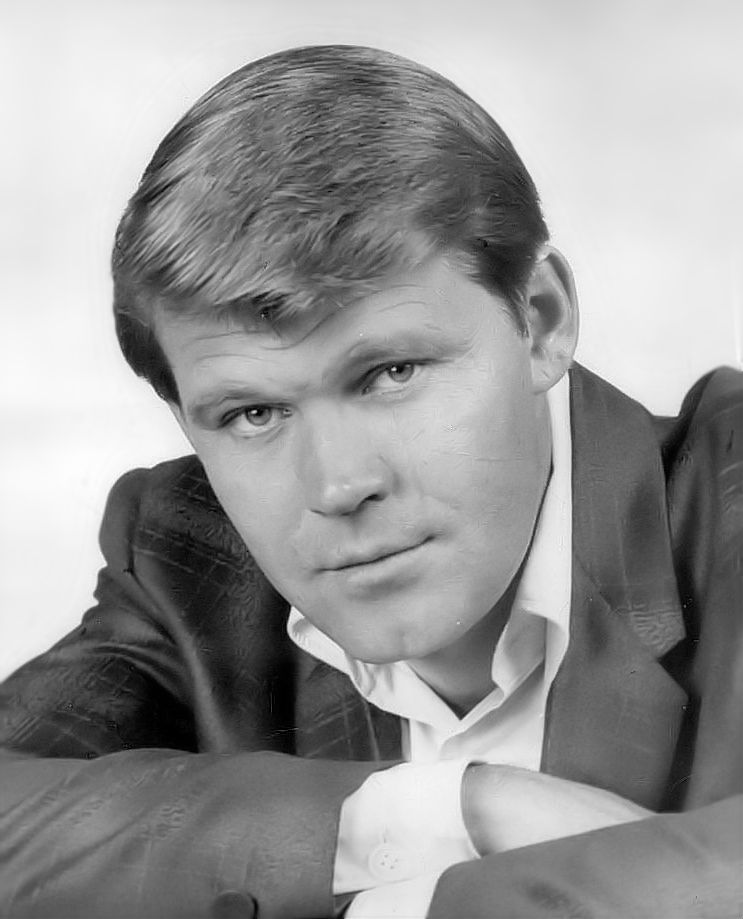
Some songs do more than top the charts. They seem to arrive already glowing, carrying a whole world inside them. “Rhinestone Cowboy” was one of those records: bright, bittersweet, and instantly memorable, with Glen Campbell singing like a man who knew exactly what it meant to keep going when the spotlight felt just out of reach.
Released in 1975, the song became one of Campbell’s defining hits, but its story began a little earlier, with a songwriter who was writing not about fantasy, but about survival. What followed was a perfect meeting of writer, singer, producer, and moment in popular music.
The song started as a portrait of struggle
Larry Weiss wrote what he knew
“Rhinestone Cowboy” was written by Larry Weiss, a songwriter and performer who understood the hard climb of the music business. He was not creating a novelty song about flashy stage clothes or a playful parody of country glamour. Beneath the sparkling title was a deeply human lyric about ambition, disappointment, and persistence.
Lines about being “lost and found” and standing where “the lights are shining on me” gave the song its emotional pull. It was about a performer chasing a break, trying to stay visible, trying to stay hopeful, and refusing to quit. That made it more than a catchy chorus. It gave the song a heart.
Weiss recorded the song himself before Campbell did, and his version introduced the world to its unusual blend of country imagery and pop accessibility. But when Glen Campbell heard it, he recognised something powerful in it: this was not just a song about a cowboy in sequins. It was a song about every entertainer who had ever waited for the phone to ring.
Why Glen Campbell was the perfect voice for it
A star who understood the lyric
By the mid-1970s, Glen Campbell was already a major name. He had been a member of the elite Los Angeles session scene known as the Wrecking Crew, playing guitar on countless hit records before becoming a star in his own right with songs like “Gentle on My Mind,” “By the Time I Get to Phoenix,” “Wichita Lineman,” and “Galveston.” He also had television fame through The Glen Campbell Goodtime Hour.
But careers in popular music are rarely a straight line. Campbell had experienced enormous highs, and by 1975 he was looking for a record that would reconnect him in a big way with radio and the public. In that sense, “Rhinestone Cowboy” fit him almost uncannily well. He was not singing as an outsider looking in. He was singing as someone who had lived the uncertain road between applause and anxiety.
That is a large part of why the performance feels so convincing. Campbell brought polish, warmth, and that famously clear voice, but he also brought a trace of weariness and determination. He sounded hopeful, yes, but never naive.
In the studio: turning a strong song into a giant record
Dennis Lambert and Brian Potter helped shape the hit
The recording was produced by Dennis Lambert, who worked closely with songwriter-producer Brian Potter. The pair were important figures in 1970s popular music, known for crafting records that could move easily between pop, country, and adult contemporary audiences. That crossover instinct was crucial.
Rather than making the song too rustic or too glossy, the production found a sweet spot. The arrangement had enough country character to suit Campbell’s image, but it also had the strong melodic lift and clean studio finish needed for mainstream pop radio. That balance helped the song travel everywhere.
The musicians behind the shine
As with many major Los Angeles recordings of the era, the exact session details are part of a wider studio culture filled with top-tier professionals. Campbell himself, of course, was no ordinary singer standing in front of a band. He was one of the finest guitarists in popular music, and his musical instincts were central to the record’s feel.
The backing track was built with the kind of precision that defined top 1970s studio work: steady rhythm, bright keyboard textures, tasteful orchestration, and a chorus designed to open up like a cinema screen. Nothing feels cluttered. Every part serves the song’s central image of a performer stepping into the light.
One reason the record still sounds fresh is that it never overplays the joke in the title. The production treats the song seriously. There is sparkle, certainly, but there is also restraint. That keeps the emotion intact.
“Rhinestone Cowboy” works because it is both glamorous and vulnerable at the same time.
A chart run that turned into a phenomenon
Number one across formats
When Glen Campbell released “Rhinestone Cowboy” in 1975, it quickly became one of the biggest records of his career. It reached number one on the Billboard Hot 100 and also topped the Hot Country Singles chart. Just as importantly, it performed strongly with adult contemporary listeners, proving how broad its appeal really was.
That kind of multi-format success mattered enormously in the 1970s. Radio was still highly influential, but audiences were segmented by format. A song that could win over pop stations, country stations, and easy-listening audiences at the same time was something special. “Rhinestone Cowboy” did exactly that.
It also travelled internationally, becoming a major hit outside the United States and strengthening Campbell’s global profile. For many listeners around the world, this was the song that fixed his image in popular culture: the handsome, gifted singer with a touch of melancholy behind the smile.
A commercial high point
The single’s success helped power the album of the same name and restored Campbell to the very top tier of chart stars. In commercial terms, it was a comeback and a confirmation. He was not simply a holdover from the late 1960s; he was still a major force in the middle of the 1970s.
That matters when listening back now, because the record captures more than a catchy hook. It captures an artist reasserting himself in real time.
Behind the scenes and on the airwaves
A title people never forgot
Part of the song’s magic lies in its title. Rhinestones suggested show business sparkle, while cowboy carried rugged American mythology. Put them together and you have an image that is slightly funny, slightly sad, and completely unforgettable. It sounded modern and old-fashioned at once, which is a difficult trick to pull off.
There is also a subtle irony in the phrase. A rhinestone is not a diamond, but it still catches the light. That makes it a perfect symbol for a performer trying to look dazzling while living with uncertainty behind the curtain.
A song with television-era reach
Campbell’s television presence gave the single extra momentum. He was already a familiar face as well as a familiar voice, and that mattered in an era when variety shows and guest appearances could turn a popular single into a household anthem. Listeners did not just hear Glen Campbell on the radio; many felt they knew him.
That personal connection helped the song land emotionally. Audiences could sense that Campbell was not mocking the dream of stardom. He was singing about its cost.
The broader 1970s moment
When genre lines were opening up
The mid-1970s were full of records that blurred boundaries. Country-pop crossover was becoming a major commercial force, and artists were increasingly moving between formats rather than staying in a single lane. “Rhinestone Cowboy” sits right in the middle of that shift.
It had country signifiers, but it was not confined by them. It had the emotional directness of country music, the melodic reach of pop, and the polished presentation that suited contemporary radio. In that sense, it belongs to the same wider era that made crossover stars and crossover songs central to the business.
It also reflected a 1970s fascination with fame itself. This was a decade when popular music often looked behind the curtain, exploring loneliness, ambition, and image. “Rhinestone Cowboy” fits beautifully into that conversation. It is catchy enough for the car radio, but thoughtful enough to reward a closer listen.
Legacy: more than a period hit
Why it still endures
Nearly fifty years later, “Rhinestone Cowboy” remains one of Glen Campbell’s signature recordings and one of the most recognisable songs of the 1970s. It has been referenced, covered, and celebrated across decades because it offers more than nostalgia. It tells a timeless story.
Anyone who has chased a goal, felt overlooked, or kept going through uncertainty can hear themselves in it. That universality is the reason the record lasts. The details may be show-business specific, but the feeling is not.
- It is instantly singable — one of those choruses that seems to belong to everyone.
- It carries emotional depth — ambition and vulnerability sit side by side.
- It defines an artist — Campbell’s voice and persona fit the lyric perfectly.
- It captures its era — crossover radio, polished production, and reflective songwriting all in one record.
The glow never quite faded
For Glen Campbell, the song became a permanent part of his musical identity, a record that summed up both his showmanship and his sincerity. For listeners, it remains one of those special singles that can instantly change the mood in a room. The opening lines arrive, the chorus lifts, and for a few minutes the dream feels possible again.
That may be the real secret of “Rhinestone Cowboy”. It is not simply about fame. It is about resilience dressed in bright colours. And on the radio, where so many songs come and go, that kind of truth still shines.