When Sunday Really Felt Like Sunday
There was a time when Sunday had a rhythm all its own. The thick newspaper on the kitchen table, dinner at Grandma’s, a drive with nowhere particular to go, football on TV and that unmistakable Sunday-night feeling when you remembered Monday was coming. A nostalgic look back at the quieter Sundays when the world seemed to slow down for just one day.
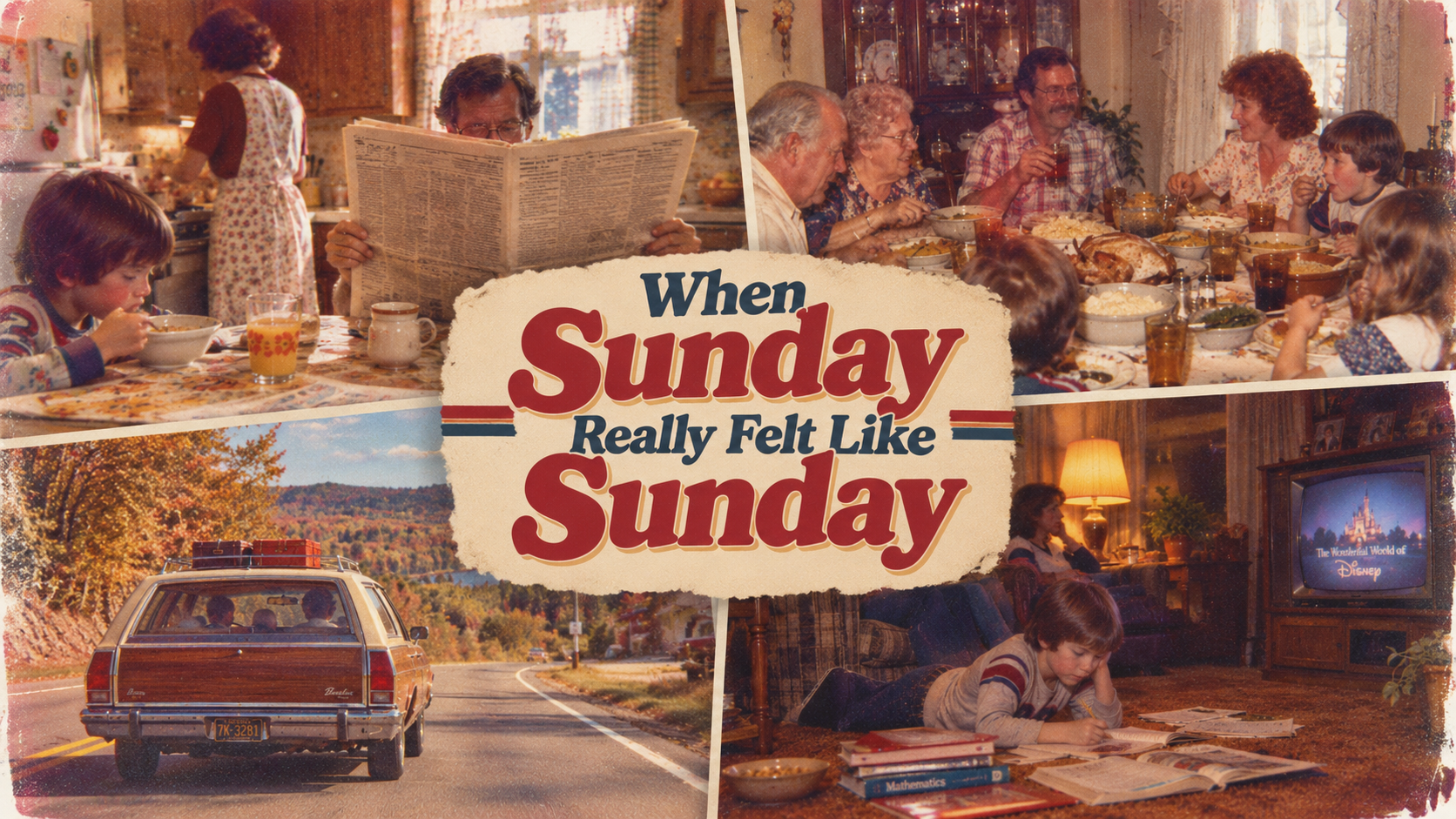
There was a time when Sunday didn’t feel like just another day of the week.
It had its own rhythm.
You could sense it almost from the moment you woke up. The neighborhood seemed quieter. Traffic was lighter. The newspaper waiting outside was considerably thicker than it had been the rest of the week. Somewhere in the house, coffee was already brewing, and nobody seemed to be moving quite as quickly as they did Monday through Saturday.
For families growing up in the 1960s, ’70s and even well into the ’80s, Sunday occupied a peculiar place in the week. It was partly a day of rest, partly a family day, partly a television day and, for plenty of kids, partly a day spent trying not to think about school the next morning.
It wasn’t necessarily exciting.
That was part of what made it special.
Sunday Morning Was Supposed to Be Quiet
Sunday mornings had a sound all their own.
Maybe it was a lawn mower somewhere in the distance, although depending on the neighborhood, mowing the lawn on Sunday morning might earn you a few looks from the neighbors. Maybe it was church bells. Maybe it was the radio playing softly in the kitchen while breakfast was being made.
For many families, Sunday meant getting dressed for church. Clothes were a little nicer, shoes were polished, and children who had spent Saturday running around outside suddenly found themselves being reminded not to wrinkle anything.
For others, Sunday morning meant sleeping later, making pancakes or eggs, and having breakfast without somebody constantly checking the clock.
And then there was the newspaper.
The Newspaper Took Over the Kitchen Table
The Sunday newspaper wasn’t something you quickly glanced through. It was practically a piece of furniture.
It arrived stuffed with sections: local news, national news, sports, entertainment, classifieds, comics, coupons and page after page of colorful advertising inserts. Someone wanted the sports section. Someone else wanted the comics. Mom might be going through the coupons while Dad disappeared behind several enormous pages of newsprint.
Children quickly learned which sections mattered to them.
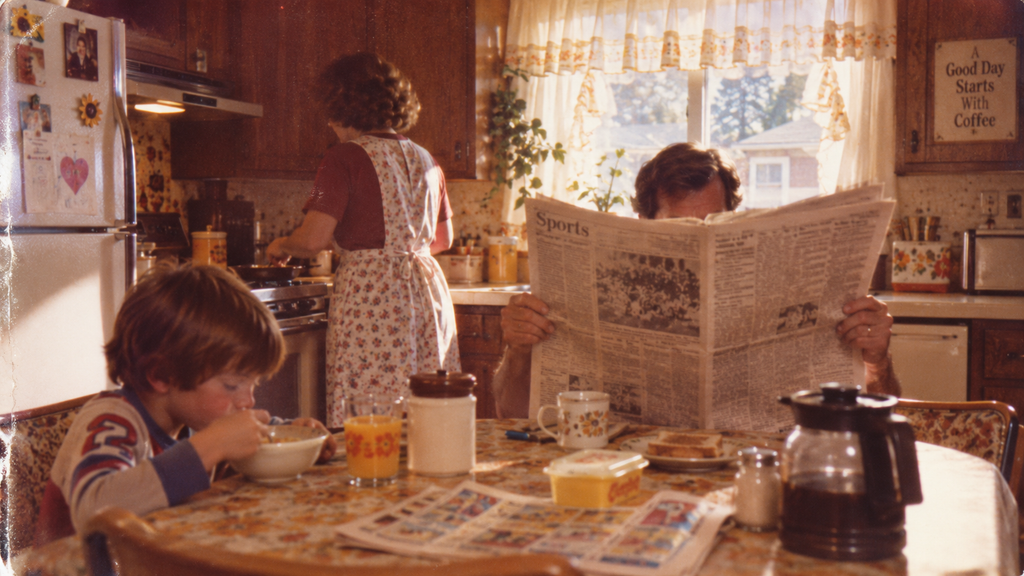
The Sunday comics were an event of their own, printed larger and in color. Department-store advertisements could become surprisingly fascinating around Christmas or back-to-school season. And somewhere among all those pages might be the television listings that told you what was coming later that evening.
The newspaper could remain scattered across the kitchen or living-room table for most of the day.
Nobody seemed particularly bothered by it.
Sunday Dinner Was Really Dinner
Depending on the family, the big meal might come in the early afternoon rather than at night.
Sunday dinner could mean roast beef, chicken, ham, pasta, potatoes, vegetables, fresh bread and whatever dish had been prepared the same way for generations. In many families, particularly those with strong immigrant traditions, Sunday dinner was less a meal than a weekly gathering.
Grandparents came over. Or everyone went to Grandma’s.
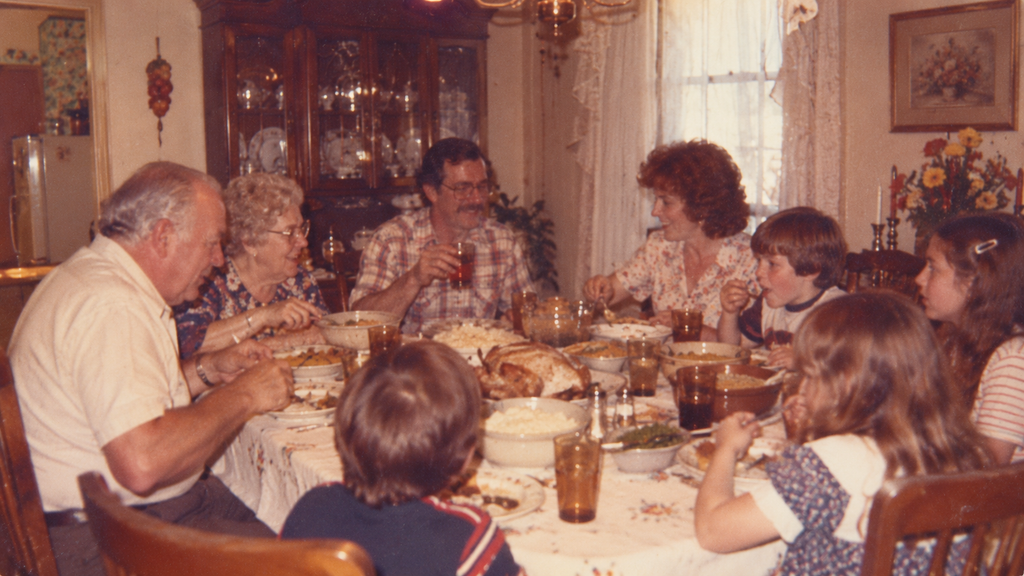
Aunts and uncles appeared. Cousins disappeared downstairs, upstairs or into the backyard while the adults remained around the table talking long after everyone had finished eating.
The meal itself could take hours when you counted everything that came afterward. Plates were cleared, coffee appeared, dessert came out and conversations continued.
Nobody announced that they had another appointment in twenty minutes.
Sunday was the appointment.
Sometimes You Just Went for a Drive
Then there was the Sunday drive.
Try explaining this tradition today without making it sound slightly strange.
The family got into the car and went somewhere, often without any particularly important reason for going there.
Maybe you drove through the countryside. Maybe Dad wanted to see a new neighborhood being built. Maybe you stopped for ice cream. Maybe you visited relatives who lived half an hour away. Sometimes you simply followed roads you didn’t normally travel during the week.
The destination wasn’t really the point.
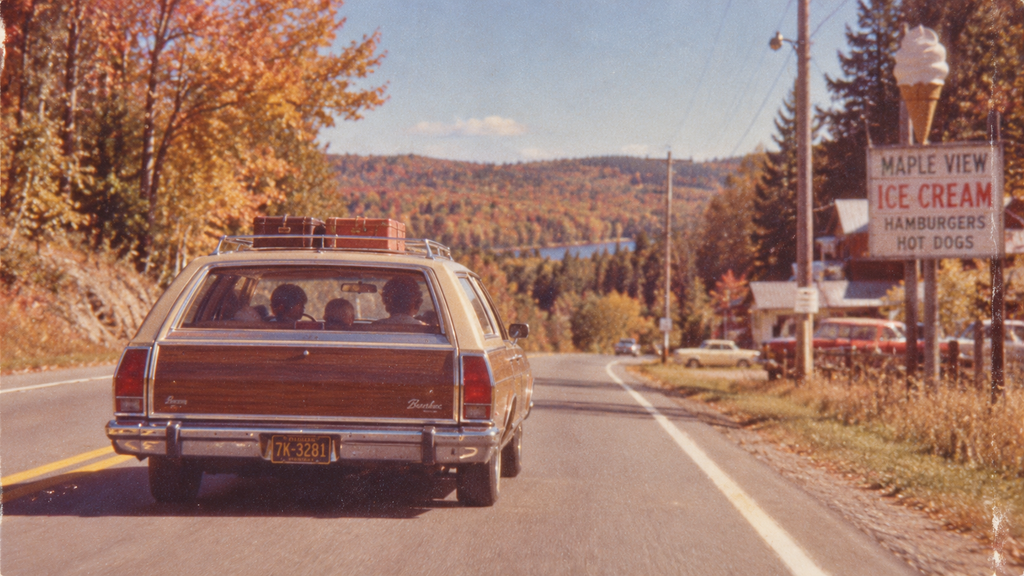
The car radio played. The windows might be down. Kids watched telephone poles, farms, houses and roadside businesses pass by from the back seat.
There was nowhere you urgently needed to be.
You were just out for a Sunday drive.
The World Wasn’t Always Open
One of the biggest differences between Sunday then and Sunday now was what happened outside the house.
Not much.
Depending on where and when you grew up, many stores were closed on Sundays, while others operated limited hours. Downtown shopping districts could become remarkably quiet. Banks were closed. Offices were closed. Plenty of local businesses simply put a sign on the door and came back Monday.
Even when Sunday shopping gradually became more common, the day retained that quieter feeling for years.
If you suddenly remembered that you needed something for school on Sunday night, there wasn’t always a 24-hour superstore waiting to rescue you.
That was your problem.
And every kid eventually learned that lesson.
Sunday Afternoon Had No Hurry
Sunday afternoons could stretch forever.
In the fall, football might dominate the television. Dad could settle into his chair while games played through the afternoon, occasionally drifting into that mysterious half-asleep state in which he appeared unconscious but somehow knew immediately if anyone tried to change the channel.
In other homes there might be an old movie playing, music on the stereo, relatives visiting or simply nothing much happening at all.
Kids went outside.
Someone washed the car.
A neighbor stopped by.
You might lie on the living-room floor reading the comics again simply because there wasn’t anything else you particularly needed to do.
Boredom existed then, and Sunday afternoon was one of its natural habitats.
Looking back, maybe a little boredom wasn’t such a terrible thing.
Then Sunday Evening Arrived
This was when the mood changed.
As daylight began disappearing, Sunday suddenly stopped feeling endless.
Dinner might be something simple, especially if the big meal had already happened earlier. The house became quieter. School clothes had to be found. Baths or showers had to be taken. Lunches might be prepared for the next morning.
And somewhere, inevitably, there was homework.
Homework that had existed since Friday afternoon.
Homework you had successfully ignored all day Saturday.
Homework that had somehow become considerably more urgent around seven o’clock Sunday evening.
The weekend was collecting its debts.
Television Became Part of the Sunday Ritual
Sunday night television had a particular atmosphere because the entire family was often home.
For years, programs such as The Wonderful World of Disney became closely associated with Sunday evenings. Later there were shows like 60 Minutes, family dramas, variety programs and Sunday-night movies.
The exact lineup depended on the decade and the household, but the ritual was remarkably similar.
Everyone gathered around the same television.
There wasn’t another screen upstairs streaming something different. Nobody was watching an entire season of a series on a tablet. If there was something everyone wanted to see, you watched it when it was broadcast.
Sometimes Sunday night television was comforting.
Sometimes it simply provided background noise while you finished that homework you should have done Saturday.
And Then Came That Feeling
Anyone who grew up with those Sundays probably remembers the moment.
It might have happened when the television program ended. Maybe your mother told you it was time to get ready for bed. Maybe you looked outside and saw that the street had gone completely dark.
Whatever triggered it, you suddenly remembered:
Tomorrow was Monday.
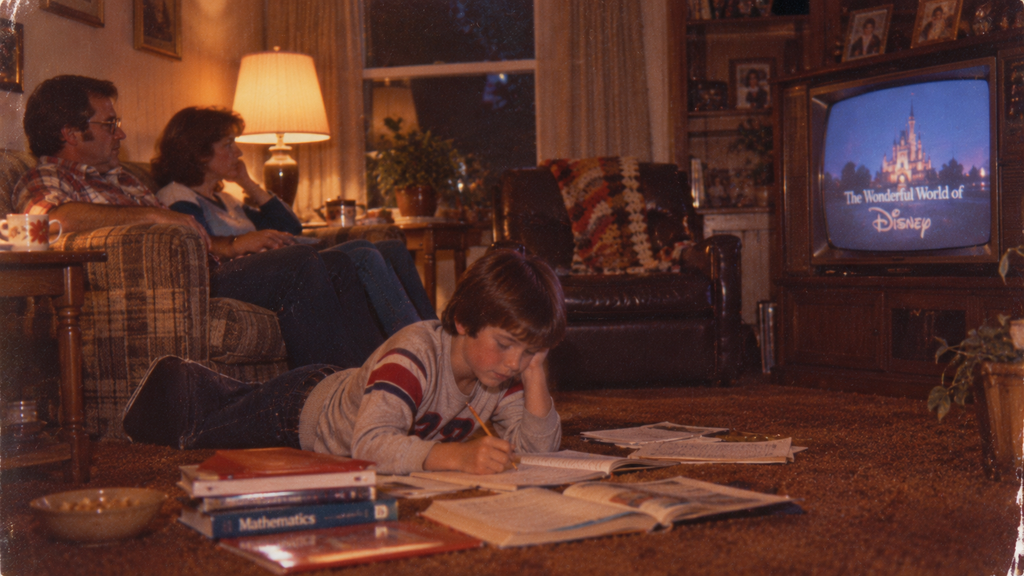
The freedom that had seemed unlimited on Friday afternoon was almost gone.
The school bus would be coming in the morning. Dad would be leaving for work. Alarm clocks would ring. The newspaper would be thinner. Breakfast would be faster.
The regular week was about to begin again.
There was something slightly melancholy about Sunday night, especially when you were a kid. Yet that feeling was also part of what gave the weekend its shape. Sunday was the gentle transition between the freedom of Saturday and the responsibilities waiting Monday morning.
When Every Day Became Available
Today, many of the boundaries that once separated Sunday from the rest of the week have disappeared.
Stores are open. Packages arrive. Emails come in. People work from home. Entertainment is available whenever we want it. We can shop at midnight, watch television at breakfast and answer a work message while sitting at Sunday dinner.
Convenience has given us plenty.
But perhaps it has also made the days feel more alike.
The old Sunday forced the world to slow down a little. Not everyone observed it in the same way, and certainly not every Sunday was some perfect family postcard. There were arguments, boring afternoons, burnt dinners and plenty of children complaining that there was nothing to do.
But Sunday still felt different.
Maybe that’s what we miss.
Not simply the newspaper, the Sunday drive, Grandma’s dinner or the television shows.
We miss having one day that seemed to tell us, whether we wanted it to or not, that the rest of the world could wait until tomorrow.
And perhaps most of all, we miss those quiet Sunday afternoons when there really wasn’t anywhere else we were supposed to be.