When the Neighborhood Had a Corner Store
Remember when every neighborhood seemed to have a little corner store? From penny candy and baseball cards to returnable soda bottles and the owner who knew everyone by name, these small shops were more than places to buy milk—they were part of the neighborhood.
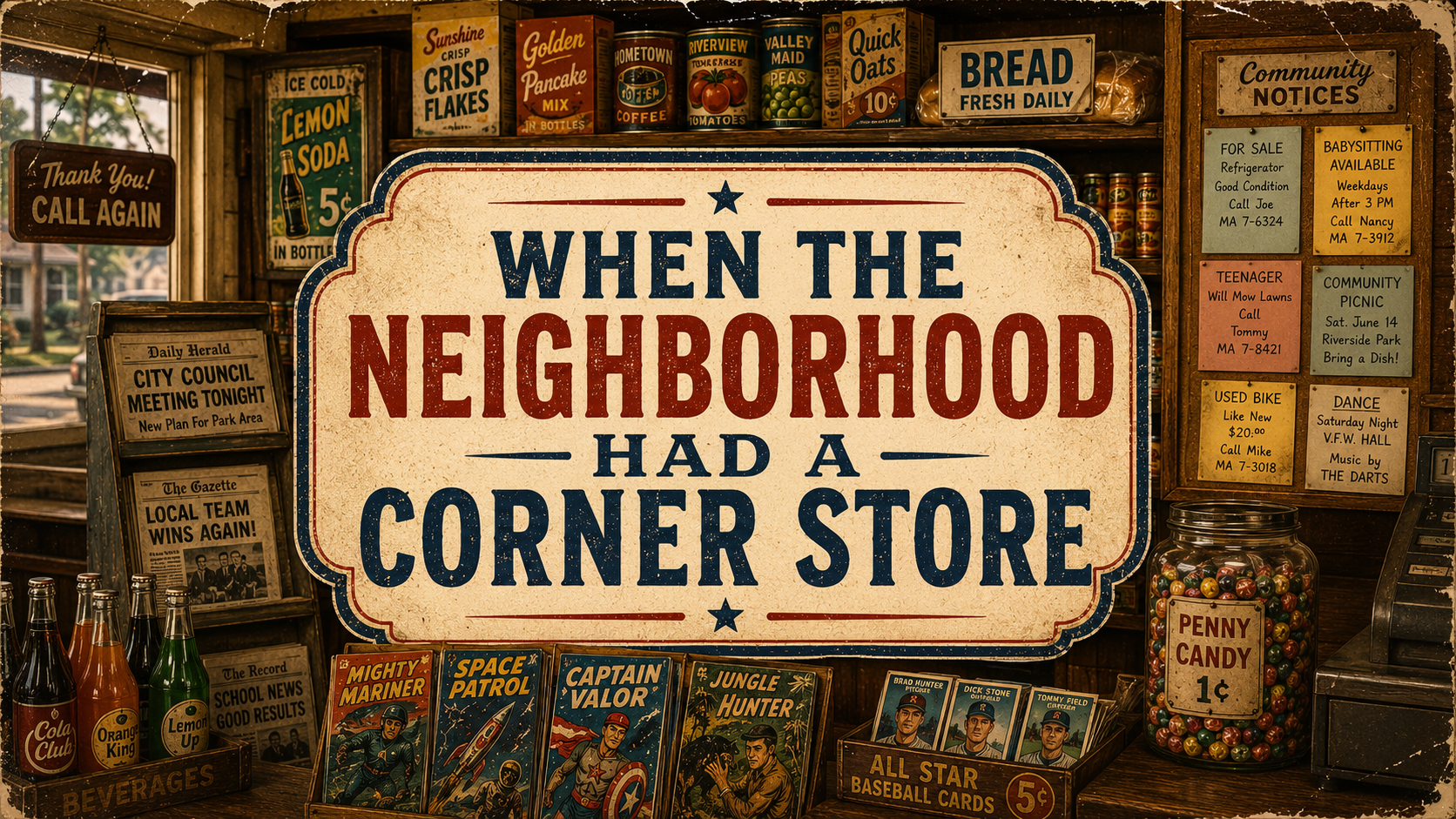
There was a time when you didn’t need to get into the car every time you needed a loaf of bread, a bottle of soda or a gallon of milk. You simply walked down the street. Maybe the store was two blocks away, maybe five. You might cut through somebody’s yard, hop on your bicycle or walk there with a couple of friends and whatever change you had managed to collect from around the house.
At the end of that short journey was the neighborhood corner store. It wasn’t a supermarket, and it wasn’t quite what we think of today as a convenience store either. It was smaller, more personal and usually packed with an astonishing amount of merchandise for a place with only a few narrow aisles. If you grew up in a neighborhood that had one, chances are you can still picture the counter, the candy display and the old refrigerator cases along the wall. You may even remember the person behind the register, because there was a good chance that person remembered you.
The Bell Over the Door
Every neighborhood store was different, but somehow many of them felt familiar. There might be an old screen door during the summer or a heavy glass door partially covered with advertisements for soda, bread or cigarettes. Somewhere near the entrance sat a rack of newspapers, and when you walked inside, a little bell above the door announced that another customer had arrived.
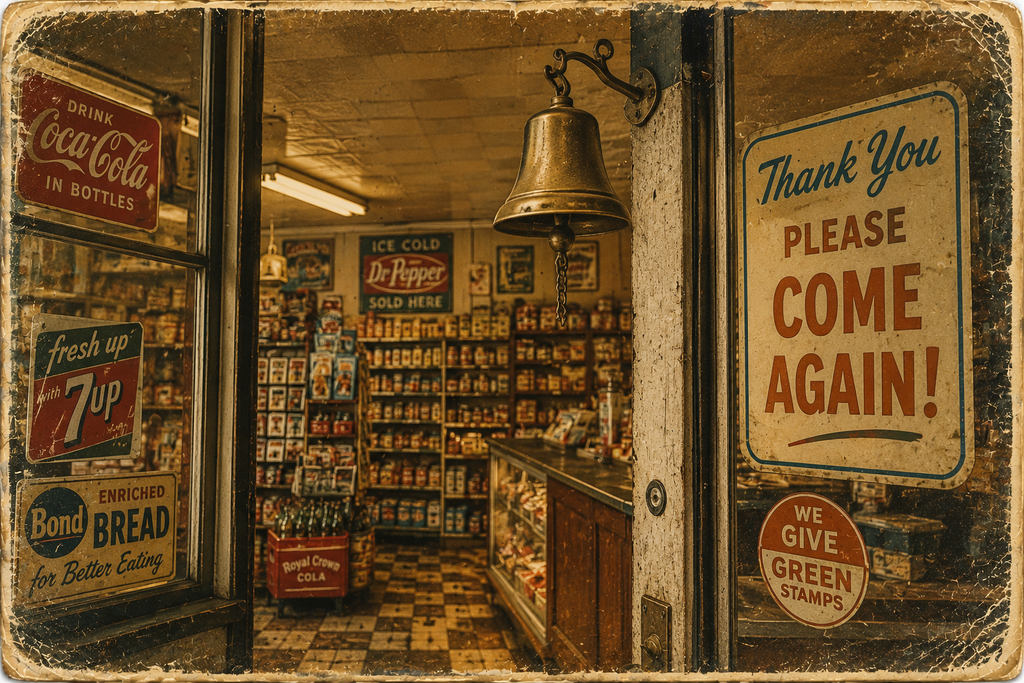
The floors might creak and the aisles were often narrow, with shelves crowded with canned vegetables, cereal, bread, detergent, soup, coffee, paper towels and dozens of other things a family might suddenly discover it needed. A refrigerated case hummed along one wall with milk, butter, eggs and cold drinks inside. There was no carefully designed shopping experience and no enormous selection of twenty different versions of the same product. Things seemed to be placed wherever there was room, and somehow everyone in the neighborhood knew exactly where to find them.
For Kids, It Was All About the Candy
Adults might have gone to the corner store because they needed milk or bread, but kids had entirely different priorities. The candy counter could turn a handful of coins into several minutes of serious decision-making. Depending on the year and the store, there might be Tootsie Rolls, Pixy Stix, Lemonheads, Boston Baked Beans, candy necklaces, wax bottles, Atomic FireBalls, Smarties, Bazooka bubble gum and row after row of candy bars.
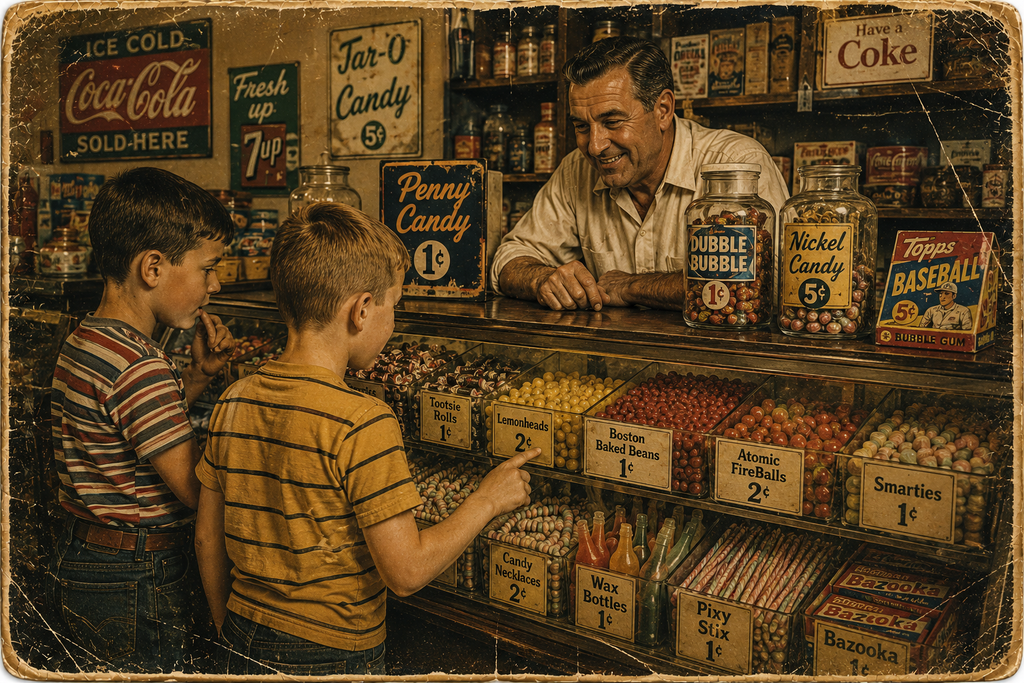
Some candy really did cost a penny, while other treasures required a nickel, a dime or considerably more financial planning. If you had fifty cents in your pocket, you could feel surprisingly wealthy. The challenge was deciding whether to buy several smaller pieces of candy or spend most of your money on one candy bar, a pack of gum or something from the cooler.
The person behind the counter usually showed remarkable patience while children stared through the glass and reconsidered their choices over and over again. There was no rush. Spending twenty-five cents properly was important business.
Baseball Cards, Comic Books and Other Necessities
Candy wasn’t the only reason kids found excuses to visit the store. A new pack of baseball cards could be irresistible, particularly when you were hoping to find a favorite player or a card you could trade with someone at school. You tore open the wax wrapper before you were halfway home and started sorting through the cards, usually while attempting to chew the stick of gum that came inside.
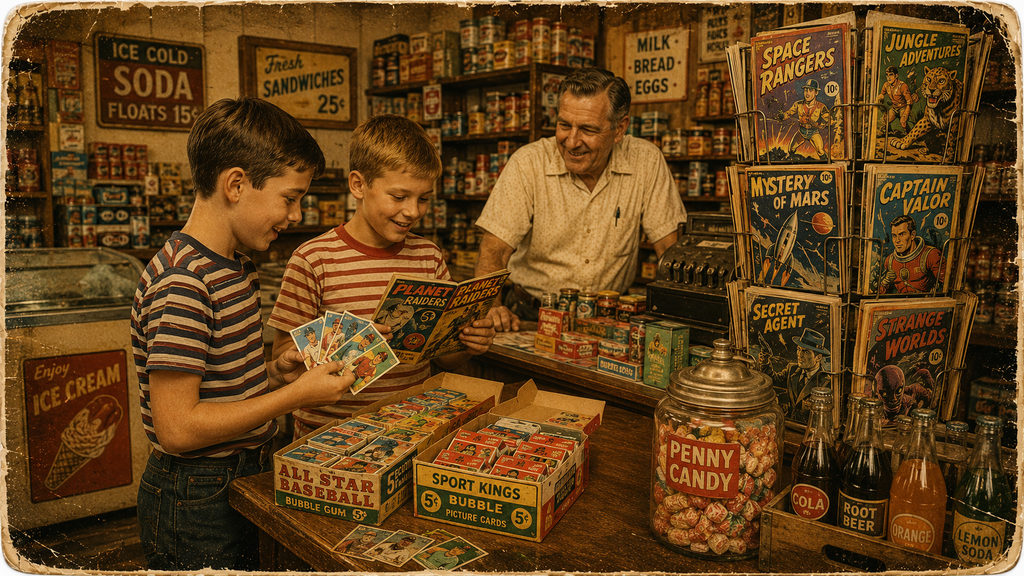
Comic books offered another reason to linger. A spinner rack near the front might hold Superman, Batman, Archie, Spider-Man and whatever else had arrived that week. There were magazines and paperback books for adults, puzzle books and sometimes toys or inexpensive novelty items near the register. A kid could walk into the corner store without intending to buy anything in particular and still spend ten minutes studying all the possibilities.
Soda Bottles Were Worth Money
Before plastic bottles took over the soft-drink aisle, soda commonly came in returnable glass bottles. Coca-Cola, Pepsi, 7UP, RC Cola, Orange Crush and countless regional brands sat cold in refrigerators and coolers, and the bottles themselves had something that made them especially interesting to children: a deposit value.
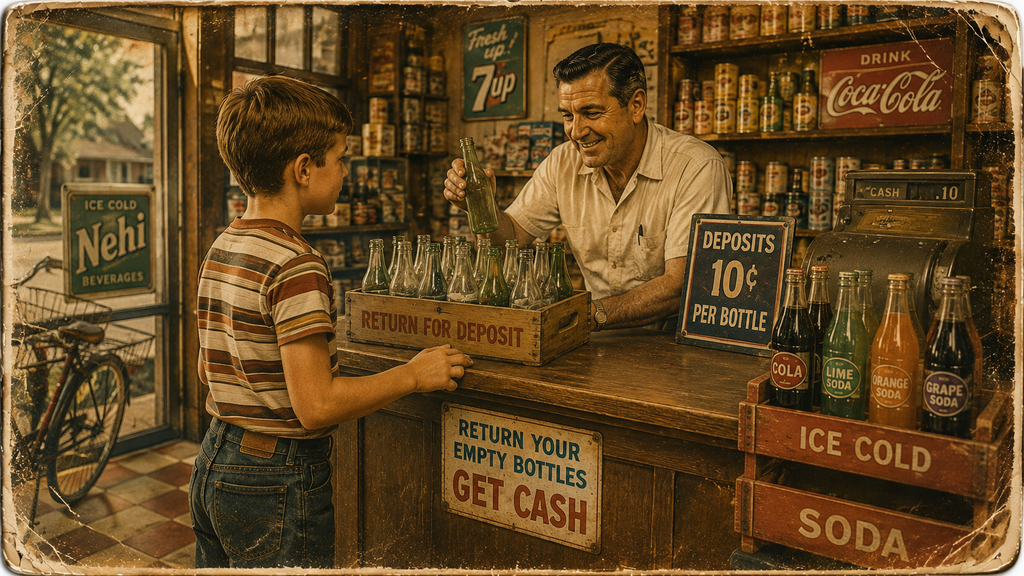
Empty bottles could be collected and returned to the store for money. You might find them around the house or garage, and occasionally an abandoned bottle discovered while riding your bike felt almost like finding a coin on the sidewalk. Collect enough empties and suddenly you had enough money for candy, baseball cards or another bottle of soda.
It was recycling long before most children thought of it that way. To a ten-year-old, an empty soda bottle wasn’t trash. It was currency.
“Mom Said to Put It on the Tab”
Perhaps the biggest difference between the neighborhood store and today’s convenience store was the relationship between the owner and the customers. The person behind the counter often didn’t just recognize you; he or she knew your family, your parents, your brothers and sisters and possibly even your grandparents.
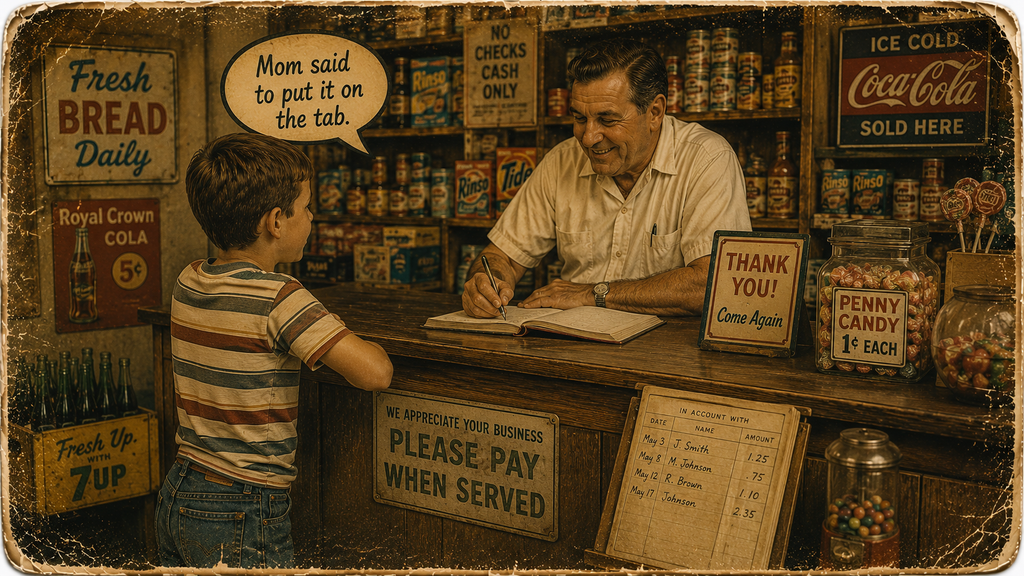
In some stores, longtime customers could keep a small running account. A child might be sent down for milk or bread with instructions to tell the owner to put it on the family’s tab. Somewhere behind the counter there might actually be a notebook recording what people owed. The arrangement wasn’t based on an app, an account number or a credit score. It worked because people knew one another, and the store owner knew exactly where you lived.
That familiarity worked both ways, of course. If you were a kid doing something you shouldn’t be doing, having the store owner know your parents wasn’t always quite so convenient.
The Emergency Grocery Run
The corner store rarely replaced the family’s weekly trip to the supermarket. Instead, it filled all the little gaps between those trips. Someone would be halfway through preparing dinner and discover there were no onions. Breakfast was approaching and somebody had finished the milk. Dad wanted the newspaper, company unexpectedly arrived and there wasn’t enough soda in the refrigerator, or Mom suddenly realized she needed another ingredient for a recipe.
That was when someone heard the familiar instruction: “Run down to the store.”
The convenience was especially valuable in an era when many families had only one car. There was no reason to drive across town and walk through a huge supermarket for one or two items when a neighborhood store was only a few blocks away. A child could be handed a dollar, told exactly what to buy and sent on the errand. The only danger was whether all of the change would actually make it back home.
The Newspaper Rack Was Part of the Morning
Long before people woke up and immediately checked a phone, the morning news arrived folded. Corner stores were important newspaper stops, with the local daily stacked near larger regional papers and Sunday editions arriving as enormous bundles filled with advertising inserts, comics, coupons and special sections.
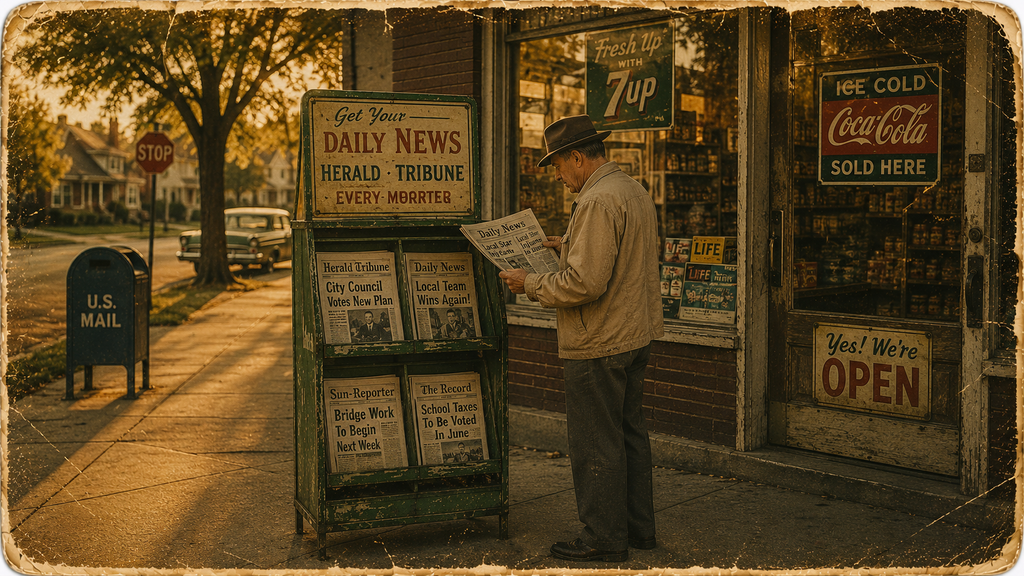
People stopped on their way to work or walked over on Sunday morning to pick up the paper. The newspaper wasn’t simply another product on the shelf; it was part of the daily rhythm of the neighborhood. People discussed the headlines while standing at the counter, checked the sports scores and sometimes learned as much from the conversation inside the store as they did from the newspaper they carried home.
There Was Always Something Behind the Counter
Certain things seemed to live permanently behind the counter. Cigarettes were an obvious example, displayed prominently in an era when tobacco advertising was everywhere, but there might also be cigars, matches, batteries, aspirin, razor blades, camera film, lottery tickets and dozens of little items people occasionally needed.
Sometimes there was an old cash register that already looked antique. A radio might be playing quietly behind the counter, perhaps carrying a baseball game on a summer afternoon, and in some stores there was a small television tucked away somewhere for the owner to watch during slow periods. The owner spent so much time there that the area behind the counter could feel almost like an extension of the family living room.
The Owner Usually Knew What Was Happening
The neighborhood store also served as an unofficial information center. People stopped in, talked for a few minutes and exchanged whatever news was circulating around the neighborhood. Someone knew who was selling a used car. Someone else had heard who bought the house down the street. There was news about local schools, businesses, jobs, families and whatever else people were talking about that week.
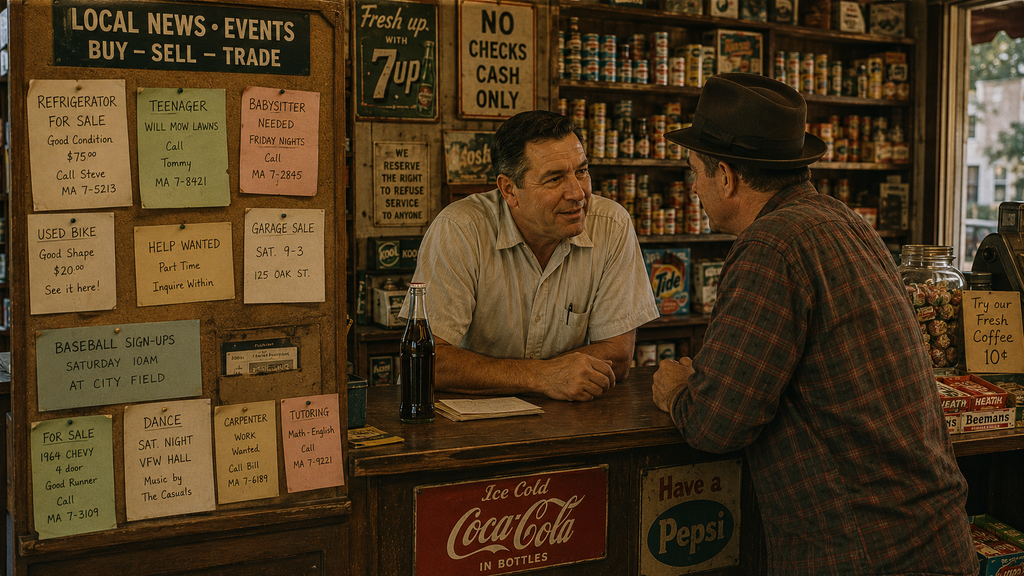
A bulletin board or a collection of handwritten cards near the register might advertise a refrigerator for sale, a teenager offering lawn mowing, someone looking for babysitting work or a local event happening over the weekend. Before neighborhood Facebook groups, information traveled through places like this. It may not have traveled instantly, but somehow everyone still seemed to hear the news.
You Were Allowed to Go There by Yourself
For many people, one of the strongest memories of the neighborhood store isn’t actually anything that was sold inside. It’s the independence that came with being allowed to go there alone.
A parent could hand you some money and tell you to pick up a loaf of bread or a gallon of milk, and off you went. Maybe you were eight or nine years old. Perhaps a younger brother or sister came along. You crossed streets, carried money, remembered what you were supposed to buy and were expected to return with both the groceries and the correct change.
The corner store gave children a small territory beyond home that still felt familiar. You knew the route, the store owner knew you and your parents knew where you were. It was only a simple errand, but when you were young, walking or riding your bicycle to the store without an adult could feel like a genuine taste of freedom.
Every Neighborhood Had Its Own Version
Not everyone called it a corner store. Depending on where you lived, it might have been the neighborhood market, grocery, deli, variety store, general store or bodega. Quite often, people simply called it by the owner’s name.
“Go down to Charlie’s and get some milk.”
No further explanation was necessary.
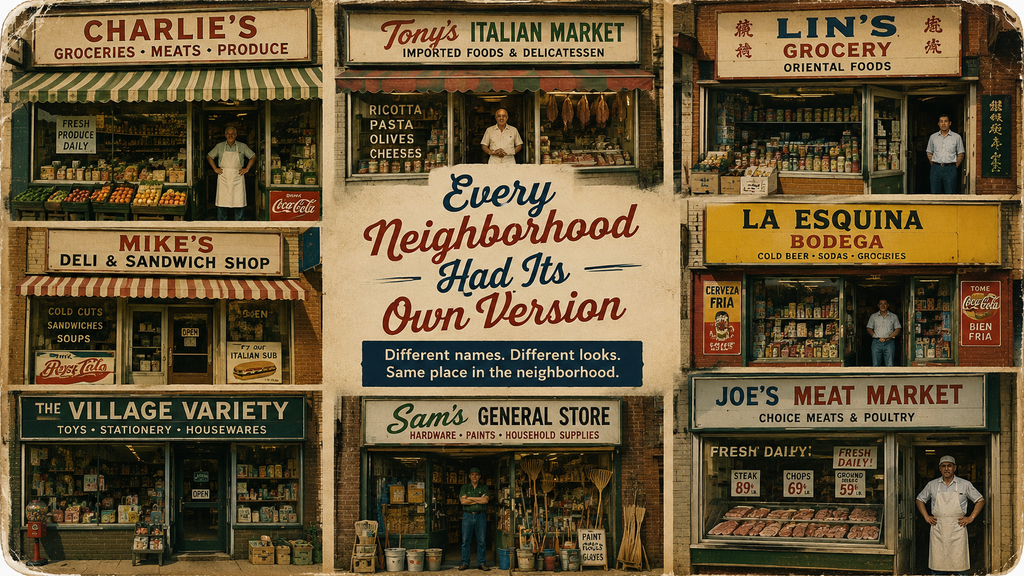
Different communities gave these stores their own personalities. Some had deli counters and made sandwiches. Others specialized in fresh meat or produce. Immigrant families brought foods and traditions from their own backgrounds, while other stores became known for a particular item that everyone in the neighborhood came in to buy.
That individuality was part of what made them memorable. You could visit ten neighborhood stores and find ten different places. Nobody expected them to look exactly alike.
Then the Neighborhood Began to Change
The traditional corner store didn’t disappear overnight. Supermarkets became larger, more families owned multiple cars and shopping centers expanded farther into the suburbs. Chain convenience stores offered longer hours, standardized selections and often gasoline. Later came big-box retailers, pharmacies selling almost everything and eventually online shopping and home delivery.
Many small independent stores couldn’t compete with those changes. Others adapted, becoming delis, specialty markets or modern convenience stores, and independent corner stores remain an important part of life in many communities today. But the particular version many people remember — the little neighborhood grocery where the owner knew the family buying the milk — became increasingly difficult to find.
It Was More Than a Place to Buy Milk
By today’s standards, the old corner store wasn’t particularly impressive. The selection was limited, the prices weren’t necessarily the lowest and the aisles could be cramped. There was no loyalty app, curbside pickup, self-checkout or delivery driver bringing your order to the front door.
But convenience meant something slightly different then. It meant knowing there was a place a few blocks away where you could get what you needed. It meant being able to walk there instead of driving. It meant seeing someone behind the counter who recognized you, and perhaps spending a few minutes talking before heading home.
For children, it was something more. The neighborhood store represented one of the first places in the world they could visit on their own. A bicycle leaned against the storefront, the bell rang when the door opened, cold bottles of soda waited in the cooler and baseball cards and candy sat near the register.
You emptied the change from your pocket onto the counter and started counting.
And the person waiting patiently on the other side already knew your name.