A cassette clicks in the car stereo — 1981 comes alive
1981 was pop at a turning point: bigger hooks, shinier production, and a thrilling sense that the future had just walked into the studio.
Press play on 1981 and you hear a year in motion. Pop was becoming sleeker, rock was sharpening its hooks, disco’s afterglow was still flickering in the clubs, and a fresh electronic pulse was beginning to reshape the charts. It was a year when radio felt gloriously unpredictable: one moment you had a polished soft-rock anthem, the next a nervy new wave classic, then a country-pop crossover, then a song built around a bass line nobody could forget.
That is part of what makes 1981 such a joy to revisit. It was not simply a year of big hits. It was a year of crossroads, when old styles learned new tricks and new stars arrived sounding like the future.
The songs that defined 1981
Any list of the year’s biggest and best hits will spark debate, and that is half the fun. What follows is a grouped tour through the records that dominated radio, dance floors, jukeboxes, and memory.
1. Kim Carnes — Bette Davis Eyes
If one record looms over 1981, it is this one. With its smoky vocal, cool synth textures, and unforgettable chorus, Bette Davis Eyes felt modern, mysterious, and just a little dangerous. It spent nine weeks at number one in the United States and became one of the year’s defining signatures. Fun fact: the song had actually been written years earlier, but Kim Carnes transformed it into something sleek and unforgettable for the MTV age that was just beginning.
2. Olivia Newton-John — Physical
Playful, bold, and impossible to ignore, Physical became a pop phenomenon. Its catchy hook and cheeky energy made it one of the biggest hits of the era. It also arrived at exactly the right moment, when fitness culture was exploding and music videos were becoming more important. The song’s success helped confirm that pop in the early 1980s could be bright, glossy, and knowingly fun.
3. Diana Ross and Lionel Richie — Endless Love
Every great chart year needs a huge ballad, and this was 1981’s grand romantic centrepiece. Endless Love was lush, tender, and designed for slow dances everywhere. The pairing of Diana Ross and Lionel Richie gave it star power to spare, and its success showed that even in a fast-changing musical climate, a beautifully delivered love song could still stop the room.
4. Hall & Oates — Kiss on My List
No duo captured the polished pop-soul brilliance of the period better than Daryl Hall and John Oates. Kiss on My List is all precision and charm: crisp rhythm, irresistible melody, and a chorus that settles in after one listen. It is a perfect example of how radio-friendly pop in 1981 could be sophisticated without losing its warmth.
5. Rick Springfield — Jessie’s Girl
Pure pop-rock electricity. Jessie’s Girl turned romantic frustration into one of the most singable choruses of the decade. Rick Springfield delivered it with just the right mix of yearning and punch, and the song became a staple of rock and pop stations alike. Decades later, it still feels like the soundtrack to an open car window and a summer chorus shouted back at the speakers.
6. Human League — Don’t You Want Me
This was one of the records that announced a major shift in pop. Don’t You Want Me took synthesizers out of the margins and into the centre of mainstream success. Its dramatic male-female vocal exchange, icy melody, and electronic backbone made it a landmark hit. If you want to hear the future of 1980s pop arriving in real time, this is one place to start.
7. Soft Cell — Tainted Love
Minimal, tense, hypnotic. Tainted Love turned a soul song into a synth-pop classic and became one of the era’s most striking reinventions. Soft Cell’s version felt stark and stylish, with just enough unease under the surface to make it unforgettable. It was a reminder that pop could be catchy and edgy at the same time.
8. Journey — Don’t Stop Believin’
It was not the biggest chart-topper of the year at the time, but history has been very kind to Don’t Stop Believin’. With Jonathan Cain’s piano intro, Steve Perry’s soaring vocal, and that wide-open sense of possibility, it has become one of the most beloved rock anthems ever recorded. In 1981, it already sounded built to last.
9. Joan Jett and the Blackhearts — I Love Rock ’n Roll
Few songs hit with this much swagger. Joan Jett’s version of I Love Rock ’n Roll was tough, direct, and gloriously loud in spirit even when heard through a tiny transistor radio. It helped make her a major star and gave early 1980s rock one of its most durable rallying cries.
10. Blondie — Rapture
Blondie had already proved they could move between punk, pop, and disco, but Rapture did something even more adventurous. It brought elements of rap into the mainstream in a way that was startling for the time. Debbie Harry’s cool delivery and the track’s downtown New York energy make it one of 1981’s most historically fascinating hits.
11. Stars on 45 — Stars on 45
A medley built for nostalgia became a hit during a year that was busy inventing the future. Stars on 45 stitched together familiar melodies into a danceable package and became a sensation. It was proof that audiences loved novelty when it was done with flair.
12. Dolly Parton — 9 to 5
Bright, witty, and sharply observed, 9 to 5 was more than a hit single from a hit film. It was a workplace anthem with real personality. Dolly Parton managed to sound cheerful and pointed at the same time, and that balancing act is one reason the song still resonates.
The musical landscape: a year of crossover and change
What made 1981 so exciting was the sheer variety. You could hear the final shimmer of disco-influenced production in some hits, while elsewhere the sharp angles of new wave were moving into the mainstream. Rock was splitting into several lanes at once: arena-ready bands were writing giant choruses, punk’s influence was still visible in stripped-down attitude, and a more polished style of radio rock was thriving.
Soul and R&B were evolving too. The grooves were tightening, the production was becoming cleaner, and the use of drum machines and synthesizers was increasing. Meanwhile, country-pop was crossing over with remarkable confidence. Dolly Parton, Kenny Rogers, and others showed that storytelling and mainstream appeal could work beautifully together.
And then there was the rise of video culture. MTV launched in August 1981, and although its full impact would take time to spread, the shift had begun. Suddenly image, style, and visual identity mattered in a new way. Artists who could pair a memorable song with a striking look were entering a different kind of pop era.
Trends, genres, and movements shaping the charts
New wave steps into the spotlight
By 1981, new wave was no longer just a buzzword from hip clubs and adventurous playlists. It was becoming chart language. The Human League, Soft Cell, and other acts showed that synthesizers could drive huge pop hits rather than merely decorate them. The music often felt cool, stylish, and urban, but the best of it still had strong melodies at its core.
Rock gets bigger hooks
Arena rock and pop-rock were in excellent health. Journey, REO Speedwagon, Foreigner, and Styx all thrived in this period, delivering songs built for maximum emotional lift. Big choruses, polished production, and dramatic vocals were the order of the day.
R&B and funk grow sleeker
The grooves of the late 1970s did not disappear; they evolved. Records were becoming tighter and more electronic, setting the stage for the rest of the decade. Earth, Wind & Fire, Kool & the Gang, and Rick James were among the artists keeping rhythm front and centre while the production style changed around them.
Country-pop reaches a wider audience
The crossover wave was real. Songs with country roots were finding broad pop audiences, helped by film, television, and artists with enormous charisma. This movement widened the chart conversation and gave 1981 one of its most appealing contrasts: polished urban pop sitting comfortably beside heartfelt country storytelling.
Albums that made 1981 a landmark year
Great singles often get the spotlight, but 1981 was also rich in albums that still carry weight in music history.
- The Rolling Stones — Tattoo You
Home to Start Me Up, this album proved the Stones could still command the decade with swagger intact. - Journey — Escape
A blockbuster set packed with radio giants, including Don’t Stop Believin’ and Open Arms. - The Human League — Dare
A cornerstone of synth-pop, stylish and hugely influential. - Rush — Moving Pictures
Technically dazzling yet widely accessible, with Tom Sawyer leading the charge. - Stevie Nicks — Bella Donna
A powerful solo statement full of atmosphere and personality. - Phil Collins — Face Value
An emotional, inventive debut that announced Collins as a major solo force. - Prince — Controversy
Bold, provocative, and clearly pointing toward the extraordinary run to come. - Kraftwerk — Computer World
A futuristic electronic landmark whose themes now seem startlingly prophetic.
What is striking about these albums is how many different roads they represent. Classic rock veterans, progressive musicians, synth pioneers, singer-songwriters, and emerging visionaries all found room in the same year.
Why 1981 matters in music history
Some years are memorable because they perfect an existing style. Others matter because they open doors. 1981 did both.
It was a hinge point between the late 1970s and the fully formed 1980s. You can hear older traditions still glowing: singer-songwriter craft, disco’s rhythmic confidence, classic rock muscle, soul elegance. But you can also hear the next chapter arriving: synthesizers moving to the front, videos becoming vital, production turning more precise, and genre boundaries becoming more fluid.
It was also a year when several future giants were either consolidating their power or preparing for major breakthroughs. The groundwork for the rest of the decade was being laid in plain sight. Listen carefully to 1981 and you can hear the architecture of mid-1980s pop being assembled piece by piece.
Fun facts and trivia from the year
- MTV launched on 1 August 1981. That single event helped transform how music was marketed, seen, and remembered.
- Kim Carnes’ raspy vocal on Bette Davis Eyes became instantly recognisable. It gave the song a dramatic character unlike anything else at the top of the charts.
- Don’t You Want Me was initially not even considered the obvious standout by everyone involved. It went on to become one of the defining synth-pop hits of the era.
- Joan Jett’s I Love Rock ’n Roll was a cover. She heard the original by the Arrows in the 1970s and later made it her own with total conviction.
- Rapture helped bring rap into mainstream pop conversation. Its chart success marked an important cultural moment.
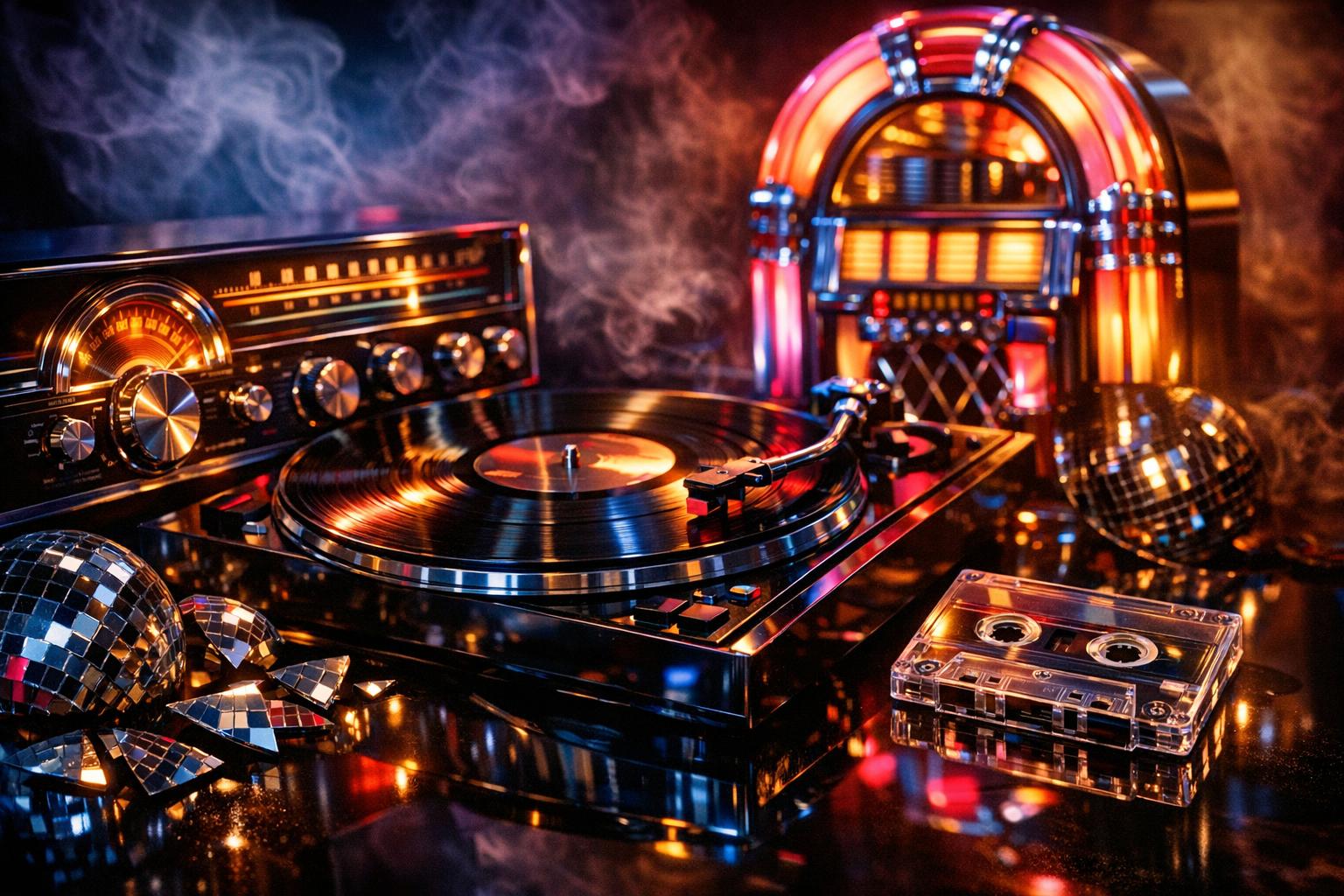
- Physical media still ruled. Vinyl was strong, cassettes were everywhere, and making a personal mixtape was practically an art form.
One last spin
1981 had polish, personality, and a sense of possibility. It gave us giant choruses, elegant ballads, nervy electronic pop, and songs that still leap out of the speakers with colour and confidence. More than that, it captured a moment when the old rules of pop had not disappeared, but the new rules were arriving fast.
That makes revisiting the year such a pleasure. You are not just hearing a collection of hits. You are hearing a musical world stretch, experiment, and sparkle in real time. And when those opening notes return on the radio, they still bring the same thrill: the feeling that anything might come on next.