A Ride Worth Taking
Here's what made The Time Machine such an enduring favourite: dazzling imagination, a wonderfully elegant design, and the kind of cinematic wonder that still pulls you in. If you love classic films with heart and adventure, this one remains a terrific ride.
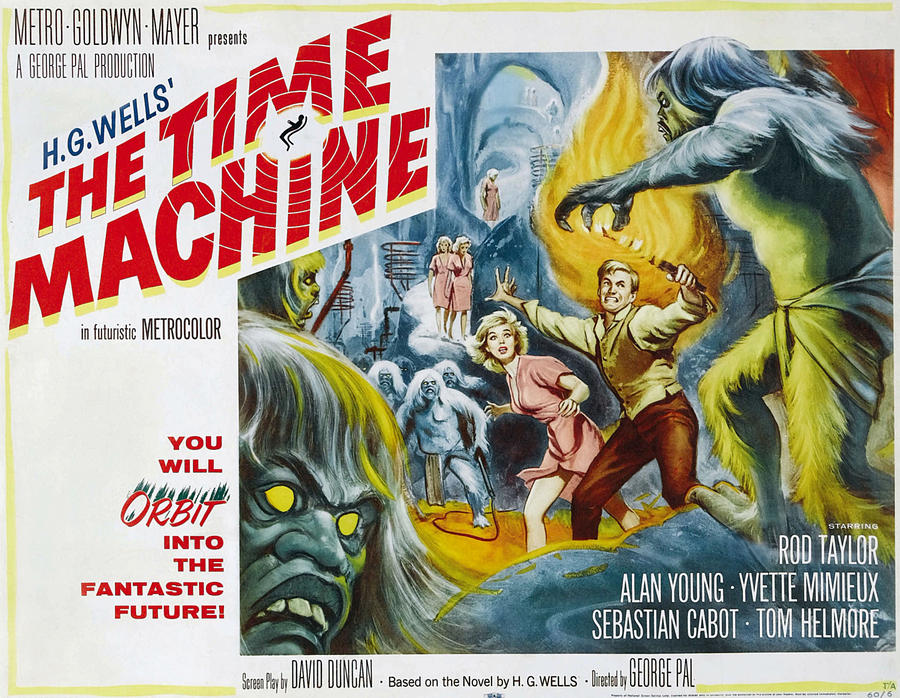
There are films you admire, and then there are films you happily fall into every time they appear on screen. The Time Machine from 1960 belongs firmly in that second group. Directed by George Pal and based on H.G. Wells’ celebrated novel, it is one of those richly imaginative pictures that still feels special decades later: elegant, adventurous, faintly eerie, and full of old-fashioned cinematic wonder.
For anyone who loves classic fantasy and science fiction, this is a genuine treasure. It has style, heart, and a sense of craftsmanship that glows in every frame. Better still, it carries that irresistible feeling of possibility that made so many mid-century films such a joy. You can almost hear the projector whirring as the story begins.
A marvellous idea, beautifully brought to life
The premise is one of cinema’s great invitations: what if time were not just something we measure, but somewhere we could travel? Rod Taylor stars as inventor George, a brilliant and determined man who builds a machine capable of moving through the centuries. That alone is enough to stir the imagination, but the film handles it with such confidence and charm that the concept never feels cold or overly technical. Instead, it feels thrillingly human.
One of the great pleasures of The Time Machine is how clearly it understands wonder. The machine itself is a beauty, all polished brass, elegant curves, and Victorian ingenuity. It looks like the sort of thing a dreamer might build in a workshop lit by lamplight and ambition. In a film full of memorable images, that machine remains the star attraction: not just a prop, but a promise.
And then there is the journey itself. The sequence in which George travels forward through time is still deeply impressive. Mannequins in a shop window change with the years, fashions shift, the world outside transforms, and the pace of history begins to race. It is clever visual storytelling, but more than that, it is playful and haunting at once. Even now, it captures the dizzying sensation of watching the future arrive faster than anyone can understand it.
Rod Taylor gives the film its pulse
A fantasy on this scale needs a lead who can keep it grounded, and Rod Taylor does exactly that. He brings intelligence, energy, and warmth to George, making him more than a distant scientific thinker. This is a man driven by curiosity, but also by conscience. Taylor gives the character a lively spark that keeps the film moving forward, even in its more reflective moments.
There is something especially appealing about the way he plays determination. George is not a reckless adventurer charging into danger for applause. He is observant, troubled by what he finds, and increasingly compelled to act. Taylor lets us see the excitement of discovery and the burden that comes with knowledge. It is a performance with real personality, and it gives the film its emotional anchor.
That matters because The Time Machine is not simply a parade of futuristic images. It asks serious questions about progress, complacency, class, and survival. Taylor never lets those ideas become heavy-handed. He carries them naturally, keeping the picture accessible and involving from first scene to last.
The future has rarely looked so memorable
When George reaches the year 802,701, the film shifts into an entirely different mood. The world of the Eloi is sunlit, serene, and deceptively peaceful. It is lovely on the surface, almost like a dream of paradise, but George quickly senses that something is wrong. That contrast gives the film much of its lasting power. Beneath the beauty lies unease.
The Morlocks, meanwhile, remain one of the film’s most striking creations. They are not merely monsters for the sake of excitement. They represent the darker side of the story’s vision, and their underground world gives the film a welcome jolt of menace. The art direction here is wonderfully atmospheric, with shadowy caverns, glowing machinery, and an industrial nightmare hidden below a calm landscape.
For a 1960 production, the film’s visual effects are especially impressive. In fact, they were recognised with an Academy Award for special effects, and it is easy to see why. The time-lapse imagery, miniature work, and design all combine to create a world that feels handcrafted in the best sense. There is ingenuity in every trick shot. You are not just watching technology at work; you are watching filmmakers solve imaginative problems with flair.
Why the effects still charm today
- They serve the story: the visuals are never there just to show off.
- The design is distinctive: the machine, costumes, and future settings all have a personality of their own.
- There is tangible craft: you can feel the physical artistry behind the illusion.
- The film trusts atmosphere: it does not drown every moment in noise or speed.
That last point is important. Modern audiences are often used to science fiction arriving at full volume. The Time Machine prefers to draw you in. It has patience. It lets mystery build. It knows that one unforgettable image, presented well, can linger far longer than a dozen frantic ones.
Behind the scenes, there was real movie magic
Part of the film’s enduring appeal comes from the people who made it. Producer-director George Pal had a gift for imaginative storytelling, and his background in animation and visual effects gave him a keen eye for what fantasy cinema needed: not just spectacle, but enchantment. He understood that audiences wanted to believe in impossible things for a couple of hours, and he built that belief carefully.
The famous time machine prop itself became a legend. Designed with ornate detail and a strong Victorian flavour, it perfectly links Wells’ 19th-century imagination to 20th-century cinema. It looks both futuristic and antique, which is exactly why it works so well. Decades later, it remains one of the most recognisable vehicles in film fantasy.
There is also a lovely old-Hollywood confidence in the production as a whole. Sets are expressive without being cluttered. Costumes tell you about the world at a glance. The pacing is measured but never sleepy. It feels like a film made by people who knew exactly what kind of spell they wanted to cast.
The Time Machine does what the best classic films do: it makes imagination feel elegant.
Even the score deserves a warm round of applause. Russell Garcia’s music adds sweep, suspense, and emotional colour throughout. It helps the film glide between adventure and reflection, giving key scenes that extra lift. Like a great radio record that knows when to soar and when to hold back, it hits the right note at the right moment.
Nostalgia, yes — but also genuine quality
It would be easy to praise The Time Machine simply because it is beloved and familiar, but that would undersell it. This is not just a fond relic. It is a genuinely effective film, still capable of capturing the imagination of first-time viewers. Nostalgia may bring people back to it, but quality is what keeps it alive.
What makes it so easy to revisit is the balance it strikes. It is thoughtful without becoming dry, exciting without becoming chaotic, and visually inventive without losing its sense of character. The film also has a quietly hopeful spirit. Even when it shows humanity at its most divided or vulnerable, it never feels cynical. There is a belief running through it that curiosity matters, courage matters, and trying to understand the future matters.
That upbeat undercurrent gives the whole experience a lift. You come away entertained, certainly, but also refreshed by the film’s sense of imagination. It reminds us that science fiction can be grand and speculative while still feeling warm and inviting.
A few reasons it remains such a pleasure
- It tells a big story with clarity and charm.
- Rod Taylor gives a performance full of drive and humanity.
- The design work is inventive, memorable, and beautifully judged.
- It blends wonder, suspense, and thoughtfulness with real skill.
- Its handcrafted effects still have personality and magic.
Final thoughts
If you are in the mood for a classic film that combines intelligence with adventure, The Time Machine is an easy recommendation. It is one of those pictures that invites you to sit back, let the years melt away, and enjoy the ride. There is excitement in its ideas, beauty in its design, and a generous sense of storytelling that never goes out of style.
More than sixty years on, it still feels like a small miracle of imagination: polished, atmospheric, and full of heart. In a world that often moves too fast, there is something especially delightful about returning to a film that makes time travel feel not just possible, but magical.
Verdict: a glowing, beautifully crafted science-fiction adventure that has earned its place among the great fantasy films of its era.