Mountain Memories, Prime-Time Magic
Gentle on the surface, quietly powerful underneath — that is why The Waltons still shines.
Some television series do more than entertain. They settle into the room like an old friend, speak in a familiar voice, and leave behind the feeling that kindness still matters. The Waltons was one of those rare shows. It arrived in the early 1970s, looked back to the 1930s and 1940s, and somehow felt timeless even then.
For many viewers, this was not simply a weekly drama. It was a gathering place. The mountain home, the long supper table, the bedtime goodnights, the small triumphs and setbacks of family life — all of it created a world that felt warmly lived in. In an era when television could often lean toward noise and spectacle, The Waltons found its strength in gentleness, sincerity, and the quiet drama of everyday people trying to do right by one another.
That might sound modest, but modesty was part of the show’s power. It knew exactly what it was doing, and it did it beautifully.
A series built on warmth
Created by Earl Hamner Jr. and inspired by his own upbringing in rural Virginia, The Waltons began with the 1971 television film The Homecoming: A Christmas Story. The response was strong enough to launch the weekly series in 1972, and audiences quickly embraced the Walton family: John and Olivia, their children, and the grandparents who added extra wisdom, humour, and occasional friction to the household.
At the centre of it all was young John-Boy Walton, played first by Richard Thomas, a thoughtful aspiring writer whose narration gave the series its reflective tone. That voice mattered. It made the programme feel like memory turned into music — not loud, not flashy, but resonant.
What made The Waltons stand out was its confidence in ordinary life. Episodes could revolve around money troubles, a school problem, a courtship, a storm, a family disagreement, or a neighbour in need. Those stories may sound small on paper, yet the show treated them with real emotional weight. It understood that for the people living them, these moments were everything.
The famous goodnights
Of course, no review of The Waltons is complete without mentioning the signature exchange that closed so many episodes. One by one, lights would go out across the house as voices called into the dark: “Good night, John-Boy.” It became one of the most beloved sign-offs in television history.
Why did it work so well? Because it felt earned. After every hardship, every lesson, every laugh, the family came back together. The goodnights were not just a catchphrase. They were reassurance. They told viewers that whatever the day had brought, home was still home.
Nostalgia with real emotional depth
It would be easy to dismiss The Waltons as simple nostalgia, but that would miss the point. Yes, the show offered comfort. Yes, it painted family bonds in warm colours. But it also dealt with unemployment, illness, prejudice, grief, war, and the strain of survival during the Great Depression. The writing rarely forgot that this was a family living through difficult times.
That balance is one reason the series has lasted. It did not present an impossible fantasy. It presented an ideal of how people might face hardship: with dignity, humour, sacrifice, and compassion. Even when the lessons were clear, they usually came through character rather than sermon.
There was also a lovely rhythm to the storytelling. The Waltons was never in a rush. It allowed scenes to breathe. A conversation on a porch, a pause at the dinner table, the sound of footsteps in the house — these details gave the series its texture. Watching it now, that pace feels almost luxurious.
Behind the scenes on Walton’s Mountain
The charm on screen was matched by a fascinating story behind the camera. Earl Hamner Jr., who served as narrator and creative force, drew deeply from family memories. That personal connection gave the series authenticity. Even when plots were heightened for drama, the emotional truth felt grounded.
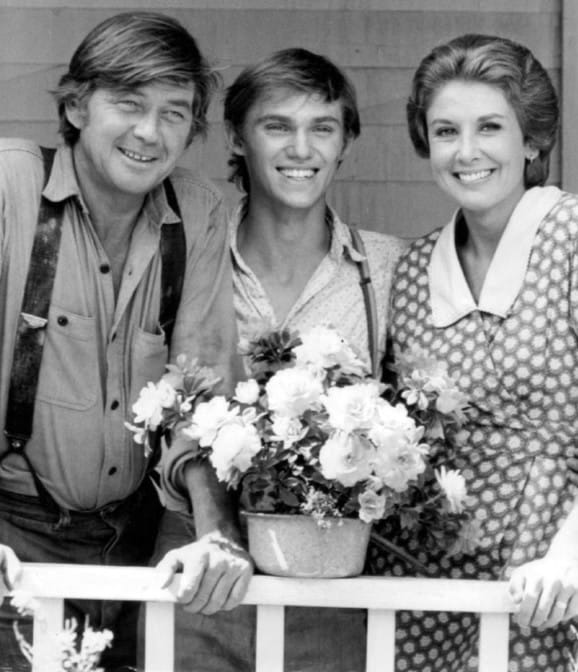
The cast also played a huge role in making the family believable. Ralph Waite brought sturdy decency to John Walton Sr., while Michael Learned gave Olivia warmth, grace, and quiet strength. Their partnership anchored the entire programme. Around them, the younger cast created a convincing sibling energy — teasing, bickering, protecting one another, and growing up before the audience’s eyes.
Richard Thomas, in particular, became inseparable from John-Boy in the public imagination. His sensitive performance helped define the early years of the show. When he later stepped away, it was a major transition for viewers, proof of how deeply audiences had invested in the character.
Another behind-the-scenes detail that adds to the series’ appeal is the care that went into the setting. Walton’s Mountain was not just a backdrop; it was part of the storytelling. The house, the mill, the church, the school, the surrounding landscape — they all helped create a world with its own weather, routines, and emotional atmosphere. You can almost smell the wood smoke and hear the screen door closing.
A cast that felt like family
One of the show’s great achievements was ensemble chemistry. This was not a series built around a single scene-stealer. It worked because everyone contributed to the feeling of a real household. Will Geer and Ellen Corby, as Zebulon and Esther Walton, added humour, stubbornness, and old-fashioned wisdom. They could be tender one moment and sharply funny the next.
That sense of family reportedly extended beyond the scripts. Like many long-running series, The Waltons had its pressures and production demands, but the warmth among the cast often translated naturally on screen. It is one reason even the busiest scenes around the dinner table feel loose and alive rather than staged.
Why it struck such a chord
Television history is full of successful programmes, but only a handful become emotional landmarks for viewers. The Waltons did exactly that. It offered an image of family life that many people found comforting, whether it matched their own experience or represented something they wished for.
It also arrived at the right moment. In the 1970s, audiences were living through social change, political tension, and cultural shifts. A series rooted in memory, community, and moral clarity had obvious appeal. Yet it did not feel old-fashioned in a stale way. Instead, it felt restorative.
There was something quietly radical in its belief that decency could be dramatic. A helping hand mattered. A promise mattered. A family meal mattered. The show reminded audiences that emotional stakes do not need explosions or cliff-edge twists. Sometimes they live in whether a father can pay the bills, whether a child feels understood, or whether a neighbour gets through a hard winter.
The music of memory
For a classic hits audience, there is another layer to appreciate: The Waltons has the same pull as a treasured song on the radio. It takes listeners — or in this case viewers — back to a feeling as much as a time. The opening theme, the narration, the soft cadence of the storytelling all work like the first few notes of a familiar record. You recognise it instantly, and suddenly you are somewhere else.
That is part of the magic. Nostalgia is not only about the past on screen. It is about the past in us — where we were when we first watched, who we watched with, what the room looked like, and how the closing credits felt at the end of the evening.
A few reasons it still works today
- Strong character writing: even supporting players were given dignity and dimension.
- Emotional honesty: the series could be sentimental, but it rarely felt hollow.
- A memorable setting: Walton’s Mountain remains one of television’s most inviting homes.
- Generational appeal: children, parents, and grandparents all had a place in the story.
- Timeless themes: love, resilience, ambition, faith, and belonging never go out of style.
Final thoughts
The Waltons remains a deeply likeable, beautifully performed piece of television. It is nostalgic without being empty, wholesome without being dull, and sentimental in the best sense of the word — emotionally open, unashamed of tenderness, and grounded in human connection.
Behind the scenes, it was shaped by personal memory, careful casting, and a clear creative voice. On screen, it became something special: a series that made room for quiet moments and trusted audiences to care about them.
That trust paid off. Decades later, The Waltons still glows. Like a favourite classic hit heard at just the right time, it brings comfort, recognition, and a little lift in the heart. And when those familiar goodnights arrive, they still sound like one of television’s sweetest promises.