A Vancouver Studio, a Lonely Question, and a Surprise No. 1
Why does this gentle, questioning ballad still stop classic hits listeners in their tracks? “Which Way You Goin’ Billy?” turned a tender Vancouver recording into an international smash, and its quiet heartbreak still feels unforgettable.
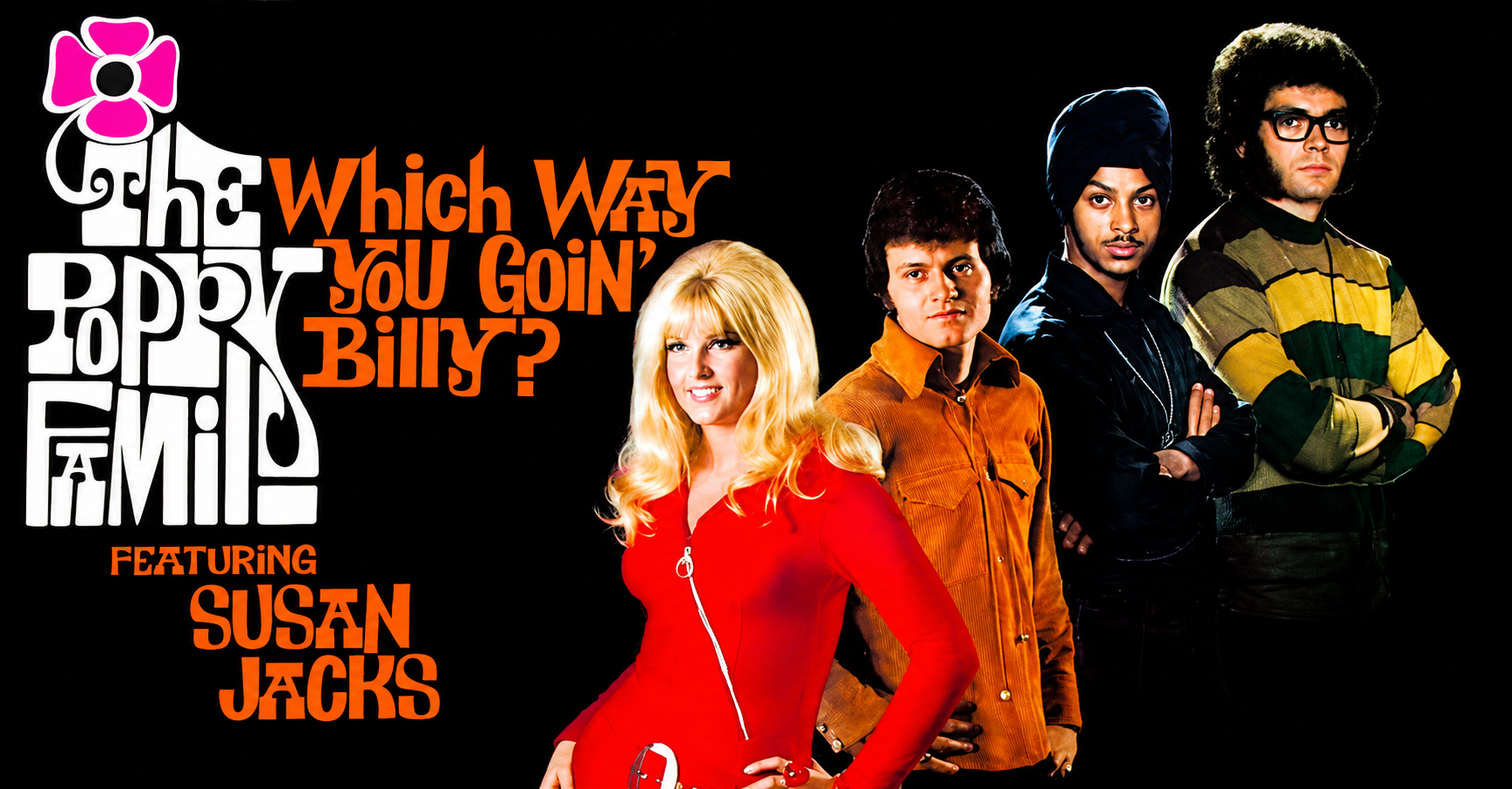
Few records capture heartbreak quite as delicately as “Which Way You Goin’ Billy?” The 1969 hit by The Poppy Family arrived with a whisper rather than a roar, yet it travelled a very long way. Built around a haunting melody, a conversational lyric, and the unmistakable contrast between Susan Jacks’ tender lead vocal and Terry Jacks’ lower answering lines, the song felt intimate even on a transistor radio. That intimacy helped turn a Canadian recording into an international success.
More than half a century later, it still has that special classic hits quality: one listen, and the room changes. It is gentle, melancholy, and strangely catchy all at once.
The idea behind the song
A question instead of a grand statement
One reason the song stands out is right there in the title. It does not announce itself with swagger or drama. It opens with a question: “Which way you goin’, Billy?” That simple line gives the song its emotional pull. Rather than telling a big story in a theatrical way, it feels like an overheard moment between two people drifting apart.
The song was written by Terry Jacks, who became the key creative force behind The Poppy Family. He had a sharp instinct for melodies that sounded accessible but carried a real ache beneath the surface. In “Which Way You Goin’ Billy?”, he shaped a lyric about emotional distance, uncertainty, and the sadness of watching someone slip away. It is not filled with complicated imagery, but that is part of its strength. The plainspoken words make the feeling more direct.
Terry and Susan Jacks at the centre
The Poppy Family was built around Terry Jacks and Susan Jacks, whose voices gave the group its identity. Susan’s singing on this track is especially important. She does not oversell the lyric. Instead, she delivers it with a calm, almost fragile clarity that makes the sadness feel real. Terry’s vocal responses add a conversational texture, as if the song is unfolding in front of the listener rather than being performed at them.
That balance between male and female voices was one of the group’s signatures, and on this record it was used with tremendous care. The emotional tension comes not from power singing, but from restraint.
How the record was made
Studio craft with a light touch
Recorded in Vancouver, the song reflected a period when Canadian pop production was becoming more confident and distinctive. The arrangement is elegant and economical. There is room in the record. Nothing feels crowded. The rhythm moves softly, the instrumentation supports rather than dominates, and the production allows the melody to breathe.
Terry Jacks was deeply involved in shaping the group’s recorded sound, and that attention to detail helped make The Poppy Family more than a one-song act. The production on “Which Way You Goin’ Billy?” blends late-1960s pop sensibility with a slightly dreamy, almost chamber-pop melancholy. It is polished, but not glossy. That difference matters. The song feels human-sized.
The players behind the scenes
Alongside Terry and Susan Jacks, The Poppy Family also included key members such as Craig McCaw and Satwant Singh. Their presence helped give the group a broader musical identity than a simple duo format might suggest. Singh, in particular, was notable as one of the very few South Asian musicians visible in North American pop at the time, adding another layer of interest to the group’s story.
As with many pop recordings of the era, the final sound also depended on skilled session work and careful engineering choices. Records like this were often made by musicians and technical staff who understood that subtle songs required discipline. Every small touch mattered: the pacing, the separation between the voices, the softness of the backing track, the way the chorus lands without becoming heavy.
Why the recording feels so intimate
There is a lovely paradox in “Which Way You Goin’ Billy?”: it is commercially precise, yet emotionally unguarded. The arrangement never rushes to a dramatic peak. Instead, it keeps circling the central feeling of loss. That gave radio listeners something memorable and unusual in 1969, when the airwaves were full of louder statements, richer orchestrations, and increasingly ambitious studio experimentation.
The Poppy Family chose understatement, and that choice became the song’s superpower.
Chart success and commercial breakthrough
A major hit in Canada and beyond
The song became a huge success in Canada, reaching No. 1 and establishing The Poppy Family as one of the country’s most important pop acts of the period. Just as impressively, it crossed into the American market and climbed to No. 2 on the Billboard Hot 100 in 1970. For a Canadian group with a quiet, melancholy single, that was a remarkable achievement.
Its success showed that listeners did not always need bombast to be captivated. A reflective record could still compete with the biggest names on Top 40 radio if it had a strong hook and a distinctive emotional mood.
Strong sales and wide radio appeal
Commercially, the single performed extremely well, earning strong sales and substantial radio play. It appealed across pop formats because it sat in a sweet spot: contemporary enough for youth audiences, melodic enough for mainstream listeners, and emotionally rich enough to linger after it ended. Program directors could place it among soft pop, folk-pop, and mainstream chart records without it sounding out of place.
That versatility helped the song travel. It was not tied to one narrow scene or trend. It belonged to the moment, but it also floated slightly above it.
The people who made it matter
Susan Jacks’ unforgettable vocal
If the song has a beating heart, it is Susan Jacks’ performance. She sang with precision, but also with a kind of emotional transparency that made listeners lean in. Her voice carried innocence, sadness, and quiet strength all at once. Many records become hits because of production tricks or timing. This one becomes timeless the moment she begins to sing.
Terry Jacks as writer and architect
Terry Jacks deserves enormous credit not only as songwriter, but as the architect of the record’s mood. He understood how to keep the arrangement sparse enough for the lyric to resonate. He also knew how to frame Susan’s voice for maximum effect. Years later, he would become globally famous in his own right with “Seasons in the Sun,” but “Which Way You Goin’ Billy?” remains one of the clearest examples of his melodic instinct and pop discipline.
A distinctive Canadian group in an international market
The Poppy Family were part of a generation of Canadian artists proving that records made outside the traditional American and British industry centres could compete internationally. That mattered. By the end of the 1960s, Canada’s pop scene was growing in confidence, and songs like this helped demonstrate that world-class hits could come from Vancouver as surely as from Los Angeles, London, or New York.
Its place in the music of the era
Where pop, folk, and melancholy met
In musical terms, “Which Way You Goin’ Billy?” sits at a fascinating crossroads. The late 1960s were full of experimentation: psychedelic textures, heavier rock sounds, singer-songwriter introspection, and increasingly sophisticated pop arrangements. The Poppy Family record borrowed a little from several of those currents without fully belonging to any one of them.
It has the emotional introspection associated with the singer-songwriter movement, the melodic directness of mainstream pop, and the soft atmospheric quality of late-1960s folk-pop. That blend helped it stand apart. It was modern, but not fashionable in a fleeting way. It sounded current without chasing trends too aggressively.
A softer record in a vivid musical landscape
That period produced many bold and colourful hits, so there was something striking about a record this gentle making such a big impact. On radio, it could arrive after a louder song and instantly change the emotional temperature. That is part of the magic of classic hits programming even now: a quieter record can sometimes command the most attention.
- Memorable hook: the title line is instantly recognisable
- Emotional clarity: the lyric is simple but piercing
- Distinctive vocal blend: Susan and Terry Jacks create real dramatic tension
- Era-defining subtlety: it reflects the late 1960s without being trapped by it
Legacy, anecdotes, and lasting appeal
A song that never really left radio
Some hits are tied tightly to their chart run. Others settle into long life. “Which Way You Goin’ Billy?” belongs in the second group. It has remained a favourite on oldies and classic hits stations because it offers something many records do not: softness with identity. Within a few seconds, listeners know exactly what it is.
That is a rare achievement. Plenty of songs are pleasant. Far fewer are unmistakable.
The contrast between success and sadness
One of the most interesting behind-the-scenes truths about the song is how strongly it contradicted the usual image of a breakthrough hit. This was not a flashy party record or a swaggering anthem. It was reflective, almost fragile. Yet that very quality gave it broad emotional reach. People heard themselves in it. The uncertainty in the lyric made it personal.
“Which way you goin’, Billy?” is the kind of chorus that feels less like a pop slogan and more like a real question someone might ask in a moment of worry.
Why it still matters
The song’s legacy rests on more than nostalgia. It represents a moment when pop music could be commercially powerful without losing its delicacy. It also remains an important chapter in Canadian music history, proof that artists from that scene could make records of international significance and lasting emotional value.
For listeners today, the appeal is easy to understand. The melody is beautiful, the performance is sincere, and the production has aged gracefully. It still sounds like a record made by people who believed that quiet feelings deserved centre stage.
And on classic hits radio, that still counts for a great deal. Between the big choruses, guitar riffs, and bright singalongs, there is always room for one song that arrives like a sigh and stays like a memory. “Which Way You Goin’ Billy?” has been doing exactly that since 1969.