Red Suit, Big Smile
A red suit, a missing instruction manual, and one of television's most irresistible theme songs — The Greatest American Hero still knows how to charm. Across its 1981 to 1983 run, the series mixed superhero mishaps, buddy-comedy spark, and pure early-1980s optimism into something audiences have never quite forgotten.
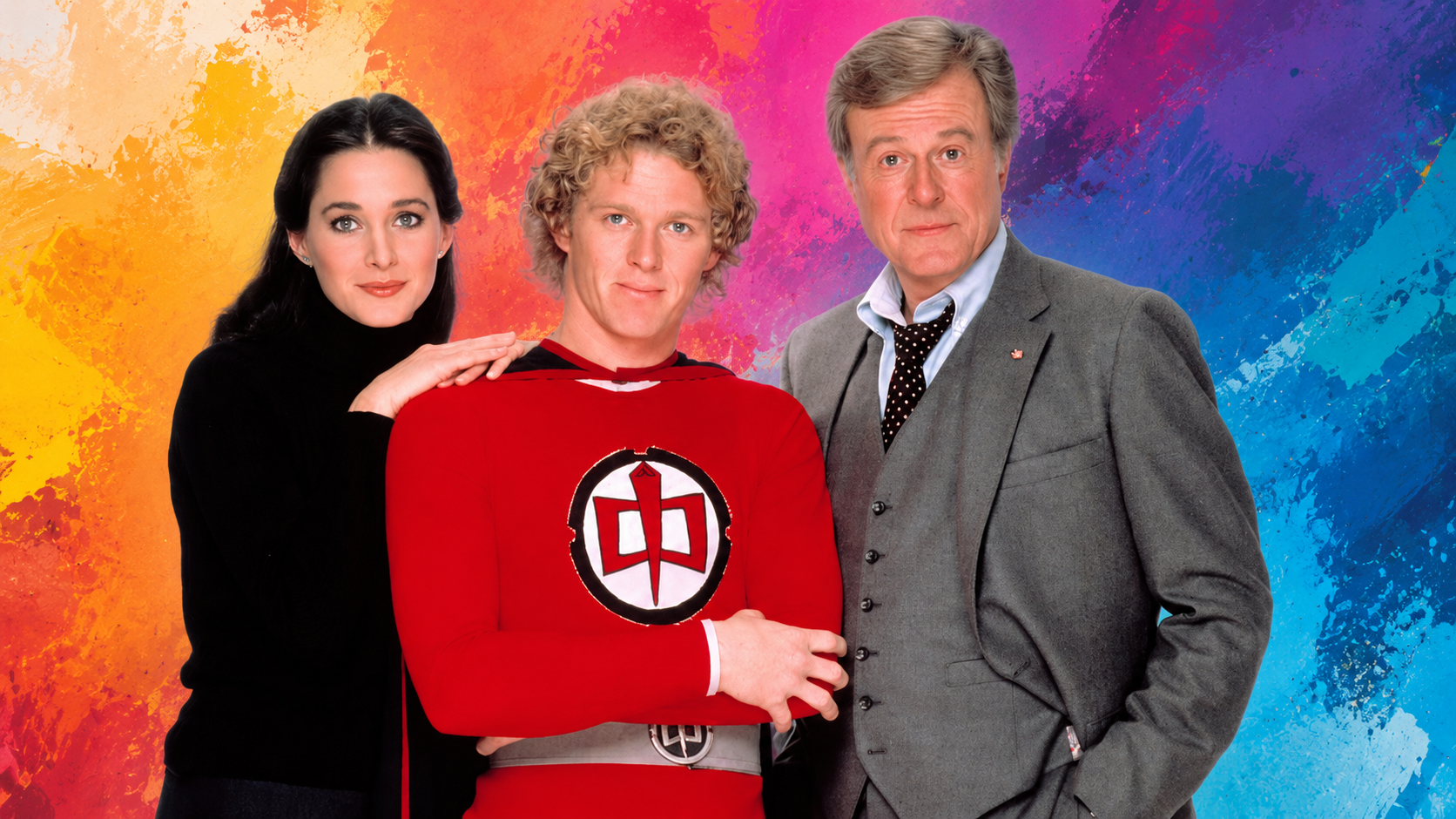
Some television shows arrive with polish, precision, and a carefully engineered sense of cool. The Greatest American Hero arrived with something much more charming: a lovable mess of a superhero, a bright streak of early-1980s optimism, and a theme song so catchy it practically floated out of the set and into everyday life. First broadcast in 1981, the series turned an ordinary schoolteacher into an accidental crime-fighter and gave audiences a hero who was never quite sure what he was doing.
That was the magic of it. In an era when many action shows leaned on tough-guy swagger, The Greatest American Hero took a different route. It was funny, light on its feet, and refreshingly human. Ralph Hinkley, played by William Katt, did not become a superhero because he was fearless or highly trained. He became one because fate handed him a mysterious suit with extraordinary powers. The only problem? He lost the instruction manual.
A superhero who tripped before he flew
If that premise still sounds delightful, it is because it really was. Ralph is a teacher, not a soldier or secret agent, and that choice gives the series its warm centre. He is relatable right away. He worries, he fumbles, he second-guesses himself, and when he tries to fly, it often looks less like graceful heroism and more like a man losing an argument with gravity.
William Katt played Ralph with exactly the right balance of sincerity and comic panic. He never treated the character like a joke, which is why the jokes land so well. Ralph genuinely wants to do the right thing. He simply has no idea how to use the tools he has been given. That tension powers the whole series.
Then there is Robert Culp as FBI agent Bill Maxwell, a performance full of clipped confidence and beautifully timed irritation. Bill believes in order, procedure, and control, so naturally he is paired with a flying amateur in red pyjamas. The chemistry between Katt and Culp is one of the show’s great strengths. Their scenes crackle with a buddy-comedy rhythm that keeps the action lively even when the special effects show their age.
Connie Sellecca also brings poise and warmth as attorney Pam Davidson, adding another important ingredient to the mix. She helps ground the show emotionally, giving it more heart than a standard action-comedy might have managed. Together, the central cast makes the series feel inviting, breezy, and easy to spend time with.
Why the concept still works
Superhero stories are everywhere now, but The Greatest American Hero still feels distinct because it leans into uncertainty. Modern heroes often master their powers quickly or discover hidden greatness within. Ralph mostly crashes into walls, overshoots landings, and tries to keep up. That awkwardness is not a flaw in the storytelling. It is the storytelling.
The show understands that there is something deeply entertaining about watching an ordinary person deal with extraordinary responsibility. Ralph is not a fantasy of perfection. He is a fantasy of possibility. What if someone decent, funny, and slightly overwhelmed suddenly had to save the day?
That idea gave the series a broad appeal. Children could enjoy the flying and the costume. Adults could appreciate the wit, the workplace friction, and the gentle satire of authority. And everyone could recognise the universal feeling at the centre of it all: being handed a job that seems much bigger than your qualifications.
The suit, the aliens, the glorious chaos
The suit itself is unforgettable: bright red, boldly simple, and impossible to confuse with anyone else’s outfit. It looks like a comic-book image brought into live-action television with very little concern for subtlety, which is part of its charm. The alien backstory gives the show a playful science-fiction spark, but wisely, the series never lets mythology overwhelm character.
Instead, the fun comes from the weekly complications. Ralph and Bill are forever trying to solve crimes, decipher clues, and make use of powers that Ralph barely understands. In one moment he may be invisible or super-strong; in the next, he is tumbling through the air like a man who should absolutely not be airborne. It keeps the stakes light enough for comedy while still delivering enough action to satisfy adventure fans.
Believe it or not, here comes the theme song
For many listeners, the first memory of The Greatest American Hero is not a scene at all. It is Joey Scarbury’s theme, Believe It or Not, one of those television songs that escaped the opening credits and became a genuine pop hit. Warm, uplifting, and instantly singable, it captured the hopeful spirit of the show perfectly.
This is where the Classic Gold connection feels especially strong. There was a time when television themes could become part of radio life, crossing over into the charts and living alongside the pop records of the day. Believe It or Not did exactly that. Hear it once and you can almost see the opening montage, the red suit, the nervous smile, and the slightly bumpy take-off.
Here is that memorable opening theme:
It is hard to overstate how much that song helped define the programme’s identity. It is earnest without being sentimental, catchy without feeling disposable, and full of the kind of melodic lift that made early-1980s television so inviting. Even people who have not seen the series in years often remember the chorus immediately.
“Believe it or not, I’m walking on air…”
That line does a lot of work. It tells you the show is cheerful, a little dreamy, and perfectly happy to let wonder feel simple.
Its early-1980s style is part of the pleasure
Watching the series now is also a lovely time capsule experience. The clothes, the cars, the offices, the suburban settings, the pacing of network television storytelling, it is all there. There is a breezy confidence to the production that belongs to its moment. Episodes move along cleanly, jokes are allowed room to breathe, and the show never feels desperate to impress.
Of course, modern viewers will notice the visual effects are modest by today’s standards. But that hardly matters. In fact, the practical, slightly rough-around-the-edges look helps the show. Ralph’s flying scenes are charming precisely because they are not slick. They remind you that television once relied less on digital perfection and more on personality, music, timing, and audience goodwill.
A series with heart, not just gimmicks
It would have been easy for The Greatest American Hero to become a one-joke concept: man gets powers, man cannot use powers, everyone laughs. Instead, the series keeps finding warmth in its characters. Ralph is not just clumsy; he is compassionate. Bill is not just gruff; he is loyal and oddly endearing. Pam is not just there to react; she gives the show balance and emotional texture.
That is why the series remains fondly remembered. Beneath the comic premise is a show about trust, responsibility, and trying your best under strange circumstances. It is upbeat without being empty. It believes in decency, and that plays beautifully even now.
So how does it hold up?
Quite well, especially if you meet it in the right spirit. This is not prestige television, and it is not trying to be. It is smart, friendly entertainment with a terrific central idea and a cast that knows exactly how to sell it. Some episodes are stronger than others, as was common in network television of the period, but the overall tone remains consistently appealing.
- What still shines: the lead performances, the comic timing, the concept, and that unforgettable theme song.
- What feels dated: some effects, some pacing choices, and a few story beats rooted firmly in early-1980s television conventions.
- What makes it worth revisiting: its warmth, its optimism, and the simple pleasure of a superhero story built on personality rather than spectacle.
For longtime fans, a revisit brings a rush of affectionate nostalgia. For first-time viewers, it offers a charming reminder that superhero entertainment does not need to be dark, noisy, or overloaded with mythology to be fun.
Final thoughts
The Greatest American Hero is one of those shows that earns its place in television memory through sheer likability. It is inventive, cheerful, and carried by performances that make even the wildest premise feel inviting. More than four decades later, its appeal is still easy to understand: it gives us a hero who is not polished, not perfect, and not always in control, but who keeps trying anyway.
That is a lovely message for any era. Add a bright red suit, a wonderfully exasperated FBI partner, and one of television’s all-time great theme songs, and you have a series that still knows how to lift off. Maybe not gracefully every time, but memorably? Absolutely.