Before Amazon: The Magic of the Mail-Order Catalog
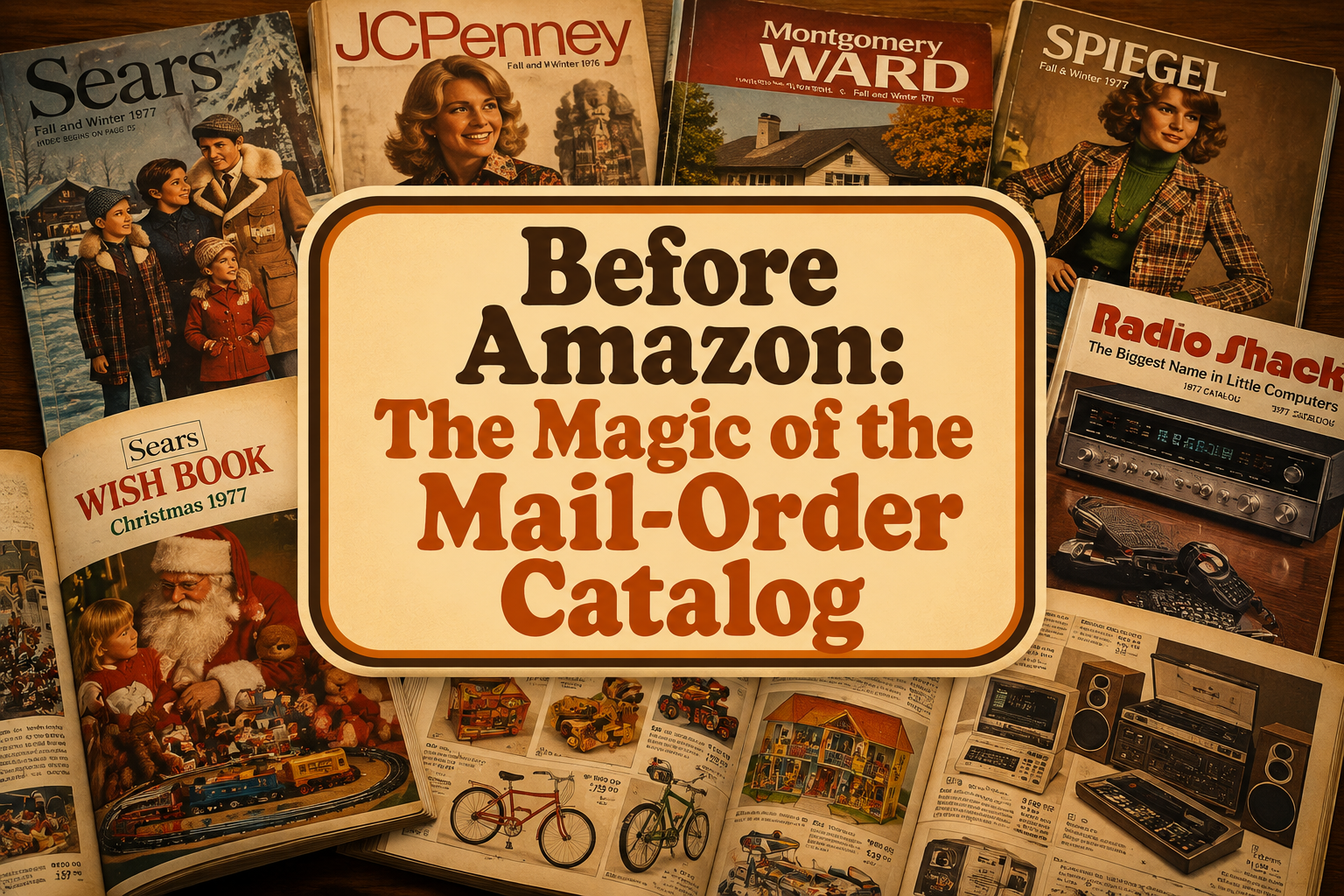
Before online shopping and next-day delivery, there was the mail-order catalog. From Sears and JCPenney to Montgomery Ward, Radio Shack and the unforgettable Sears Wish Book, these thick catalogs brought an entire world of clothes, toys, electronics and dreams right into the family living room.
There was a time when something remarkably similar to the Internet arrived at your house through the mail. It didn’t have a search box, customer reviews or recommendations based on what you had looked at yesterday. There was no “Buy Now” button and certainly no promise that your order would be sitting outside your door before bedtime. Instead, it was enormous, heavy, sometimes more than a thousand pages long, and usually ended up on the coffee table, beside the telephone or in some other place where everyone in the family could reach it. It was the mail-order catalog, and during the 1970s it was one of the great fixtures of American shopping.
Catalogs from Sears, JCPenney, Montgomery Ward, Spiegel, Radio Shack and countless specialty retailers weren’t simply advertisements. They were entire shopping centers printed on paper. Mom could browse clothing and furniture, Dad could study tools or automotive accessories, teenagers could dream about stereos and clothes, and children could spend hours looking at toys they hoped might somehow appear on Christmas morning. Even when nobody intended to order anything, a new catalog could provide an evening’s entertainment. You opened it to look for one thing and twenty minutes later found yourself hundreds of pages away looking at something completely different.
Sears: The Store That Arrived at Your House
For generations of Americans, Sears was practically synonymous with catalog shopping. Sears stores were already a major presence across the country by the 1970s, but the company’s enormous catalogs remained familiar objects in American homes. It sometimes seemed as though there was almost nothing Sears couldn’t sell you. Clothes, televisions, washing machines, refrigerators, furniture, lawn mowers, tools, cameras, bicycles, curtains, boots, sporting goods and countless household necessities could all be found by simply turning another page.
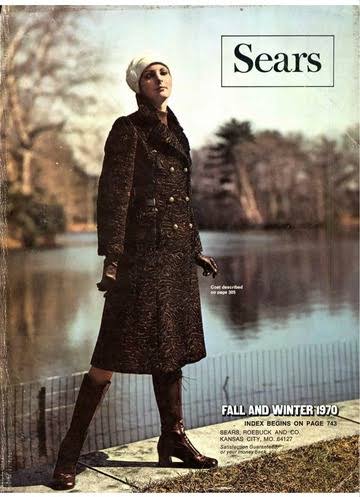
That enormous selection made the Sears catalog entertaining even when you weren’t shopping. Families could sit around looking at things they might buy someday, comparing models and discussing prices. Someone thinking about replacing the refrigerator could study several models without driving anywhere, while a child could quietly skip several hundred pages ahead to see what was happening in the toy department. The catalog was a practical shopping tool, but it was also a book of possibilities.
There was also something wonderfully different about browsing a physical catalog. Online shopping can continue almost forever as another page of results appears beneath the last one. With Sears, you could start at the front, work your way through appliances, clothing, furniture and everything else, and eventually reach the back cover. The entire store was sitting right there in your hands.
JCPenney: A Time Machine Printed on Paper
Few things transport you into an ordinary American household of the 1970s faster than opening an old JCPenney catalog today. There are the bell-bottoms, leisure suits, plaid pants, platform shoes, enormous collars and enough polyester to make you wonder how anyone survived July. But beyond the fashions, the pages capture something that recreated nostalgia never quite can: these weren’t modern costumes designed to look like the 1970s. These were the clothes people were actually buying.
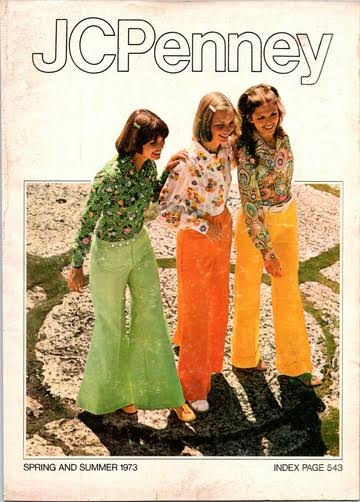
JCPenney’s catalogs extended well beyond clothing. Families could browse furniture, bedding, housewares, appliances and other merchandise, making the catalog another regular reference around the house. Looking through those pages today reveals entire rooms filled with the unmistakable colors of the period—harvest gold, avocado green, burnt orange and brown—along with furniture, lamps and patterns that instantly identify the decade.
That’s one reason old catalogs have become such fascinating historical documents. History books tend to show us presidents, wars, elections and major events. A JCPenney catalog shows us the couch somebody’s grandmother owned, the shirt Dad wore to a backyard barbecue and the bedspread that somehow survived in the guest room until 1994.
Montgomery Ward: The Other Giant of Mail Order
Long before Amazon and Walmart competed for online shoppers, Sears had another enormous rival: Montgomery Ward. The company had pioneered mail-order retail in the 19th century, bringing merchandise to customers who might live many miles from a major store. By the 1970s, suburban malls, shopping centers and department stores had transformed American retail, but the Montgomery Ward catalog remained a familiar presence.
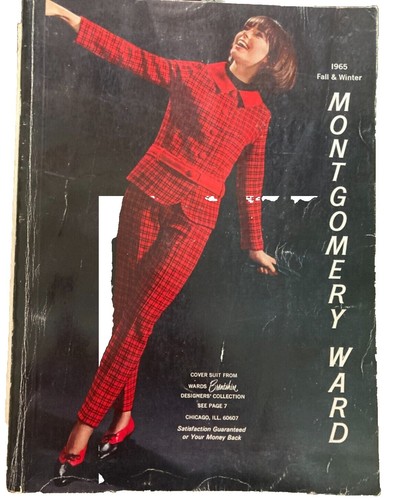
Like Sears, Montgomery Ward offered an enormous range of merchandise. Clothing, appliances, furniture, tools, toys and household goods filled its pages, and many families received catalogs from both companies. That meant comparison shopping existed long before anyone could open several browser tabs. If the family needed a new appliance, someone could find a model in Sears, locate something similar in Montgomery Ward and sit at the kitchen table comparing prices and features.
There was no algorithm making the comparison for you. You found the page, read the description and made the decision yourself.
Spiegel: Shopping With a Little More Glamour
Spiegel occupied a slightly different place in the catalog world. While Sears and Montgomery Ward could feel like enormous general stores capable of supplying almost everything a household needed, Spiegel became particularly associated with fashion, jewelry and stylish merchandise for the home. Its catalogs often had a more polished and aspirational quality, inviting customers not merely to shop but to imagine how they might look or how their homes might look.
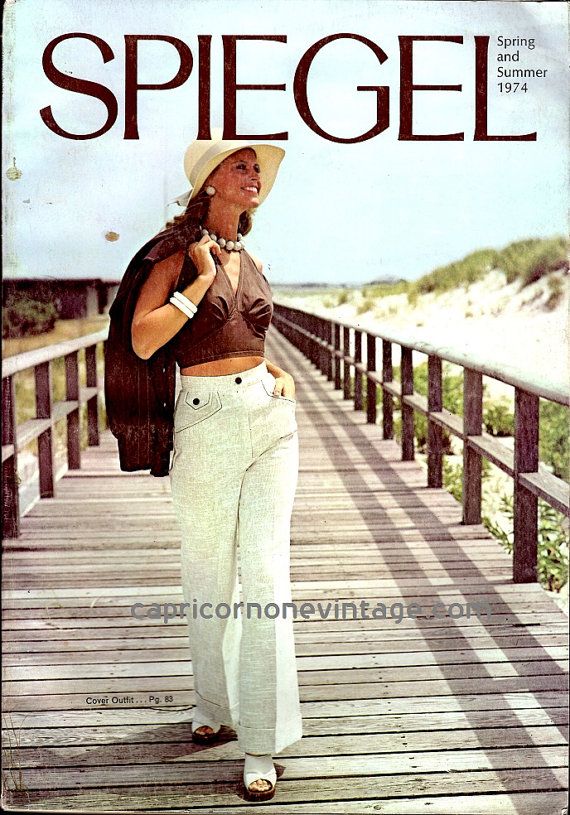
That was one of the secret pleasures of catalog shopping. You didn’t have to be able to afford everything you saw. You could furnish an imaginary living room, choose clothes for an imaginary vacation or spend an hour deciding which piece of jewelry you would buy if money suddenly stopped being a consideration. Catalogs were practical, but they were also inexpensive entertainment built around the wonderful human habit of wanting things.
Radio Shack: Pages From the Future
For anyone fascinated by electronics, the Radio Shack catalog was something else entirely. Instead of pages filled with sofas and winter coats, there were radios, stereo receivers, speakers, headphones, microphones, antennas, calculators, electronic components, scanners, batteries and gadgets whose purpose you might not entirely understand but suddenly wanted anyway.
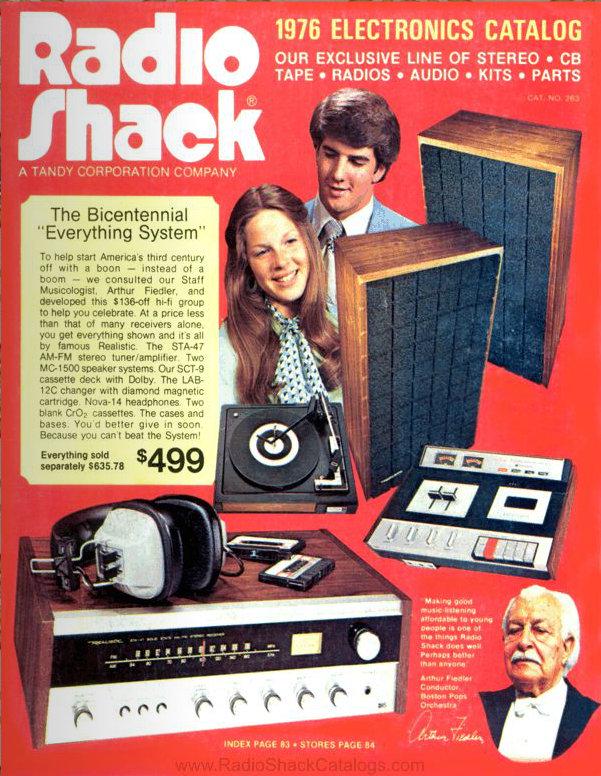
During the CB radio craze of the 1970s, those pages became even more tempting. A teenager interested in music could study stereo equipment and mentally construct a dream system with a powerful receiver and enormous speakers, while the electronics hobbyist could find components and kits for the next project. Radio Shack captured an era when consumer electronics still carried a little mystery. A new calculator, portable radio or stereo component could genuinely feel futuristic.
The catalog also had a dangerous effect on whatever electronics you already owned. Your perfectly acceptable stereo could suddenly seem terribly inadequate after ten minutes looking at newer receivers and bigger speakers. Catalogs understood the art of making us want an upgrade long before websites did.
JC Whitney: The Wish Book for Car People
Children weren’t the only ones who could disappear into a catalog for an afternoon. Car enthusiasts had JC Whitney, whose thick automotive catalogs contained seemingly endless collections of replacement parts, tools and accessories. Seat covers, mirrors, lights, exhaust components, trim pieces and performance accessories filled the pages, along with plenty of items that your car probably didn’t need but suddenly seemed absolutely essential once you knew they existed.
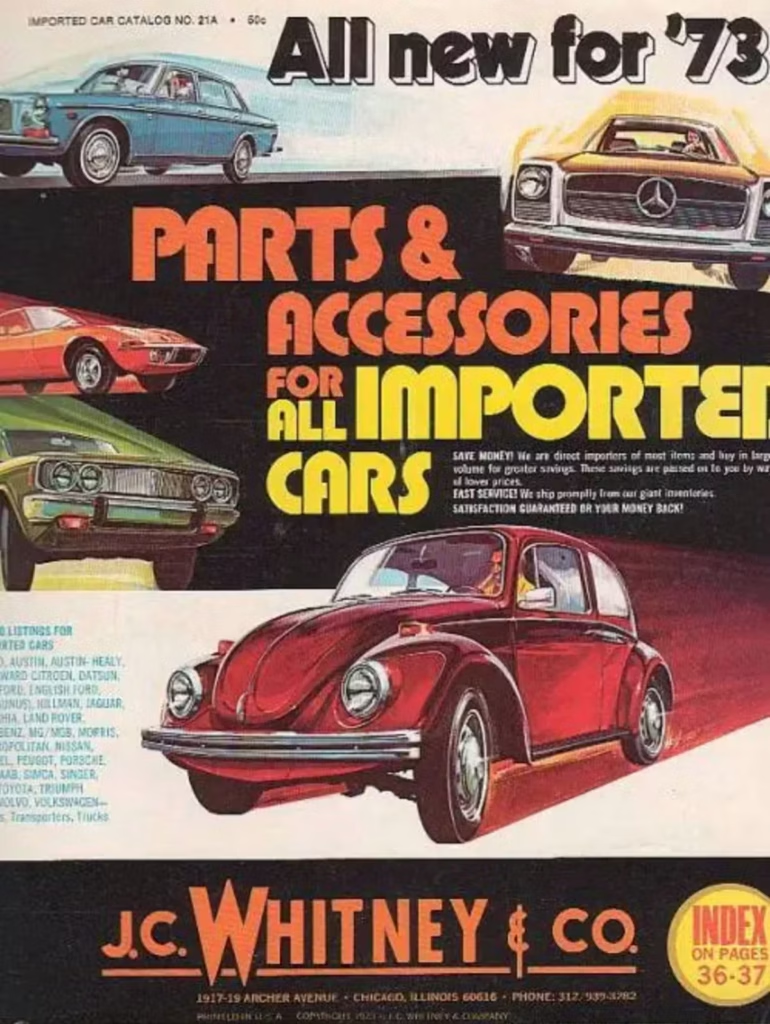
In many households, the JC Whitney catalog developed its own natural habitat. It might live in the garage, workshop or beside Dad’s favorite chair, often with page corners folded over or particular items marked for future consideration. If the Sears Christmas Wish Book was dangerous in the hands of a ten-year-old, JC Whitney could have much the same effect on an adult with a car sitting in the driveway.
Service Merchandise and the Catalog Showroom
Service Merchandise brought the catalog concept into the physical store in a particularly memorable way. The company became known for its catalog-showroom approach, where shoppers could browse products through catalogs and displays, record the item information and place an order. Merchandise stored away from the sales floor would then be brought out for pickup.
Jewelry, cameras, electronics, small appliances, housewares and gifts were important parts of the Service Merchandise experience. There was a peculiar anticipation involved in ordering something and waiting for it to emerge from somewhere behind the scenes. Compared with today’s instant online checkout, the system might sound cumbersome, but at the time it felt efficient and even slightly futuristic. For children accompanying their parents, watching the merchandise finally appear could become part of the entertainment.
Then the Sears Wish Book Arrived
All those catalogs mattered, but toward the end of the year something arrived that operated on an entirely different level: the Christmas catalog. And for millions of children, few publications were more important than the Sears Wish Book.
The Wish Book wasn’t casually browsed. It was studied. Children sprawled across living-room carpets turning page after page of dolls, action figures, bicycles, board games, model trains, sports equipment, toy cars, electronic games and enormous playsets that appeared capable of occupying half the bedroom. The first trip through the catalog was simply reconnaissance. The second became serious. By the third, a pencil or pen might appear and circles began forming around the most important candidates.

Page corners were folded. Stars appeared beside particularly desirable toys. Christmas lists were revised as something even better appeared ten pages later. Brothers and sisters competed for possession of the catalog, and parents eventually discovered that their children had somehow selected enough merchandise to require a second mortgage.
The catalog gave children something today’s digital wish lists don’t quite reproduce: an entire world of toys existed together in one physical book. You remembered where things were. You knew that the bicycles were several pages before the games and that the toy you really wanted was somewhere near the bottom of a particular page. After enough visits, you could practically navigate the Wish Book from memory.
Looking Was Half the Fun
The wonderful thing about these catalogs was that buying something wasn’t necessary. Looking was entertainment. A child could spend an afternoon imagining what it would be like to own an enormous train set. A teenager could assemble the perfect stereo system without spending a dollar. Someone furnishing a first home could mentally arrange sofas and lamps in rooms that hadn’t been decorated yet.
Catalogs also encouraged discovery in a way that modern searches sometimes don’t. You might open Sears looking for a winter coat and discover something completely unrelated thirty pages later. There was no software deciding what products you should see based on your previous purchases. You simply turned the page and encountered whatever happened to be printed there.
Perhaps that’s why old catalogs are so enjoyable to browse today. They weren’t personalized for one individual. They were snapshots of what an entire generation was being offered at that particular moment.
Ordering Something Was Only the Beginning
Actually buying something required considerably more effort than tapping a button on a phone. You needed the correct catalog number, size, color, quantity and price. Those details might be carefully copied onto an order form, and depending on the retailer and period, the completed order could be mailed, phoned in or taken to a catalog-order desk.
Then came the part modern shopping has almost eliminated: waiting. There was no live tracking map showing a delivery truck moving through the neighborhood and no text announcing that your package was seven stops away. Unless you called someone, you might have very little idea where your order was. It would arrive when it arrived, sometimes after days and sometimes after weeks.
That waiting could be frustrating, but it also created anticipation. When the package finally appeared, you knew exactly what was inside because you had already imagined opening it countless times. Children watched for deliveries. Adults wondered whether something would arrive before a birthday or Christmas. The distance between ordering and receiving made the eventual arrival feel like an event.
Today, a package sometimes appears at the front door and we briefly have to remember what we ordered. That rarely happened with a catalog purchase.
Before Amazon, We Were Already Shopping From Home
It’s tempting to think that shopping from the sofa was invented by the Internet, but companies such as Sears and Montgomery Ward had been bringing stores into people’s homes generations before anyone heard the phrase “online shopping.” The fundamental idea was remarkably familiar: browse thousands of products without leaving home, choose what you want, place an order and have it delivered.
What the Internet changed was speed. Modern shopping is unquestionably easier. We can search millions of products in seconds, compare prices instantly, read customer reviews and sometimes receive an order the same day. Few people would genuinely choose to surrender all that convenience and return to filling out catalog forms.
But convenience changed the experience as well. The enormous catalog sitting on the coffee table belonged to everybody in the house. Someone picked it up, left it open to a particular page, and someone else started browsing. The Christmas Wish Book could become part of the family’s holiday season before a single gift had been purchased.
When We Stopped Turning the Pages
Maybe that’s why finding an old catalog today can produce such an unexpectedly strong reaction. Open a Sears Wish Book from 1977 and you aren’t merely looking at discontinued toys. You’re looking at the Christmas wishes of an entire generation. Open an old JCPenney catalog and you’re surrounded by the clothes people actually wore, the furniture they actually bought and the colors that really filled their homes. Open a Radio Shack catalog and you can almost hear someone trying to explain why the family absolutely needed a new stereo receiver.
These catalogs documented ordinary life in a way few people appreciated at the time. They recorded what we wore, what we wanted, what we placed in our homes, what we gave our children and what we dreamed about owning someday. Eventually the catalogs became smaller, many disappeared altogether, and shopping migrated from paper to computers and then from computers to the phones in our pockets.
The giant book on the coffee table became unnecessary.
But anyone who grew up with those catalogs probably remembers the feeling when a new one arrived, and especially when the Christmas edition appeared. Someone grabbed it first. Someone else wanted it next. Pages were folded, toys were circled and possibilities seemed endless.
Long before Amazon wish lists, one of the great pleasures of shopping was much simpler.
A thick catalog, a comfortable spot on the living-room floor, and a pencil ready to circle everything you wanted.