Before Everything Was Open on Sunday
There was a time when Sunday truly felt different. Stores were closed, streets were quieter, families gathered for dinner, and nobody expected everything to be available around the clock. Looking back at the slower Sundays we once knew—and what we may have lost along the way.
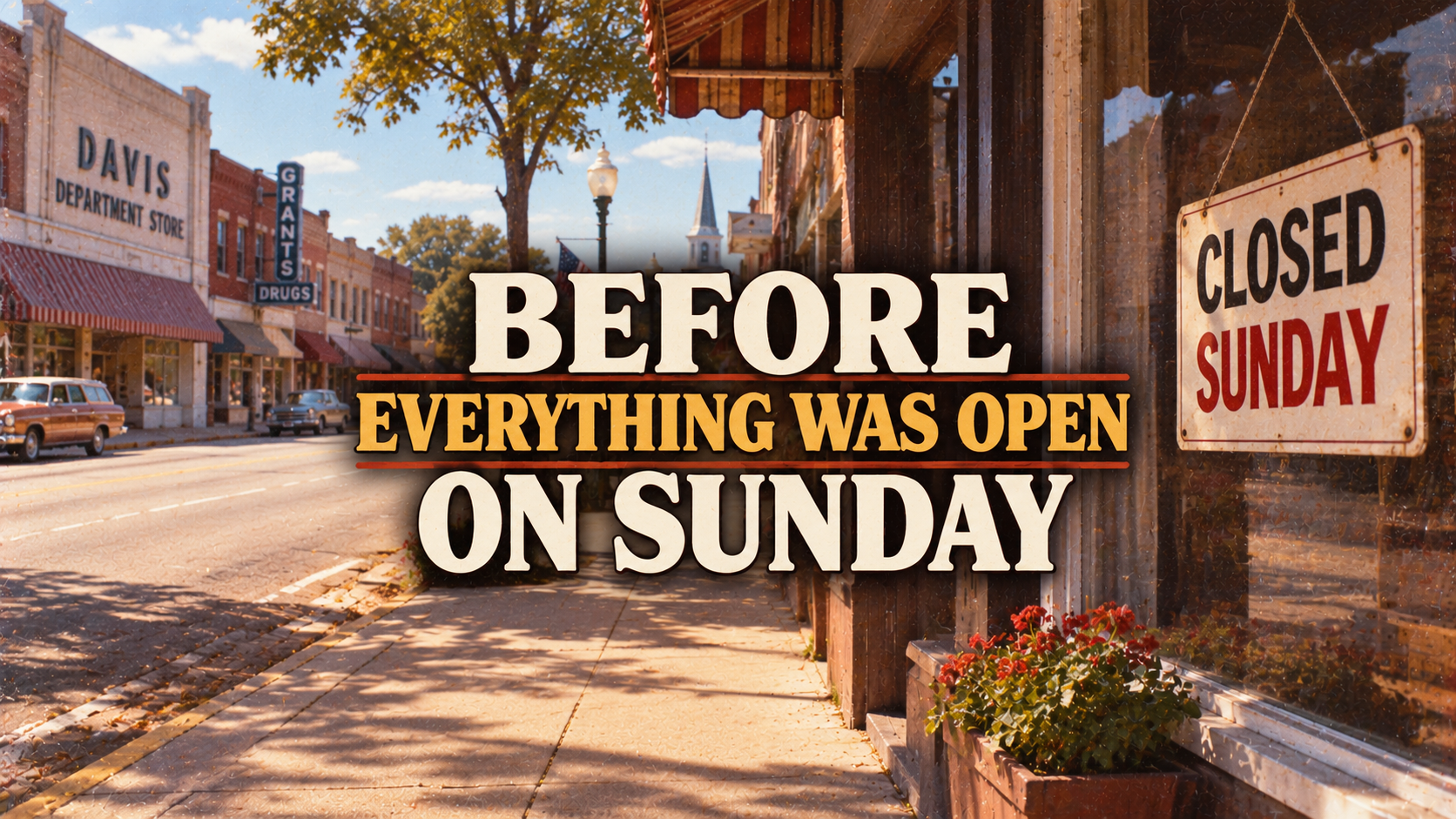
There was a time when you could tell it was Sunday without looking at the calendar.
The streets were quieter. Downtown parking lots were mostly empty. The hardware store was dark, the department store doors were locked, and many local businesses simply put a little sign in the window that said CLOSED SUNDAY.
Nobody seemed particularly surprised by it.
Sunday wasn’t just another shopping day. It had its own rhythm, its own routines and even its own sound. For many families, it meant church in the morning, a big meal in the afternoon, visiting relatives, reading the newspaper, watching television or perhaps taking the family car out for a Sunday drive.
And because there wasn’t very much to do, somehow we found plenty to do.
The Day the Stores Went Quiet
For much of the 20th century, Sunday shopping was far more limited than it is today. Depending on where you lived, local laws restricted certain businesses from opening, while other stores simply stayed closed because that was the tradition.
Even businesses that did open often kept abbreviated hours.
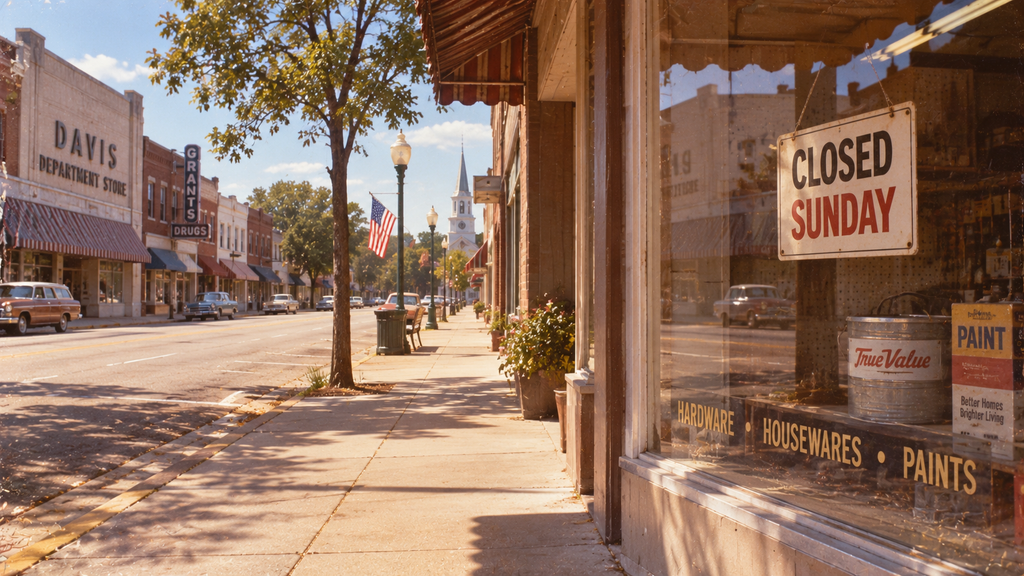
If you suddenly remembered on Sunday afternoon that you needed something from the hardware store, there was a good chance you were going to wait until Monday. If Mom needed something for dinner, you hoped the local grocery store was open—or that a neighborhood market had what she needed.
There was no expectation that every business should be available every day of the week.
The idea seems almost strange today.
Sunday Morning Had a Sound
Sunday mornings were especially quiet.
There were fewer cars on the road, lawn mowers hadn’t started yet, and the usual weekday rush was nowhere to be found. In some neighborhoods you might hear church bells in the distance. Inside the house, the sounds were just as familiar: coffee brewing, dishes in the kitchen and the thick Sunday newspaper being unfolded across the table.
And that newspaper really was an event.
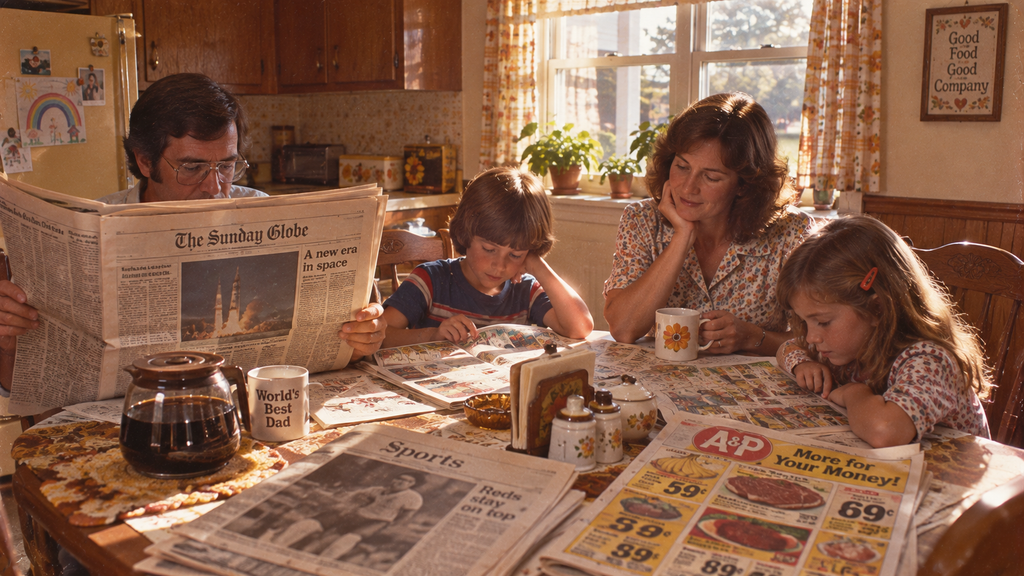
It arrived stuffed with sections—news, sports, comics, entertainment, classified ads and advertising circulars. Dad might disappear behind the sports pages while someone else grabbed the comics. Sections were passed around the table until the newspaper seemed to cover half the room.
Nobody was scrolling through anything.
For a little while, the newspaper was the internet.
Sunday Dinner Wasn’t Just Dinner
Then there was the meal.
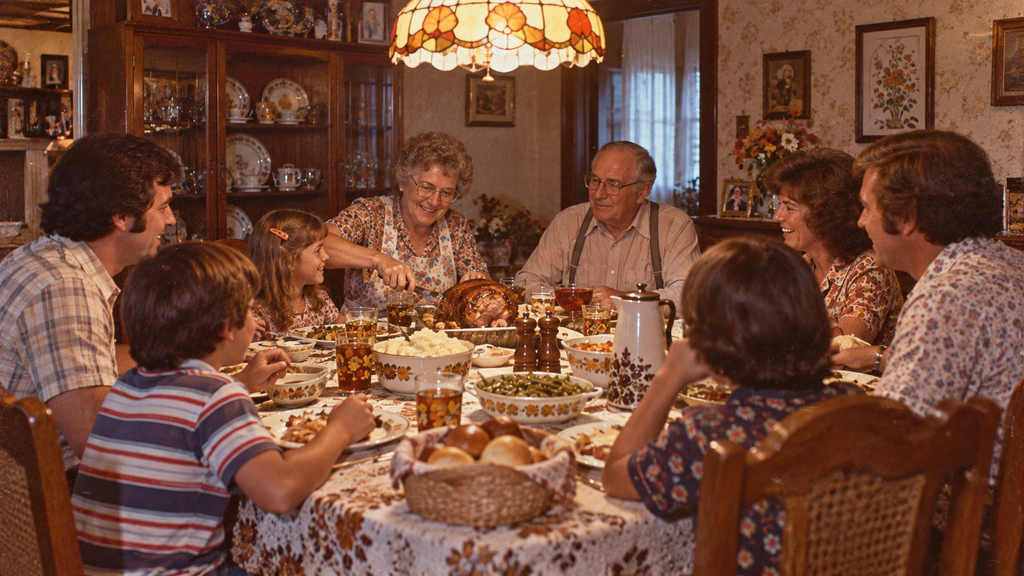
In many homes, Sunday dinner was bigger and earlier than dinner during the rest of the week. Something might have been cooking for hours, filling the house with a smell you noticed the moment you walked through the door.
Sometimes grandparents came over. Sometimes you went to their house. Aunts, uncles and cousins might appear, especially if nobody lived very far away.
The adults stayed at the table long after everyone had finished eating, drinking coffee and talking while the kids disappeared into another room or headed outside.
Nobody called it an event.
It was just Sunday.
And because it happened so often, nobody realized how much they would miss it someday.
Finding Something to Do
With fewer stores open and no endless list of errands to run, Sunday afternoons left families with something that has become surprisingly difficult to find:
Time.
Maybe you visited relatives.
Maybe Dad washed the car in the driveway while the radio played through an open window. Maybe you went for ice cream, took a walk, watched a ballgame or piled into the station wagon and went for a drive with no particular destination.
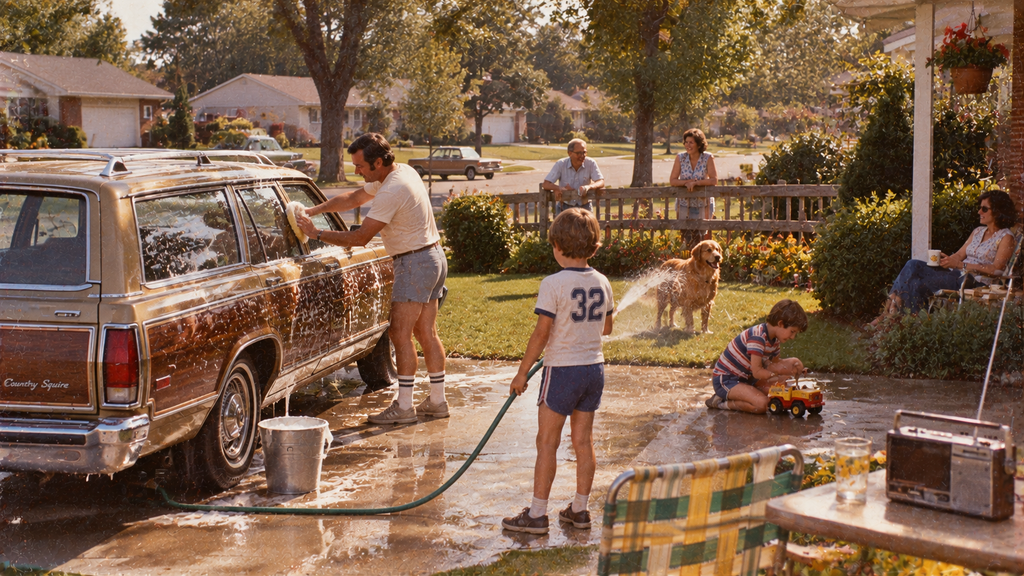
Kids went outside.
Adults sat on porches.
Neighbors talked over fences.
Sometimes absolutely nothing happened.
That was allowed too.
Television Knew It Was Sunday
Even television seemed different on Sunday.
The weekend was winding down, and the programs reflected it. Depending on the decade and the household, Sunday evenings might mean a family variety show, a movie, a nature program, a favorite drama or one of those television events that brought everyone into the same room.
There weren’t hundreds of channels competing for attention. There certainly wasn’t an endless library waiting to be streamed whenever you wanted.
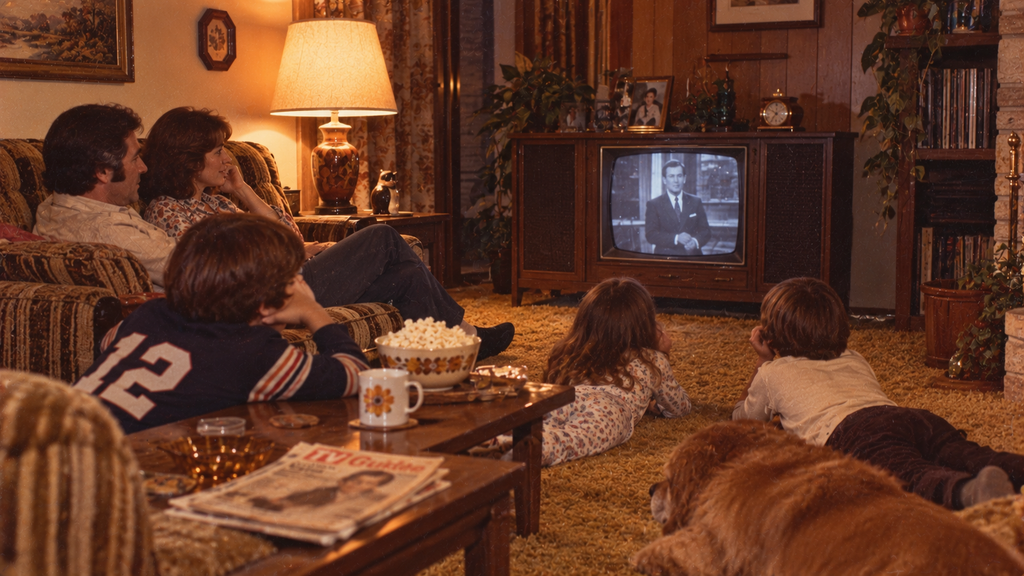
If something special was on Sunday night, you watched it Sunday night.
The television became the fireplace everyone gathered around.
And somewhere in the back of every kid’s mind was the unfortunate realization that tomorrow was Monday.
When Convenience Changed the Weekend
Gradually, Sundays became busier.
More stores began opening. Shopping centers expanded their Sunday hours. Restaurants, supermarkets and retailers increasingly treated Sunday as another important business day.
And people liked the convenience.
Of course they did.
Being able to buy groceries, pick up something at the hardware store or run errands on Sunday made life easier, especially as more households had two working parents and increasingly complicated schedules.
Eventually, Sunday began looking a lot like Saturday.
Then Saturday began looking a lot like every other day.
Today, we can shop on Sunday morning, order something Sunday afternoon and sometimes have it delivered before the weekend is even over. There is almost nothing unusual about it anymore.
We gained an extraordinary amount of convenience.
But perhaps we gave something up too.
The Value of a Day That Felt Different
The old Sunday wasn’t necessarily better for everyone. Not everyone followed the same traditions, and restrictions on Sunday business could certainly be inconvenient.
But there was something interesting about having one day when much of the world seemed to slow down together.
You didn’t have to decide not to go shopping.
The stores weren’t open.
You didn’t need to resist checking whether a package had arrived.
There wasn’t one coming.
You didn’t have to fill every empty hour with another errand because sometimes there simply wasn’t another errand you could run.
The limitations created space.
And inside that space were long dinners, newspapers spread across kitchen tables, grandparents sitting in living rooms, kids playing outside, baseball games on the radio and family cars wandering down country roads.
When Sunday Was Still Sunday
Maybe that’s what people really remember when they say Sundays used to feel different.
It wasn’t simply that the stores were closed.
It was the feeling that, for one day each week, everyday life loosened its grip a little. The errands could wait. The shopping could wait. Work could wait until Monday.
There wasn’t always somewhere else you needed to be.
By Sunday evening, the world slowly started preparing for another week. School clothes were laid out, lunch boxes were readied, alarm clocks were set and that familiar Sunday-night feeling began creeping in.
But until then, Sunday belonged to itself.
The streets were quiet. Dinner was probably cooking somewhere. The newspaper was still scattered across the table.
And on the door of the store downtown was a simple little sign:
CLOSED SUNDAY.