Behind the Yellow Brick Road: The Dangerous Making of The Wizard of Oz
Behind the colorful world of The Wizard of Oz was a surprisingly dangerous Hollywood production. From hazardous makeup and extreme Technicolor heat to fires, explosions and flying performers, discover the real accidents and injuries hidden behind one of cinema’s most magical films.
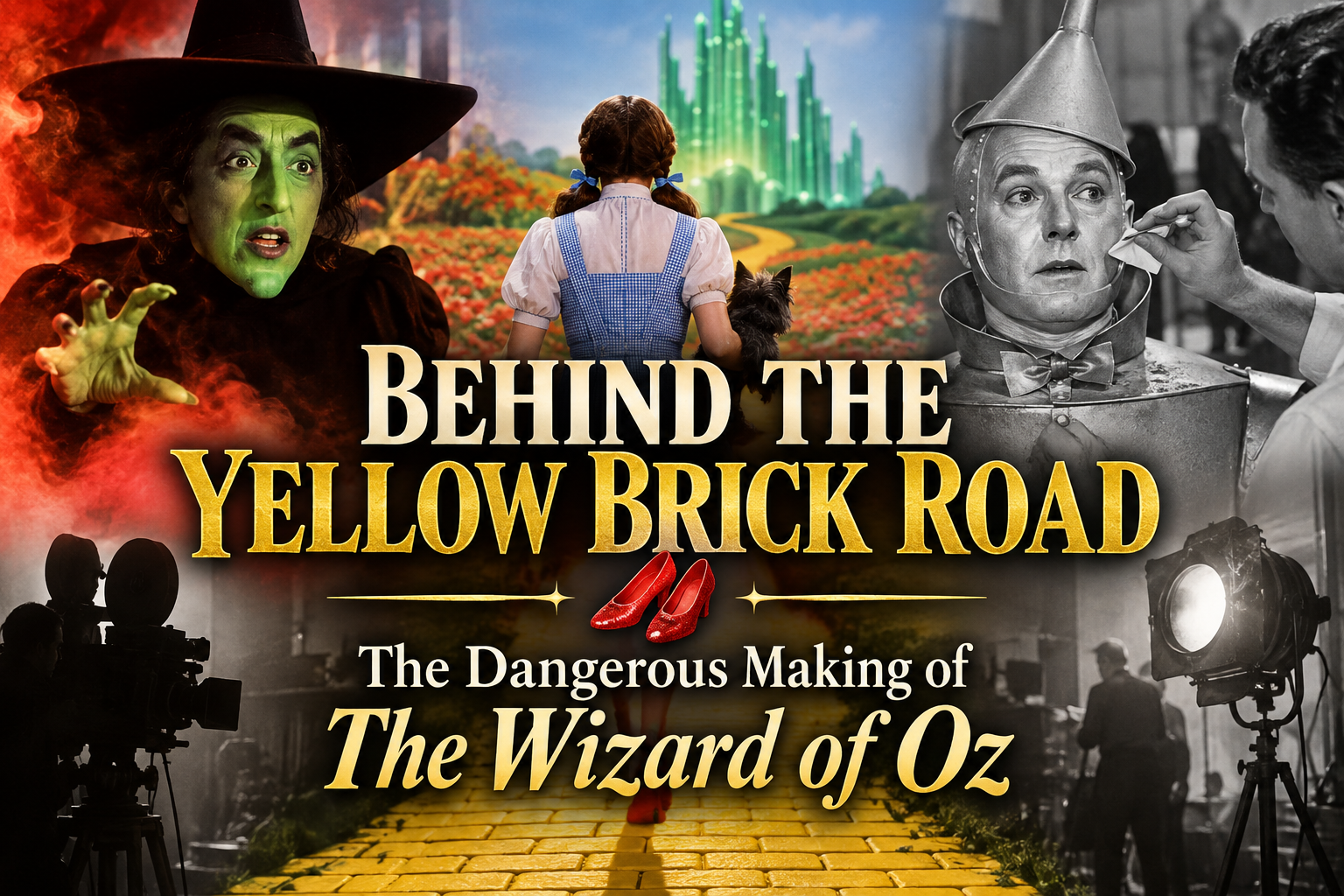
Few movies feel as magical as The Wizard of Oz.
More than eight decades after its 1939 release, the moment Dorothy opens the door of her Kansas farmhouse and steps into the brilliant colors of Oz can still feel like entering another world. There is the Yellow Brick Road, the Emerald City, the ruby slippers, the Scarecrow, the Tin Man and the Cowardly Lion — images that became part of American popular culture almost immediately and have remained there ever since.
But behind all that movie magic was a production that could be remarkably dangerous.
The actors who traveled down the Yellow Brick Road dealt with extreme heat, uncomfortable costumes, hazardous makeup and special effects that occasionally went terribly wrong. Some performers were hospitalized. One original cast member had to leave the movie altogether. And several of the incidents happened while creating scenes that today look completely innocent.
The Land of Oz, it turns out, wasn’t nearly as magical behind the camera.
The Tin Man Who Never Made It to Oz
When we think of the Tin Man today, we think of Jack Haley. But Haley wasn’t MGM’s original Tin Man.
That role belonged to Buddy Ebsen.
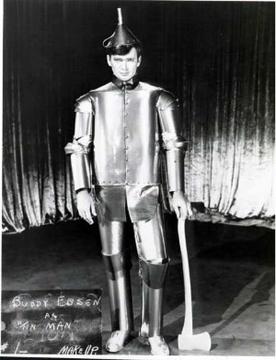
Ebsen had originally been cast as the Scarecrow before switching roles with Ray Bolger. He began rehearsing and filming as the Tin Man, wearing the metallic makeup MGM had developed for the character.
The problem was how that silver appearance was created.
The makeup included powdered aluminum, and during filming Ebsen inhaled enough of it to become seriously ill. According to the American Society of Cinematographers’ history of the production, Ebsen became sick in late October 1938 and spent six weeks in the hospital.
By the time he recovered, MGM had already replaced him with Jack Haley.
Haley’s makeup was changed from the loose aluminum powder that had caused Ebsen’s problems to a different formulation. And so one of the strangest pieces of Wizard of Oz history was created: somewhere behind the familiar Tin Man we all remember is another actor who nearly played the role, only to disappear from the movie because making him look metallic had made him dangerously sick.
When the Wicked Witch Really Caught Fire
One of the movie’s most memorable effects occurs in Munchkinland when the Wicked Witch of the West disappears in a cloud of red smoke and fire.
Margaret Hamilton was supposed to stand over a concealed elevator in the set. As she descended beneath the stage, the fire effect would erupt above her, creating the illusion that the Witch had vanished.
During one take, the timing went wrong.
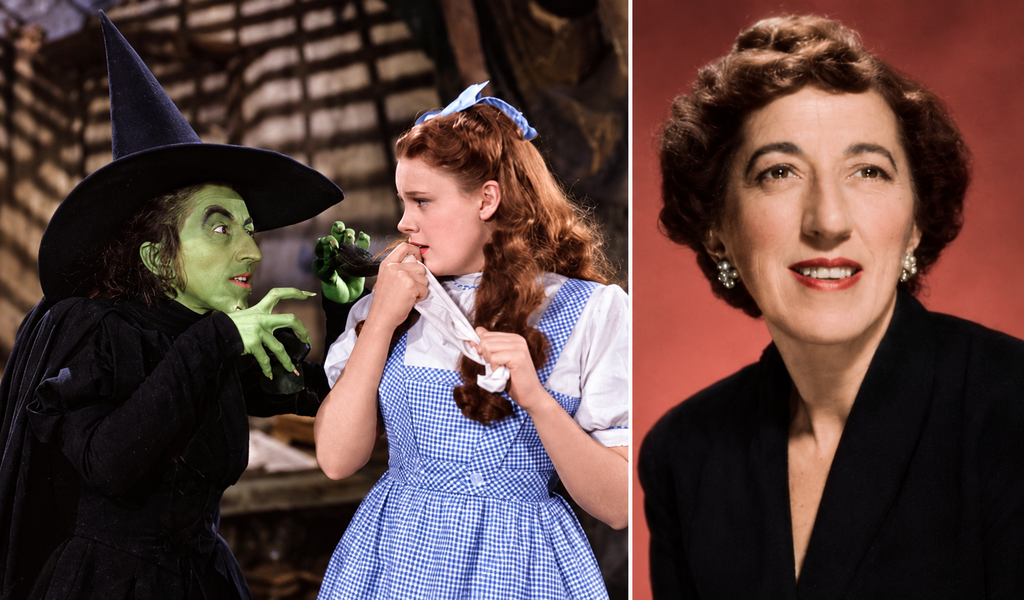
The pyrotechnics ignited before Hamilton had safely disappeared beneath the stage. She suffered first-degree burns to her face and second-degree burns to her hands.
Making matters worse was the famous green makeup covering her skin. The makeup contained copper, so it had to be removed before her burns could be treated. Hamilton later remembered the extraordinary pain involved in removing it.
She stayed away from the studio for roughly six weeks while recovering.
It’s difficult to watch that scene today without thinking about what happened behind it. What appears on screen as a few seconds of wonderfully theatrical Hollywood magic became a very real accident for the actress standing inside it.
Then Her Stunt Double Was Injured Too
After Hamilton returned, there were certain fire effects she understandably didn’t want to perform.
That’s where stunt performer Betty Danko came in.
Unfortunately, Danko would suffer an even more frightening accident while performing another Wicked Witch effect. For a sequence involving the Witch flying on her broomstick, Danko was suspended on wires while sitting on a specially constructed prop.
The broom was designed to produce smoke.
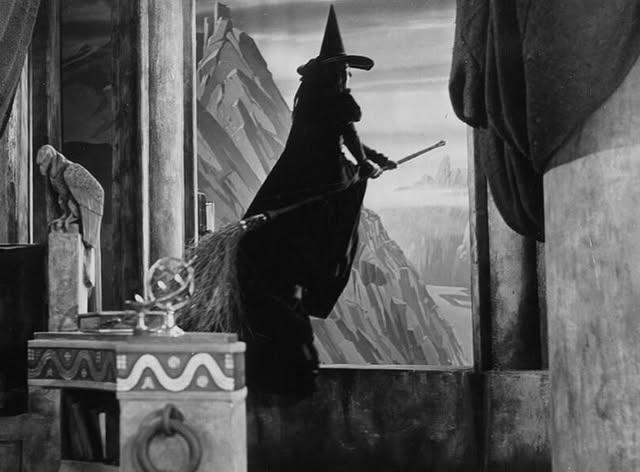
Instead, it exploded.
Danko was badly injured, spent 11 days in the hospital and was left with permanent scars.
So both the actress playing the Wicked Witch and the woman performing her dangerous stunts ended up being injured during the production.
Even the Flying Monkeys Weren’t Safe
The Flying Monkeys were another example of impressive 1939 special effects being accomplished with surprisingly physical methods.
There was no computer animation, of course. Some of the monkeys seen flying through Oz were models, but performers appearing prominently on screen were actually suspended above the set on piano wires.
Keeping those wires properly tensioned was important because kinks could cause them to break.
And sometimes they did.
Safety nets and padding were positioned below the performers, but according to the American Society of Cinematographers’ account of the production, several of the Flying Monkey performers still ended up in the hospital.
The terrifying army swooping through the sky therefore wasn’t simply an optical trick. There were real people hanging above a Hollywood soundstage while cameras rolled beneath them.
Technicolor Had a Price
Not every danger involved a stunt.
One of the greatest achievements of The Wizard of Oz was its extraordinary use of Technicolor. The transition from the subdued Kansas sequences to the vivid Land of Oz remains one of the most famous visual moments in movie history.
Creating those colors in 1938 and 1939, however, required an enormous amount of light.
Around 150 powerful arc lamps were used to illuminate the enormous interior sets. Temperatures could climb to around 100 degrees or more, and cinematographer Harold Rosson later recalled people fainting and being carried off the set.
The intense lighting was also blamed for eye irritation among members of the production.
Now imagine working under those lights while wearing the Tin Man’s costume, the Cowardly Lion’s heavy outfit, elaborate Munchkin costumes or layers of makeup.
When conditions became unbearable, production sometimes had to stop so the actors and crew could get away from the heat.
The glorious colors audiences saw on screen came at a considerable physical price for the people creating them.
A Very Different Hollywood
It would be easy to look at these stories and conclude that MGM was uniquely reckless. The reality is more complicated.
Hollywood filmmaking in the 1930s simply operated under very different standards. Elaborate practical effects were being invented as productions went along. Performers were suspended from wires, surrounded by flames and covered with chemical makeup because there were few other ways to create fantasy on screen.
There were no digital effects artists who could add the fire later. If the Wicked Witch disappeared in flames, somebody had to create those flames on the set.
If monkeys flew through the air, somebody had to figure out how to make them fly.
And if the Emerald City needed to glow in Technicolor, the studio had to throw an extraordinary amount of light onto it.
That ingenuity produced images that still look wonderful more than 85 years later. But the people making them sometimes paid the price.
And Then There Are the Legends
Over the years, the troubled production of The Wizard of Oz has also attracted darker stories that aren’t nearly as well supported.
The most notorious is the claim that a Munchkin actor can be seen hanging in the background while Dorothy, the Scarecrow and the Tin Man walk down the Yellow Brick Road.
It has been repeated for decades, especially after home video allowed viewers to pause and replay scenes.
But the supposed hanging figure isn’t evidence of a death on the set. Large birds were used in the background of Oz scenes to make the artificial studio environment appear more alive, and the strange movement visible in the distance helped fuel a legend that became much darker than the reality.
There were enough genuine accidents during the production that The Wizard of Oz doesn’t need invented ones.
Somewhere Behind the Rainbow
Perhaps that’s what makes the story behind The Wizard of Oz so fascinating.
When we watch the movie today, we don’t see Buddy Ebsen struggling to breathe. We don’t see Margaret Hamilton recovering from burns. We don’t see Betty Danko in a hospital or performers hanging from piano wires above the soundstage.
We see Dorothy opening that door.
We see Oz suddenly appearing in color.
We see the Yellow Brick Road stretching toward the Emerald City.
That’s the strange magic of old Hollywood. The machinery, heat, wires, makeup, accidents and enormous amount of human work disappear when the lights go down and the movie begins.
And somehow, after all these years, The Wizard of Oz still makes us believe that somewhere over the rainbow, there really is another world waiting on the other side.