Exclusive Interview: Fred Grandinetti on the Enduring Legacy of Popeye
Popeye has entertained generations for nearly a century, but what is the secret behind his lasting appeal? In this exclusive interview, renowned Popeye historian Fred Grandinetti shares fascinating stories, surprising discoveries, and his thoughts on why the world's favorite sailor continues to inspire fans of all ages.
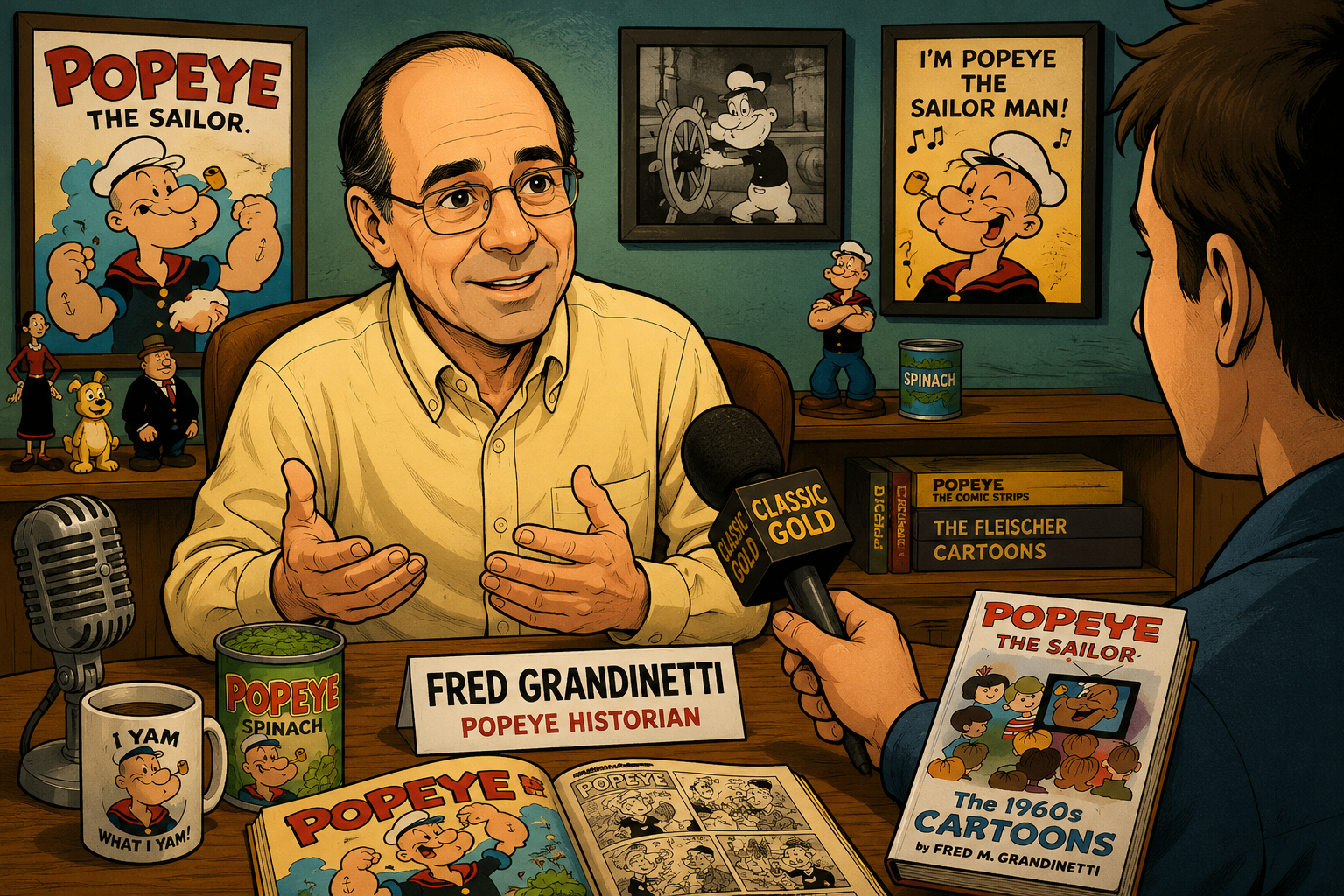
For nearly a century, Popeye the Sailor has remained one of the most recognizable and beloved cartoon characters in the world. From newspaper comic strips in the late 1920s to the legendary Fleischer cartoons, Saturday morning television, comic books, toys, and generations of devoted fans, Popeye has become far more than just a sailor who loves spinach—he’s a true pop culture icon.
To explore the remarkable legacy of Popeye, I had the pleasure of speaking with Fred Grandinetti, one of the world’s foremost Popeye historians, author, and lifelong fan. For decades, Fred has researched every corner of Popeye’s history, from the classic theatrical cartoons and comic strips to the often-overlooked 1960s television series, uncovering fascinating stories that even longtime fans may not know.
In this exclusive interview, Fred shares how his lifelong passion for Popeye began, why the sailor continues to inspire audiences nearly 100 years after his debut, what made the Fleischer cartoons so groundbreaking, surprising discoveries from his research, and why Popeye’s timeless values of courage, honesty, and helping others remain just as relevant today as they were during the Great Depression.
Whether you’ve been singing “I’m Popeye the Sailor Man” since childhood or are discovering him for the very first time, this conversation offers a fascinating look at one of animation’s greatest legends through the eyes of one of his most dedicated historians.
What first sparked your fascination with Popeye?
From what my mother told me I was in the hospital getting my tonsils out. My Aunt Kay DeMeo, who loved the color red, gave me an Olive Oyl doll. The doll’s top was wearing this color. I also recall, at a very early age, my father helping me to draw Popeye’s face. I drew three big circles separately. My father suggested I combine them forming a drawing better resembling Popeye. Of course, as a child, I always read his adventures in comic strips. My parents bought me several toys which included dolls, coloring, punch-out and sticker fun books.
Why do you think Popeye became such a huge cultural icon during the 1930s and stayed popular for generations?
I believe the circumstances going on in the world helped him become a cultural icon. Popeye was created on January 17th 1929 during the time of our great depression. Newspaper readers really rooted for this sailor who was tough and had scruples! These characteristics were very relatable to the common person. Without sounding to corny I believe it’s his morales and values which have kept him popular for generations. Certainly, in many of the comic strips, funny books and animated cartoons Popeye would often mention or sing about morales. For example, at the conclusion of the cartoon, Popeye Thumb (Paramount Cartoon Studios, 1961) he sings, “Ya can be small as a mite and have plenty of height says Popeye the Sailor Man!”
Many fans love the classic Fleischer cartoons. What made those cartoons so special compared to other animation of the era?
The Fleischer brothers created several innovations. This included using miniature sets to create three-dimensional backgrounds in their animated cartoons. They became fascinating for viewers to watch. Max Fleischer loved Popeye’s comic strip antics. His affection for the character also played a part of their success. He didn’t just think, “Well this is popular on paper let’s see if it translates successfully to animation.” Max Fleischer suggested a character he thoroughly enjoyed reading about. The Fleischer Studios also didn’t alter the characters personalities which had become engrained within the public’s mind. Popeye remained the tough (when he had to be), sailor with a heart of gold. J. Wellington Wimpy still sought a free meal, Eugene the Jeep remained a magical creature and Poopdeck Pappy was still his free-spirited cantankerous self. I believe having source material to help motivate the character’s actions was a big plus. Of course, the studio personnel were extremely talented.
You’ve written about the 1960s Popeye TV cartoons — why do you think those cartoons are still remembered today despite their lower budgets?
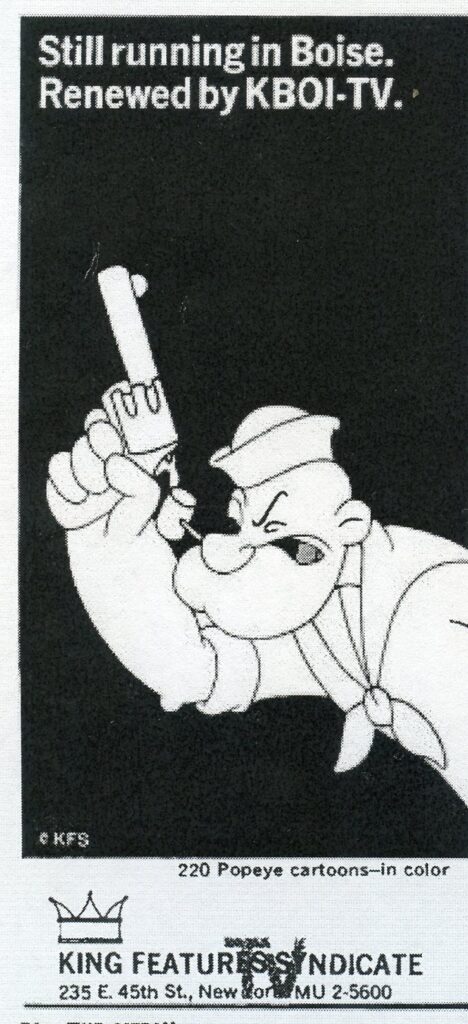
Critics who tear apart the television cartoons, for their low budgets, usually do so when comparing these to Popeye’s theatrical films. Often a studio had the luxury of six months and thousands of dollars to complete a theatrical cartoon. A television cartoon’s budget was not large. I was told the Popeye episodes, from Jack Kinney’s studio, had one week to be completed (the animation quality in many of Kinney’s’ reflected this). However, several studios and personnel were involved with their production. It really depended upon the experience individuals had with limited animation whether an episode is watchable or not. When this series first aired it was extremely popular (and profitable). These Popeyes were eaten up by kiddies (which unlike the early theatricals were the target audience). By 1965 many television stations renewed their initial contracts to continue airing the films. The series also introduced kids to characters from Popeye’s universe which had yet to be seen in animation. These included; King Blozo, Alice the Goon, Rough House, Toar, The Sea Hag and The Wiffle Bird (also known as The Whiffle Hen). More screen time was given to both Wimpy and Eugene the Jeep. Of course, Bluto was out of the picture. Popeye battled his look-a-like, Brutus (the name change is a whole other story, arf! arf!) Today’s adults feel nostalgic towards them. If people want to know which episodes to seek and avoid, I suggest obtaining a copy of Popeye the Sailor, the 1960’s Television Cartoons by BearManor Media. I tried to pick out (though missed a few) animation and audio errors which occurred in a particular episode. Also included are trivia and historical information regarding selected cartoons from the series.
Was there anything surprising you discovered while researching Popeye’s history?
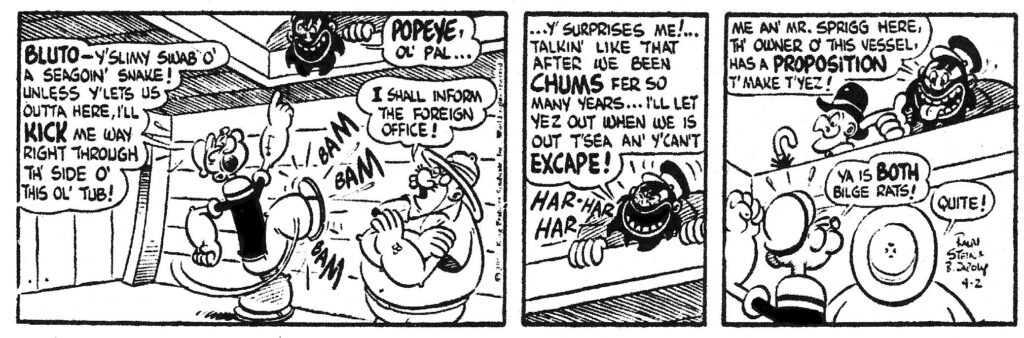
I was very surprised when I discovered, from an article in The Electric Company Magazine, Bluto returned to the daily strip when it was written by Ralph Stein and drawn by Bela ‘Bill’ Zaboly in 1957. It was long believed he battled Popeye once, in 1932, by the sailor’s creator, E.C. Segar. During Stein’s tenure Popeye and his British traveling companion, Sir Pomeroy Vauxhall traveled the globe (and into outer space) seeking adventures. Olive Oyl, Poopdeck Pappy and a more grown-up Swee’pea popped up occasionally. However, the regular supporting cast were regulated to the Sunday page written by Tom Sims. You can read about the Stein/Zaboly era at https://www.boomermagazine.com/history-of-popeye-the-sailor-man-1954-1959/ Another thing which surprised me actually started my writing about Popeye’s film history. I came across the information, by 1962, Popeye had been featured in 454 animated cartoons. More than Mickey Mouse or Bugs Bunny! I felt this needed to get out more and began writing articles for various film magazines and newspapers. Later on, King Features Syndicate, who own the rights to Popeye and his crew, used this information in their press releases.
Do you think younger generations today can still connect with Popeye? Why or why not?
Of course, Popeye can still connect with younger generations. For several years I worked at my local library. I hosted several Popeye movie programs for children who had never seen him before. I had parents asking me where they could get Popeye cartoon videos for their children. Soon I had piles of videos in the backroom which I handed out to parents. Today, I continue to hear stories of grandparents watching the cartoons, whether on Me TV or you tube, with their grandchildren. Several years ago, I donated a Popeye doll to a local children’s hospice and really didn’t think that much about it. I received a call from a woman who worked at the hospice thanking me for the doll. She told me how the terminally ill children hug the Popeye doll for “strength”. I began to think of Popeye in a totally different direction and the effect his character has on people both young and old. When 9/11 occurred a big Christmas party was given to children who lost family members. I sent a big carton of Popeye dolls to be distributed. Surely his ability to give “strength” was needed then.
Which Popeye character besides Popeye himself do you think deserves more appreciation?
I believe J. Wellington Wimpy needs more appreciation. The moocher is considered, by many comic strip historians, to be one of the greatest characters created. It’s quite a feat, for decades, to obtain food without paying. He also could be a low-down scoundrel or loyal friend. Unlike several characters in Popeye’s universe his physical design didn’t alter very much when adapting to other media.
In your opinion, what is the greatest Popeye cartoon or storyline ever made?
That’s a tough question because I have several favorite moments from all of the different Popeye series (except the short-lived Popeye and Son). However, from a technical level, characterization, music and use of color it would have to be Popeye the Sailor Meets Sindbad the Sailor (Fleischer Studios, 1936). This film was nominated for an academy award but instead a Disney short won. Popeye would eventually have his revenge. The sailor’s theatrical shorts proved to be more popular than Mickey Mouse at the box office. When these same shorts premiered on television, often opposite The Mickey Mouse Club, viewers weren’t singing, “M-I-C-K-E-Y” but “I’m Popeye the Sailor Man, toot! Toot!”
Popeye encouraged kids to eat spinach for decades. Do you think he was one of the first cartoon characters to truly influence pop culture behavior?
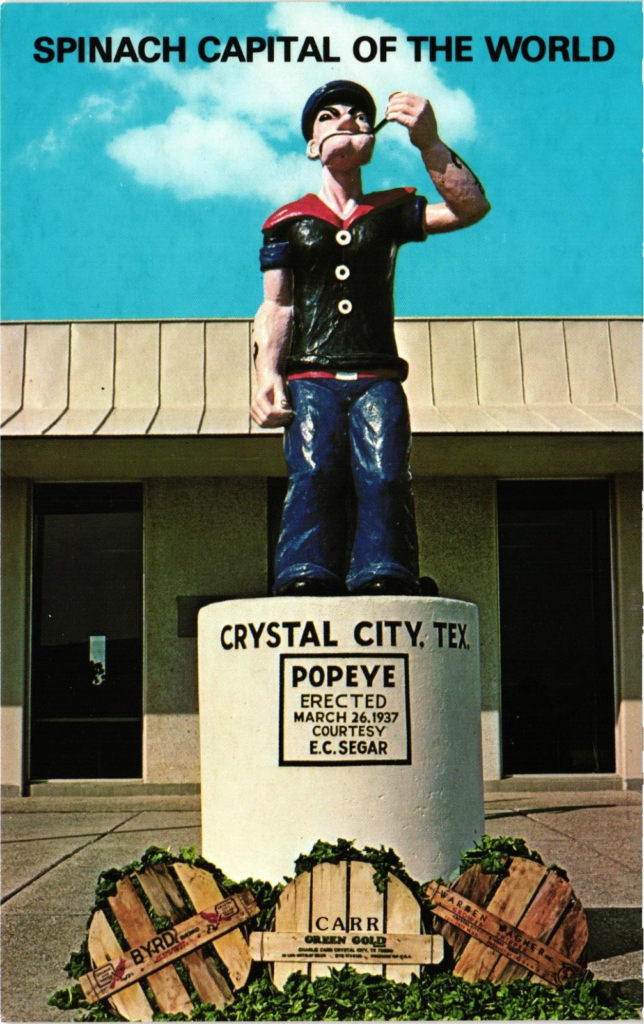
I would say Buster Brown was probably the first with children adopting his style of attire and actions. He was also one of the first characters to be licensed for products. However, when Popeye announced in a 1931 daily strip, he ate spinach for strength sales of the vegetable went up. Allen’s Popeye brand Spinach, originating in 1965, remains a top seller. Both Crystal City Texas and Alma, Arkansas erected statues of Popeye due to his consumption of spinach. Of course, literally hundreds of thousands of Popeye related products have been licensed since the early 1930’s.
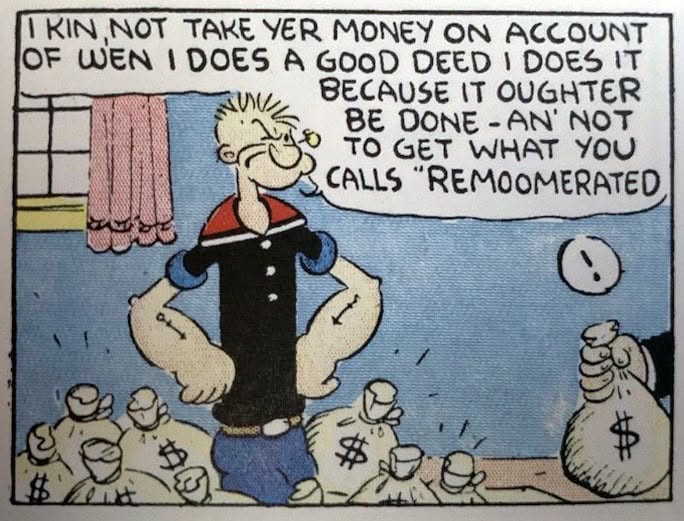
What do you hope Popeye’s legacy will be 100 years from now
One of Popeye’s virtues, often stated in print and other media, is to perform good deeds without asking for a reward. That and the countless hours of entertainment he has given to people all over the world, in my opinion, is his legacy.