Family Ties — the sitcom that put America’s generation gap on the sofa
Here's what made Family Ties such a sharp, lovable snapshot of 1980s America: it turned a national political shift into a family comedy you could not stop watching. With hippie parents, a proudly conservative son, and a cast full of warmth, the show made the generation gap feel funny, familiar, and surprisingly heartfelt.
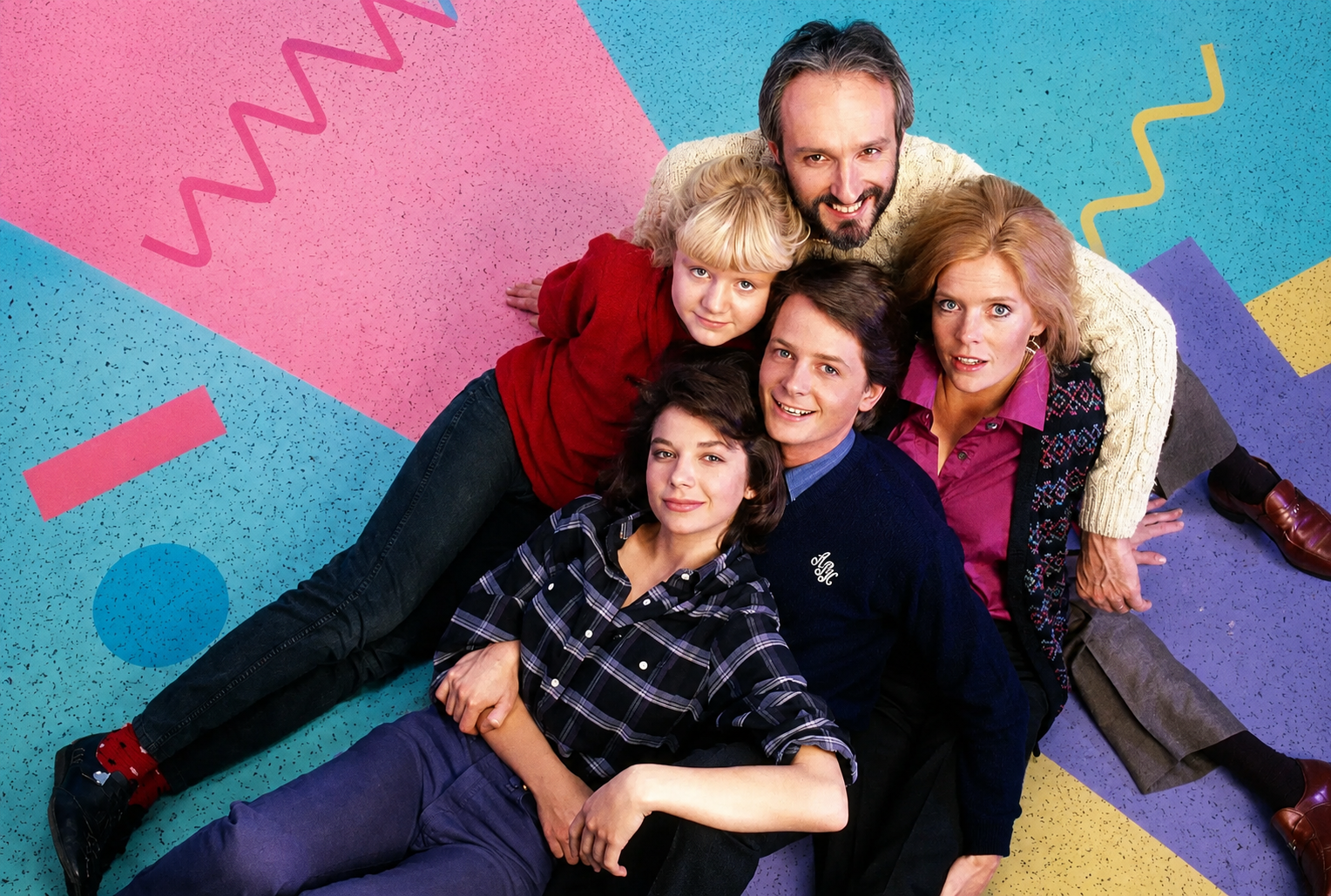
Some television comedies make you laugh, some make you think, and a rare few manage to do both while feeling like an old friend. Family Ties was one of those shows. When it arrived in the early 1980s, it stepped straight into the living room of Reagan-era America and found its big comic spark in one unforgettable idea: what happens when two former 1960s idealists raise a son who worships free markets, briefcases, and Richard Nixon?
That son, of course, was Alex P. Keaton. Played with dazzling timing by Michael J. Fox, Alex became the engine of the series and one of the defining television characters of the decade. But the real magic of Family Ties was that it never reduced its family to a simple joke. Beneath the punchlines, it understood something true about the country at that moment: America was changing, and those changes were showing up right at the dinner table.
A living room built for debate
At first glance, the premise was irresistible. Steven and Elyse Keaton had the glow of former counterculture believers. They had marched, protested, and embraced a more liberal, socially conscious vision of the world. Then came their son Alex, a young man who looked at that worldview and politely, persistently rejected it. He loved capitalism, admired conservative politics, and approached life with the confidence of someone already planning his rise through the business world.
That clash gave Family Ties its weekly rhythm. The Keaton home became a cheerful battleground where ideas bounced around as quickly as the jokes. One scene might pivot on taxes, social values, or political loyalty; the next might simply be about a teenage son trying to out-argue his parents before dessert.
What made it sing was tone. The show did not feel angry or heavy-handed. It felt warm. Even when the family disagreed, there was affection in the room. That balance helped the series capture a broader national mood. The 1980s were often painted in bold colours: ambition, consumer confidence, conservative politics, and a fresh push away from the turbulence of the previous generation. Family Ties turned all of that into something personal and funny.
Alex P. Keaton, the young conservative America could not ignore
Alex was the lightning bolt. He was young, bright, sharply ambitious, and completely sincere in his beliefs. That sincerity mattered. If he had been written as a cartoon, the character would have faded quickly. Instead, he was specific. He read the Wall Street Journal, idolised business success, and carried himself like a future executive who had somehow landed in suburban family life by mistake.
Michael J. Fox gave Alex a remarkable mix of speed, charm, and vulnerability. He could deliver a cutting one-liner, flash a grin, and then reveal the insecurity underneath almost in the same breath. That is a difficult trick, and Fox made it look effortless. Viewers laughed at Alex’s intensity, but they also rooted for him.
There was a wonderful irony at the heart of it all. The supposedly stuffy conservative son became the coolest person in the house. In a decade that increasingly celebrated drive and success, Alex felt less like an outlier and more like a sign of where the culture was headed. He was not just rebelling against his parents. In many ways, he was the 1980s arriving early and asking for a seat at the table.
Why Alex worked so well
- He was funny without being cruel: Alex could be smug, but he was rarely heartless.
- He represented a real shift: his politics reflected a wider change in American attitudes during the Reagan years.
- He was still a son and brother: no matter how polished he tried to seem, the family could still puncture his ego in seconds.
- Michael J. Fox made him human: underneath the confidence was a teenager still figuring himself out.
The Reagan-era backdrop in plain view
To understand why Family Ties connected so strongly, it helps to remember the moment it arrived. Ronald Reagan’s presidency brought with it a renewed emphasis on optimism, patriotism, economic growth, and individual advancement. Popular culture was shifting too. The idealism of the late 1960s and 1970s had not vanished, but it was now sharing space with a more openly aspirational mood.
Family Ties did not lecture about this. It dramatised it in miniature. Steven and Elyse represented values rooted in activism, social responsibility, and collective thinking. Alex represented self-interest in its cleanest, most ambitious form, though the show wisely gave him enough heart to stop that from becoming cold.
That tension mirrored countless real households where parents and children were seeing the world differently. It was not always about politics in a strict sense. Sometimes it was about style, priorities, money, work, and what success should look like. Family Ties captured that shift with a smile rather than a sermon.
Its great achievement was making a national political divide feel like a family conversation you might overhear between bites of dinner.
Behind the scenes, a smart change shaped the show
One of the most interesting stories behind Family Ties is that the original concept leaned more heavily toward the parents. Steven and Elyse were initially designed as the central focus, with the generational comedy flowing around them. But once the series found its footing, it became clear that Michael J. Fox had something special. His performance as Alex drew attention fast, and the writers responded by building more of the show around him.
That kind of shift happens in television now and then, but it only works when the chemistry is right. On Family Ties, it absolutely was. Meredith Baxter and Michael Gross gave the parents intelligence and warmth, never letting them become stereotypes of ageing idealists. Justine Bateman brought a dry, appealing presence as Mallory, Alex’s fashion-loving sister, while Tina Yothers added a grounded spark as Jennifer. Later, the family expanded further, keeping the household lively and familiar.
The ensemble mattered. Alex may have become the breakout star, but he needed the rest of the family to bounce off. Every eye roll from Mallory, every patient rebuttal from Elyse, every exasperated look from Steven helped sharpen the show’s comic identity.
A breakout performance with perfect timing
There is also a lovely bit of television history in Michael J. Fox’s rise. He was not initially treated as the obvious centrepiece, but audiences responded to him in a big way. His quicksilver energy made Alex impossible to ignore. Before long, Fox was one of the brightest young stars on television, and Family Ties became the launching pad for an even bigger career.
Looking back, you can feel that electricity in the episodes. Fox plays Alex like a boy who desperately wants to be a man of the world, which makes his moments of emotional honesty land even harder. That contrast gave the show more depth than a standard family sitcom.
More than politics: the heart of the Keaton family
For all its clever cultural timing, Family Ties endured because it had heart. The Keatons argued, teased, and occasionally drove one another up the wall, but they remained believable as a family that loved each other deeply. That emotional foundation allowed the series to move from broad comedy into more tender territory when needed.
Some of its most memorable episodes worked precisely because the laughs had already made the characters feel real. When the show slowed down, the audience stayed with it. Alex, especially, could be surprisingly moving when his confidence cracked and the ambitious young conservative was revealed to be a son still seeking approval, stability, and direction.
That blend of wit and warmth is a big part of why the series remains so fondly remembered. It offered the pleasure of recognition. Families do not need to agree on everything to feel connected. Sometimes the disagreements are part of the bond.
Why it still feels so watchable
Decades later, Family Ties still has that inviting, settle-in quality that classic television does so well. Part of that is nostalgia, of course: the clothes, the hairstyles, the cosy interiors, the rhythm of a sitcom built before irony swallowed everything whole. But there is more to it than period charm.
The show still works because the central idea has not aged out. Parents and children continue to surprise one another. Political and cultural values still shift from one generation to the next. Ambition still collides with idealism. And humour remains one of the best ways to explore those differences without turning every disagreement into a disaster.
Family Ties understood that long before many others did. It found the national story inside a household story. It made room for debate, affection, disappointment, pride, and laughter, all within the space of a half-hour comedy.
That is why it remains such a vivid time capsule of Reagan-era America. Not because it simply reflected the headlines, but because it translated a changing country into the language of family life. In the Keaton living room, history did not arrive with a speech. It arrived wearing a tie, carrying a briefcase, and asking if anyone had seen the business section.