How Do You Mend a Broken Heart?
The piano settles in, the harmony rises, and suddenly the room belongs to The Bee Gees. "How Can You Mend a Broken Heart" was more than a hit in 1971—it was a reunion, a comeback, and one of pop's most elegant expressions of heartache.
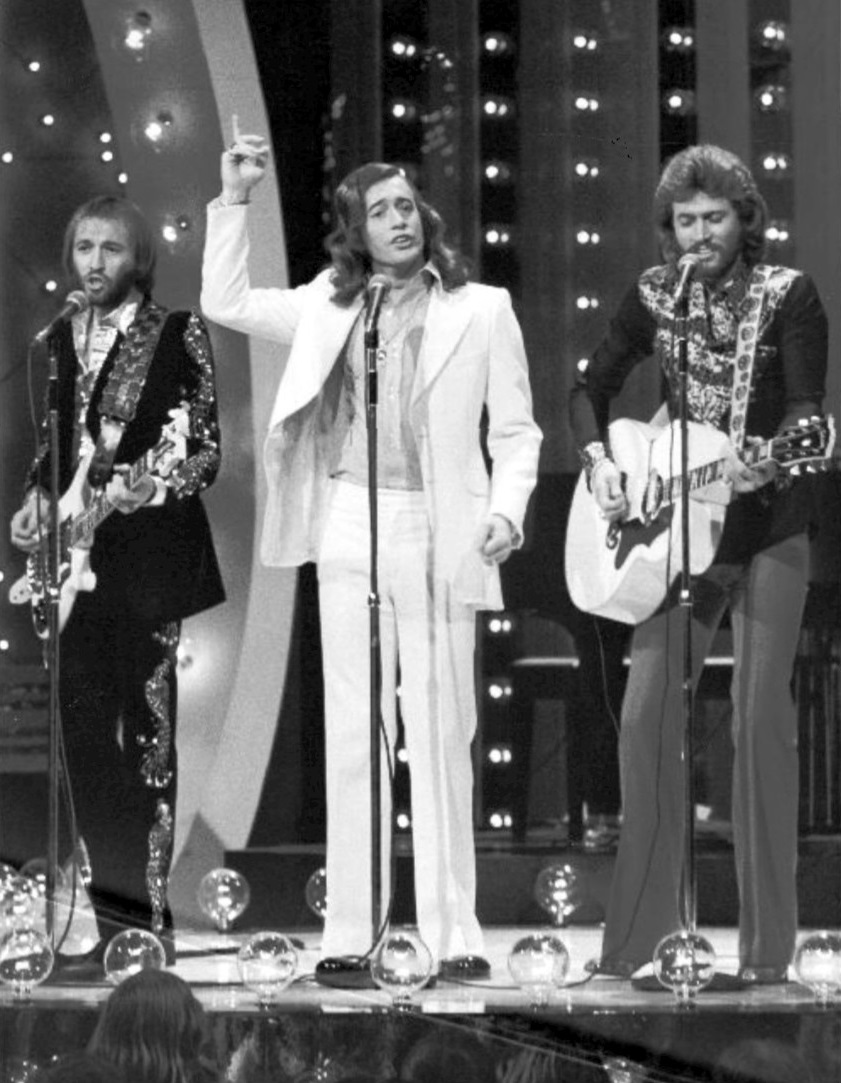
Few songs capture heartache with quite the same grace as “How Can You Mend a Broken Heart”. When The Bee Gees released it in 1971, they were not simply delivering another beautifully harmonised ballad for radio. They were returning from a turbulent period, rebuilding family ties, and finding a way to turn private pain into a record that felt universal. The result was a song of aching simplicity, wrapped in rich melody and sung with the kind of emotional honesty that can stop listeners in their tracks.
A reunion gave the song its emotional core
Brothers finding their way back
By the time this song appeared, The Bee Gees had already lived through a dramatic rise, a painful split, and a hard-won reunion. In the late 1960s they had become one of the most distinctive groups in pop, blending baroque arrangements, close harmonies, and melancholy songwriting into hits such as Massachusetts, I Started a Joke, and To Love Somebody. But success brought strain. Tensions inside the group grew, and by 1969 the brothers had separated.
That break matters when talking about “How Can You Mend a Broken Heart”, because the song carries more than romantic sorrow. It also reflects reconciliation. Barry and Robin Gibb, the principal writers, reunited in 1970, and the brothers began repairing both personal and professional relationships. In that sense, the title lands with extra weight. It sounds like a love song, but it also feels like a question hanging over a family trying to put itself back together.
Barry and Robin shape a timeless ballad
The song was written by Barry Gibb and Robin Gibb, and it shows the strengths each brother brought to the table. Barry had a gift for direct, memorable phrasing and melodic warmth. Robin often leaned toward a more haunting, introspective quality. Together, they created something that feels both intimate and grand.
One of the song’s great strengths is its opening line: “I can think of younger days when living for my life was everything a man could want to do.” It is reflective rather than dramatic, almost like someone sitting alone and speaking softly before the full ache of the song unfolds. Then comes the title question, repeated with such plain language that it becomes devastating. There is no elaborate poetry needed. The emotion is already there.
Inside the recording
A fresh chapter in the studio
The recording was made during sessions for the album Trafalgar, released in 1971. The Bee Gees were working in a period of transition, moving away from some of the ornate late-1960s touches and toward a fuller, more contemporary early-1970s sound. The record still has elegance and orchestral depth, but there is also a grounded, soulful quality that points toward the decade ahead.
The song was produced by The Bee Gees together with Robert Stigwood, the powerful manager and impresario who played a major role in shaping their career. Stigwood understood the group’s emotional and commercial appeal, and his involvement helped guide the presentation of their recordings during this era.
The voices and players behind the magic
Barry Gibb took the lead vocal, and it is one of his finest performances. Long before his celebrated falsetto period with the disco-era Bee Gees, Barry had a rich, expressive lower register that could sound tender, bruised, and quietly commanding all at once. Robin and Maurice Gibb added the harmonies that gave the recording its unmistakable Bee Gees signature: close, familial, and almost conversational in the way the voices lean into one another.
Maurice Gibb, as ever, was crucial to the group’s musical architecture. He was the versatile all-rounder of the brothers, able to move between instruments and help shape arrangements with a subtle but essential touch. The Bee Gees also worked with skilled session musicians and arrangers during this period, creating the song’s stately rhythm, soft piano foundation, and sweeping orchestral textures. Those elements never overpower the vocal. Instead, they cradle it.
That balance is part of what makes the record endure. The arrangement rises and falls like a deep breath. There is space in it. The strings add sorrow, the rhythm section gives it a steady pulse, and the harmonies make the emotional world of the song feel wider than one person’s heartbreak.
An old song idea brought back to life
One of the more intriguing stories around the track is that the idea had been around for a while before it became a Bee Gees hit. Barry Gibb later spoke about the song as one that had existed in earlier form before the brothers’ reunion gave it the right moment and meaning. That is often the way with great songs: they wait until life catches up with them.
Once recorded, the performance had an air of inevitability. Even among the strong material on Trafalgar, this was the song that stood apart. It had the emotional clarity of a standard and the melodic strength of a major pop single.
The song that put them back on top
A major chart breakthrough in America
“How Can You Mend a Broken Heart” became a landmark release for The Bee Gees when it reached number one on the Billboard Hot 100 in the United States in 1971. That was a huge moment: it was the group’s first American chart-topper, and it confirmed that their comeback was real. For a band that had already known fame but also uncertainty, that number one carried special significance.
The single also performed strongly in other territories and helped re-establish the Bee Gees as major international hitmakers. Audiences responded not just to the melody, but to the emotional directness. This was a song people could live inside for three and a half minutes.
Commercial success with lasting radio power
Radio embraced the record because it worked on several levels at once. It was polished enough for mainstream pop stations, emotional enough for adult audiences, and melodically rich enough to stand out in a crowded era of strong songwriting. Over time, it became one of those records that listeners recognise almost instantly from the first few bars.
Its success also helped set the tone for the Bee Gees’ early-1970s output, showing that they could still command attention in a changing musical landscape. This was not nostalgia for their 1960s sound. It was proof that they could evolve without losing their identity.
Why it fit the moment so perfectly
Pop was growing up
The early 1970s were filled with songs that sounded more introspective, more vulnerable, and often more personal than much of the bright, tightly wound pop of the mid-1960s. Singer-songwriters were flourishing. Soul music was becoming increasingly sophisticated and emotionally layered. Rock bands were stretching out musically while still making room for tenderness.
“How Can You Mend a Broken Heart” sits beautifully in that world. It has the melodic discipline of classic pop craftsmanship, but it also carries the emotional openness that defined the era. It is a ballad, certainly, but not a lightweight one. It speaks in adult terms about loss, memory, and the struggle to move forward.
A bridge between Bee Gees eras
What makes the song especially fascinating in the Bee Gees story is how clearly it connects different phases of their career. It still has the lushness and melancholy of their late-1960s work, yet it also hints at the rhythmic confidence and broader soul influence that would become more prominent as the decade progressed. In that sense, it is a bridge record.
Listeners who know the Bee Gees mainly for the dazzling disco years can sometimes be surprised by just how powerful their pre-Saturday Night Fever catalogue is. Songs like this remind us that the brothers were elite songwriters long before white suits and dance floors entered the picture.
Legacy, covers, and cultural afterlife
A standard of heartbreak
Over the years, “How Can You Mend a Broken Heart” has taken on the quality of a modern standard. It has been covered by a wide range of artists, most famously Al Green, whose soulful interpretation brought a different kind of ache to the song and introduced it to another audience. That kind of cross-genre life is usually the mark of exceptional songwriting.
The song has also remained a favourite on oldies and classic hits radio because it delivers exactly what listeners hope for from a lasting ballad: emotional truth, memorable melody, and a performance that never feels overplayed even after decades on the air.
A title that became part of the culture
Some songs are remembered for a riff, others for a chorus. This one is remembered for a question. The title itself has entered everyday language, which is often the sign of a song that has travelled far beyond the charts. People quote it because it says something universal in the simplest possible terms.
The Bee Gees’ 2020 documentary even took its title from the song, a powerful reminder of how central it remains to their story. Out of a catalogue packed with extraordinary hits, this one still stands as a defining statement of who they were when emotion, harmony, and craftsmanship met in perfect balance.
Small details that make the record unforgettable
The elegance of restraint
One behind-the-scenes truth about the song is that its power comes from what it does not do. It never rushes. It never shouts. The Bee Gees trusted the lyric, the melody, and the blend of their voices. In an age when many records aimed for impact through size and volume, this one found its strength in patience.
- Writers: Barry Gibb and Robin Gibb
- Lead vocal: Barry Gibb
- Producers: The Bee Gees and Robert Stigwood
- Album: Trafalgar (1971)
- Major achievement: The Bee Gees’ first number one single in the United States
Listen closely and you can hear how carefully the emotional temperature is managed. Barry’s vocal is wounded but controlled. The harmonies arrive like memory. The arrangement swells just enough. It is heartbreak presented with dignity, and that may be why the song has aged so well.
The feeling still reaches across the years
There is something deeply reassuring about the endurance of “How Can You Mend a Broken Heart”. It reminds us that even in moments of fracture, great artists can create something whole. For The Bee Gees, it was a comeback statement, a family document, a commercial triumph, and one of the finest ballads of its era.
More than fifty years later, it still sounds like the needle dropping on a quiet room. The piano begins, the voices gather, and suddenly that old question feels new again. That is the magic of classic radio, and it is the magic of The Bee Gees at their most human.