The Twilight Zone’s “The Howling Man”: One of Television’s Greatest Gothic Horror Stories
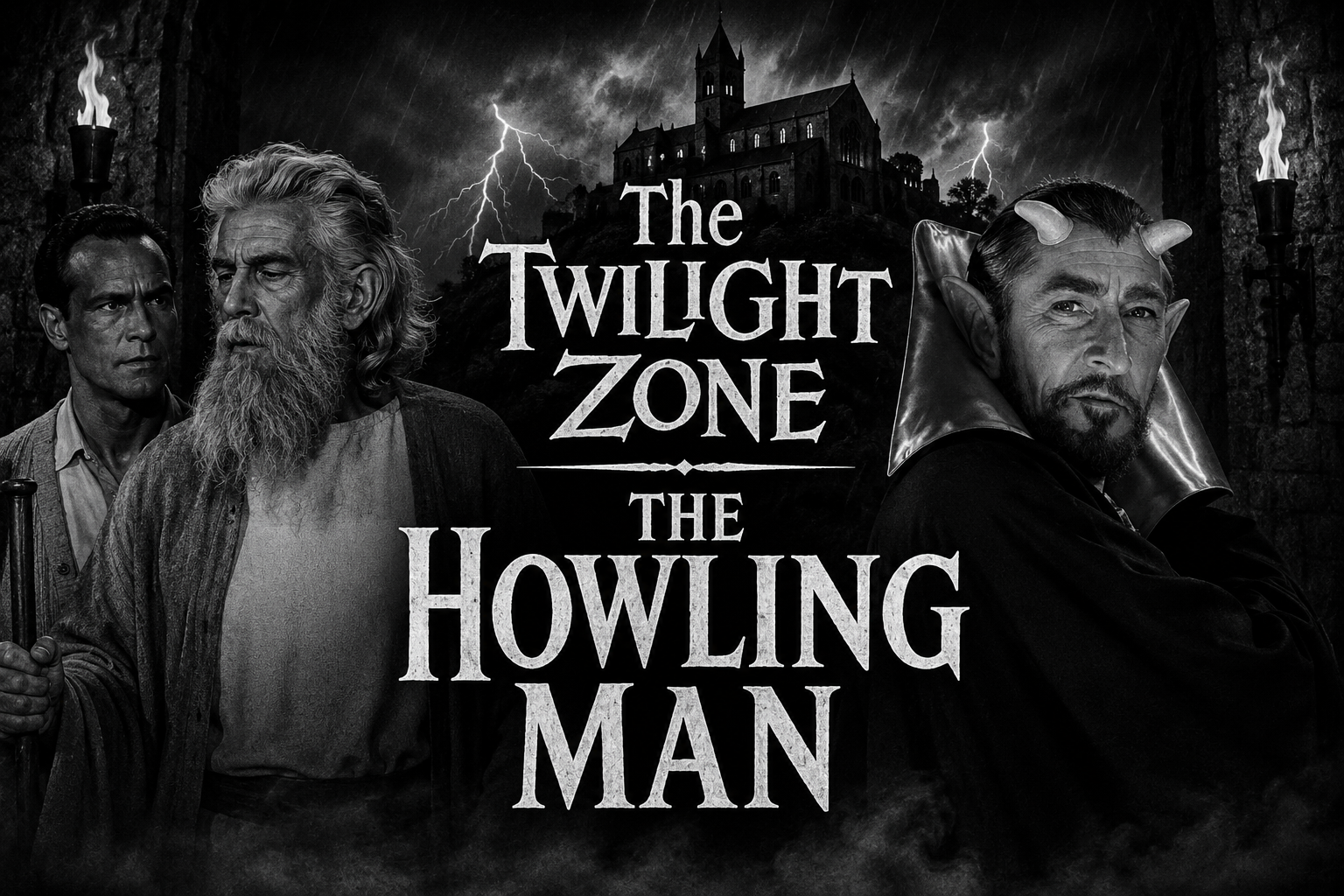
A stranded traveler. A mysterious monastery. A prisoner the monks insist is the Devil himself. The Howling Man remains one of the most atmospheric and unforgettable episodes of The Twilight Zone, blending gothic horror with one of the series' most chilling moral dilemmas.
When people talk about the greatest episodes of The Twilight Zone, titles like Time Enough at Last and The Monsters Are Due on Maple Street usually come up first. Yet hidden among the series’ many classics is an episode that feels completely different from everything else Rod Serling’s legendary show produced.
Originally airing on January 4, 1963, “The Howling Man” transports viewers into a world of ancient monasteries, relentless storms, and a terrifying secret that has haunted audiences for more than sixty years.
A Story Wrapped in Mystery
The episode follows David Ellington, an American traveler who becomes stranded during a violent storm somewhere in Europe. Seeking shelter, he stumbles upon a remote monastery run by a mysterious order of monks.
Almost immediately, something feels wrong.
From deep inside the monastery comes the desperate sound of a man screaming and begging for help. The monks insist the prisoner must never be released, claiming he is no ordinary man.
Instead, they make an unbelievable claim:
The prisoner is the Devil himself.
David, convinced the monks have lost their minds, begins to question whether the captive is actually an innocent victim of religious fanaticism. As the story unfolds, viewers are forced to ask themselves the same question.
Who should they believe?
A Different Kind of Twilight Zone
Unlike many episodes that rely on science fiction or futuristic concepts, The Howling Man embraces classic gothic horror.
Everything about the production feels like an old Universal horror film:
- A lonely monastery hidden in the mountains.
- Endless rain and thunder.
- Flickering candlelight.
- Long stone corridors.
- Dark shadows around every corner.
The result is one of the series’ most visually striking episodes and proof that suspense often comes from atmosphere rather than special effects.
The Performance That Makes It Work
Much of the episode’s success comes from actor Robin Hughes, whose unforgettable portrayal of the mysterious prisoner constantly shifts between pitiful victim and sinister manipulator.
Is he simply a frightened man locked away unjustly?
Or is he exactly what the monks claim?
The uncertainty keeps viewers guessing until the shocking climax.
Equally memorable is John Carradine as Brother Jerome, the elderly monk determined to prevent unimaginable evil from escaping into the world. Carradine’s commanding presence gives the story a sense of timeless authority.
A Twist Worth Waiting For
Like the very best episodes of The Twilight Zone, The Howling Man builds patiently toward a finale that completely changes the audience’s perspective.
Without spoiling the ending for first-time viewers, the final moments remain among the most chilling in the series. The episode reminds us that evil doesn’t always appear frightening. Sometimes it looks charming, persuasive, and completely trustworthy.
That timeless message is one reason the story still resonates decades later.
Behind the Scenes
One reason the episode stands out is its cinematic style. Director Douglas Heyes deliberately departed from the show’s usual minimalist sets, creating an elaborate gothic environment complete with towering walls, heavy wooden doors, and dramatic lighting that feels more like a feature film than a television episode.
The transformation scene near the end was particularly ambitious for early 1960s television and remains one of the most memorable visual effects ever featured on The Twilight Zone.
The episode was adapted from a short story by Charles Beaumont, one of the series’ most important writers and a frequent collaborator with Rod Serling.
Why Fans Still Love It
More than sixty years after its original broadcast, The Howling Man continues to appear on lists of the greatest Twilight Zone episodes.
Fans appreciate it because it dares to tell a supernatural horror story without relying on monsters, gore, or jump scares. Instead, it builds tension through uncertainty, outstanding performances, and a haunting atmosphere that lingers long after the credits roll.
It’s also one of those rare episodes that seems to improve with every viewing. Knowing the ending only makes the earlier scenes more fascinating.
Final Thoughts
The Howling Man proves that The Twilight Zone wasn’t just a science fiction anthology—it was also capable of producing unforgettable horror.
Its haunting visuals, moral dilemma, and unforgettable conclusion have earned it a well-deserved place among the series’ finest achievements. Whether you’re discovering it for the first time or revisiting it years later, this is an episode that reminds us why Rod Serling’s masterpiece continues to captivate generation after generation.
Sometimes the most terrifying monsters aren’t hiding in the darkness.
Sometimes they’re standing right in front of us… asking to be set free.