
Late Night Signal: The Amazing Transparent Man
A dark studio, a humming machine, and a face fading into thin air: The Amazing Transparent Man still delivers that irresistible late-night thrill. This upbeat look back celebrates the film's crafty effects, brisk storytelling, and the inventive spirit behind one of 1960's most charming sci-fi B-movies.
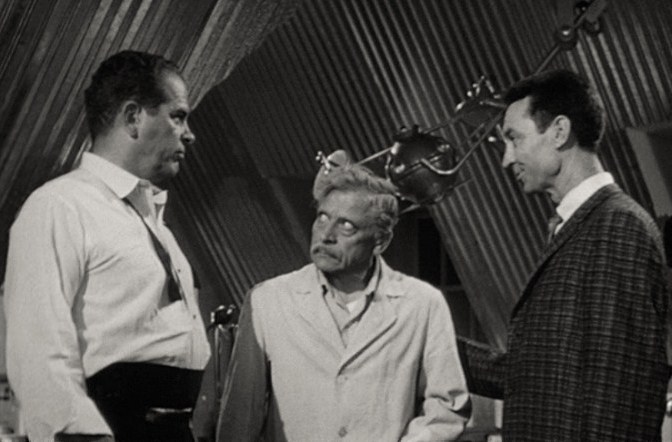
There is a special pleasure in discovering a modest little science-fiction picture that knows exactly what it is there to do. The Amazing Transparent Man, released in 1960, does not arrive with grand philosophical speeches or expensive spectacle. Instead, it slips onto the screen with a mischievous grin, a brisk running time, and the kind of low-budget ingenuity that can make a late-night movie session feel like a private conversation between filmmakers and audience. For anyone who loves classic genre cinema, this is a film worth celebrating.
Directed by Edgar G. Ulmer, a master of doing a great deal with very little, the film turns a wonderfully pulpy premise into a compact entertainment machine. A scientist discovers a process that can render a man invisible. Naturally, this breakthrough does not fall into gentle hands. Criminal ambition, military interest, and scientific curiosity begin to collide, and before long the picture is moving with the clipped energy of a radio serial brought to life.
A B-movie with real spark
Part of the charm of The Amazing Transparent Man is how cheerfully it embraces its own concept. This is not a film embarrassed by invisibility tricks, shadowy laboratories, or dangerous men with dangerous plans. It leans into those pleasures. The result is a movie that feels lively rather than self-important, and that spirit is a major reason it remains so enjoyable.
Douglas Kennedy plays Major Paul Krenner, the cold and calculating figure at the centre of the scheme, with exactly the right steel-edged confidence. Marguerite Chapman brings poise and intelligence to Laura Matson, while James Griffith gives Joey Faust a rough, uneasy quality that keeps the tension alive. There is a satisfying push and pull in these performances. No one is trying to play this material as a joke, and that sincerity gives the film its pulse.
Then there is the title attraction itself: the transparent man. The special effects are, of course, products of their time, but that is part of the delight. They have a handmade ingenuity that fits the era beautifully. Watching older science-fiction films often means appreciating not only the story being told, but the craft behind the illusion. Here, the effects invite us into the process. You can almost feel the problem-solving that must have gone on behind the camera.
Edgar G. Ulmer’s gift for atmosphere
Ulmer had a remarkable ability to create mood on limited resources, and that talent is all over this film. The laboratories feel secretive, the hideouts feel tense, and the whole picture carries a faintly nocturnal mood, as if it belongs to empty roads, guarded compounds, and whispered plans after midnight. It is not lavish, but it is evocative.
That matters because atmosphere is often what separates a forgettable B-picture from a memorable one. The Amazing Transparent Man understands how to use darkness, silence, and suggestion. Instead of trying to compete with larger productions on scale, it creates interest through pacing and texture. It knows when to keep things moving and when to let a scene simmer just long enough.
There is also something pleasingly direct about the storytelling. The film does not waste time. It introduces its premise, lays out the stakes, and gets on with the business of suspense. For modern viewers used to over-explained plots and inflated runtimes, that economy can feel refreshing. This is a movie that arrives, makes its impression, and leaves before the welcome wears thin.
The joy of practical imagination
One of the reasons classic science-fiction still attracts devoted fans is that it often feels wonderfully tactile. In a film like this, the impossible is achieved not by endless digital polish, but by practical trickery, camera discipline, editing, and performance. That gives the whole experience a certain texture. The illusion may be simpler than what audiences see today, but it is often more endearing for that very reason.
And when the invisibility effect appears, there is a little thrill to it. Not because it fools us completely, but because it reminds us of the era’s can-do creativity. It is the same pleasure one gets from hearing a great mono single on the radio: the sound may not be huge, but the character is unmistakable.
Behind the scenes: making a little look intriguing
The story behind films like The Amazing Transparent Man is often half the fun. This was a period when independent genre filmmakers had to work fast, think smart, and trust atmosphere to do some of the heavy lifting. Budgets were tight, schedules were tighter, and every prop, shadow, and camera angle had to earn its place.
Ulmer was especially skilled at this kind of filmmaking. He had a reputation for turning limitations into style, and you can sense that discipline here. Rather than treating low cost as a handicap, the film uses it almost like a creative challenge. Sparse settings become mysterious. Simple effects become memorable set pieces. Dialogue scenes are shaped to keep the tension humming. It is old-school movie craftsmanship, and it deserves admiration.
There is also a certain post-war, atomic-age fascination running through the picture. Like many science-fiction films of the era, it reflects a world excited by scientific possibility and uneasy about where that possibility might lead. Invisible power, military applications, secret research: these themes were in the air, and the film taps into them with a light but effective touch. It never becomes heavy-handed, yet it carries that unmistakable Cold War shiver.
The real magic of the film is not that a man becomes invisible. It is that a small production still manages to feel vivid, suspenseful, and full of personality more than six decades later.
Why it still plays so well today
Some older genre pictures survive as curiosities. Others survive because they are genuinely fun to watch. The Amazing Transparent Man belongs in the second group. It has momentum, atmosphere, and a clean sense of purpose. It also benefits from the kind of earnestness that gives many classic B-movies their staying power. The filmmakers believe in the setup, and that belief carries the audience with them.
For fans of vintage science-fiction, there is a lot to enjoy here:
- A clever central premise that gets the imagination going immediately
- Lean storytelling that keeps the action moving
- Moody black-and-white photography that adds character well beyond the budget
- A strong sense of period fascination with science, secrecy, and danger
- That unmistakable late-night movie charm that makes discovery part of the pleasure
It is also the kind of film that invites affectionate conversation afterward. You want to talk about the effects, the performances, the plotting, and the resourcefulness of the whole enterprise. In that sense, it behaves a little like a favourite old record: maybe not the biggest hit on the chart, but the one enthusiasts are always delighted to recommend.
A perfect pick for nostalgic viewing
If your ideal evening includes a dim room, a glowing screen, and a trip back to the era when science-fiction could be eerie, playful, and slightly scrappy all at once, this film fits beautifully. It belongs to that rich tradition of pictures that once flickered through television schedules and found loyal audiences among night owls, teenagers, and curious movie lovers. Watching it now brings back some of that same magic.
There is comfort in its scale, pleasure in its invention, and warmth in its very existence. Not every movie needs to be monumental. Some just need to entertain with style, offer a memorable idea, and leave behind a faint electric glow. The Amazing Transparent Man does exactly that.
Worth tuning in for
Seen today, The Amazing Transparent Man stands as a bright example of how much personality a small 1960 genre film could carry. It is suspenseful without being grim, imaginative without becoming pretentious, and nostalgic in the best possible way. This is a film made by people who understood pace, mood, and the audience’s appetite for a good uncanny hook.
So yes, this is a positive recommendation, and an enthusiastic one. If you have a soft spot for classic science-fiction, old Hollywood resourcefulness, or the rich pleasure of discovering a film that punches above its weight, this one deserves a place on your screen. It may be transparent by title, but its appeal is easy to see.