Leather Jackets, Fast Cars — Television Heroes Who Made Cool Look Effortless
Cool was never this gloriously over-dressed.
Some television characters do not just solve crimes, win fights, or save the day. They stroll onto the screen and instantly change the temperature of the room. In the 1970s and 1980s, TV was packed with heroes who had style, swagger, and just enough mischief to make them unforgettable. They were the people you wanted to be, or at least borrow a line from.
This was the age of talking cars, tropical shirts, impossible hair, and action scenes that somehow looked even better with a synthesizer line underneath. And while every era has its stars, the small-screen heroes of the 70s and 80s had a special kind of cool: larger than life, a little playful, and completely at home in a world where charisma mattered as much as courage.
Here is a fond look back at some of the coolest television heroes of that golden glow era.
Michael Knight — the man who made black leather look like a superpower
If cool had a driver’s license in the 1980s, it probably said Michael Knight. Played by David Hasselhoff in Knight Rider, Michael was the kind of hero who never seemed flustered. He had the hair, the confident half-smile, and a car so famous it practically deserved its own fan mail.
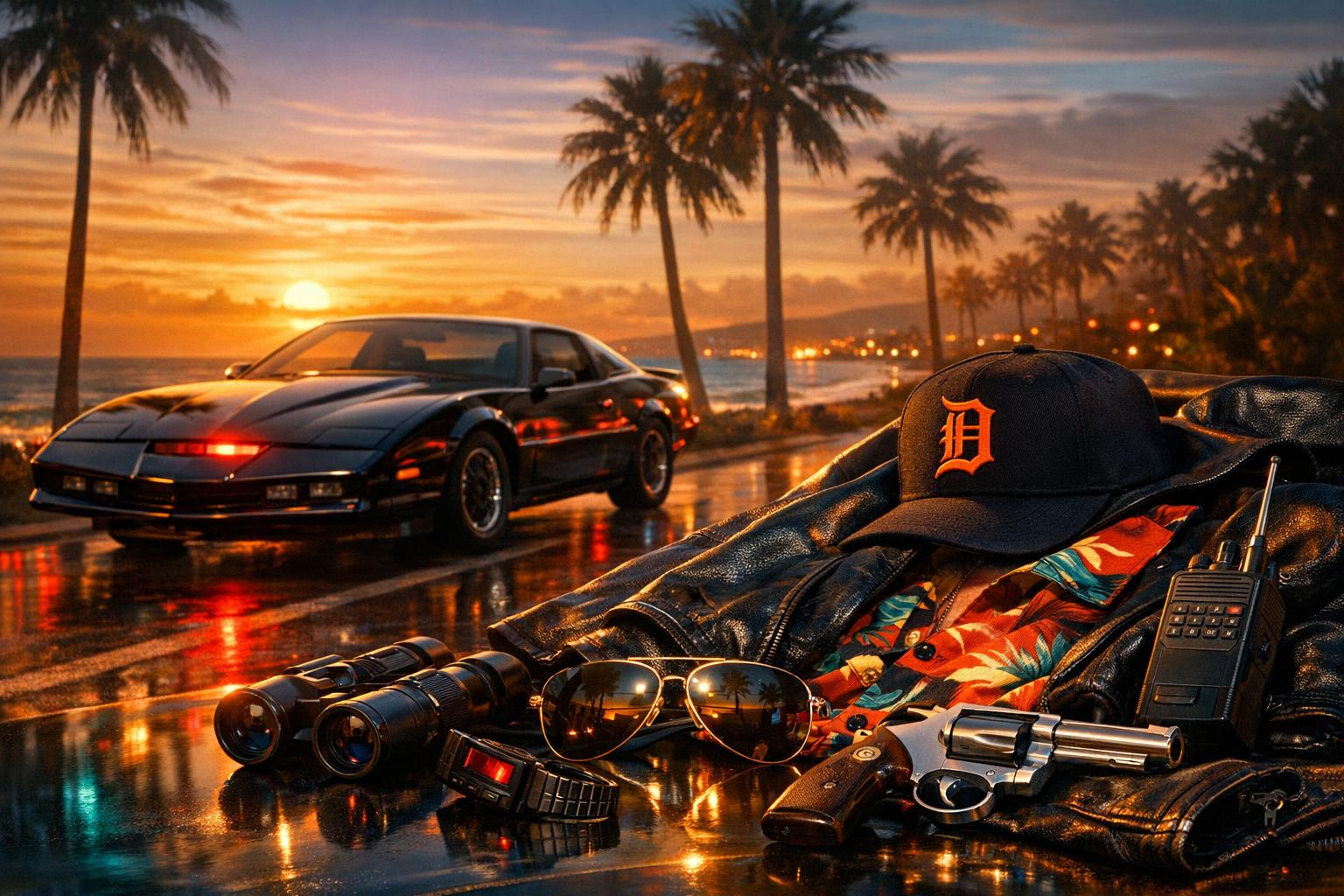
Of course, that car was KITT, the sleek black Pontiac Trans Am with a red scanner light and a voice smoother than many late-night radio hosts. Together, Michael and KITT became one of television’s great double acts. One brought the fists and the charm, the other brought the gadgets and the sarcasm.
Quick cool factor
- Style: Black leather jacket, open-neck shirts, clean-cut action-hero confidence.
- Catchphrase energy: Less about one exact line, more about that calm, heroic tone that said everything was under control.
- Why he was cool: He drove the smartest car on television and somehow made crime-fighting look relaxed.
Michael Knight was the fantasy hero for a generation of viewers. He did not just arrive at the scene. He arrived in a machine that talked back. That alone would secure his place in television history.

Thomas Magnum — sunshine, sarcasm, and the world’s greatest moustache
Then there was Thomas Magnum, played with irresistible charm by Tom Selleck in Magnum, P.I. If Michael Knight was all sleek night driving and high-tech cool, Magnum was warm-weather cool: Hawaiian shirts, a Detroit Tigers cap, and a grin that suggested he was enjoying himself just a little more than everyone else.
Set against the dazzling backdrop of Hawaii, Magnum, P.I. had style built into every frame. But Magnum himself was the main attraction. He was a private investigator with a playful streak, a habit of bending rules, and a talent for making danger look like an inconvenience between lunch and sunset.
Quick cool factor
- Style: Hawaiian shirts, shorts, cap, moustache, and absolute confidence.
- Catchphrase energy: More wisecracks than slogans; his running narration gave him a wonderfully personal charm.
- Why he was cool: He looked like he was on holiday, yet somehow always got the job done.
Magnum’s cool came from balance. He was funny without being silly, tough without trying too hard, and glamorous without losing his everyman appeal. Also, it must be said, he drove a Ferrari. Television understood the assignment.

Starsky and Hutch — streetwise cool in stereo
Some heroes work best alone. Others need a partner to really spark. Starsky & Hutch gave viewers both. Paul Michael Glaser’s intense, street-smart Starsky and David Soul’s calmer, more measured Hutch made a perfect 1970s duo.
They had banter, loyalty, and one of the most recognisable cars in television history: the red-and-white Ford Gran Torino that tore through city streets like it knew it was being watched. There was grit in the show, but there was also warmth. These two felt like real friends, and that chemistry made them endlessly watchable.
Quick cool factor
- Style: Leather jackets, casual streetwear, and pure 70s cop-show attitude.
- Catchphrase energy: The cool was in the back-and-forth, the nicknames, and the rhythm between them.
- Why they were cool: They made partnership look heroic, funny, and just a little dangerous.
There is something timeless about a great TV duo. Starsky and Hutch had that magic, with enough swagger to fill two theme tunes.
The Six Million Dollar Man — bionic cool before tech became everyday
Long before smart watches and voice assistants, there was Steve Austin in The Six Million Dollar Man. Played by Lee Majors, Austin was part man, part machine, and all action hero. The series took science fiction and blended it with a grounded, all-American toughness that made it feel thrilling rather than distant.
And yes, the slow-motion running scenes are still legendary. They turned a simple sprint into a full event. Add the famous sound effects and suddenly every child in the living room was trying to recreate bionic movement across the carpet.
Quick cool factor
- Style: Practical jackets, pilot shades, and serious hero energy.
- Catchphrase: The opening idea said it all: they could rebuild him.
- Why he was cool: He was futuristic, powerful, and strangely believable at the same time.
Steve Austin represented a very 70s kind of cool: capable, calm, and enhanced just enough to seem extraordinary without losing his human side.
Face, Hannibal, B.A. and Murdock — the A-Team turned cool into chaos
If one cool hero is good, four are even better. The A-Team was loud, funny, explosive, and gloriously over the top. George Peppard’s Hannibal Smith had the cigars and master plans. Dirk Benedict’s Face had the charm. Mr. T’s B.A. Baracus had the van, the gold chains, and the kind of presence that could stop a scene in its tracks. Dwight Schultz’s Murdock brought the unpredictable sparkle.
This was a team built for pure entertainment. Every episode felt like a promise: there would be disguises, improvised vehicles, impossible escapes, and at least one line you would repeat the next day.
Quick cool factor
- Style: Military jackets, gloves, gold jewellery, disguises, and big personalities.
- Catchphrases: “I love it when a plan comes together” is still one of television’s great victory lines.
- Why they were cool: They made action feel playful, and every member brought a different flavour of charisma.
B.A. may have been the breakout icon, but the full team was the secret. They were like a great band: every member mattered, and together they were unforgettable.
Sonny Crockett — pastel cool under neon skies
By the time Miami Vice arrived in the 1980s, television cool had changed shape. It became glossier, moodier, and more stylised. Enter Sonny Crockett, played by Don Johnson, who looked as if he had stepped out of a music video and into a police drama.
With rolled-up sleeves, pastel jackets, loafers, and a permanently exhausted intensity, Crockett became a defining image of 80s television. He was cool in a more modern way: less wink, more atmosphere. The music, the lighting, the speedboats, the night-time skyline — it all fed into his mystique.
Quick cool factor
- Style: Pastel suits, T-shirts, loafers, designer stubble.
- Catchphrase energy: Quiet confidence rather than comic one-liners.
- Why he was cool: He made detective work look cinematic.
Crockett showed that television heroes could evolve with the times. Cool no longer had to be rugged or jokey. It could be sleek, moody, and set to a pounding drum machine.
Why these heroes still shine
What makes these characters last is not just nostalgia, though there is plenty of that. It is the clarity of their appeal. Each one had a strong identity you could recognise in seconds. Michael Knight had the car. Magnum had the shirt and moustache. Starsky and Hutch had the friendship. Steve Austin had the bionics. The A-Team had the chemistry. Sonny Crockett had the style.
They also came from a time when television loved bold character design. Heroes were allowed to be distinctive, even exaggerated. Their wardrobes were memorable, their vehicles were iconic, and their personalities were turned up just enough to become legend.
And perhaps that is why they remain so much fun to revisit. They remind us of an era when television was not afraid to be colourful, punchy, and a little outrageous. These heroes did not just fight villains. They gave viewers a weekly masterclass in attitude.
One last ride through the opening credits
Close your eyes and you can almost hear it all again: the rev of an engine, the snap of a snare drum, the swoosh of a helicopter shot over sunlit water. The heroes of the 70s and 80s were bigger than life, but that was exactly the point. They made television feel exciting.
So here is to the leather jackets, the sports cars, the tropical shirts, the dramatic stares, and the catchphrases that still raise a smile. Cool may change its clothes every decade, but these television heroes wore it so well that they never really went out of fashion.