One Summer Evening on Maple Street
A darkened street, a stalled car, and one small doubt are all this classic episode needs to get under your skin. Its 1960 television setting gives it nostalgic charm, but the fear and finger-pointing still feel startlingly current.
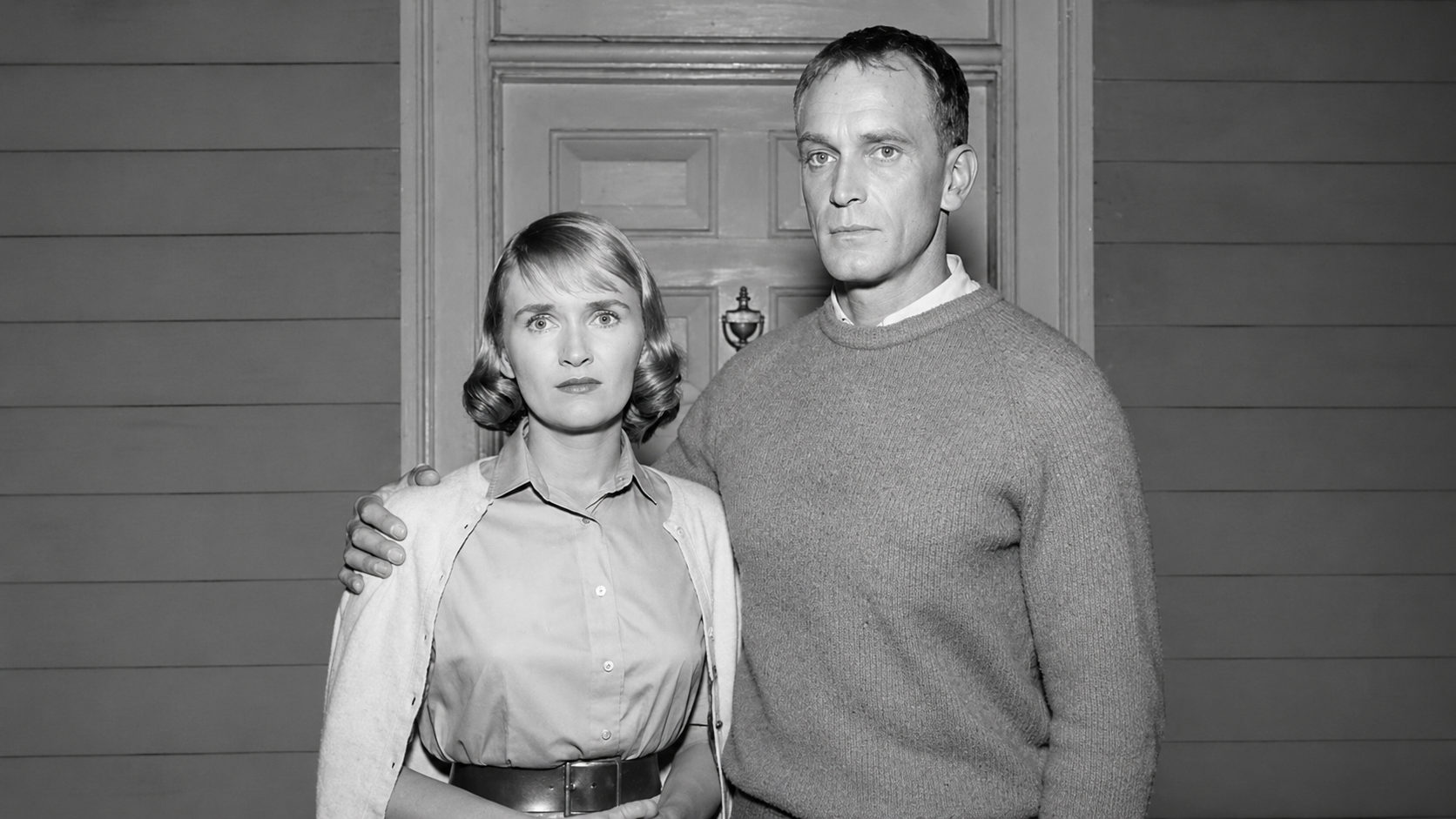
There is something wonderfully unsettling about the way The Twilight Zone could turn an ordinary neighbourhood into a pressure cooker. In “The Monsters Are Due on Maple Street”, first broadcast in 1960, the street looks familiar enough to belong to anyone: children playing, adults chatting, porch lights glowing, the easy rhythm of suburban life ticking along. Then the power goes out, a strange flash crosses the sky, and suddenly the friend next door starts to look like a suspect.
It is one of the most memorable episodes of Rod Serling’s landmark television series, not because it relies on elaborate special effects or a creature reveal, but because it understands a far more frightening truth: panic can do more damage than any monster ever could. More than sixty years later, it still lands with remarkable force.
A simple setup with a powerful sting
The premise is beautifully direct. On a warm evening, the residents of Maple Street are interrupted by a mysterious sound and a flash overhead. Soon after, cars will not start, telephones stop working, and electrical devices begin behaving oddly. Nobody knows why. That uncertainty is the spark that lights the whole story.
At first, the neighbours try to stay calm. They gather in little clusters, talking things through in the practical, everyday way people do. But then a young boy, Tommy, mentions an idea he has picked up from science-fiction stories: maybe the neighbourhood has been infiltrated by beings who look human. It sounds absurd, until fear gives the idea room to breathe.
That is the genius of the episode. It does not ask us to believe something wild. It asks us to watch ordinary people start believing it themselves.
Fear spreads faster than facts
Once suspicion enters Maple Street, every tiny detail becomes evidence. One man’s car starts unexpectedly. Another neighbour stays up late at night. Someone else owns a radio. Innocent quirks suddenly appear sinister. The episode shows, with chilling precision, how quickly a community can unravel when people stop trusting one another.
And yet, for all its tension, the writing remains wonderfully human. These are not grand heroes or villains in the beginning. They are recognisable people, fumbling in the dark, trying to make sense of something frightening. That familiarity is what gives the story its bite. You can imagine this street. You can hear the raised voices, the hurried footsteps, the screen doors slamming.
Rod Serling’s sharpest warning light
Rod Serling wrote many unforgettable episodes of The Twilight Zone, but this one feels especially precise in its mission. It is a parable, yes, but never a dry one. Serling wraps his warning in the language of suspense, then lets it unfold with almost musical timing. Every accusation lands like a drumbeat. Every pause matters.
What makes the script endure is its refusal to let the audience feel superior. It would be easy to watch and say, “Well, I would never behave like that.” But the episode is smarter than that. It understands that fear, rumour, and group pressure can push almost anyone toward bad decisions.
“The tools are there,” Serling seems to be telling us, “all that is needed is the right nudge.”
That message resonated strongly in 1960, in a world shaped by Cold War anxieties and public suspicion. It still resonates now because the mechanics of panic have not changed nearly as much as our gadgets have.
The final reveal still chills
Without taking away the pleasure of discovery for first-time viewers, it is fair to say the ending is one of the great closing turns in television. It widens the lens in a way that is both clever and deeply unsettling. The real brilliance, though, is that the final moment does not undercut the drama on Maple Street. It sharpens it.
The episode leaves you with a haunting thought: the greatest vulnerability was never the power lines or the machinery. It was the people themselves.
Performances that feel close to home
Part of the episode’s lasting appeal lies in its cast. Claude Akins, Jack Weston, Barry Atwater and the rest of the ensemble give the story a convincing, lived-in energy. Nobody plays the material too broadly. The fear builds in increments: a puzzled look, a defensive answer, a sharper tone, a step forward that feels just a little too aggressive.
That gradual rise matters. If everyone began at full shouting volume, the episode would lose its shape. Instead, we hear the neighbourhood’s mood change note by note, until the street that seemed so calm at the start becomes almost unrecognisable.
There is also something very effective about the domestic setting. These are front lawns, porches, sidewalks, familiar spaces meant for conversation and comfort. Watching them transform into a stage for accusation gives the episode an eerie charge. The monster story arrives without caves, castles, or laboratories. It walks right onto an ordinary block.
Why it still feels fresh on television today
Some classic television episodes are admired more than loved, respected mainly for their historical importance. “The Monsters Are Due on Maple Street” is not one of those. It still works as gripping entertainment. The pacing is tight, the concept is instantly understandable, and the emotional stakes are clear from the moment the first doubts begin.
It also remains refreshingly economical. In just under half an hour, the episode introduces a setting, establishes a group dynamic, creates a mystery, escalates tension, and delivers a moral punch that lingers long after the credits. That is craftsmanship of a very high order.
Nostalgia with real substance
For fans of classic television, there is a special pleasure in revisiting an episode like this. You get the monochrome photography, the crisp direction, the unmistakable Serling narration, and that elegant era of anthology storytelling when one bold idea could carry an entire night. It is nostalgic, certainly, but not in a hollow way. The episode earns its reputation every time you watch it.
And for newer viewers, it can be a delightful surprise. This is the kind of classic that does not need apologising for. It does not feel dusty or distant. It feels immediate.
A Classic Gold verdict
If this were a record spinning on the radio, you would call it a timeless side: lean, memorable, and built around a hook that grabs you early and refuses to let go. The Twilight Zone produced many masterpieces, but “The Monsters Are Due on Maple Street” sits near the very front of the shelf.
It is suspenseful without being flashy, thoughtful without becoming heavy-handed, and nostalgic in the best possible sense. You return to it for the atmosphere, the performances, and that delicious feeling of a story tightening the screws with each passing minute. Then you stay for the bigger idea underneath it all.
- Best for: viewers who love intelligent suspense and classic anthology television
- What stands out: the script’s precision, the believable ensemble cast, and the unforgettable ending
- Why it lasts: its warning about fear and suspicion remains painfully relevant
On a friendly evening of classic television, this is exactly the kind of episode you hope to rediscover: smart, eerie, and still crackling with life. Maple Street may look quiet at first glance, but once you step onto it, you will not forget the visit anytime soon.