
Out of the Fog (1941): A Dark, Atmospheric Trip Back to Old New York
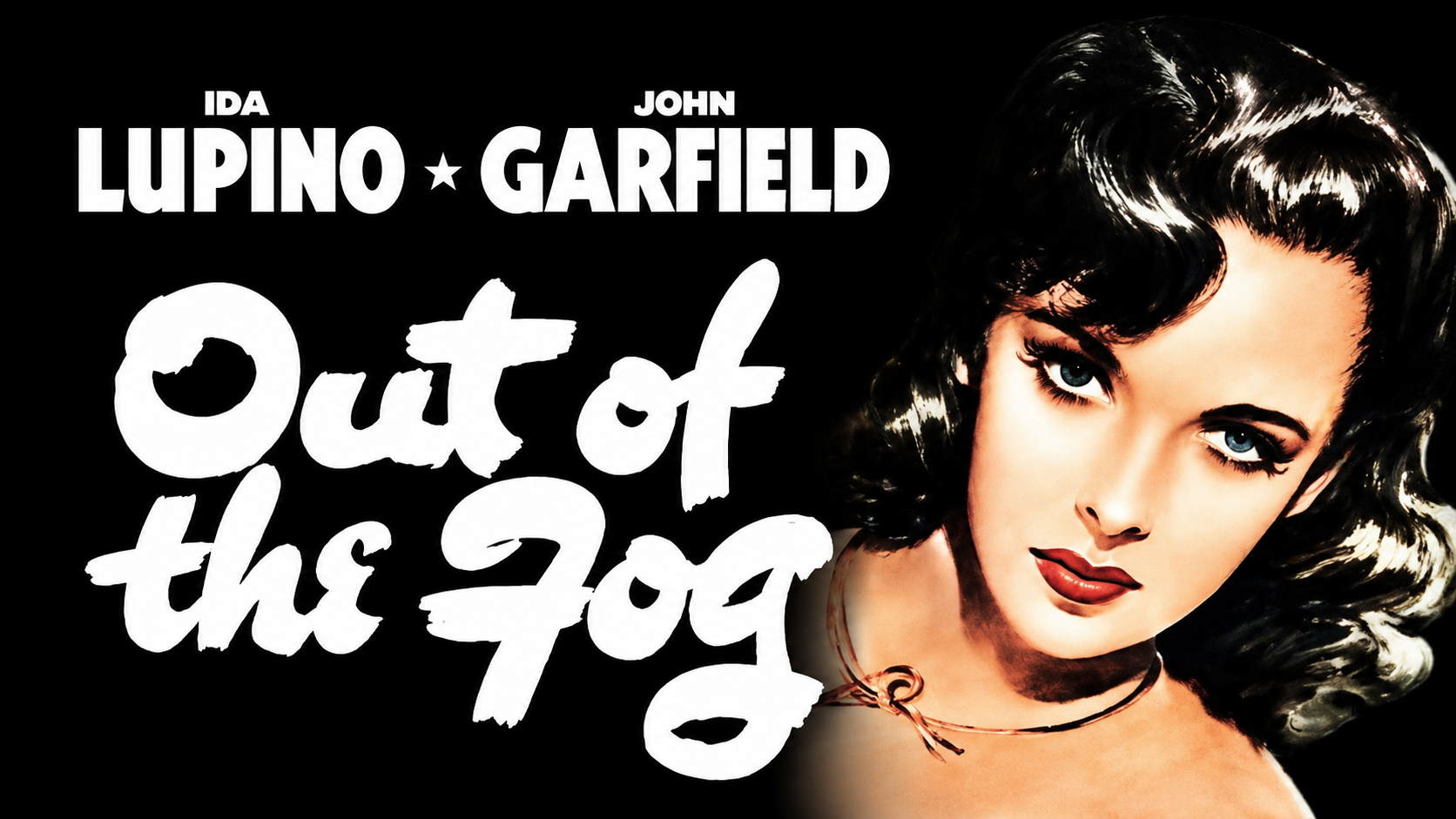
Step into the foggy waterfront of 1941 with Out of the Fog, an atmospheric crime drama starring John Garfield and Ida Lupino. With its shadowy streets, theatrical performances, and old New York charm, it feels like a haunting trip into another time.
There are old movies that we watch because of the story. There are others we watch for the stars.
And then there are movies like Out of the Fog, where the atmosphere becomes almost more memorable than the plot itself.
Released in 1941, Out of the Fog stars John Garfield, Ida Lupino, Thomas Mitchell and John Qualen in a dark crime drama set around the waterfront of Brooklyn. On paper, it is a story about intimidation, desperation and ordinary people finding the courage to fight back.
But watching it more than eight decades later, something else stands out.
It feels like stepping into another world.
A New York That Has Disappeared
From its opening moments, Out of the Fog surrounds us with darkness, mist and the waterfront.
Small boats rock beside wooden docks. Streetlights disappear into the fog. People live in modest apartments and gather in neighborhood restaurants. The city feels enormous somewhere beyond them, yet the characters themselves inhabit a surprisingly small world.
That is part of what makes the movie so nostalgic today.
This isn’t the glamorous New York of skyscrapers, penthouses and nightclubs that appeared in so many Hollywood productions. This is a working-class New York of fishermen, shopkeepers, immigrants and families trying to get by.
And because so much of the movie takes place at night, there is an almost dreamlike quality to it.
You can practically imagine the damp air coming off the water.
When Fog Was a Special Effect
Modern movies can create entire cities inside a computer. Out of the Fog needs surprisingly little to create its world.
A dock.
A boat.
A streetlight.
A dark room.
And lots of fog.
The black-and-white photography turns these simple elements into something wonderfully atmospheric. Shadows hide parts of rooms. Faces emerge from darkness. The waterfront sometimes seems to disappear completely into the mist.
There is something artificial about it, certainly. You know you’re looking at Hollywood sets.
But strangely, that artificiality makes the movie even more appealing today.
It feels less like reality and more like a memory of 1941.
A Movie That Feels Like a Stage Play
One of the most interesting things about Out of the Fog is how theatrical it feels.
There is a good reason for that.
The film was adapted from Irwin Shaw’s play The Gentle People, which had appeared on Broadway before Warner Bros. brought the story to the screen.
And you can feel those theatrical origins throughout the movie.
Many scenes involve characters gathered in a room simply talking. Conversations are allowed to develop. Actors move in and out of the frame almost as though they were entering and leaving a stage.
Even the performances have a theatrical quality.
The actors don’t mumble their dialogue or try to make every moment understated. They perform.
Their voices are clear. Their gestures are deliberate. Their expressions communicate exactly what their characters are feeling.
To modern viewers accustomed to naturalistic acting, it can initially seem exaggerated.
But give it a few minutes.
Soon it becomes part of the charm.
You stop feeling as though you’re watching a modern movie trying to recreate the 1940s. You feel as though you’re actually watching entertainment from the 1940s.
And there is a huge difference between the two.
John Garfield Brings Danger to the Waterfront
At the center of the story is Harold Goff, played by John Garfield.
Goff is a small-time racketeer who discovers that local fishermen Jonah Goodwin and Olaf Johnson have been operating their boat without the proper paperwork. He sees an opportunity and begins demanding protection money from them.
Garfield gives Goff exactly the kind of presence the character needs.
He isn’t a gigantic gangster surrounded by machine guns and bodyguards. His power comes from intimidation.
He walks into the lives of ordinary people and simply refuses to leave.
That makes him particularly unpleasant.
There is something disturbingly casual about his cruelty. To Goff, frightening two older working men isn’t personal. It’s business.
Garfield makes him charming enough that you understand why some people might initially be attracted to him, but dangerous enough that you never completely relax when he’s on screen.
Ida Lupino Wants Something More
Ida Lupino plays Stella, Jonah’s daughter, who dreams of escaping her ordinary neighborhood life.
That desire puts her directly in Goff’s path.
To Stella, he initially represents something exciting.
He has money. Confidence. Nice clothes. He seems connected to a larger, more glamorous world beyond the docks and small apartments she has known all her life.
That creates one of the movie’s more interesting tensions.
The audience knows Goff is dangerous.
Stella sees possibility.
Lupino brings energy and restlessness to the character. You understand why Stella doesn’t want to spend the rest of her life exactly where she grew up.

It is another element that makes Out of the Fog feel surprisingly human beneath its crime-story surface.
Thomas Mitchell and John Qualen Steal the Movie
For all the star power of Garfield and Lupino, the emotional heart of the film belongs to Thomas Mitchell and John Qualen as Jonah and Olaf.
These aren’t tough Hollywood gangsters.
They’re ordinary men.
They work. They fish. They save money. They dream about taking their boat on a long trip someday.
And suddenly a criminal appears and begins taking what little they have.
Mitchell and Qualen give their characters warmth, humor and vulnerability. Their friendship feels lived-in, which makes Goff’s intimidation of them increasingly frustrating to watch.
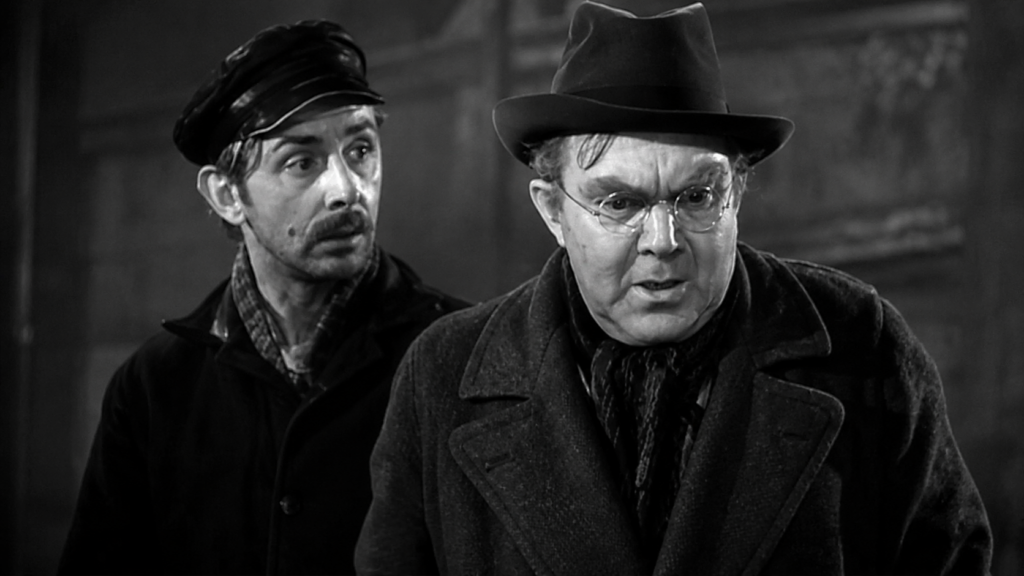
You want these two men to be left alone.
And perhaps that is why the movie works so well.
The conflict isn’t about rival criminal organizations fighting for control of a city.
It’s about ordinary people being pushed around until they finally decide they’ve had enough.
The Pleasure of Watching an Old Movie Move Slowly
Out of the Fog also reminds us how differently movies once moved.
Nobody seems to be racing toward the next action sequence.
Scenes breathe.
Characters sit at tables.
They talk.
They argue.
They walk through rooms.
They stare out windows.
For viewers accustomed to modern editing, the pace can seem slow.
But on the right evening, that’s exactly what makes a movie like this so enjoyable.
Turn down the lights, forget about your phone for a while and allow yourself to enter its world.
Soon the slower rhythm becomes comforting.
You aren’t just following a plot anymore.
You’re spending time in 1941.
The Nostalgia of a World We Never Knew
Perhaps the strangest thing about watching Out of the Fog today is the nostalgia it creates.
Most of us watching the movie now never experienced this America.
We never walked those waterfront neighborhoods.
We never ate in those little restaurants.
We never rode those old cars or lived in those apartments.
And yet the movie can somehow make us miss them.
That’s one of the remarkable powers of classic cinema.
Old movies accidentally became time machines.
The filmmakers were simply trying to tell a story for audiences in 1941. They couldn’t have known that generations later, viewers would be studying the furniture, the clothing, the streets, the boats, the restaurants and even the way people spoke.
Things that were completely ordinary when the movie was made have become fascinating today.
More Than a Crime Drama
Out of the Fog isn’t usually the first movie mentioned when people talk about great films of the 1940s.
It doesn’t have the legendary reputation of Casablanca, The Maltese Falcon or Double Indemnity.
But perhaps that’s part of its appeal.
Discovering a movie like this feels like finding something that has been quietly waiting for you for more than eighty years.
Come for John Garfield and Ida Lupino.
Stay for Thomas Mitchell and John Qualen.
But most of all, stay for that wonderful atmosphere: the fog rolling across the waterfront, the dark apartments, the little boats tied to the docks and performances that sometimes make you feel as though you’re sitting in the audience of a Broadway theater in 1941.
Sometimes an old movie doesn’t need to be perfect to transport you.
It just needs to open a door.
And for 85 minutes, Out of the Fog opens one into a New York that has long since disappeared.