A Detroit Studio, a Burst of Horns, and Stevie Wonder’s Special Delivery
This is the moment Stevie Wonder stopped sounding merely unstoppable and started sounding fully in charge.
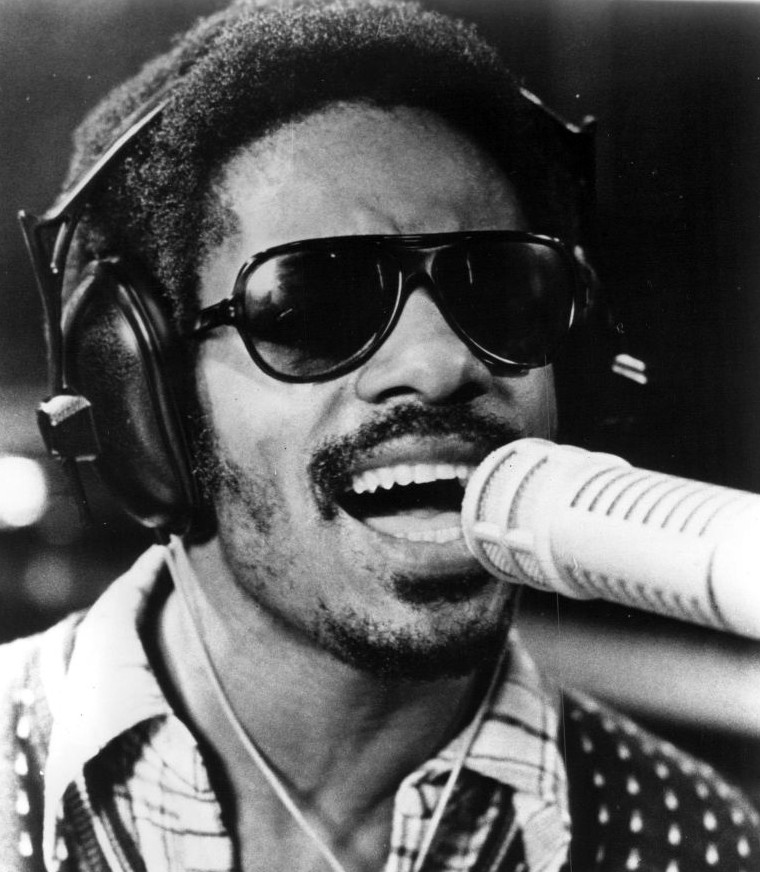
Few records announce themselves with quite the same spring in their step as “Signed, Sealed, Delivered I’m Yours”. The groove is immediate, the horns arrive like a grin, and Stevie Wonder sounds as if he is leaning right through the radio speaker to tell you the good news in person. Released in 1970, the single captured a thrilling moment in Wonder’s career: he was no longer the child prodigy introduced to the world in the 1960s, and not yet the fully self-directed album visionary of his classic 1970s run. This song sits right at that turning point, sparkling with Motown craft while already carrying Stevie’s unmistakable stamp.
The moment Stevie took the wheel
By 1970, Stevie Wonder had been in the public eye for years. He had arrived as “Little Stevie Wonder,” the teenage harmonica sensation behind hits like “Fingertips”, but he was growing fast as a singer, songwriter, keyboard player, and producer. At Motown, where the quality-control machine was famously rigorous, artists often worked within a tightly managed system. “Signed, Sealed, Delivered I’m Yours” is exciting partly because you can hear Wonder pushing beyond that framework.
The single became his first hit produced by Stevie Wonder himself, a major milestone. That detail matters. Motown had built an empire on polished teamwork, with producers, arrangers, writers, and studio musicians all contributing to a refined house style. For Stevie to step forward as producer signaled artistic confidence and a growing independence that would soon reshape his career completely.
And yet the record never sounds like a manifesto. It sounds joyous, easy, generous. That is one of its great tricks: beneath the bright bounce is a meaningful shift in power.
How the song was written
A collaboration with real spark
The writing credits on “Signed, Sealed, Delivered I’m Yours” reflect the collaborative energy behind it. The song is credited to Stevie Wonder, Lee Garrett, Syreeta Wright, and Lula Mae Hardaway, Stevie’s mother. Each name tells part of the story.
Lee Garrett was a songwriter and singer who worked closely with Wonder during this period. Syreeta Wright, a gifted songwriter and singer in her own right, was one of Stevie’s most important creative partners; the two would later marry, and their musical connection ran deep. Lula Mae Hardaway had already contributed to Stevie’s songwriting world before, helping shape lyrics and ideas with a direct, emotional plainness that suited him beautifully.
The song itself is built on a classic pop-soul premise: a man who has made mistakes returns with absolute certainty, declaring his love in terms borrowed from the mailroom and the shipping office. It is a wonderful conceit because it is playful without being gimmicky. “Signed, sealed, delivered, I’m yours” is instantly understandable, memorable on first hearing, and perfect for Stevie’s buoyant delivery.
There is also a tactile quality to the lyric that makes it stick. You can almost feel the envelope flap, the rubber stamp, the parcel tied up and sent on its way. In a song about devotion, that physical imagery gives the emotion shape.
Syreeta’s lyrical touch
One of the most often-cited behind-the-scenes details about the song is Syreeta Wright’s contribution to the lyric, including the line “Here I am baby”, which became one of the record’s most irresistible hooks. It is the kind of phrase that seems obvious only after someone brilliant has said it. Simple, warm, and rhythmically perfect, it gives the song its open-armed character.
That call of “Here I am, baby” feels conversational, almost improvised, as if Stevie has just burst into the room. In truth, that kind of natural ease is usually the product of sharp songwriting instincts. Syreeta had them in abundance.
Inside the recording
Motown precision with a looser, funkier edge
Recorded in Motown’s orbit during a period of transition for both the label and for Stevie himself, “Signed, Sealed, Delivered I’m Yours” carries the label’s trademark polish but with a slightly rougher, more immediate energy than some earlier Motown singles. It swings harder. The rhythm section feels less ornamental and more propulsive. The whole track seems to bounce off the walls.
That has a lot to do with the musicians involved. As with so many Motown recordings of the era, the backing was shaped by the extraordinary studio players often associated with the Funk Brothers, the loose collective of musicians whose bass lines, drum patterns, keyboard parts, and guitar figures powered countless hits. Precise session documentation from this period can sometimes be complicated, but the sound world is unmistakably rooted in that Motown studio excellence: tight drums, melodic bass, crisp guitar, and horns that punch without overwhelming the vocal.
Stevie’s own keyboard work is central to the feel. Even when the arrangement is busy, he keeps the performance light on its feet. His vocal is just as important. He does not merely sing the melody; he animates every line, clipping some phrases, stretching others, and throwing in ad-libs that make the record feel alive in the moment.
A vocal full of personality
One of the great pleasures of the track is hearing Stevie balance polish and spontaneity. He sounds thrilled by the song. There is a smile in the phrasing, a little flash of mischief in the timing, and a preacher’s instinct for emphasis in the way he lands the title line. The backing vocals answer him beautifully, creating that classic soul sense of testimony and response.
It is also a fine example of how Motown records could be meticulously assembled while still feeling human. Nothing is slack, but nothing is stiff either. The record breathes.
Chart success and commercial reception
When “Signed, Sealed, Delivered I’m Yours” arrived in 1970, audiences responded quickly. The single became a major international hit, reaching No. 3 on the Billboard Hot 100 in the United States and topping the Billboard R&B chart. In the United Kingdom, it also performed strongly, reaching the Top 20.
That success confirmed several things at once:
- Stevie Wonder remained a major singles artist as he entered adulthood
- His move into production was not just artistically significant, but commercially successful
- Listeners were ready for a Stevie Wonder who sounded more self-defined and more rhythmically adventurous
Critics and fans alike were drawn to the record’s brightness and drive. It had the accessibility of a pop hit, the emotional directness of soul, and just enough rhythmic grit to hint at where Black popular music was heading in the early 1970s.
Why it mattered in 1970
A bridge between classic Motown and the decade ahead
To understand the song’s place in music history, it helps to hear it as a bridge. The late 1960s had established Motown as one of the defining hit factories in popular music, with immaculate singles by the Supremes, the Temptations, the Four Tops, Marvin Gaye, and many more. But by 1970, the musical landscape was changing. Soul music was becoming more personal, more politically aware, more album-oriented, and often funkier in its rhythmic language.
“Signed, Sealed, Delivered I’m Yours” sits right on that threshold. It still has the compact brilliance of the classic three-minute Motown single. At the same time, its groove points toward the freer, more individual Stevie Wonder heard soon after on landmark albums such as Music of My Mind, Talking Book, and Innervisions.
In that sense, the record is more than a hit. It is a clue. You can hear the old system still working beautifully, but you can also hear one of its greatest stars preparing to remake the rules.
Legacy, covers, and cultural afterlife
A song that never really left
Some hits belong to their year. Others seem to keep mailing themselves forward to the next generation. “Signed, Sealed, Delivered I’m Yours” is firmly in the second category. Its title alone has entered everyday language as shorthand for certainty, commitment, and arrival.
The song has enjoyed a long afterlife through film, television, advertisements, celebrations, and countless oldies and classic hits playlists. It is one of those records that can instantly lift the mood of a room. Weddings, reunion parties, road trips, radio countdowns: it fits almost anywhere because it carries such uncomplicated joy.
It has also been covered and reinterpreted by many artists over the years, a sign of how sturdy the songwriting is. Perhaps the most famous later revival came when Peter Frampton and Dolly Parton recorded a duet version in the 1970s, introducing the song to another audience. Long after its original chart run, Stevie’s version remained the one most listeners returned to, proof that the first delivery was hard to beat.
The enduring Stevie magic
Part of the song’s legacy lies in how perfectly it captures Stevie Wonder’s gifts in miniature:
- His melodic instinct — the hook lands immediately
- His rhythmic feel — the groove is nimble and irresistible
- His warmth — even the declaration sounds personal
- His showmanship — every phrase has life in it
For radio listeners especially, it remains a kind of instant sunshine record. The opening bars are enough. Before the first verse is finished, the mood has changed.
Small details that make it memorable
One reason “Signed, Sealed, Delivered I’m Yours” has lasted so well is that it is packed with tiny pleasures. The horns do not simply decorate the track; they propel it. The backing vocals do not just support Stevie; they frame him like a cheering crowd. The rhythm section keeps everything moving with a dancer’s balance of discipline and release.
Then there is the title phrase itself, one of the great examples of pop economy. Four words from the world of postage and paperwork become a full emotional declaration. It is catchy, clever, and impossible to forget.
“Here I am, baby / Signed, sealed, delivered, I’m yours.”
That line still feels like a door swinging open.
The special delivery still arrives on time
More than half a century later, “Signed, Sealed, Delivered I’m Yours” remains one of Stevie Wonder’s most beloved singles because it captures a rare combination: craftsmanship, personality, and pure uplift. It is a record made at a crossroads, where Motown excellence met Stevie’s growing artistic independence, and the result was electric.
Play it now and it still sounds fresh, still moves with purpose, still brings that little jolt of happiness that great radio records deliver in seconds. Some songs age into museum pieces. This one still feels like good news.