
Stand By for Captain Video
The studio lights are blazing, the control panel is humming, and a homemade universe is seconds from going live. Captain Video and His Video Rangers still crackles with the daring energy of television’s earliest space race.
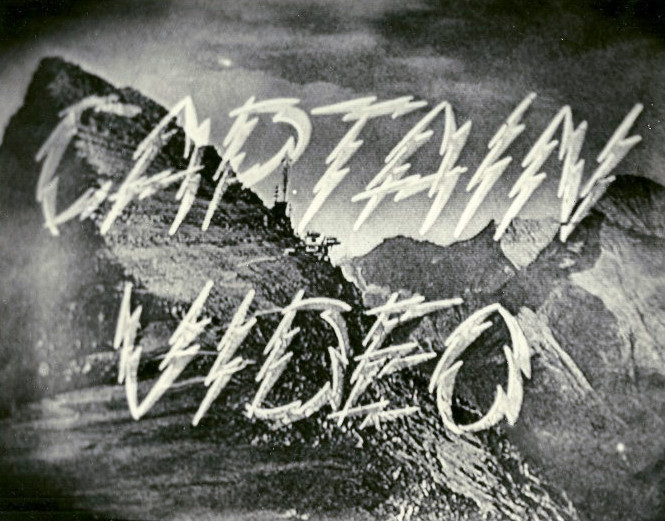
There is a special kind of magic in early television: the hum of hot studio lights, a painted control panel wobbling slightly in the background, and performers racing through live scenes as if the whole future of entertainment were balanced on a countdown clock. Captain Video and His Video Rangers, which aired from 1949 to 1955, belongs right in that glowing, flickering world. It was ambitious, improvised, earnest, and wonderfully bold—one of those pioneering series that now feels less like a dusty relic and more like a transmission from the moment television learned to dream big.
For modern viewers, the show can look charmingly homemade. But that is part of its appeal. This was science fiction built in real time, often on tight budgets and tighter schedules, with imagination doing the heavy lifting. Seen today, Captain Video and His Video Rangers is not just a program; it is a behind-the-scenes story about how early TV creators turned cardboard, conviction, and pure momentum into a weekly adventure.
A hero built for the television age
When Captain Video and His Video Rangers arrived on the DuMont Television Network in 1949, television itself was still finding its voice. Radio had long mastered the art of cliffhangers, announcers, and larger-than-life heroes. Television, by contrast, was still experimenting with what it could do well. Into that frontier stepped Captain Video, a stern but noble commander patrolling the universe and defending justice with his loyal Rangers.
The premise was simple and effective: futuristic missions, dangerous villains, scientific gadgets, and a steady stream of lessons about courage, discipline, and doing the right thing. The title character, first played by Richard Coogan and later by Al Hodge, carried exactly the sort of square-jawed authority audiences expected from a post-war adventure hero. He was serious without being cold, commanding without losing the sense that he was inviting young viewers to join the mission.
That invitation mattered. In an era when television sets were becoming the centrepiece of family living rooms, Captain Video spoke directly to children while reassuring adults. It had the pulse of a serial, the morality of a fable, and the excitement of a Saturday matinee beamed into the home.
The charm of live television
Part of what makes the series so fascinating now is that it was largely performed live. That meant there was very little room for error. Sets had to be moved quickly, cues had to land on time, and actors had to keep the story moving even when props misbehaved or effects looked less than intergalactic. If you love the energy of live radio, you can feel a similar current here: everyone is leaning forward, trying to catch the next beat before it disappears.
Fast fixes, bold illusions
Budgets were famously modest, and the production team compensated with speed and ingenuity. Props were often repurposed. Costumes suggested outer space with broad strokes rather than polished realism. Special effects relied on lighting, smoke, model work, and the audience’s willingness to meet the show halfway. In many ways, that partnership with the viewer is exactly what gives the series its enduring warmth.
There is something deeply likeable about a show that says, in effect, “Here is our universe—come along with us.” Instead of drowning the screen in spectacle, Captain Video asked the audience to imagine the rest. That can make the adventures feel oddly intimate, almost like a neighbourhood theatre troupe putting on a cosmic serial with complete sincerity.
When the script needed help
One of the best behind-the-scenes stories attached to the series is the calibre of writers who passed through its orbit. Among them was a young Arthur C. Clarke, who contributed story ideas. That detail alone says a great deal about the program’s place in television history. Even at its most makeshift, Captain Video attracted serious science-fiction thinking. The show was not merely dressing up old western plots in space helmets; it was part of a larger cultural moment in which the future felt thrilling, near, and open for invention.
Because so many episodes were broadcast live and not preserved, what survives today is only a partial record. That missing material gives the series an almost legendary quality. We are left with fragments, memories, production stills, and stories from those who made it. In a way, that suits a program about transmission, distance, and adventure across the unknown.
Why it mattered to a generation
Long before science-fiction television became sleek and cinematic, Captain Video and His Video Rangers showed that the genre could work on the small screen. It helped prove there was an audience for futuristic storytelling at home, week after week. That is no small achievement. Later television adventures with bigger budgets and more polished effects owe something to these early experiments.
For young viewers, the show was especially powerful. Captain Video was not a wisecracking anti-hero or a distant super-being. He was a leader. He gave instructions, explained devices, and treated heroism as a matter of character. His Rangers were not there simply to admire him; they were part of a wider mission. That structure made the show feel participatory. Children could imagine themselves in uniform, taking orders, learning science, and helping save the day.
That may be the secret of the show’s staying power: it turned the television set into a command console and the living room into a launch bay.
There was also a distinctly hopeful tone to the series. The future here was dangerous, yes, but it was also navigable. Knowledge mattered. Bravery mattered. Teamwork mattered. In the early years of the atomic age, that blend of caution and optimism struck a chord.
Performances that sold the fantasy
A production like this lives or dies on commitment, and the cast understood the assignment. Richard Coogan brought a crisp, authoritative presence to the title role in the early run, while Al Hodge, who became the better-known Captain Video for many viewers, leaned into the character’s reassuring strength. Neither performance depended on irony. They played the material straight, which was exactly the right choice.
That straight-faced style is essential to the series’ appeal. If the actors had winked at the audience, the illusion would have collapsed. Instead, they treated every ray gun, control panel, and planetary threat as entirely real. That seriousness gives the show its pulse. You believe because they believe.
The villains, the gadgets, the weekly rush
Adventure serials need danger, and Captain Video supplied it in generous portions. Villains lurked, schemes unfolded, and futuristic devices promised both salvation and chaos. The gadgets were especially important. Early television loved visual hooks, and a blinking machine or mysterious instrument could instantly suggest a world beyond the studio walls.
Even when those devices now appear delightfully primitive, they still work in dramatic terms. They give the actors something to explain, react to, and protect. In other words, they keep the story moving. And in live television, movement was everything.
Watching it now
So how does Captain Video and His Video Rangers play in the twenty-first century? Best of all when approached with curiosity and a little affection. If you expect modern pacing or seamless world-building, you may miss the point. But if you watch it as a piece of television archaeology—alive with invention, pressure, and optimism—it becomes genuinely rewarding.
Its flaws are visible, certainly. The production can be rough. The storytelling sometimes leans on formula. Some performances and dialogue reflect the broad style of the era. Yet those very qualities are part of the texture. They remind us that television was once an exciting, unstable medium where creators were making up the grammar as they went along.
- Best reason to watch: a front-row seat to television history in motion
- Best quality: infectious sincerity and live-wire energy
- Most memorable feature: how much imagination it creates with so little
Final verdict
Captain Video and His Video Rangers is not a polished monument. It is something more appealing: a brave, bustling prototype. It captures the moment when television was still young enough to be fearless, when a small studio could stand in for the cosmos and a determined cast could make viewers believe that adventure was arriving right through the screen.
For anyone who loves classic broadcasting, this series is a joy—not because it is perfect, but because it is alive with effort, invention, and the thrill of firsts. You can almost hear the floor manager counting down, feel the heat from the lights, and sense the cast stepping into position. Then the signal goes out, the hero appears, and for a little while the future belongs to Captain Video.