
Men into Space still knows how to launch a good idea
With control-room voices snapping out instructions and rocket smoke billowing across the screen, Men into Space wastes no time selling its vision of tomorrow. This 1959 series still feels like a lively dispatch from the moment TV decided the space race belonged on prime time.
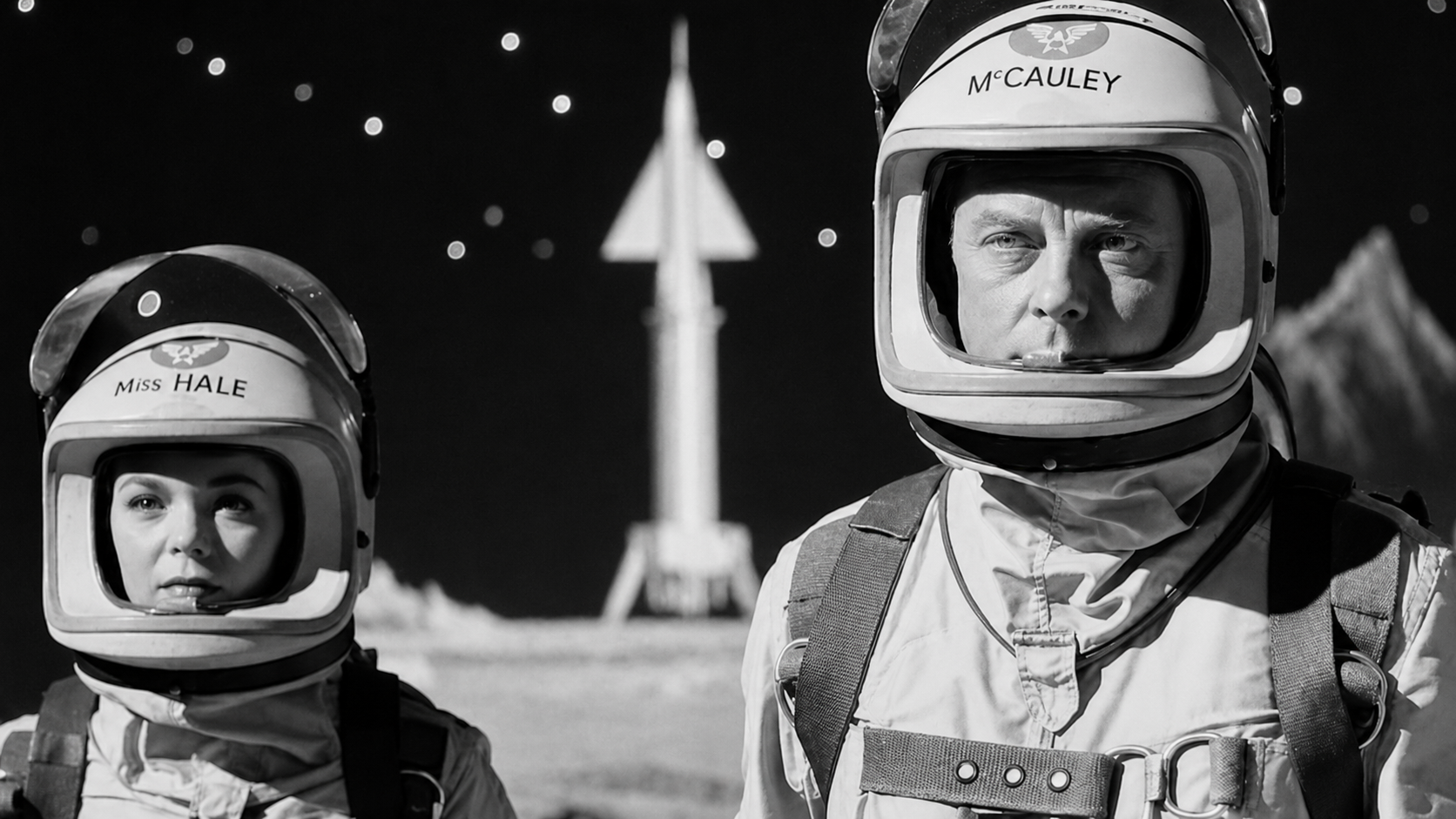
There is something instantly appealing about Men into Space. Before the countdown reaches zero, before the rockets rise in a cloud of smoke and studio ambition, the series makes a promise that television in the late 1950s loved to make: the future is coming, and sensible, determined people are going to build it. Watching it now, that confidence is part of the charm.
First broadcast in 1959, Men into Space arrived at a fascinating moment. The space race was no fantasy headline by then. Sputnik had already startled the world, NASA had been created, and public imagination was fixed firmly upward. Hollywood and television had spent years giving audiences bug-eyed monsters, ray guns, and distant planets. This series chose a different route. It aimed for procedural realism, presenting space travel not as wild fantasy but as an engineering challenge, a military project, and a very human test of nerve.
A TV future built with slide rules and steel nerves
The series stars William Lundigan as Colonel Edward McCauley, a calm, capable officer who feels less like a swashbuckling science-fiction hero and more like the kind of square-jawed professional audiences trusted in mid-century television. That is central to the show’s identity. Men into Space is not really about flashy heroics. It is about preparation, command decisions, technical setbacks, and the hard business of getting people safely off the Earth and, ideally, back again.
That approach gives the series a tone that still feels distinctive. There is drama, certainly, but it comes from oxygen shortages, mechanical failures, radiation fears, fuel calculations, and the limits of human endurance. In other words, the excitement comes from problems that sound plausible. For viewers in 1959, that must have felt thrillingly close to the headlines. For viewers today, it plays like a fascinating bridge between old television adventure and the more grounded space dramas that came later.
It also helps that the show takes itself seriously in a way that is easy to enjoy. There is no wink to the audience, no campy invitation to laugh along. Men into Space believes in its mission. That sincerity gives it weight, and, in the best episodes, real momentum.
The look of tomorrow, made on yesterday’s television budgets
Now, let us be honest, because part of the fun of revisiting classic television is seeing exactly how it was made. This was not a lavish production by modern standards. Sets can be tight, effects can be modest, and some of the equipment has that wonderful all-purpose industrial look that old television used whenever a control panel needed to suggest “advanced technology.” Buttons blink, dials spin, men in uniforms speak crisply into headsets, and somehow it all works.
In fact, that handmade quality is part of the appeal. The spacecraft interiors have a practical, lived-in feel. The suits and hardware may not match modern aerospace knowledge, but they reflect a serious attempt to imagine near-future design. Rather than aiming for fantasy spectacle, the production leans into functional realism. You can almost hear the producers saying, “Make it look convincing enough that the audience might believe this is coming in a few years.”
That spirit extends to the model work and effects sequences. They are unmistakably of their era, but often impressively composed. Rocket launches, docking attempts, lunar operations, and orbital emergencies are staged with care. There is a documentary flavour to some of it, as if the series wants to be taken as a preview rather than a dream.
Behind the scenes, realism was the selling point
One of the most interesting things about Men into Space is how strongly it was marketed and remembered for its technical seriousness. The production drew on the language, imagery, and emerging expertise of the real-world space effort. That does not mean every detail holds up under modern scrutiny, of course, but it does mean the series was reaching for authenticity at a time when television science fiction often preferred pure invention.
That choice gave the show a special place in the culture. It felt educational without becoming dry. It was dramatic without drifting too far into fantasy. In a television landscape still learning how to portray the coming space age, that was a smart lane to occupy.
William Lundigan keeps the whole mission on course
A series like this stands or falls on credibility, and William Lundigan gives it exactly that. His performance is measured, steady, and reassuring. He does not overplay the danger, which makes the danger feel greater. He does not turn McCauley into a larger-than-life adventurer, which makes him more believable as the man trusted to lead these missions.
There is a quiet authority in the way Lundigan carries scenes. He listens well, reacts cleanly, and delivers technical dialogue with confidence. That matters in a show where characters often have to explain procedures, risks, and rapidly changing situations. If the lead actor cannot make that language sound natural, the illusion collapses. Lundigan rarely lets it.
For a classic hits audience, there is something familiar here. It is the same kind of dependable presence great radio presenters and recording artists often had in the era: no unnecessary fuss, no exaggerated style, just confidence, clarity, and craft. He anchors the series the way a strong lead vocal anchors a record.
Episodes that play like compact mission reports
One of the pleasures of Men into Space is its structure. Many episodes unfold like case files from the near future. A mission is proposed, a challenge emerges, procedures are discussed, danger escalates, and solutions are found through teamwork and technical reasoning. That rhythm gives the series a crisp pace.
It also means the show can explore a wide range of ideas:
- Survival in extreme conditions when equipment fails or environments become hostile
- The psychology of space travel, including isolation, pressure, and fear
- The politics and logistics of exploration, with agencies, command structures, and public expectations in the background
- The practical dream of colonising space, especially lunar bases and orbital platforms
Seen now, some stories feel prophetic, some feel charmingly optimistic, and some reveal the limits of the era’s scientific imagination. But even when an episode is dated, it is rarely dull. The show keeps moving, and its central fascination never fades: how do human beings turn a giant impossible idea into a checklist, a launch window, and a mission plan?
Where the series shows its age
Not every moment has aged gracefully. Dialogue can be stiff. Supporting characters are sometimes more functional than memorable. The series can also reflect the social assumptions of its time, especially in its overwhelmingly male, military-industrial view of the future. The title itself tells you plenty about the period mindset.
And yet, even here, there is historical value. Men into Space captures the aspirations and blind spots of late-1950s America with unusual clarity. It is not just entertainment; it is a time capsule of how the future was being imagined on television just as the real race into orbit was accelerating.
Why it still plays well today
The best classic television does more than trigger nostalgia. It lets you feel the hopes of the era that produced it. Men into Space does that beautifully. It is full of confidence in science, discipline, and collective effort. It assumes that difficult problems can be solved by trained people working together. In a cynical age, that can feel unexpectedly refreshing.
There is also a direct line from this series to later screen science fiction that pursued realism over fantasy. You can sense early echoes of the procedural space drama, the mission-based structure, and the fascination with systems under pressure. It may not have the polish of later productions, but it helped establish a vocabulary.
For viewers who love vintage television, it offers all the pleasures you would hope for: period design, earnest performances, clever premise-driven storytelling, and a front-row seat to a moment when the future still looked like a row of switches and a brave face under a helmet.
Final approach
Men into Space is not a forgotten masterpiece in the sense of being flawless. It is better than that, in some ways. It is a fascinating, energetic, deeply sincere piece of television that shows how one era tried to picture the next one. Its effects may be modest and its style unmistakably 1959, but its curiosity and commitment remain attractive.
If you come to it looking for glossy modern spectacle, you may need to adjust your controls. But if you want a spirited, behind-the-scenes glimpse of television imagining the real space age as it was beginning, this series is easy to enjoy. It has tension, heart, technical intrigue, and that wonderful old belief that tomorrow can be built by people who keep calm, read the instruments, and do the job right.
Classic Gold verdict: a smart, sturdy blast from television’s space-age past, powered by optimism, ingenuity, and enough countdown drama to keep you watching.