Sunset Boulevard, Feathered Hair, and a Ringing Telephone
Why does Charlie's Angels still click with classic hits audiences? Because it bottles the same glamorous late-1970s energy as the records we still love—bright, stylish, and impossible to forget.
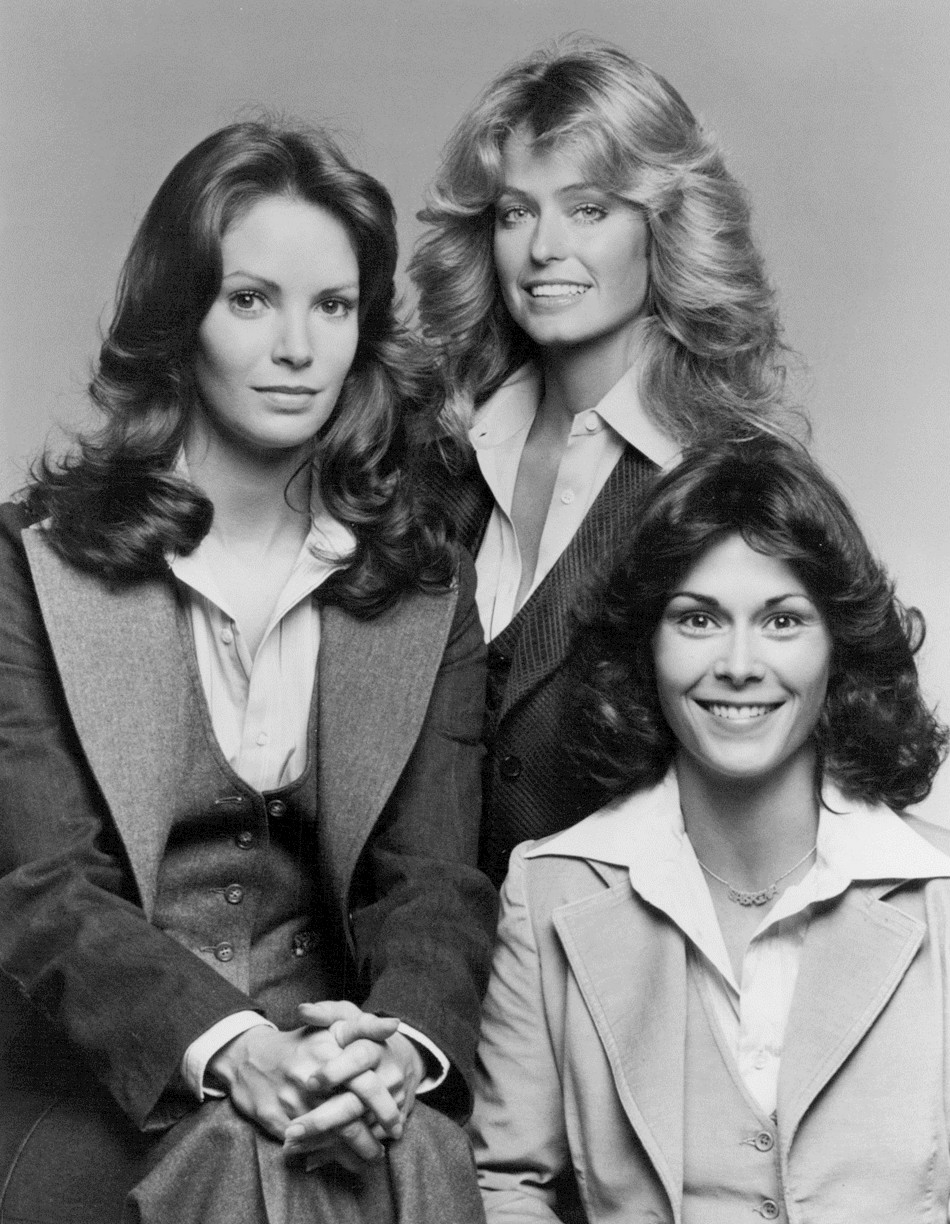
Few television openings announce themselves quite like Charlie’s Angels. A telephone rings, a mysterious voice delivers the mission, and suddenly Los Angeles becomes a playground of fast cars, high stakes, and three sharply different heroines who know exactly how to command a scene. For many viewers in the 1970s, it was pure appointment television. For many listeners on classic hits radio today, it still feels like part of the same bright, glamorous cultural moment that gave us disco grooves, California cool, and a confident pop sheen that practically glowed from the speakers.
Premiering in 1976, Charlie’s Angels arrived with style to spare and a concept simple enough to become instantly iconic: three women working as private investigators for the unseen Charlie Townsend, guided by the ever-reliable John Bosley. On paper, it was a detective series. On screen, it was something more playful, more polished, and far more memorable than the average crime drama. It mixed mystery, fashion, action, and fantasy in a way that felt tailor-made for the decade.
Why the series made such a splash
There is a reason Charlie’s Angels became a cultural event rather than simply another television show. It knew exactly what it was selling: glamour, adventure, friendship, and a touch of mystery. The original trio of Farrah Fawcett, Kate Jackson, and Jaclyn Smith had a chemistry that was impossible to ignore. Each Angel brought a distinct energy. Farrah had that dazzling, all-American sparkle; Kate played intelligence and dry wit beautifully; Jaclyn added elegance and warmth.
Together, they gave the series its balance. One of the pleasures of watching the early episodes now is seeing how neatly the show uses those contrasts. It is not just about beautiful people in stylish clothes, though there is certainly plenty of that. It is about rhythm. One Angel charms, another observes, another pushes the case forward. The format is light on its feet, and that is part of its enduring appeal.
Television in the 1970s was crowded with detectives, police officers, and tough-guy leads. Charlie’s Angels stepped into that world and changed the picture. It offered women at the centre of the action, solving crimes, going undercover, and carrying the story. The show was often discussed for its glamour first, but its real trick was making female-led adventure look commercially unstoppable.
That irresistible 1970s glow
If you love classic hits radio, you can probably feel the atmosphere of Charlie’s Angels before you even press play. It belongs to the same world as sunlit West Coast pop, sleek soul, and the first shimmer of disco-era sophistication. The cars shine, the clothes move beautifully on camera, and even the office scenes have a certain polish. Los Angeles is not just a setting here; it is part of the fantasy.
The show understood visual branding long before that phrase became common. Feathered hair, tailored jackets, evening gowns, sporty convertibles, beach houses, hotel lobbies, and office interiors with just the right amount of glass and brass: all of it created a lifestyle viewers could instantly recognise. Even when the plots became wonderfully improbable, the world itself remained inviting.
Fashion, fantasy, and the weekly mission
One week the Angels might be entering a beauty pageant, the next they could be posing as dancers, models, flight attendants, or wealthy socialites. Undercover work was built into the engine of the series, which meant every episode offered a new mini-world. That kept the formula fresh and gave the stars room to play with tone. It also gave audiences one of the show’s biggest pleasures: the transformation scene, where preparation for the mission felt almost as exciting as the mission itself.
That blend of crime-solving and costume drama may sound light, but it was a very clever television device. It gave the series movement and variety, and it made every episode feel like an event. In the same way a great three-minute pop single can transport you somewhere instantly, Charlie’s Angels could establish a mood in moments.
Behind the scenes: the people who made it work
The series was created by Ivan Goff and Ben Roberts, with Aaron Spelling helping to shape it into one of the defining television brands of the era. Spelling, in particular, had a remarkable instinct for glossy, highly watchable entertainment. He understood that audiences wanted escapism, but he also knew that escapism works best when the cast is genuinely appealing.
And that cast mattered enormously. Kate Jackson was reportedly instrumental in helping define the tone of the early show, grounding it with a little intelligence and bite. Jaclyn Smith became the steady centre, the Angel who stayed through the entire original run. Farrah Fawcett, meanwhile, became an international phenomenon almost overnight. Her smile, her famous hairstyle, and her easy screen presence turned her into one of the most recognisable faces of the decade.
That sudden fame also led to one of the show’s most talked-about behind-the-scenes stories. Farrah left after the first season as a regular, which could have destabilised the series completely. Instead, the producers adapted, bringing in Cheryl Ladd as Kris Munroe, the younger sister of Farrah’s Jill. It was a smart move. Rather than pretending lightning could simply strike twice, the show shifted the chemistry and found a new rhythm.
More than one lineup, more than one era
One of the interesting things about revisiting Charlie’s Angels is realising that different viewers remember different versions of it. Some think first of the original trio. Others have deep affection for Cheryl Ladd’s bright, spirited presence. Later arrivals like Shelley Hack and Tanya Roberts mark different phases of the show, each reflecting changing tastes at the end of the 1970s and the start of the 1980s.
That changing lineup is often discussed as a weakness, but it can also be seen as part of the series’ story. Charlie’s Angels was not frozen in one perfect moment. It evolved, adjusted, and kept trying to hold onto the audience’s imagination as television itself was changing around it.
The criticism and the charm
It would be impossible to review Charlie’s Angels honestly without mentioning the criticism it attracted. Detractors dismissed it as style over substance and coined the term “jiggle television” to mock its emphasis on glamour and sex appeal. That criticism did not come from nowhere. The show undeniably leaned into image, and sometimes with a heavy hand.
But that is not the whole story. Watching it now, what stands out is not just the glamour but the confidence. The Angels are capable, quick-thinking, and often one step ahead. The series may package its heroines in glossy wrapping, yet it repeatedly gives them control of the action. That contradiction is part of what makes the show so fascinating as a cultural artefact. It is both very much of its time and slightly ahead of it.
Charlie’s Angels was never trying to be grim realism. Its real mission was to entertain, and it did that with a wink, a wardrobe change, and a lot of momentum.
Seen through a modern lens, some episodes feel campy, some feel dated, and some are unexpectedly sharp. But even at its most outrageous, the series remains watchable because it moves with such assurance. It knows when to be playful, when to be suspenseful, and when to let star power do the heavy lifting.
Why it still belongs in the classic hits conversation
There is a strong connection between classic hits radio and a show like Charlie’s Angels. Both tap into memory through mood as much as content. A great song from the late 1970s can bring back a haircut, a car interior, a summer evening, or the glow of a television set in the corner of the room. Charlie’s Angels works in much the same way. It is not simply remembered; it is felt.
For radio audiences especially, the series evokes an era when entertainment felt larger, shinier, and a little more playful. It sits comfortably alongside the music of Fleetwood Mac, Donna Summer, the Bee Gees, and Hall & Oates because it shares that polished, high-impact appeal. It belongs to the same emotional archive.
The lasting legacy
The franchise has been revived and reimagined more than once, which tells you something important. The core idea still has life. Three women, one mission, mystery, glamour, and teamwork: it is a formula that remains instantly understandable. But the original series has a special magic that later versions can only partly recreate. That magic lies in the period details, the chemistry of the cast, and the unrepeatable texture of 1970s television.
- It gave television one of its most recognisable opening concepts.
- It turned its stars into pop-culture icons.
- It captured the glossy optimism of late-1970s entertainment.
- It remains a vivid time capsule of style, pace, and attitude.
Final verdict
Charlie’s Angels is not perfect, and it does not need to be. Its pleasure lies in its sparkle, its speed, and its sheer confidence. At its best, it is smart escapism wrapped in sunshine and suspense. The mysteries may not always be the main attraction, but the atmosphere certainly is.
Rewatching it today is a bit like hearing a favourite classic hit come on the radio unexpectedly. You remember the hook at once. You smile before the chorus even arrives. And for a little while, the world looks brighter, sleeker, and much more fun.