
The Love Boat still sails beautifully through television history
A bright television studio glow, a sweeping theme, and a ship full of smiling faces — The Love Boat still feels like one of the happiest invitations ever sent through the screen. This classic series remains a warm, star-packed cruise through television comfort viewing at its most charming.
There are television shows that entertain, and then there are television shows that feel like an invitation. The Love Boat was very much the second kind. The moment that famous theme begins and the ship glides into view, you are not just watching a series — you are boarding for an hour of sunshine, romance, comedy, and pure easygoing charm.
For audiences in the late 1970s and through the 1980s, The Love Boat became one of those dependable weekly pleasures that felt as familiar as a favourite song on the radio. It was glossy without being cold, sentimental without becoming syrupy, and packed with enough star power to make every episode feel like an event. Decades later, it remains a wonderfully comforting watch.
A cruise ship full of comfort viewing
Premiering in 1977, The Love Boat took a simple but irresistible idea and turned it into one of television’s most recognisable formats. Set aboard the Pacific Princess, the series followed captain Merrill Stubing, played with reassuring warmth by Gavin MacLeod, and his crew as they guided passengers through a string of romantic misunderstandings, comic complications, reunions, surprises, and happy endings.
The structure was clever. Each episode offered several stories at once, usually mixing romance, family drama, mistaken identity, and light comedy. That meant there was always something for everyone. If one storyline tugged at the heart, another would raise a smile. If one guest star played things sincerely, another might lean into broad comedy. The result was television that moved along with the easy rhythm of a holiday afternoon.
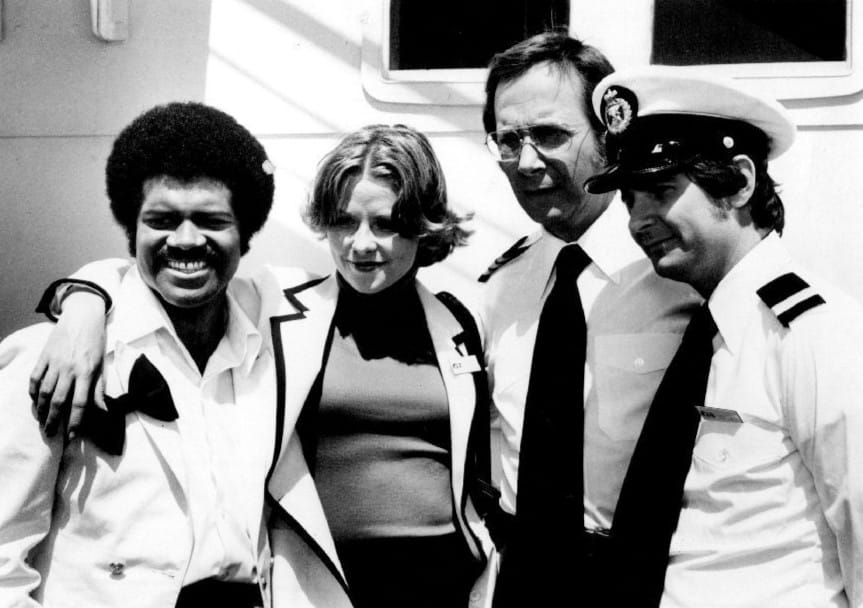
It also helped that the regular cast felt instantly welcoming. Gavin MacLeod’s Captain Stubing brought calm authority and a twinkle of humanity. Bernie Kopell’s Doctor Bricker delivered dry comic timing with perfect precision. Fred Grandy made Yeoman Purser Burl “Gopher” Smith adorably earnest, while Ted Lange’s bartender Isaac Washington added warmth, wit, and style. And then there was Lauren Tewes as cruise director Julie McCoy, whose bright, capable presence helped give the show much of its sparkle.
The cast made the ship feel real
One of the series’ great strengths was the chemistry among the regulars. They did not play a crew in a gritty, realistic sense; they played a television family, and that was exactly the point. Their interactions had a polished ease that made the Pacific Princess feel like a place viewers would happily visit every week.
That chemistry is a major reason the show still works. The jokes are gentle, the emotions are clear, and even the occasional far-fetched plot is carried along by performers who know precisely how to keep everything buoyant. Watching them together is like hearing a band that may not be flashy in every moment but never misses the beat.
Why the formula was so hard to resist
At first glance, The Love Boat might seem like pure escapism, and of course it is. But it is expertly made escapism. The series understood that viewers wanted glamour, beautiful locations, attractive guest stars, and stories that usually ended on a hopeful note. It delivered all of that with a smile.
The cruise setting was central to its magic. A ship is naturally a place of transition: people arrive with expectations, secrets, hopes, and anxieties, then leave changed in some small way. That gave the writers an ideal framework for compact storytelling. New passengers could come aboard every week, bringing fresh energy and new emotional stakes, while the crew remained the familiar anchor.
It is a format that now feels surprisingly modern. Anthology-style guest stories wrapped inside a dependable ensemble series? That is a strong concept in any era. The Love Boat simply delivered it with white uniforms, ocean sunsets, and a bright smile.
A guest star parade like no other
If classic television had a grand floating showroom, this was it. One of the most enjoyable things about revisiting The Love Boat is spotting the remarkable procession of guest stars. Film legends, television favourites, music stars, comedians, athletes — they all seemed to come aboard eventually.
That guest-star element gave the show a special kind of excitement. For viewers at home, it was part drama, part game. Who would appear this week? What pairing would the writers dream up? Which familiar face would be playing against type? It gave the series the same kind of anticipation a radio listener feels when a beloved deep cut unexpectedly turns up between two major hits.
And because the tone of the show was so welcoming, many stars seemed happy to relax into it. Some delivered heartfelt performances, some leaned into self-parody, and some simply basked in the sunny atmosphere. The series became a meeting place for generations of entertainers, which only adds to its nostalgic glow today.
That theme song did a lot of heavy lifting
Let us be honest: part of the enduring affection for The Love Boat lives in its music. The theme song is one of television’s great mood-setters, instantly conjuring open water, polished brass, and the promise that something delightful is about to happen. It is cheerful, memorable, and impossible to separate from the identity of the show.
For a classic hits audience, that matters. A strong theme song does more than introduce a programme — it creates an emotional shortcut. The opening of The Love Boat tells you exactly how to feel before a single line is spoken. You are meant to relax. You are meant to smile. You are meant to believe, at least for the next hour, that life can be tidied up with a kind word, a lucky coincidence, and a view of the sea.
Few television themes have ever said “leave your worries at the shore” quite so effectively.
That musical identity helped turn the series into more than just a successful programme. It became a cultural fixture, the kind of show people remember not only with their minds but with their ears.
A cheerful time capsule of its era
Part of the fun of watching The Love Boat now is seeing it as a glossy snapshot of late 1970s and 1980s television. The fashion, the hairstyles, the pacing, the guest-star culture, the polished sentiment — it is all there. Yet the show does not feel trapped by its era. If anything, its period details are part of the pleasure.
There is something deeply appealing about a series that wears its optimism so openly. Modern television often prizes darkness, ambiguity, and emotional damage. The Love Boat offers something else: generosity. It assumes people can change, reconnect, forgive, and enjoy themselves. Even when the stories are light, that spirit gives the show its staying power.
That is not to say every episode is perfect. Some plots are predictable, some jokes belong firmly to their time, and some emotional turns arrive with the speed of a ship’s buffet line. But the show’s sincerity carries it through. It knows exactly what it wants to be, and it rarely drifts off course.
A look back at the series in motion
The clip above is a lovely reminder of the series’ appeal: bright energy, familiar faces, and that unmistakable sense of television as a weekly treat. Even in a short segment, you can feel how confidently the show sold its world. It did not ask viewers to analyse it too deeply. It asked them to come aboard.
Why it still matters
The Love Boat endures because it understood an essential truth about popular entertainment: pleasure is not a small thing. A series can be light and still be skilful. It can be easy to watch and still leave a lasting impression. It can be sentimental and still be smart enough to know exactly how to win an audience.
For many viewers, the show is tied to memories of family living rooms, weekend schedules, and the comforting ritual of familiar television. For newer audiences, it offers a chance to experience a style of mainstream entertainment that feels almost luxurious in its friendliness. There is no cynicism in its engine room. The whole production runs on warmth.
In that sense, The Love Boat is more than a nostalgic favourite. It is a reminder of television’s ability to be companionable. Not every series has to challenge, shock, or unsettle. Sometimes the most lasting ones are the shows that simply make people feel good.
Final verdict
The Love Boat remains a charming, polished, and deeply likeable piece of television history. It is breezy without being empty, sentimental without losing its wit, and iconic without feeling stiff or overpraised. The cast are terrific company, the guest stars keep things lively, and the whole enterprise glows with the kind of optimism that never really goes out of style.
If you have not seen it in years, returning to the Pacific Princess is a happy reunion. And if you are discovering it for the first time, do not be surprised if that famous invitation still works its magic. Some ships never really dock in our memories. They just keep sailing.
- Best for: viewers who love classic television, ensemble casts, and upbeat storytelling
- Enduring strength: warmth, music, and a brilliantly inviting format
- Overall feeling: sunny, nostalgic, and easy to love