1978 lit up the dial with pure pop drama
The radio dial glows, the needle drops, and suddenly 1978 is back in the room. Disco giants, rock reinventions, movie smashes, and unforgettable hooks made it one of pop’s most colourful years.
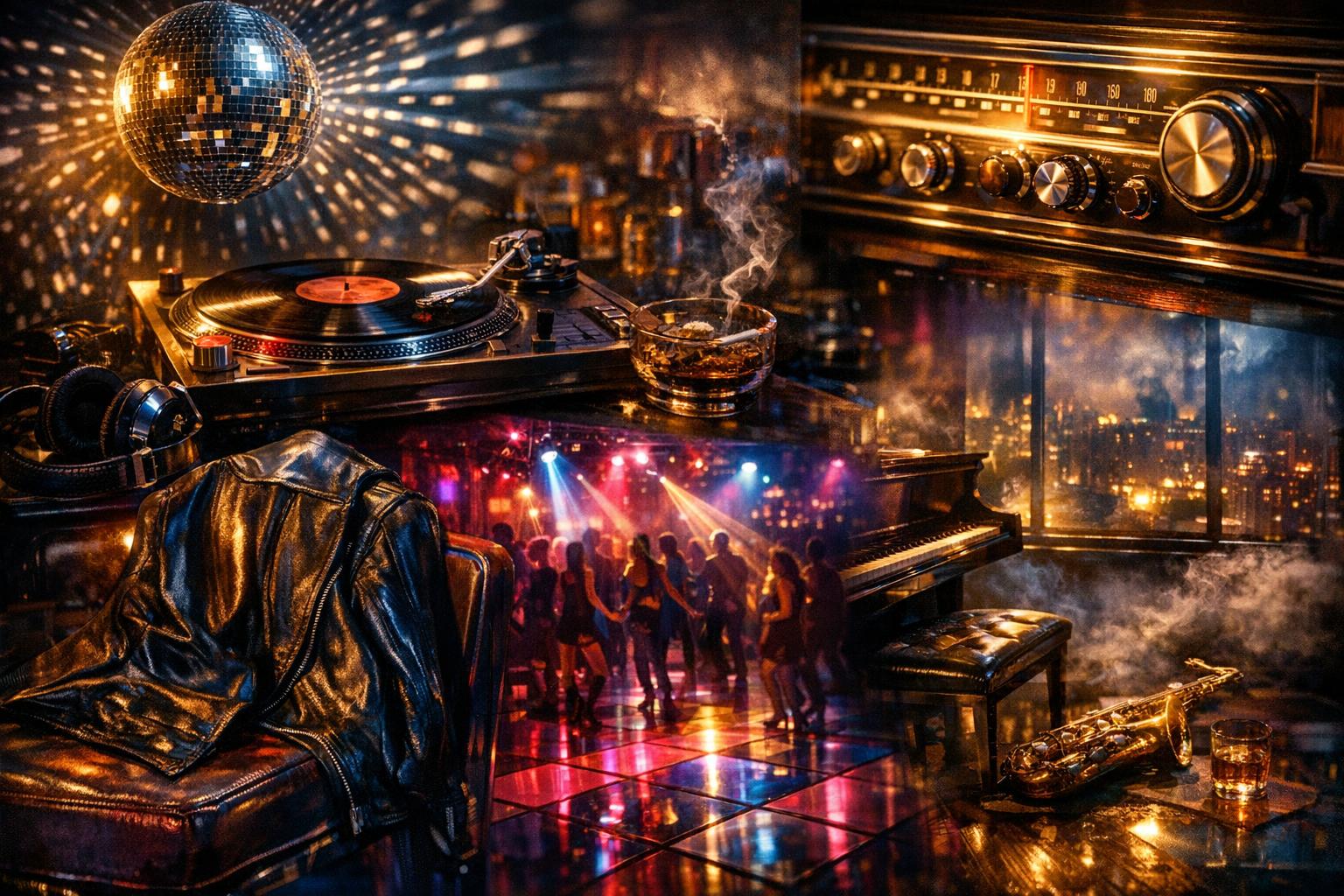
Drop the needle on 1978 and the room seems to change colour. Suddenly there are mirror balls, leather jackets, punk sneers, soft-rock harmonies, disco strings, and a piano ballad powerful enough to stop a conversation in its tracks. It was a year when radio felt gloriously crowded: dance floors were full, album rock was ambitious, singer-songwriters still mattered, and a new generation of artists was beginning to reshape pop culture in real time.
What makes 1978 so special is not just the number of huge hits, but the variety. This was the year of Saturday Night Fever fever, yes, but it was also the year of restless change. New wave was peeking around the corner, punk had rattled the old order, and mainstream pop was learning how to be slicker, bigger, and more theatrical. If you were turning the radio dial in 1978, you could hear the future arriving one chorus at a time.
The songs everyone seemed to know in 1978
Any list of the year’s biggest hits has to begin with the records that felt unavoidable: songs that lived on radio, in cars, at parties, and in the public imagination. Here are some of the defining smashes of 1978, each carrying a different flavour of the year.
1. Stayin’ Alive – Bee Gees
If 1978 had a pulse, this was it. Built on that instantly recognisable beat and wrapped in falsetto cool, Stayin’ Alive became more than a hit single; it became a cultural symbol. The song’s association with disco and urban swagger was amplified by its connection to Saturday Night Fever, but its appeal ran deeper than fashion. There is tension in it, resilience in it, and a groove so precise it still feels aerodynamic decades later.
2. Night Fever – Bee Gees
The Bee Gees were everywhere in 1978, and Night Fever proved they were not a one-song phenomenon. Sleeker and silkier than some of their other hits, it captured disco at its most elegant. It also showed how completely the Gibb brothers had mastered the art of writing records that felt cinematic without losing their pop immediacy.
3. Le Freak – Chic
Few records announce themselves with more confidence than Le Freak. Nile Rodgers and Bernard Edwards created a dance classic that was sharp, stylish, and irresistibly lean. Behind the groove was a little bit of attitude too: the song reportedly grew out of frustration after being turned away from a fashionable nightclub. That edge helped make it more than a party song; it was disco with teeth.
4. September – Earth, Wind & Fire
Warm, joyous, and bursting with life, September remains one of the happiest records ever made. Earth, Wind & Fire blended funk, soul, pop, and sheer uplift into a track that sounds like a celebration before the party has even fully started. Its famous opening vocal call feels like a door swinging open to let the good times in.
5. Baker Street – Gerry Rafferty
Then came the song with that saxophone line. Baker Street gave 1978 one of its most memorable hooks, but the record’s staying power comes from its mood: reflective, slightly weary, and full of grown-up longing. In a year packed with glitter and movement, this was a reminder that introspective songwriting could still stop listeners in their tracks.
6. Shadow Dancing – Andy Gibb
Andy Gibb’s biggest hit had the polish and emotional pull that defined late-70s pop. Shadow Dancing floated between disco rhythm and romantic melancholy, making it a perfect fit for both radio and the dance floor. It also underlined just how dominant the wider Gibb family sound had become.
7. Miss You – The Rolling Stones
Even rock royalty was paying attention to the clubs. With Miss You, the Rolling Stones dipped into disco-inflected rhythm without losing their identity. The result was sly, loose, and surprisingly natural. It is one of the best examples of an established rock act adapting to the times while still sounding unmistakably like themselves.
8. Three Times a Lady – Commodores
Lionel Richie’s gift for writing emotional, elegant ballads was fully on display here. Three Times a Lady became a huge crossover success because it felt timeless the moment it arrived. In a year of shiny production and dance-floor momentum, this was pure romance, delivered with grace.
9. You’re the One That I Want – John Travolta and Olivia Newton-John
Grease turned nostalgia into a global event, and this duet was one of its biggest moments. You’re the One That I Want was playful, punchy, and impossible to ignore. It helped prove that film musicals could still dominate the charts, and it gave audiences a hit that felt both retro-inspired and completely current.
10. My Life – Billy Joel
Billy Joel had a knack for making conversational pop sound enormous. My Life arrived with attitude, melody, and a kind of everyday confidence that connected instantly with listeners. It was polished but not distant, catchy without trying too hard, and it helped cement Joel as one of the era’s great hitmakers.
11. Copacabana – Barry Manilow
Here was pure storytelling pop, dressed for the spotlight. Copacabana brought drama, melody, and nightclub glamour together in one unforgettable package. Barry Manilow turned a tragic tale into a singalong favourite, which is no small trick.
12. Hot Child in the City – Nick Gilder
With its edgy energy and glossy production, Hot Child in the City hinted at the harder, nervier pop-rock that would become more prominent as the decade closed. It felt urban, urgent, and just a little dangerous.
The sound of 1978: glitter, grit, and crossover magic
To understand 1978, you have to picture a music world with several scenes happening at once. Disco was at full commercial power, dominating clubs and crossing over into the mainstream with extraordinary force. Its rhythms, string arrangements, and polished production were influencing everyone, even artists not usually associated with dance music.
At the same time, punk’s shockwave was still being felt. Even if punk itself was not topping every chart, its spirit had changed expectations. Songs could be shorter, sharper, and more confrontational. Image mattered, but so did attitude. That energy fed directly into new wave, which was beginning to emerge as one of the most exciting next chapters in popular music.
Soft rock and singer-songwriter records also remained hugely important. This was still an era when a thoughtful lyric, a strong chorus, and a carefully crafted album could create a long-lasting bond with listeners. Artists like Billy Joel, Gerry Rafferty, and the Commodores thrived because audiences wanted both emotional connection and musical sophistication.
Then there was the sheer rise of crossover. In 1978, genre lines felt more flexible. Rock bands borrowed dance rhythms. Soul groups embraced pop structures. movie soundtracks became chart juggernauts. The biggest records often lived at the intersection of styles, which made radio especially exciting.
Major trends that shaped the year
Disco reached its commercial peak
By 1978, disco was not just a club phenomenon; it was a global mainstream force. The success of the Bee Gees, Chic, Donna Summer, and Earth, Wind & Fire showed how dance music had become central to pop. Producers paid closer attention to rhythm sections, bass lines became more prominent, and songs were built to move bodies as much as stir hearts.
Soundtracks ruled the charts
Film and music were tightly linked in 1978. Saturday Night Fever and Grease were not simply successful films; they were chart-shaping cultural events. Their songs travelled far beyond the cinema, becoming part of everyday life. This was a reminder that a great song tied to a powerful screen image could become even bigger.
New wave was stepping into view
While disco dominated commercially, a cooler, more angular style was beginning to gather momentum. Artists connected to new wave brought nervous energy, quirky hooks, and a stripped-down visual style that contrasted with disco glamour. The movement would explode more fully in the years ahead, but 1978 was one of its important setup years.
Albums still mattered deeply
This was not just a singles year. Listeners were still buying albums in large numbers, and many artists were thinking in terms of full-length statements rather than isolated hits. That balance between blockbuster singles and carefully sequenced albums gave 1978 unusual depth.
Notable albums released in 1978
Some years are remembered for songs; 1978 gave us songs and landmark albums.
- Bee Gees – Spirits Having Flown was just around the corner, but their 1978 dominance was still tied closely to the enormous afterglow of the Saturday Night Fever era.
- Billy Joel – 52nd Street brought sophistication, wit, and immaculate songwriting, helping Joel step into a new level of stardom.
- The Rolling Stones – Some Girls was a sharp, revitalised set that proved the band could absorb contemporary influences and come back sounding dangerous again.
- Blondie – Parallel Lines was one of the key bridge records between punk, new wave, and pop accessibility. It helped define where pop was heading next.
- Bruce Springsteen – Darkness on the Edge of Town offered grit, tension, and emotional weight, showing another side of late-70s music far from the disco ball.
- Van Halen – Van Halen arrived like a jolt of electricity, introducing a flashier, more technically dazzling hard-rock style that would influence countless bands.
- Kate Bush – The Kick Inside announced a singular new voice in art-pop, with imagination and theatricality to spare.
- Donna Summer – Live and More captured one of disco’s defining stars at a moment of huge popularity.
Seen together, these albums tell the story of a year that refused to be pinned to one sound. Rock was evolving, pop was becoming more adventurous, and dance music was rewriting the rules of commercial success.
Why 1978 matters in music history
1978 sits at a fascinating crossroads. It was one of the last years of the 1970s in full bloom, but it also pointed clearly toward the 1980s. You can hear the transition everywhere: in the sleekness of the production, in the growing importance of image, in the merging of genres, and in the rise of artists who would become even bigger in the next decade.
It was also a year that challenged the old idea that pop had to stay in neat categories. A dance record could be artful. A rock band could flirt with club rhythms. A soundtrack song could become a permanent standard. A quirky new wave act could move toward the mainstream. That openness helped set the stage for the genre-blending decades that followed.
In many ways, 1978 was the moment when popular music learned how to be both highly polished and wildly diverse at the same time.
Fun facts from the year the charts sparkled
- The Bee Gees were astonishingly dominant. Their run of hits around this period was so strong that for many listeners, their voices practically became part of the architecture of late-70s radio.
- Chic turned frustration into a classic. The story behind Le Freak gives the song an extra spark: one of disco’s greatest party records was born out of a less-than-glamorous real-life snub.
- The saxophone on “Baker Street” became legendary. That riff is one of the most instantly recognisable instrumental hooks in pop history, often cited as a high point for the instrument in rock radio.
- Grease proved nostalgia could feel brand new. Though inspired by an earlier era, its songs became thoroughly modern hits in 1978.
- Rock veterans adapted fast. The Rolling Stones were not the only established act absorbing contemporary trends, but Miss You remains one of the best-known examples of a major band responding to disco without sounding forced.
- 1978 helped launch future icons. Debut and breakthrough records from artists on the edges of punk, new wave, and hard rock hinted strongly at what the next few years would bring.
One unforgettable year on the radio
There are years in music history that feel like snapshots, and there are years that feel like full-length films. 1978 is the second kind. It had stars at their commercial peak, genres colliding in fascinating ways, and songs that still leap out of the speakers with colour and character. Whether you remember dancing to the Bee Gees, singing along to Grease, or pausing for the first notes of Baker Street, the year still carries a special glow.
Most of all, 1978 reminds us how thrilling a great pop year can be when it contains multitudes. It was glossy and gritty, romantic and rebellious, tightly produced and emotionally direct. Decades later, those records still feel alive because they captured a moment when music was not standing still for anyone.