Power Ballad, Midnight Glow
Whitesnake's Is This Love was more than a hit single in 1987. It was a perfectly timed power ballad, born from pressure, polished for radio and built to last in the glow of the MTV era.
A song that arrived right on cue
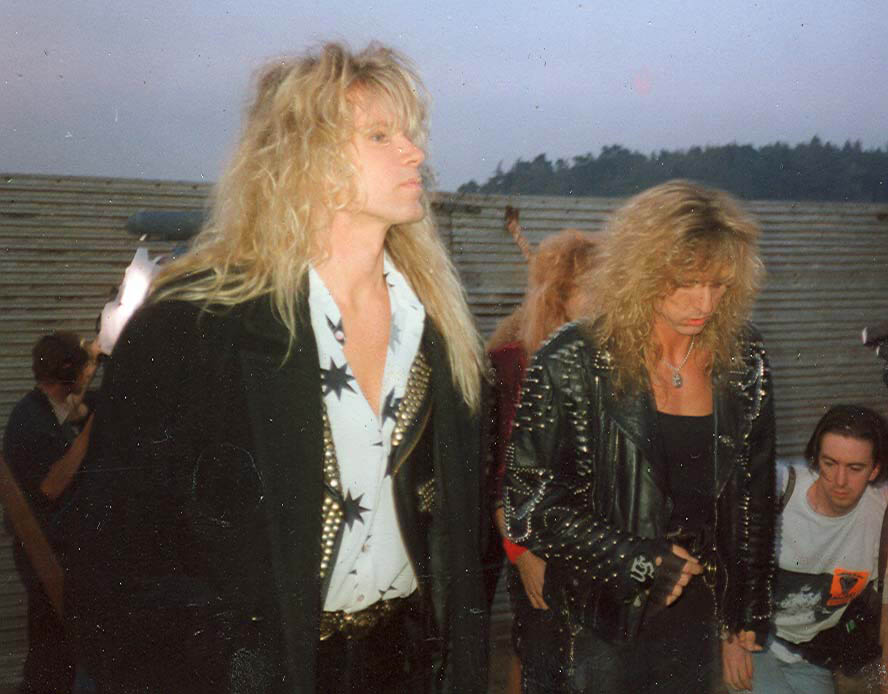
By 1987, Whitesnake were no longer just a respected hard rock band with a loyal following. They were on the verge of becoming a global force, and Is This Love helped push them across that line. Warm, dramatic and instantly memorable, the song showed a softer side of a group better known for swaggering riffs and blues-rock muscle. It was the kind of record that seemed to glow from the radio speaker: part love song, part arena anthem, and entirely built for the late-1980s moment.
For many listeners, Is This Love remains one of the defining power ballads of its era. It had tenderness, but it never lost that glossy rock grandeur. David Coverdale’s voice carried both vulnerability and confidence, while the arrangement rose and fell with cinematic precision. It felt intimate, yet huge. That balance is a big part of why the song has lasted.
How Is This Love was written
From personal feeling to polished classic
The song was written by Whitesnake frontman David Coverdale and guitarist John Sykes, the same creative pairing behind several of the band’s late-1980s highlights. By the time they were working on material for the self-titled Whitesnake album, both men understood the value of contrast. A hard-hitting rock record needed moments of release, and Is This Love became one of those crucial emotional centrepieces.
Coverdale has spoken over the years about the song’s romantic heart, and listeners have long connected it with his relationship with actress Tawny Kitaen, who would also become closely associated with Whitesnake’s visual image in the MTV era. The lyric has a directness that helped it travel widely: I should have known better than to let you go alone is simple, conversational and easy to believe. It does not hide behind abstraction. It sounds like a thought blurted out in the quiet after midnight.
One of the best-known stories around the song is that it was at one stage considered for Tina Turner. That detail has become part of rock folklore, and while versions of the story vary, it says something important about the writing itself: the melody and lyric were strong enough to work beyond one band or one genre image. In the end, Whitesnake kept it, and that turned out to be a wise decision. Coverdale’s voice gave it a smoky, yearning quality that was central to the final effect.
Recording the track
A studio process shaped by change
The road to the finished recording was not entirely straightforward. The Whitesnake album was made during a turbulent period for the band, with line-up changes and the pressure of creating a record that could break internationally on a larger scale. That tension often produces flat, overworked music. Here, it seemed to sharpen the focus.
Mike Stone, known for his work with Queen and others, was a key figure in the production of the album, alongside David Coverdale. Stone brought a clean, expansive sound that suited radio without stripping away the band’s rock identity. On Is This Love, that meant careful layering, a wide stereo image and a polished finish that made every element feel deliberate.
The recording also reflects the complicated personnel story around the album. Although John Sykes co-wrote the song and played a major role in the creation of the record, the band line-up shifted before the album’s full promotional campaign gathered steam. The album itself featured contributions from musicians including Neil Murray on bass, Aynsley Dunbar on drums, and Don Airey and Bill Cuomo on keyboards. Those keyboard textures are especially important on Is This Love, adding the soft glow behind the vocal and guitar lines.
There was also a practical studio problem that became part of Whitesnake legend: David Coverdale suffered serious vocal issues during the making of the album. He eventually needed a period of rest and treatment, which slowed progress and added stress to the sessions. That makes the finished vocal on Is This Love all the more impressive. It sounds effortless, but there was real strain and determination behind it.
The musicians who gave it shape
The beauty of Is This Love lies in how carefully each part supports the mood. The drums stay restrained, never crowding the song’s emotional centre. The bass gives the track a steady, almost heartbeat-like motion. The keyboards provide atmosphere without turning it into pure pop. Then there is the guitar work: elegant, controlled and melodic, with just enough sustain to make every phrase linger.
That was one of the signatures of this period of Whitesnake. They understood the drama of space. Rather than rushing to fill every second, they let the song breathe. The pauses matter almost as much as the notes.
Climbing the charts
A major hit in a crowded year
Released as a single in 1987, Is This Love became one of Whitesnake’s biggest worldwide hits. In the United States, it reached No. 2 on the Billboard Hot 100, held back from the top spot but still becoming a defining radio favourite of the year. It also performed strongly on album-oriented rock and adult contemporary formats, which shows how effectively it crossed audience lines.
Elsewhere, the song found success across Europe, Australia and beyond, helping cement Whitesnake as a truly international act. It was the kind of single that worked in several settings at once: rock radio loved its guitar sheen, pop stations embraced its melody, and MTV gave it an enormous visual platform.
Commercially, it also strengthened the remarkable run of the Whitesnake album, which produced a sequence of major singles including Here I Go Again ’87 and Still of the Night. If those songs showcased different sides of the band, Is This Love may have been the one that broadened their audience most dramatically. It invited in listeners who might not usually have gone searching for a hard rock album.
MTV, image and the late-1980s mood
When power ballads ruled the airwaves
It is impossible to separate Is This Love from the broader musical atmosphere of the late 1980s. This was the great age of the power ballad, when hard rock bands discovered that emotional openness could be just as commercially potent as volume. Big choruses, glossy production, expressive guitar solos and highly visual music videos were all part of the formula.
Whitesnake were perfectly placed to thrive in that environment. They had roots in bluesy British hard rock, but by 1987 their sound had been refined into something sleek and transatlantic. Is This Love sits at that intersection. It has enough grit to satisfy rock fans, but enough melodic softness to sit comfortably beside mainstream pop hits of the day.
The music video played a huge part in the song’s reach. Featuring Tawny Kitaen, whose appearances in Whitesnake videos became iconic in the MTV era, it gave the song a glamorous, dreamlike visual identity. Those videos were part romance, part fantasy and part performance art, and they helped define how many people remember late-1980s rock. For younger viewers especially, songs like Is This Love were not just heard. They were seen.
In the late 1980s, a power ballad was more than a slow song. It was a statement of scale: intimate lyrics delivered with stadium-sized emotion.
Behind the scenes and favourite stories
Rumours, revisions and resilience
Like many major hits, Is This Love has gathered a few stories around it over time. The Tina Turner connection remains the most famous, and whether listeners treat it as an intriguing near-miss or a fully settled fact, it adds a wonderful what-if to the song’s history. It is easy to imagine the melody in another voice, but it is even easier to hear why Whitesnake claimed it for themselves.
Another fascinating detail is how much instability surrounded a song that sounds so calm and assured. During the making and release of the Whitesnake album, band relationships were under strain, personnel were shifting, and Coverdale was dealing with vocal problems. Yet the track itself feels unhurried, almost serene. That contrast between backstage turmoil and front-of-house elegance is one of the oldest stories in rock music.
There is also the simple craft of the arrangement, which often gets overlooked because the melody is so strong. Listen closely and you can hear how expertly the song builds. Nothing arrives too early. The chorus opens just enough, the keyboards widen the emotional frame, and the guitar lines answer the vocal rather than competing with it. That kind of restraint is much harder than it sounds.
Why the song still matters
Its legacy in rock and pop memory
Decades later, Is This Love remains one of Whitesnake’s signature recordings and one of the standout ballads of the 1980s. It still turns up on classic hits radio, on streaming playlists devoted to arena rock and love songs, and in retrospectives about the golden age of MTV. It has become one of those records that instantly sets a scene. A few opening bars, and suddenly you are back in a world of glowing dashboards, neon reflections and radio speakers turned up just a little louder than they should be.
Its legacy also lies in what it proved. Whitesnake showed they could deliver a ballad without sounding timid or compromised. The song did not water down the band; it expanded them. That mattered in an era when rock groups were learning how to balance toughness with accessibility.
For David Coverdale, it remains one of the finest examples of his ability to sell a lyric with personality rather than pure technique. For John Sykes, it stands as a reminder of his sharp melodic instincts as a co-writer. For listeners, it endures because it captures a feeling that never really dates: the moment when confidence gives way to uncertainty, and a big voice asks a very human question.
Is This Love was born in a high-pressure studio environment, shaped by gifted musicians, polished by expert production and launched into one of the most competitive pop landscapes of the decade. Yet what survives is not the machinery around it. What survives is the feeling. That is why the song still lands, all these years later, with the same soft-focus magic.