Sheena Easton lit up the airwaves with grit, glamour and range
Sheena Easton’s journey from Scottish music student to international chart star is one of pop’s most memorable rise-to-fame stories. Her hits, reinventions and fearless collaborations still bring sparkle, drama and personality to classic hits radio.
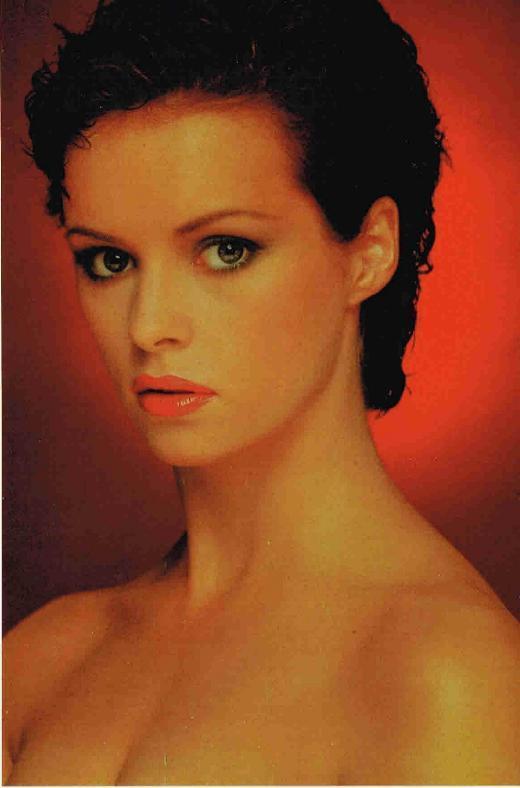
Some artists arrive with a hit. Sheena Easton arrived with a story the public could actually watch unfold. Before the platinum records, the Grammy win and the television appearances, she was a young Scottish singer with serious training, sharp instincts and a determination that could carry a song from tender heartbreak to sparkling pop in a heartbeat. That sense of movement, of a career always finding a fresh angle, is a big part of what makes Easton such a rewarding artist to revisit on classic hits radio.
Her catalogue is full of songs that still leap out of the speakers, but the real pleasure is hearing how much personality sits inside them. She could be wistful, playful, elegant, dramatic and quietly funny, sometimes all within the same three-minute single. Behind the scenes, her path was just as fascinating.
From Bellshill to the big stage
Sheena Easton was born Sheena Shirley Orr in Bellshill, Scotland, in 1959, the youngest of six children. Music was not some distant dream in the household. It was part of the atmosphere, part of everyday life. After her father died when she was young, her mother worked hard to support the family, and Easton has often spoken about the determination and resilience that environment gave her. Those qualities would become essential later when the music business began testing her versatility.
As a child, she was drawn to performance early. One of the key moments she has recalled was seeing The Way We Were and becoming captivated by Barbra Streisand. That was not just fan admiration; it was a spark. Easton began to imagine a life in music and performance, and she pursued it seriously. She studied at the Royal Scottish Academy of Music and Drama in Glasgow, training as a singer and actress. That formal education gave her something many pop hopefuls did not have at the time: technical control, stage discipline and the ability to adapt.
Before fame, she worked hard on the practical side of becoming a professional performer, taking gigs and auditions and learning how to hold a room. It is easy to forget that some of the most polished pop stars of the early 1980s had years of unseen preparation behind them. Easton was one of them.
A television documentary changed everything
One of the most unusual breakthrough stories in pop belongs to Sheena Easton. In 1980, she became the subject of a British television documentary called The Big Time: Pop Singer, which followed her attempt to land a recording contract and launch a music career. Viewers saw the nerves, the meetings, the waiting and the ambition. It was a behind-the-scenes look before that sort of access became routine.
What happened next was remarkable. The documentary gave audiences a reason to root for her before they even knew the songs. Then the songs arrived. Her single “Modern Girl” introduced her to listeners, but it was “9 to 5” that truly changed the game. Bright, catchy and full of personality, it became a major hit in the UK and, retitled “Morning Train (Nine to Five)” for the American market, reached number one in the United States in 1981.
That kind of transatlantic breakthrough was no small feat. Suddenly Easton was not simply the singer from a documentary. She was an international star. And she did not stop there. In the same early burst of success came “For Your Eyes Only”, the theme from the James Bond film of the same name. It gave her a sleek, cinematic moment and showed she could deliver sophistication as convincingly as chart-friendly pop.
“For Your Eyes Only” remains one of those classic theme songs that feels instantly transportive: elegant, mysterious and unmistakably early 1980s in the best way.
The hits that made her a radio favourite
Classic hits listeners know that Sheena Easton was never confined to one lane. Her most famous songs reveal a performer who could move between styles without sounding like she was chasing trends. Instead, she made each song feel like a different room in the same house.
- “Morning Train (Nine to Five)” – Cheerful, melodic and impossible to ignore, this was the song that made her a household name in America.
- “For Your Eyes Only” – A graceful Bond ballad with a sense of drama and poise.
- “Telefone (Long Distance Love Affair)” – A polished pop hit with emotional tension and one of those instantly memorable hooks.
- “Strut” – Bold, witty and confident, this 1984 hit revealed a tougher, more playful Easton.
- “Sugar Walls” – Provocative and talked-about, it showed her willingness to take risks and stir conversation.
- “U Got the Look” – Her electrifying duet with Prince, a smash that brought her into one of pop’s most exciting creative worlds.
- “The Lover in Me” – A late-1980s dance-pop hit that proved she could evolve with the decade while keeping her vocal identity intact.
Then there were the songs that fans hold especially close, even if they are not always the first titles mentioned. “Almost Over You” is a perfect example: a richly emotional ballad that lets her phrasing shine. Easton had a gift for singing heartbreak without overplaying it. She could sound wounded, but never weak.
Reinvention without losing herself
One of the most impressive things about Sheena Easton’s career is how naturally she managed reinvention. In the early 1980s, she could appear as the polished pop vocalist with a luminous smile and a radio-ready single. A few years later, she was embracing sharper edges, more assertive material and a more adult image. Not every artist survives that transition. Easton did, because the talent was real and the musicality ran deep.
Her voice helped enormously. It had clarity and sweetness, but also enough bite to sell stronger material. That balance meant she could sing a Bond theme, a dance-pop track, a romantic ballad or a flirtatious club hit and still sound recognisably like herself. Producers could place her in different settings, but the personality in the vocal always came through.
She also had excellent timing. Easton emerged at a point when pop was becoming increasingly visual, international and style-conscious. Yet unlike some stars who were built almost entirely around image, she had the training to back it up. She understood arrangement, phrasing and performance. That made her durable.
Prince, surprise turns and bold choices
Any behind-the-scenes look at Sheena Easton has to include her connection with Prince. Their collaboration on “U Got the Look” in 1987 was one of those pop pairings that felt electric from the first listen. Prince admired artists who could bring precision and charisma, and Easton certainly had both. She also recorded songs written or shaped by him, including “Sugar Walls”, which Prince wrote under the pseudonym Alexander Nevermind.
The Prince link added another fascinating chapter to her career. It placed her in a more adventurous, funk-inflected setting and introduced her to new audiences. It also confirmed something longtime listeners already knew: Easton was braver than people sometimes gave her credit for. She was willing to take chances, whether that meant changing her sound, shifting her image or stepping into more controversial material.
There are other lesser-known details that make her story even more enjoyable. Sheena Easton won the Grammy Award for Best New Artist in 1982, a sign of just how quickly she had made an impact. She also built a strong presence in television and live performance, and over time she became known for her work in stage musicals as well. That acting and theatre training from her early years never really left her; it simply found new outlets.
Another striking fact is how broad her chart life was. She had success in pop, adult contemporary, dance and even crossover spaces that touched R&B. That kind of flexibility is not common. It speaks to a performer who understood how to meet a song where it lived.
What made her style stand out
Sheena Easton’s musical style is best understood as a blend of craft and adaptability. At her core, she was a pop singer with theatrical intelligence. She knew how to shape a lyric, how to build a chorus and how to give a song a clear emotional point of view. But she was never trapped by that foundation.
You can hear different shades across her work:
- Pop polish in songs like “Morning Train (Nine to Five)” and “Telefone (Long Distance Love Affair)”
- Cinematic elegance in “For Your Eyes Only”
- Adult contemporary warmth in “Almost Over You”
- Dance-floor confidence in “Strut” and “The Lover in Me”
- Funk-pop edge in her Prince-associated material
That range helped influence later artists who saw no reason to stay in one category. Easton belongs to that important group of 1980s women in pop who proved versatility could be a strength rather than a liability. She could be glamorous, yes, but she was also musically agile, and that mattered.
Why she still matters on classic hits radio
For classic hits radio listeners today, Sheena Easton offers something special: familiarity with surprise built in. The well-known songs instantly trigger memories, but when you hear a short run of her records together, you are reminded how many versions of Sheena Easton there were. That makes her catalogue feel lively rather than fixed in time.
She also represents a very human kind of stardom. Her rise was visible. People saw the effort before they saw the triumph. In an age when careers can seem to appear overnight, there is something especially satisfying about an artist whose breakthrough came with the public watching her work for it.
And then there is the simple matter of quality. Her songs are built for radio in the best sense: strong hooks, memorable moods, polished production and vocals that carry both charm and authority. Whether it is the bright bounce of “Morning Train”, the drama of “For Your Eyes Only” or the snap and swagger of “Strut”, her records still sound like events.
That is why Sheena Easton remains such a welcome presence between the giants of the era. She belongs there. Her career tells a bigger story about pop in the 1980s: ambitious, stylish, unpredictable and full of crossover moments. But beyond the industry shifts and chart milestones, what lasts is the voice: warm one moment, teasing the next, always alert to the song’s emotional centre.
Revisiting Sheena Easton is like opening a well-loved photo album and finding more colour than you remembered. The hits are there, of course. So are the glamorous snapshots, the television moments and the chart triumphs. But there is also the hardworking young singer from Scotland, the trained performer, the risk-taker and the artist who kept evolving. That full picture is what makes her enduringly appealing, and why her records still feel right at home on classic hits radio.