Why Was Corey Hart Wearing Sunglasses at Night?
With its icy synths, unforgettable hook, and signature image, Corey Hart’s “Sunglasses at Night” became one of the defining singles of 1984. Here is the story behind its creation, its chart rise, and why it still glows in pop culture memory.
A breakout moment in 1984
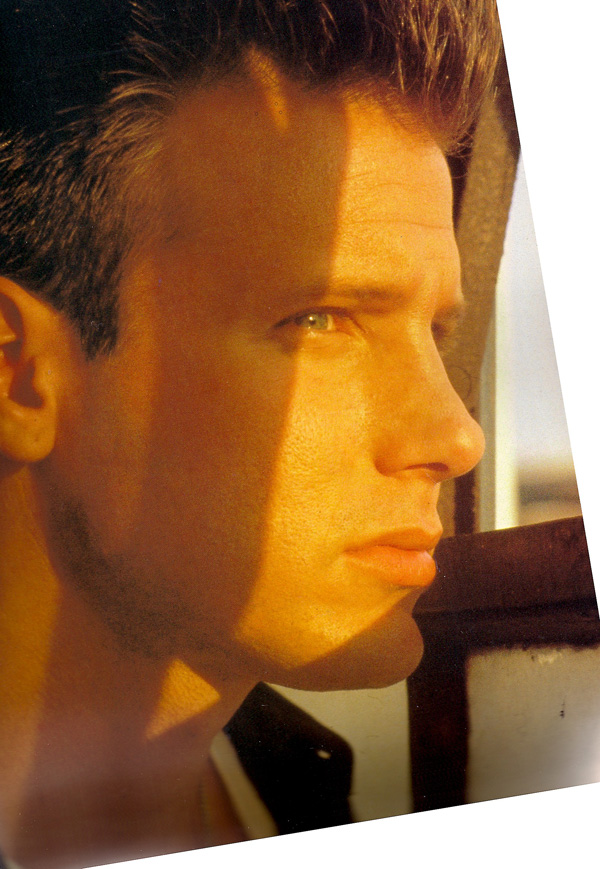
When Corey Hart released “Sunglasses at Night” in early 1984, he was still a very young artist with enormous ambition. Born in Montreal, Hart had already spent years developing as a songwriter and performer, and he arrived at the recording of his debut album with a clear sense of mood and identity. That debut album, First Offense, would introduce him to a wide audience, but it was “Sunglasses at Night” that truly opened the door.
The song stood out immediately. It had the dramatic sheen of synth-pop, the tension of new wave, and the emotional directness of a great pop single. It felt stylish, but not distant. There was longing in it, a little danger, and a chorus that listeners could latch onto after one play. In a crowded pop landscape filled with strong personalities, Hart managed to create a signature image almost instantly.
How the song was written
A young songwriter with a vivid idea
“Sunglasses at Night” was written by Corey Hart himself, and that mattered. This was not a manufactured hit handed to a new singer by a committee of writers. Hart was deeply involved in shaping his own material, which gave the song an authenticity that listeners could feel, even beneath the glossy production.
The most famous story behind the song’s origin is wonderfully simple and perfectly memorable. Hart has explained that the idea came to him after staying in a hotel where the curtains did not close properly. Bright light streamed into the room, and he ended up wearing sunglasses indoors. From that image, a song began to form. It is one of those classic pop origins where a small, oddly specific moment sparks something much larger.
But the title was never just a visual gimmick. Hart turned that image into something more psychological and poetic. In the song, the sunglasses suggest distance, self-protection, watchfulness, and emotional tension. That gave the lyric a richer feel than novelty titles often have. It sounded cool, of course, but it also hinted at vulnerability.
Lyrics with mystery and mood
Part of the song’s staying power comes from the way it balances clarity and ambiguity. The chorus is immediate and memorable, yet the verses feel dreamlike, almost cinematic. Rather than spelling everything out, Hart created a mood. That was very much in tune with the era, when many pop and new wave songs used striking images and emotional fragments to create atmosphere.
“I wear my sunglasses at night / So I can, so I can / Watch you weave then breathe your story lines.”
Those lines helped make the song feel more intriguing than a standard love song. There is romance in it, but also suspicion, fascination, and a sense of performance. It is a song that invites listeners in without explaining every detail.
In the studio
Recording First Offense
“Sunglasses at Night” was recorded for Hart’s debut album First Offense, released in 1983 in Canada and pushed internationally in 1984 as the single gained momentum. The album was produced by Jon Astley and Phil Chapman, two experienced hands who helped give the record its crisp, contemporary sound.
Astley, in particular, would go on to become known for his work in production and mastering, but here he helped shape a record that balanced radio accessibility with a slightly edgy atmosphere. The production on “Sunglasses at Night” is clean and controlled, with synthesizers providing the cool surface while the rhythm section drives the song forward. It is polished, but not soft. There is tension in the arrangement, and that tension is a big part of what makes the track memorable.
The musicians and the sound
As with many pop recordings of the period, the final sound was the result of both songwriting and careful studio construction. Hart was the central creative force, but producers, engineers, and session players all played a role in translating his idea into a hit record. The drums have that firm, gated-era punch associated with the early to mid-1980s, while the keyboards add a sleek, nocturnal texture.
Hart’s vocal is also crucial. He sings with conviction, but not with excessive force. There is a controlled urgency in his performance that suits the lyric perfectly. He sounds young, stylish, and emotionally invested all at once. It is easy to imagine a producer overdoing a song like this, but the recording avoids that trap. It leaves enough space for the mood to breathe.
Chart success and commercial reception
From Canada to the international charts
Once released as a single, “Sunglasses at Night” quickly proved it had real commercial power. In Canada, Hart was already building a strong following, and the song became a major national hit. Internationally, it broke him to a much wider audience, especially in the United States, where it reached No. 7 on the Billboard Hot 100 in 1984.
That was a major achievement for a debut-era artist, particularly in a year packed with heavyweight pop competition. The mid-1980s charts were full of superstars and rapidly emerging acts, from Prince and Cyndi Lauper to Duran Duran, Tina Turner, and Madonna. For Corey Hart to cut through that noise with such a distinctive first signature hit says a great deal about the song’s impact.
A hit on radio and on television
The song’s success was helped enormously by the rise of music television. This was the age when image and sound worked hand in hand, and Hart’s dark glasses became an instant trademark. The music video gave viewers a face, a look, and an attitude to connect with the song. In the MTV era, that kind of visual identity could turn a strong single into a cultural moment.
Commercially, “Sunglasses at Night” helped establish First Offense and set up Hart for further success. It was not a one-off novelty smash. It was the start of a career that would include more major hits, proving that Hart had staying power as both a writer and performer.
The people behind the hit
Corey Hart at the center
The key figure, unquestionably, was Corey Hart himself. As the song’s writer and performer, he brought the concept, the melody, the lyric, and the visual identity. That combination is rare enough in pop music to be worth emphasizing. Hart was not simply interpreting someone else’s idea. “Sunglasses at Night” felt like an extension of his own artistic personality.
Producers shaping the atmosphere
Jon Astley and Phil Chapman deserve credit for helping the song land exactly where it needed to: modern, dramatic, and radio-ready. Their production gave the track a professional sheen without stripping away its personality. In the best 1980s pop records, production was not just technical polish; it was part of the storytelling. On “Sunglasses at Night,” the studio sound helps create the song’s after-dark world.
Behind-the-scenes details and anecdotes
The hotel room inspiration
The curtain story remains the best-loved anecdote attached to the song because it feels so perfectly accidental. Pop history is full of songs born from heartbreak, ambition, or social commentary, but sometimes all it takes is a badly designed hotel room and a songwriter with a sharp eye for imagery. Hart took a practical annoyance and transformed it into a line that would follow him for decades.
A look that became inseparable from the song
Another fascinating detail is how quickly the sunglasses themselves became part of Hart’s public identity. Plenty of artists have a signature accessory, but few have one so directly linked to a specific song. Once audiences saw him perform it, the image stuck. It helped make the single instantly recognizable, even to casual listeners.
That visual connection was a gift commercially, but it could also be a burden. When an artist becomes strongly associated with one image, it can overshadow the broader catalogue. To Hart’s credit, he continued to build a substantial career beyond the shades.
Its place in the wider 1980s music landscape
Where pop, rock, and new wave met
“Sunglasses at Night” arrived at a fascinating moment in popular music. By 1984, synthesizers were no longer a novelty, and artists were blending electronic textures with rock structures in increasingly sophisticated ways. The song sits comfortably in that space. It has the sleekness of synth-pop, but also enough drive to appeal to rock and mainstream pop audiences.
That crossover quality was one reason it worked so well on radio. It could sit beside new wave acts, mainstream pop stars, and even more guitar-based artists without feeling out of place. In that sense, it reflects one of the great strengths of the era: genres were constantly borrowing from one another, and the best hits often lived in the overlap.
The MTV factor
It is impossible to talk about a song like this without mentioning the visual culture of the 1980s. Music videos were changing how audiences experienced songs, and “Sunglasses at Night” was perfectly built for that world. The title alone suggested a memorable image. The performance style, the fashion, and the moody atmosphere all fit the television age beautifully.
That does not mean the song depended on image alone. In fact, one reason it has lasted is that the track itself is strong enough to survive outside its original visual moment. Strip away the video and the fashion, and you still have a compelling melody, a smart lyric, and a distinctive vocal.
Legacy and lasting appeal
Still instantly recognizable
Decades later, “Sunglasses at Night” remains Corey Hart’s signature song for many listeners, and it is easy to hear why. The opening still grabs attention. The chorus still lands. The central image is still unforgettable. Some 1980s hits now feel tied tightly to their time, but this one still carries a charge.
It has also enjoyed a long afterlife through radio, compilation albums, nostalgic retrospectives, and film and television placements that draw on the mood of the era. When people think of stylish, nocturnal 1980s pop, this song often appears quickly in the conversation.
More than a novelty title
Perhaps the most impressive part of its legacy is that it has endured as more than a clever phrase. Plenty of songs with eye-catching titles fade once the novelty wears off. “Sunglasses at Night” lasted because there is substance beneath the surface. It captures a particular 1980s mood, but it also taps into something timeless: the desire to hide, to observe, to protect oneself, and to remain just a little mysterious.
That is why the song still feels good on the radio today. It is nostalgic, certainly, but it is not trapped in nostalgia. It still sounds confident, stylish, and alive.
A classic after dark
“Sunglasses at Night” was the perfect breakthrough single: distinctive enough to announce a new artist, accessible enough to become a major hit, and intriguing enough to keep listeners coming back. Written by a young Corey Hart from a flash of real-life inspiration, shaped by sharp production, and launched into the world at exactly the right cultural moment, it became one of the defining songs of 1984.
And perhaps that is the real magic of it. What began as a private image in a hotel room became a piece of pop mythology. Turn it up today, and it still feels like midnight under neon lights, with mystery in the air and a great hook coming through the speakers.