Before the Fall, a Quiet Classic
Written in a moment of doubt and recorded with remarkable restraint, Fleetwood Mac’s 1975 gem "Landslide" grew from a personal reflection into a timeless classic. Here is the story behind its creation, its quiet rise, and the legacy that keeps it echoing through generations.
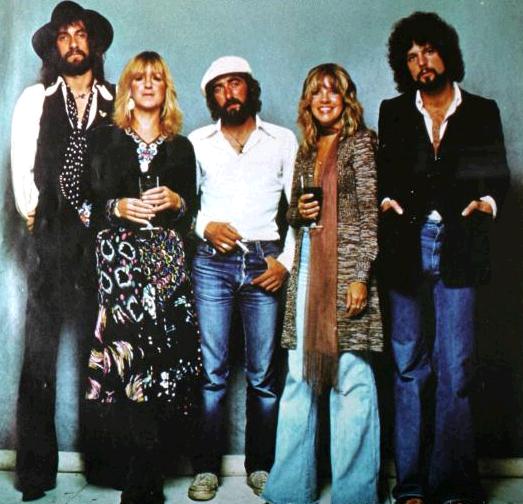
Some songs arrive with a bang. “Landslide” arrived like a private thought, almost whispered into the room, and somehow became one of Fleetwood Mac’s most enduring recordings. Released on the band’s landmark 1975 self-titled album, the song gave listeners a gentler doorway into a group that was about to become one of the biggest acts in the world. Decades later, its honesty still feels fresh: a young woman standing at a crossroads, trying to make peace with change before life makes the decision for her.
A song born in uncertainty
Stevie Nicks at a turning point
The story of Landslide begins before Fleetwood Mac became the Fleetwood Mac most people know. In the early 1970s, Stevie Nicks and Lindsey Buckingham were a struggling musical duo trying to build a career in Los Angeles. Their 1973 album Buckingham Nicks had attracted attention for its style and ambition, but it did not sell well. The record label dropped them, and the pair found themselves in a difficult, uncertain period both professionally and personally.
Nicks has often said that she wrote Landslide in 1973 while staying in Aspen, Colorado. Buckingham had gone out to rehearse, and she was left alone, looking out at the Rocky Mountains. It was one of those suspended moments life sometimes offers: she was in her mid-twenties, her career felt fragile, and she was wondering whether she should give up music altogether. The mountains, vast and unmoving, became a mirror for her own thoughts about time, fear, ambition, and change.
“Can I handle the seasons of my life?”
That line is the heart of the song. It is not dramatic in a theatrical way; it is dramatic because it is so recognisable. Nicks was writing about herself, but she was also writing about the universal moment when youth begins to give way to responsibility, and dreams have to survive contact with reality.
A deeply personal lyric
Unlike many classic rock songs of the era, Landslide does not rely on swagger or spectacle. Its power lies in its plainspoken poetry. The image of climbing a mountain and seeing one’s reflection in the snow-covered hills is vivid, but it never feels ornamental. It feels lived in. That emotional directness helped the song stand apart in a decade full of grand productions and larger-than-life personalities.
Nicks has also linked the song to her relationship with Buckingham. They were partners in music and in life, and both parts of that relationship were under strain. So Landslide carries several kinds of tension at once: artistic uncertainty, romantic instability, and the larger fear of growing older before one has truly begun.
Into the studio with the new Fleetwood Mac
The line-up that changed everything
By late 1974, Fleetwood Mac was in transition. The British blues band founded by Mick Fleetwood, John McVie, and Peter Green had already gone through several incarnations. When guitarist Bob Welch left, Mick Fleetwood was searching for a fresh direction. He heard Buckingham’s guitar work on the Buckingham Nicks album and wanted to recruit him. Buckingham agreed on one condition: Stevie Nicks had to come too.
That decision changed rock history. The new five-piece line-up of Stevie Nicks, Lindsey Buckingham, Christine McVie, John McVie, and Mick Fleetwood quickly developed a chemistry that was both musical and combustible. On the 1975 album Fleetwood Mac, Landslide became one of the key songs introducing Nicks as a major songwriting voice.
Who helped shape the recording
The track was produced by Fleetwood Mac together with Keith Olsen, an experienced producer and engineer who had also worked on Buckingham Nicks. Olsen played an important role in helping the band capture a clean, intimate California sound that suited the material perfectly.
Although Landslide is often thought of as a solo-style performance within a band album, its elegance came from careful collaboration. Stevie Nicks wrote the song. Lindsey Buckingham created the delicate acoustic guitar arrangement that gives the recording its flowing pulse. His fingerpicked playing is central to the song’s identity: graceful, precise, and emotionally supportive without overpowering the lyric.
The full band appears with notable restraint. There is no heavy rhythm section pushing the song forward, no dramatic studio trick designed to make it bigger than it needs to be. Instead, the recording leaves space. That was a smart artistic choice. Fleetwood Mac understood that the song’s strength came from its vulnerability.
Keeping it simple
One of the most striking things about the original recording is how little it tries to impress the listener. Nicks’s vocal is tender and slightly hushed, as if she is still discovering the meaning of the words while singing them. Buckingham’s guitar wraps around her voice rather than competing with it. The production is warm and uncluttered, which allows every phrase to land.
That simplicity was not accidental. In an era when studios were increasingly capable of elaborate layering, Landslide proved that emotional focus could be more powerful than technical excess. It feels almost like a conversation overheard in a quiet room.
How it performed when the world first heard it
Album track first, classic later
Interestingly, Landslide was not initially one of Fleetwood Mac’s major hit singles from the 1975 album. The record produced more obvious radio successes such as Rhiannon, Over My Head, and Say You Love Me. At first, Landslide was more of a treasured album cut: the kind of song fans discovered by spending time with the whole record.
Commercially, that did not stop it from becoming hugely important. The album Fleetwood Mac itself was a breakthrough smash, reaching number one in the United States and selling in enormous numbers. As the album grew, so did the song’s reputation. Radio programmers, listeners, and later generations of artists kept returning to it.
A slow-building favourite
Its chart story is unusual because its real commercial life unfolded over time. The original version became a staple of classic rock and adult contemporary radio, and later reissues and digital-era listening helped it reach new audiences. In many ways, Landslide followed the path of a true standard rather than a flash-in-the-pan hit: it kept resurfacing, kept connecting, and kept gathering meaning.
That long arc says a great deal about the song. Some tracks dominate charts for a season. Landslide became part of people’s lives.
Behind the scenes and on stage
A song that grew with Stevie Nicks
One of the most touching aspects of Landslide is that Stevie Nicks continued to sing it as she moved through the very seasons she had once feared. Audiences first heard it from a young songwriter wondering what adulthood might bring. Over the years, they heard the same song from a woman who had lived through fame, heartbreak, reinvention, and loss. That gave live performances an added emotional charge.
Nicks has often introduced the song in concert with reflections on age, memory, and family. As time passed, listeners who had once heard it as a song about youthful uncertainty began to hear it as something larger: a meditation on life itself.
The famous live versions
Fleetwood Mac revisited Landslide in several live settings, but one especially beloved version came on the 1997 reunion live album The Dance. That performance, with its slightly richer arrangement and mature vocal perspective, helped bring the song to yet another generation. It also reminded listeners how naturally it fit the band’s dramatic history. Here was a song about change, sung by musicians whose lives and relationships had changed in public view for decades.
There is also a small irony in the song’s history: despite its intimate scale, it became one of the emotional centrepieces of large arena shows. Even in huge venues, it somehow kept its private feeling.
Legacy far beyond 1975
A favourite for cover versions
Few Fleetwood Mac songs have invited as many reinterpretations. Artists from different genres have covered Landslide, drawn to its melodic clarity and emotional openness. One of the most commercially successful was The Chicks version, which became a major hit in the early 2000s and introduced the song to country and pop audiences who may not have known the original in depth.
That cover did more than revive interest; it confirmed the song’s flexibility. Landslide can live in rock, folk, country, singer-songwriter, and adult contemporary settings without losing its essence. That is usually the mark of exceptional songwriting.
Film, television, and emotional shorthand
Over the years, the song has appeared in film, television, tribute performances, and talent-show interpretations, often used at moments of reflection or transition. It has become a kind of emotional shorthand for memory, growth, and the bittersweet passage of time. Because the lyric is specific but not narrow, people can project their own stories into it.
That broad emotional reach has made it especially durable. It speaks to young listeners making their first big decisions, but it also speaks to older listeners looking back on the roads they took and the ones they left behind.
Why it mattered in the wider music era
The rise of confessional California rock
Landslide fits beautifully into the mid-1970s shift toward more personal, introspective songwriting. This was the era of albums that felt carefully sequenced and emotionally revealing, where listeners wanted not just hooks but personality. Fleetwood Mac, along with artists such as Joni Mitchell, Jackson Browne, Carole King, and the Eagles, helped define a West Coast sound that could be polished yet deeply human.
What made Fleetwood Mac special was the combination of pop craft and emotional exposure. They could deliver radio-friendly songs, but there was often real vulnerability under the surface. Landslide may be the clearest example of that balance. It is accessible, melodic, and memorable, yet it never feels manufactured.
A quiet song in a big decade
The 1970s gave us arena rock, disco, progressive ambition, singer-songwriter confession, and the early stirrings of punk. In that crowded landscape, Landslide found power through understatement. It did not need a huge chorus or a flashy arrangement to leave a mark. Its confidence came from truthfulness.
That may be the real secret of its longevity. Listeners change. Tastes change. Production styles come and go. But a song that captures a real human feeling with grace will keep finding new ears.
The song that kept climbing
Looking back, “Landslide” feels like more than a beautiful album track from 1975. It is the sound of an artist on the edge of transformation, writing honestly before the world fully knew her name. It is also a reminder that Fleetwood Mac’s greatness was not only in their dramatic history or their blockbuster success, but in their ability to recognise when a quiet song should be left beautifully, almost daringly, alone.
For a record born from uncertainty, Landslide has had remarkable staying power. It still plays like a late-night radio moment: intimate, reflective, and somehow uplifting. The mountain is still there. So is the question. And that is exactly why people keep coming back.