Eagles took California dreams and turned them into radio gold
From open-road harmonies to the mystery of Hotel California, the Eagles turned craftsmanship and chemistry into some of classic radio's most enduring songs. Here is the upbeat, behind-the-scenes story of how they became one of the defining bands of their era.
From different roads to one remarkable band
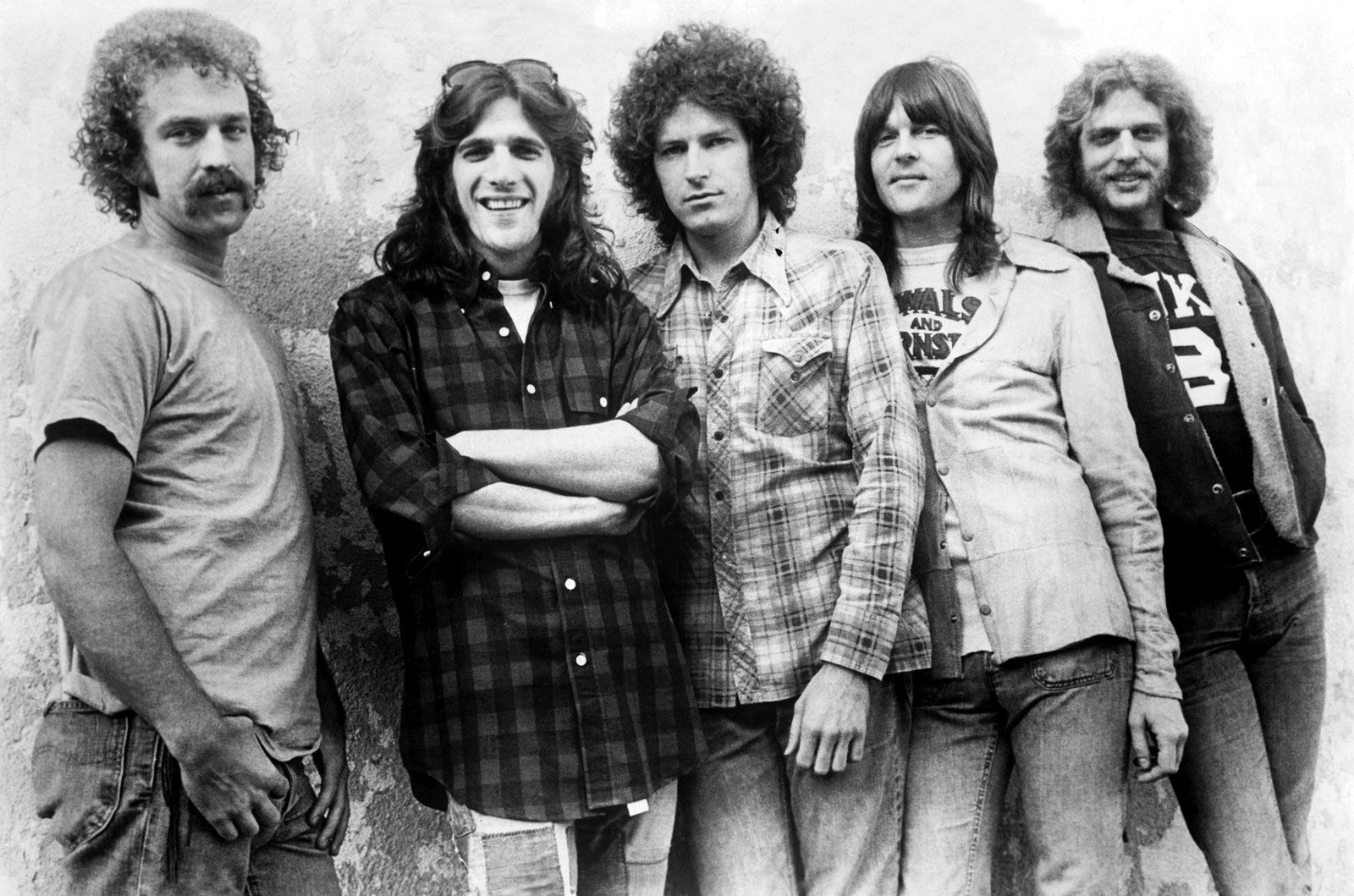
Before they became one of the defining groups of the 1970s, the Eagles were four musicians with very different journeys, all moving through the busy, fast-changing American music scene of the late 1960s and early 1970s.
Glenn Frey grew up in Detroit, Michigan, where he absorbed the sounds of rock and soul on local radio. He was drawn to music early, learning piano and guitar, and he quickly developed the sharp instincts that would later make him not just a performer but a strong musical architect. Frey had already spent time in bands and was connected to the Detroit scene before heading west in search of bigger opportunities.
Don Henley, from Texas, came from a more small-town background, but his ambition was just as strong. He played in local groups, sang, drummed, and wrote songs, showing the combination of precision and emotional intelligence that would become central to the Eagles sound. Henley had a gift for turning observation into lyrics, whether the mood was wistful, weary, or quietly biting.
Bernie Leadon brought deep roots in country, bluegrass, and folk. A highly respected multi-instrumentalist, he had already built a reputation in groups connected to the country-rock movement. Randy Meisner, meanwhile, came in with a striking high tenor voice and a background in bands that blended rock with country harmony.
The key meeting point for these musicians came through Linda Ronstadt. In 1971, Frey, Henley, Leadon, and Meisner were recruited to play in her backing band. It was one of those behind-the-scenes moments that changed music history. They discovered not only that they could play beautifully together, but that they had a rare chemistry built on tight harmonies, disciplined musicianship, and a shared feel for melody.
That chemistry soon became a band of its own. Signed by David Geffen’s Asylum label, they named themselves the Eagles, a title simple enough to sound timeless and wide open, just like their music.
The breakthrough that came quickly
The Eagles arrived at a moment when American rock was opening up. Audiences were ready for music that felt polished but personal, rooted in country storytelling yet built for rock radio. Their self-titled debut album, released in 1972, made an immediate impression.
It produced Take It Easy, a song that still feels like a road stretching toward the horizon. Co-written by Glenn Frey and Jackson Browne, it turned everyday restlessness into something joyful and unforgettable. That opening line alone has become part of popular culture. The song introduced the Eagles as a band that could sound relaxed without ever being careless.
More hits followed from that first album, including Witchy Woman and Peaceful Easy Feeling. Right away, the group showed range. They could be mysterious, warm, romantic, and radio-friendly without losing musical depth. Their harmonies were a major part of the appeal. Each voice had character, and together they created a blend that felt effortless, even though it was built with great care.
By the time albums like Desperado and On the Border arrived, the Eagles were refining their identity. Desperado did not produce huge chart singles at first, but its title track would go on to become one of the most beloved songs in their catalogue. It showed their ability to reach beyond simple hit-making into something more cinematic and emotionally rich.
Then came a major shift. Guitarist Don Felder joined, adding a harder rock edge. Later, Joe Walsh would bring even more bite, personality, and six-string firepower. The lineup changes helped the band evolve from country-rock pioneers into arena-sized hitmakers.
When the songs became part of everyday life
Some bands have hits. The Eagles have songs that seem woven into the fabric of radio itself. They are the kind of tracks that make listeners turn up the volume in the car, sing along in the kitchen, or suddenly remember a summer, a city, or a chapter of life they had almost forgotten.
Best of My Love gave them their first number one in the United States, proving they could deliver tenderness as convincingly as groove. Lyin’ Eyes offered a beautifully detailed story song, full of character and quiet sadness. One of These Nights had a sleek, nocturnal energy that showed the band moving confidently into a more polished and contemporary sound.
Then there is New Kid in Town, wistful and elegant, with a melody that drifts in like memory. Life in the Fast Lane brought a sharper, more dangerous pulse, driven by Joe Walsh’s muscular guitar work. And of course, there is Hotel California.
Few songs in classic hits history have inspired as much fascination as Hotel California. Released in 1976, it became the Eagles’ signature statement: mysterious, vivid, and endlessly discussable. Was it about fame? Excess? The dark side of the California dream? Part of its power is that it never locks itself into one narrow meaning. Don Henley described it as a song about the journey from innocence to experience, and that idea gives the track its haunting pull.
The recording itself has become legendary. The twin-guitar finale by Don Felder and Joe Walsh is one of rock radio’s most celebrated endings, precise and dramatic but also emotionally charged. It is the kind of moment listeners wait for, even if they have heard the song hundreds of times.
And the hits kept coming. Take It to the Limit, with Randy Meisner’s soaring vocal, remains one of their most moving performances. Heartache Tonight showed their ability to sound loose and exuberant while still hitting with total confidence. I Can’t Tell You Why, led by Timothy B. Schmit after Meisner’s departure, brought a softer, late-night sophistication that fit the band beautifully.
- Take It Easy – the open-road anthem that introduced them to the world
- Desperado – a reflective classic that grew into one of their most cherished songs
- Lyin’ Eyes – storytelling at its most graceful and relatable
- One of These Nights – sleek, stylish, and impossible to forget
- Take It to the Limit – a showcase for harmony and emotional lift
- Hotel California – the masterpiece that still sparks conversation
- Life in the Fast Lane – rock energy with a dangerous grin
- Heartache Tonight – pure release, built for loud singalongs
Perfection, pressure, and the stories behind the music
Part of what makes the Eagles fascinating is that their polished sound was often created in conditions that were anything but calm. They were famously exacting in the studio. Harmonies were worked over carefully. Arrangements were refined, tested, and improved. That perfectionism helped produce records that have lasted for decades, though it also created tension inside the band.
There is a well-known line, often repeated with a smile, that the Eagles were sometimes at their best when they were almost driving each other mad. The group members were strong personalities, and success only intensified that. Yet those internal pressures also pushed them toward excellence.
One of the best stories concerns the writing of Life in the Fast Lane. Joe Walsh had used the phrase after hearing it from a fast-driving acquaintance, and it immediately sounded like a song title. It was pure Eagles material: flashy, memorable, and just dangerous enough. They knew a great phrase when they heard one.
Another enduring anecdote surrounds Take It Easy. Jackson Browne had been working on the song but had not finished it. Glenn Frey helped complete it, including the now-famous line about standing on a corner in Winslow, Arizona. That line became so iconic that it eventually inspired a real-life tourist attraction in the town. Not many songs can claim to have reshaped a street corner.
“We’re part of the fabric of that era, but the songs have managed to outlast the era.”
That sentiment captures the Eagles well. Their music is deeply connected to the 1970s, yet it never feels trapped there. The themes are too human: freedom, ambition, regret, romance, escape, disillusionment, longing.
There are lesser-known details, too. The band’s Their Greatest Hits 1971-1975 became one of the best-selling albums in history, a reminder that by the mid-1970s the Eagles were no longer simply successful, they were enormous. And despite their image as California rock royalty, only some of the key members were actually from California. In a way, that makes perfect sense. The Eagles were as much about the idea of California as the place itself: sunshine, highways, glamour, possibility, and the shadows behind all of it.
The sound they built and the artists they influenced
The Eagles helped define a style that blended rock, country, folk, and pop into something smooth enough for wide radio appeal but sturdy enough to earn deep respect from musicians. Their songs had craft. Their records had space in them. The guitars rang clearly, the rhythms moved with confidence, and the harmonies gave everything a rich, human warmth.
What set them apart was balance. They could sound easygoing without becoming lightweight. They could be commercially huge without losing musical intelligence. They could write songs that worked on first listen and still revealed more over time.
Countless artists followed paths the Eagles helped open. You can hear their influence in country-rock, adult contemporary, heartland rock, harmony-driven pop, and even modern Americana. Bands and singers across generations have borrowed from that recipe of crisp songwriting, vocal blend, and emotional clarity.
They also proved that musicianship mattered on mainstream radio. Guitar parts were not just decoration in Eagles songs; they were central to the storytelling. Listen to the acoustic strum of Take It Easy, the stately sweep of Desperado, or the electric drama of Hotel California, and you hear a band using arrangement as narrative.
Why Eagles still belong on classic hits radio
For classic hits listeners, the Eagles are more than a successful band from the past. They are one of those rare acts whose songs still create an immediate atmosphere. Put one on, and a room changes. A drive feels longer in the best possible way. A memory sharpens. A chorus invites company.
That is a big part of why they remain essential to radio today. Their music offers familiarity, but it never feels worn out. The best Eagles songs are rich enough to reward repeat listening and accessible enough to welcome everyone in. They connect generations too. Long-time fans hear the records they grew up with; younger listeners discover songwriting and musicianship that still sound fresh.
There is also something deeply satisfying about the craft in their catalogue. In an age of constant noise and quick consumption, Eagles songs remind listeners how powerful a well-built melody, a perfectly placed harmony, or a memorable guitar line can be.
And then there is the emotional range. Want something uplifting? Take It Easy is ready. Something reflective? Desperado is waiting. Something dramatic for the open road after dark? Hotel California still checks in right on time.
The Eagles matter because they captured a dream and complicated it. They gave us sunlit melodies and shadows underneath. They made records that sounded immaculate but felt lived in. For anyone who loves classic hits radio, that combination is hard to resist.
Decades on, their songs still glide out of the speakers with that unmistakable blend of polish, heart, and horizon. And every time they do, it feels a little like meeting an old friend who still has a great story to tell.