The Power Of Love — the song that put a DeLorean into overdrive
With its punchy guitars, bright horns, and unforgettable link to Back to the Future, “The Power Of Love” became a defining sound of 1985. Here is the story of how Huey Lewis and the News turned a film commission into a number one classic.
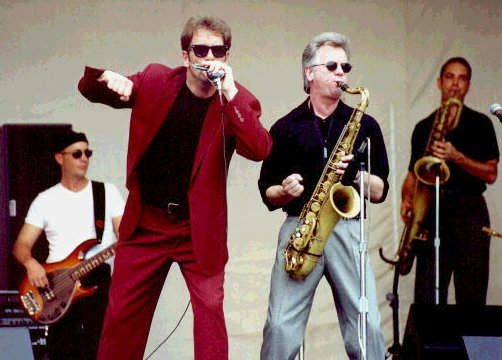
Few songs capture the bright, confident rush of the mid-1980s quite like “The Power Of Love” by Huey Lewis and the News. It arrives with a punchy guitar figure, a brass-driven swagger, and a chorus that feels built to fill car radios, dance floors, and movie theatres all at once. Released in 1985, it became far more than a hit single. It turned into a defining pop culture moment, forever linked with one of the decade’s most beloved films while also standing tall as a classic in its own right.
Behind that instant-recognition factor, though, is a story of sharp songwriting, smart timing, and a band at the very peak of its powers.
How the song came together
A call from Hollywood
By the mid-1980s, Huey Lewis and the News were already on a remarkable run. Their 1983 album Sports had transformed them from a hard-working American bar band with pop instincts into major stars. They had the rare ability to sound polished without losing their live-wire energy. That made them a natural fit when filmmakers Robert Zemeckis and Bob Gale were looking for music for a new time-travel comedy called Back to the Future.
The production initially hoped Huey Lewis might provide a song, and the connection made perfect sense. His music had that all-American momentum the film wanted: upbeat, melodic, slightly cheeky, and full of movement. According to the story often told around the film, Lewis first hesitated when asked to write a song specifically describing the movie’s plot. He did not want to create a literal summary in musical form. Instead, he and the band delivered something broader and stronger: a song about love as a force more powerful than money, fame, or status.
“The power of love is a curious thing / Make a one man weep, make another man sing.”
That opening line says a lot about why the song worked. It is universal enough to live outside the film, but vivid enough to feel cinematic.
The writers and the band chemistry
“The Power Of Love” was credited to Huey Lewis, Chris Hayes, and Johnny Colla. That writing team reflected the collaborative spirit at the heart of Huey Lewis and the News. Lewis brought the charismatic voice and a gift for turning everyday language into memorable hooks. Hayes, one of the band’s key guitarists and musical architects, helped shape the song’s driving rock-pop framework. Colla, another founding member, contributed to the arrangement and writing style that gave the band its crisp, muscular identity.
Like many of the group’s best songs, it feels carefully built but never stiff. The rhythm section keeps everything moving with a steady, no-nonsense pulse, while the guitars and keyboards add lift and shine. Then there are the horns, a crucial part of the Huey Lewis and the News sound. They do not merely decorate the track; they help define its personality, giving it that celebratory, street-corner-meets-arena feel.
Recording the hit
Studio polish with live-band spirit
The song was produced by Huey Lewis and the News together with Bob Brown, the band’s long-time manager and production collaborator. That mattered. Brown understood how to present the group in a way that preserved their live energy while making their records radio-ready. “The Power Of Love” sounds tight and highly controlled, but it never loses the feeling that a real band is pushing the song forward in real time.
The musicians behind the recording included the core members of the News: Huey Lewis on vocals, Chris Hayes and Johnny Colla on guitars, Sean Hopper on keyboards, Mario Cipollina on bass, and Bill Gibson on drums. The horn arrangements were central to the band’s identity too, with the brass lines adding snap, warmth, and a sense of occasion.
One reason the record still sounds so fresh is that it sits at a sweet spot in 1980s production. It has the clarity and punch of the era, but it is not buried in studio trickery. The drums are crisp, the vocals are front and centre, and the arrangement leaves room for every hook to land. It is glossy, certainly, but not artificial.
A title adjustment for the big screen
There is also a small but memorable detail attached to the song’s release. To avoid confusion with Jennifer Rush’s ballad of the same name, the single was often billed as “The Power Of Love” by Huey Lewis and the News with the film connection made very clear in marketing. In the context of 1985, that distinction mattered, because both songs were circulating in the same broad pop landscape, even though they could not have been more different in style.
From radio smash to number one
Chart success in 1985
Commercially, “The Power Of Love” was enormous. In the United States, it became Huey Lewis and the News’ first number one hit on the Billboard Hot 100. That was a major milestone for a band that had already built an impressive catalogue of radio favourites. It also performed strongly across other charts, including adult contemporary and mainstream rock formats, proving just how widely it connected.
Internationally, the song was also a major success, reaching the top ten in several territories and becoming one of the band’s best-known recordings around the world. It had the kind of cross-format appeal record labels dream about: catchy enough for pop radio, sturdy enough for rock listeners, and upbeat enough to become a staple at parties, sporting events, and on television.
Why audiences responded
Part of the appeal was simple timing. In 1985, audiences were hungry for songs that felt energetic and optimistic. Pop and rock were embracing bigger choruses, brighter production, and a polished sense of fun. “The Power Of Love” delivered all of that without sounding disposable. It had the bounce of pop, the backbone of rock, and the good humour of rhythm and blues-influenced bar-band music.
It also helped that Huey Lewis sang it with complete conviction. He never oversells the lyric. Instead, he sounds like someone letting you in on a truth he has learned the hard way. That relaxed confidence was one of his great strengths as a frontman.
Back to the Future and a permanent place in pop culture
The perfect match with Marty McFly
Of course, it is impossible to talk about “The Power Of Love” without talking about Back to the Future. The song plays prominently in the film and became inseparable from the image of Marty McFly, skateboards, denim, amplifiers, and the gleaming silver DeLorean. It was not just included on the soundtrack; it helped define the film’s tone. Before the time-travel plot fully unfolds, the song tells you exactly what kind of ride you are in for: fast, funny, youthful, and full of heart.
One of the film’s best inside jokes involves Huey Lewis himself. He appears in a cameo as a school talent show judge who rejects Marty’s band for being “just too darn loud.” It is a wonderfully self-aware moment, especially coming from the man whose own band had just delivered one of the era’s loudest and most joyful anthems.
More than a movie song
What gives the song its staying power is that it never depended entirely on the film. Plenty of soundtrack singles are remembered only in relation to the movie that launched them. “The Power Of Love” escaped that fate because it was strong enough to live independently on radio and in concert. Even listeners who have not seen Back to the Future can recognise the song within seconds.
That dual identity is rare. It is both a perfect movie song and a complete stand-alone hit.
Behind-the-scenes details fans still love
A band that knew its lane
One of the most interesting things about Huey Lewis and the News is how clearly they understood their own strengths. They were not trying to be mysterious, futuristic, or overly fashionable. In an era full of striking visual reinventions and studio experimentation, they leaned into something more grounded: sharp songs, expert playing, and a sense of fun. “The Power Of Love” is a great example of that confidence. It does not chase trends; it simply does what the band does exceptionally well.
The Oscar nomination
The song’s impact was so immediate that it earned an Academy Award nomination for Best Original Song. That recognition confirmed what audiences already knew: this was not just a successful tie-in single, but one of the standout songs associated with cinema in the 1980s.
- Writers: Huey Lewis, Chris Hayes, Johnny Colla
- Producers: Huey Lewis and the News, Bob Brown
- Film connection: Featured prominently in Back to the Future
- Major achievement: First US number one for Huey Lewis and the News
How it fits the wider sound of the 1980s
Big hooks, real instruments, pure momentum
Listen closely and “The Power Of Love” reveals a lot about where mainstream music stood in 1985. This was a period when pop and rock were becoming increasingly sleek, but audiences still responded strongly to bands that sounded like bands. Huey Lewis and the News occupied a very attractive middle ground. They embraced modern production values, yet their records were rooted in traditional musicianship: guitars, drums, keyboards, horns, and a singer with personality.
That balance helped the song sit comfortably alongside artists as varied as Bruce Springsteen, Phil Collins, Tina Turner, Bryan Adams, and Hall & Oates. It belonged to an era of blockbuster singles, but it also carried echoes of earlier American rock and soul traditions. You can hear traces of rhythm and blues, bar-band rock, and classic pop craftsmanship all folded into one compact, radio-perfect package.
In that sense, “The Power Of Love” is more than a nostalgic favourite. It is a snapshot of a moment when mainstream music could be highly polished and still feel human, when a song could be huge without losing its grin.
Why it still feels so good
Decades later, “The Power Of Love” remains irresistible because it delivers exactly what great classic hits should: immediacy, character, and joy. It starts strong, never lets up, and leaves behind the feeling that life might move a little faster and brighter for the next few minutes. That is no small achievement.
For Huey Lewis and the News, it was a career-defining triumph. For film fans, it is a permanent companion to one of the most cherished movies of the 1980s. And for anyone who loves a great pop-rock single, it is proof that sometimes the most powerful thing in music is not complexity at all. Sometimes it is a killer hook, a great band, and a chorus that still makes the world feel full of possibility.