Chicago on the Dial
From bold horn charts to unforgettable ballads, Chicago built one of the richest catalogues in classic hits history. Their story is one of ambition, reinvention, and songs that still light up the radio.
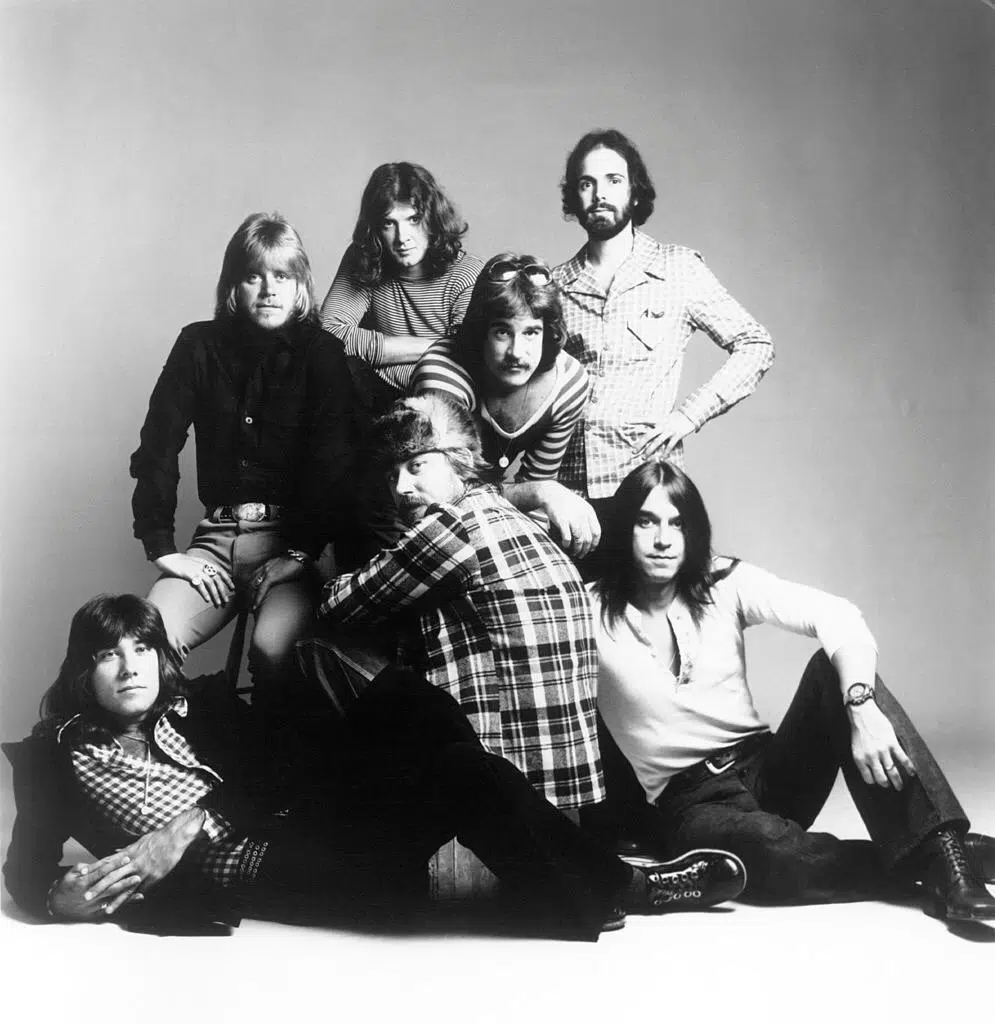
There are some bands that arrive with a hit single, and there are others that seem to build an entire world. Chicago did the latter. Brass, rock guitars, rich harmonies, jazz touches, tender ballads, and a city-sized sense of ambition all came together in a group that refused to sound like anyone else. For classic hits radio listeners, Chicago remains one of those names that instantly brings a flood of memories: the first notes of a horn line, the warmth of Peter Cetera’s voice, the punch of a chorus that still feels enormous decades later.
Behind those familiar songs is a story full of hustle, reinvention, and remarkable musicianship. Chicago did not simply chase trends. They built a catalogue sturdy enough to survive changing fashions, changing line-ups, and changing decades. That is part of what makes them such an enduring presence on the radio.
From the Windy City to the Sunset Strip
Chicago’s story began, fittingly, with a group of young musicians who were serious about their craft long before fame arrived. Several future members met in the late 1960s in Chicago, where they were immersed in jazz, classical music, rhythm and blues, and the energy of rock. Keyboard player and singer Robert Lamm, trumpet player Lee Loughnane, saxophonist and woodwind player Walter Parazaider, trombonist James Pankow, guitarist Terry Kath, bassist and singer Peter Cetera, and drummer Danny Seraphine each brought a different musical background to the table.
That mix mattered. This was not a band built around one frontman and a backing group. It was more like a musical conversation between equals, with everyone adding something distinct. Pankow, Loughnane, and Parazaider were especially crucial in shaping the brass-driven identity that made Chicago leap out of the speakers. Their horn arrangements were not decorative extras. They were central to the band’s sound.
Before they were known as Chicago, they performed under the name The Big Thing. It was a bold title, and in a way it turned out to be a prophecy. The group moved to Los Angeles, where they landed a regular gig at the Whisky a Go Go, one of the most important live venues of the era. That move put them in front of the right audiences at the right time. They soon drew the attention of music industry figures who recognised that this was no ordinary rock band.
Their name changed to Chicago Transit Authority, a direct nod to their hometown. But the real Chicago Transit Authority objected, so the band shortened it to simply Chicago. It was cleaner, stronger, and somehow perfectly suited them. One word. Instantly recognisable.
A breakthrough built on ambition
Chicago’s debut album, Chicago Transit Authority, arrived in 1969 as a double album, which tells you almost everything you need to know about their confidence. Most new acts would have played it safe. Chicago went big. The record blended rock, jazz, soul, blues, and politically aware songwriting in a way that felt adventurous without losing its emotional pull.
It produced key early tracks including Does Anybody Really Know What Time It Is?, Beginnings, and Questions 67 and 68. Those songs introduced listeners to the group’s signature ingredients: sophisticated arrangements, memorable hooks, and a sense that the band could turn on a coin from intimate to explosive.
The real commercial breakthrough came as the 1970s unfolded. Albums like Chicago, Chicago III, and Chicago V established them as major stars. Then came one of their defining moments: Saturday in the Park in 1972. Written by Robert Lamm, the song captured a bright, bustling summer scene with such vividness that listeners could practically see the people dancing, hear the laughter, and feel the heat rising off the pavement. It remains one of the great feel-good records of the era.
That same period also gave the band 25 or 6 to 4, driven by Terry Kath’s fierce guitar work and one of the most instantly recognisable horn riffs in classic rock. If Saturday in the Park showed Chicago’s sunny side, 25 or 6 to 4 revealed their edge. They could groove, they could soar, and they could absolutely rock.
By the mid-1970s, Chicago had become one of the biggest bands in the world. Their run of hit albums and singles was extraordinary, and they were equally formidable on stage. Audiences came for the songs, of course, but also for the musicianship. This was a band that could really play.
The songs that never leave the radio
Chicago’s catalogue is deep, but a handful of songs have become permanent fixtures because they connect so immediately.
- If You Leave Me Now – A soft, elegant ballad led by Peter Cetera, this 1976 hit became one of the band’s biggest global successes. Its delicate arrangement and aching vocal made it unforgettable.
- Saturday in the Park – Joyful, cinematic, and full of life, it remains one of the group’s most beloved recordings.
- 25 or 6 to 4 – Bold, driving, and packed with attitude, this is Chicago at full power.
- Hard to Say I’m Sorry – Released in 1982, this song helped launch a major second act for the band, introducing them to a new generation of listeners.
- You’re the Inspiration – One of their defining love songs, warm and sincere in a way that made it a radio favourite almost instantly.
- Colour My World – Gentle and romantic, with its famous flute part, this became a staple at school dances and weddings for years.
- Make Me Smile – Bright, punchy, and uplifting, it showed how naturally Chicago could blend complexity with pop appeal.
What is striking about these songs is their range. Few bands can move so convincingly from brass-powered rock to intimate balladry without sounding fragmented. Chicago made it feel natural.
Terry Kath, Peter Cetera, and the chemistry within the band
Every great band has an internal chemistry that is hard to define but impossible to fake. In Chicago’s case, that chemistry was shaped by the contrast between personalities and musical strengths. Terry Kath was widely admired as a guitarist of exceptional power and imagination. Jimi Hendrix himself is often said to have praised Kath’s playing, a story that has become part of Chicago lore because it feels so believable when you hear him play. There was fire in his guitar work, but also subtlety.
Peter Cetera brought a very different quality: a clear, emotional tenor voice that became central to many of the band’s biggest songs. Robert Lamm was a gifted songwriter with a knack for capturing moods and scenes. James Pankow’s arranging gave the horns their drama and shape. Together, they formed a band with multiple centres of gravity, which is one reason the music stayed rich and unpredictable.
There were triumphs, but there was heartbreak too. In 1978, Terry Kath died accidentally at the age of 31. It was a devastating loss, both personally and artistically. Many bands would not have recovered. Chicago did continue, but his death marked a turning point. It changed the emotional weather inside the group and remains one of the saddest chapters in their history.
Chicago’s story is not just one of hits. It is also a story of resilience.
That resilience was tested again as musical tastes shifted at the end of the 1970s. Yet Chicago found a way forward.
Reinvention in the 1980s
One of the most fascinating parts of Chicago’s career is that they were not just a 1970s success story. They reinvented themselves in the 1980s and returned to the top of the charts. Working with producer David Foster, the band leaned more heavily into polished adult contemporary pop, while still holding onto the emotional directness that had always served them well.
Hard to Say I’m Sorry was the song that opened that new chapter. It became a huge hit and reminded the world that Chicago still knew exactly how to deliver a melody that lingered. Then came You’re the Inspiration, Stay the Night, and Hard Habit to Break, songs that gave the band a fresh presence on radio and television.
Some longtime fans preferred the jazz-rock complexity of the early years, while others embraced the sleek romanticism of the 1980s material. The truth is that both eras are part of Chicago’s identity. Their genius was not in standing still. It was in adapting while keeping enough of their character intact that listeners still knew who they were hearing.
A sound with brass, heart, and surprising depth
Trying to sum up Chicago’s musical style in a single phrase is almost impossible, and that is part of the fun. At their core, they fused rock energy with jazz-trained precision. The horns gave them grandeur and bite. The rhythm section could be supple or thunderous. The songwriting ranged from observational and playful to deeply romantic.
They were one of the major bands that proved horns could be fully integrated into rock music without feeling borrowed from somewhere else. Their success helped open doors for other horn-driven acts and expanded what mainstream rock radio could sound like.
They also had a rare gift for dynamics. A Chicago song might begin with a quiet piano figure, bloom into a vocal harmony, then burst into a brass arrangement that feels like sunlight breaking through clouds. That ability to build emotion through arrangement, not just lyrics, is one reason the records still sound so satisfying.
Lesser-known facts only make them more interesting. For one thing, the band became famous for numbering many of their albums in sequence, which gave their discography a wonderfully confident, almost industrial neatness. They also sold tens of millions of records across multiple decades, a feat that sounds even more impressive when you remember how dramatically popular music changed during their career.
Why Chicago still matters on classic hits radio
Classic hits radio thrives on songs that do more than trigger memory. The best records also stand up in the present moment, and Chicago has plenty of those. Their music offers familiarity, but never blandness. A listener may know every word to If You Leave Me Now or Saturday in the Park, yet the arrangement still reveals fresh details: a horn phrase here, a vocal blend there, a guitar line that suddenly catches the ear.
They matter because they represent a kind of musical craftsmanship that listeners continue to value. These were not disposable recordings. They were carefully built performances by musicians with deep roots and high standards. There is warmth in them, but also muscle. Romance, but also risk. That combination keeps the songs alive.
They matter, too, because Chicago’s catalogue mirrors the lives of many listeners. There are songs for youthful optimism, songs for heartbreak, songs for reconciliation, songs for long drives, summer afternoons, and quiet late-night reflection. Few bands have covered so much emotional ground while remaining so unmistakably themselves.
And perhaps that is the real reason Chicago belongs on the dial, year after year. Their music feels lived in. It carries the echo of crowded clubs, long studio nights, personal losses, commercial triumphs, and the simple joy of a band locking into a groove and making something memorable together.
When a Chicago song comes on the radio, it does not just fill the room. It changes the atmosphere. Suddenly, the day has a little more colour, a little more lift, and maybe even a horn section in the background. For a classic hits audience, that is not just nostalgia. That is enduring magic.