Needle Drop: Paul Simon
The red studio light flickers on, a guitar lands softly in the mix, and suddenly Paul Simon is right there in the room. His songs have been brightening radio for decades, but the real story is how one of music’s sharpest writers kept finding new sounds, new questions, and new ways to connect.
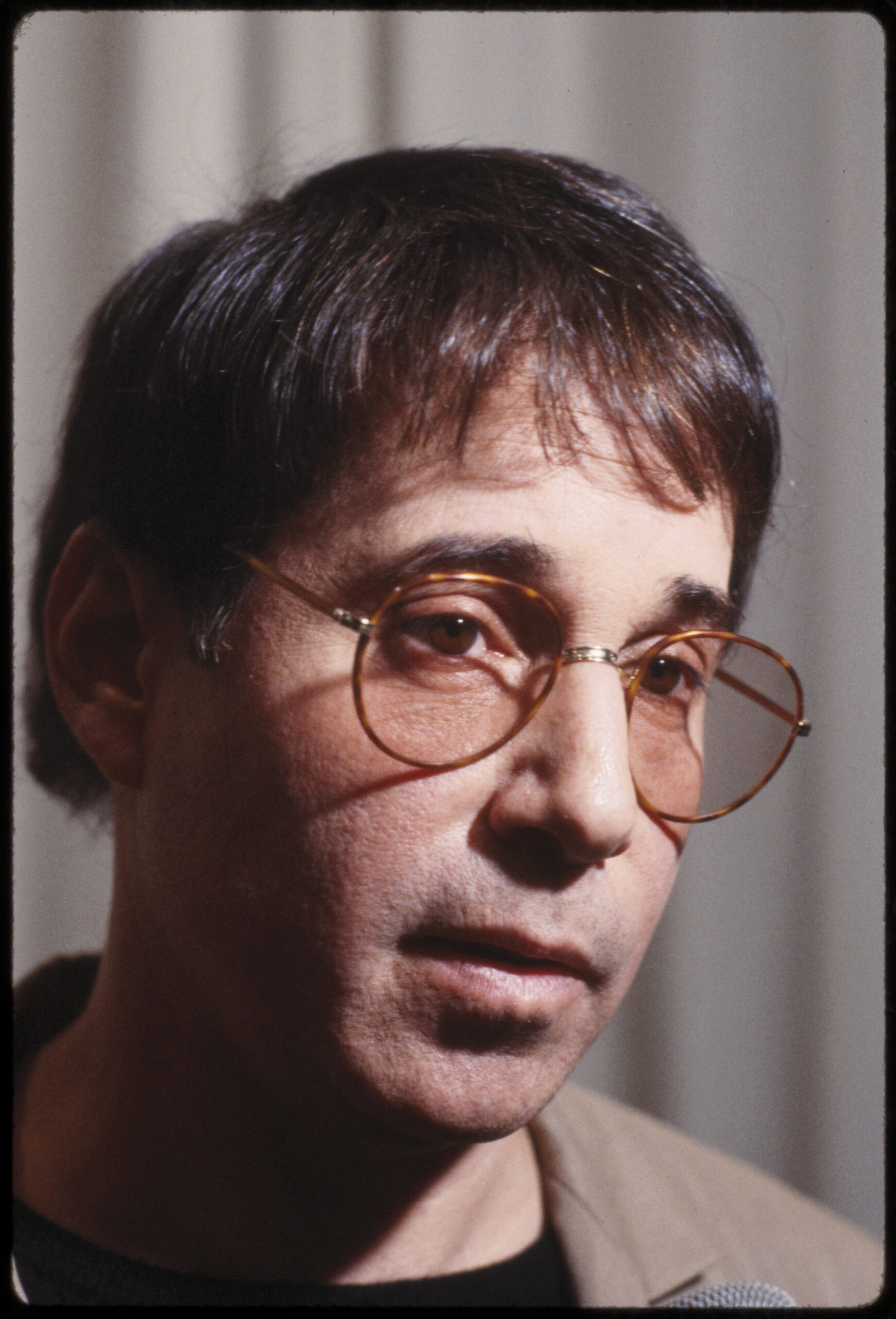
The red studio light is on, the guitar is close-miked, and a voice that sounds both intimate and wise leans into the room. That is one of the enduring pleasures of Paul Simon: no matter how large his success became, his songs often feel as if they are being sung just a few feet away. Over the decades, he has written tunes that slip easily onto classic hits radio, but behind those familiar melodies sits a restless, curious artist who never stopped listening for a new rhythm, a sharper line, or a more revealing truth.
For listeners, Paul Simon is many things at once: one half of one of popular music’s most celebrated duos, a solo star with a gift for detail and surprise, and a songwriter whose work can sound breezy on the surface while carrying remarkable emotional depth underneath. His catalogue holds singalong favourites, reflective ballads, and rhythm-rich adventures that widened the possibilities of pop music.
Queens beginnings and a young songwriter’s ear
Paul Frederic Simon was born on October 13, 1941, in Newark, New Jersey, and grew up in the Kew Gardens Hills area of Queens, New York. Music was around him early. His father, Louis Simon, was a teacher, bandleader, and bassist, while his mother, Belle, was an elementary school teacher. It was a household where culture, education, and melody all had a place, and that combination helped shape Simon’s careful, literary writing style as much as his musical instincts.
As a boy, he was drawn to the explosion of popular music coming through radios and jukeboxes in the 1950s. Doo-wop, early rock and roll, and vocal harmony groups left a deep impression. One of the most important events in his life came when he met Art Garfunkel as a child. They attended school together and discovered a shared love of singing. Their voices blended beautifully, and before long they were performing as a duo.
In their teens, Simon and Garfunkel recorded under the name Tom and Jerry, scoring a modest hit in 1957 with Hey Schoolgirl. It was an early glimpse of Simon’s ambition and professionalism. While still very young, he was already writing, recording, and learning how the music business worked. That early experience taught him a lesson many great songwriters learn quickly: talent matters, but persistence matters too.
Simon attended Queens College for a time, studying English, which feels fitting when you look at the precision of his lyrics. Even in his most radio-friendly songs, there is often a writer’s eye at work: a street corner, a conversation, a passing thought, a lonely room. He did not simply chase hooks. He built worlds inside three or four minutes.
The breakthrough that changed everything
Although Simon and Garfunkel had been working for years, their true breakthrough came in the 1960s. Their 1964 album Wednesday Morning, 3 A.M. initially went nowhere. At that point, it might have seemed like the story was ending before it had properly begun. But music history sometimes turns on unusual moments.
After the pair had gone their separate ways for a while, producer Tom Wilson remixed The Sound of Silence, adding electric instruments without the duo’s involvement. The new version was released as a single and became a major hit in 1965. Suddenly, Simon and Garfunkel were at the centre of the folk-rock era.
It is one of the great behind-the-scenes stories in popular music: a quiet acoustic song, reshaped in the studio, finding its moment and changing two careers overnight. Simon, who had been in England at the time, returned to the United States to reunite with Garfunkel, and the duo quickly became one of the defining acts of the decade.
What followed was an extraordinary run. Songs such as Homeward Bound, I Am a Rock, A Hazy Shade of Winter, Mrs. Robinson, The Boxer, Cecilia, Scarborough Fair/Canticle, and Bridge Over Troubled Water gave them a catalogue most artists would envy. Simon’s writing was central to that success. He had a rare ability to combine poetic language with melodies that felt immediate and memorable.
Mrs. Robinson, famously linked to the film The Graduate, brought Simon’s songwriting to an even wider audience. Bridge Over Troubled Water, though sung by Garfunkel, became one of the era’s most beloved recordings and showed the emotional range of Simon’s writing. Yet by 1970, tensions within the duo had grown, and Simon and Garfunkel split.
Stepping out alone
Breaking up one of the most successful duos in music history could have been a daunting move, but Simon’s solo career quickly proved he was far more than half of a partnership. His 1972 self-titled album featured Mother and Child Reunion, a warm, inventive hit recorded in Jamaica, and Me and Julio Down by the Schoolyard, a playful, irresistible song whose exact story remains delightfully mysterious.
That mystery is part of Simon’s charm. He often writes in a way that feels specific without giving everything away. Listeners are invited in, but they still have room to wonder. It keeps the songs alive.
In 1973, he released There Goes Rhymin’ Simon, which included Kodachrome and Loves Me Like a Rock. These records showed just how broad his musical vocabulary had become. Gospel, Latin rhythms, folk, pop, rhythm and blues, and acoustic singer-songwriter craft all sat comfortably in his work. He was not interested in staying in one lane.
Then came one of his most admired achievements: Still Crazy After All These Years in 1975. The title track remains one of Simon’s signature songs, full of rueful observation and adult reflection. 50 Ways to Leave Your Lover, driven by Steve Gadd’s instantly recognisable drum pattern, became a number one hit. It is witty, catchy, and deceptively sophisticated, classic Paul Simon territory.
Simon also had a gift for songs that felt conversational while being meticulously built. He could make unusual lyrical phrasing sound completely natural. That is harder than it looks, and it is one reason fellow songwriters have long admired him.
A bold reinvention with Graceland
If Simon had stopped there, his place in music history would already be secure. But in the 1980s, he delivered a remarkable reinvention. After a difficult commercial period, he began exploring South African township music and collaborating with musicians from South Africa. The result was Graceland, released in 1986.
The album was a triumph: artistically adventurous, rhythmically alive, and packed with songs that became deeply loved. You Can Call Me Al brought humour, brass, and bounce to radio playlists everywhere. Graceland itself is wistful and vivid, a travel song, a memory piece, and a meditation on change all at once. The Boy in the Bubble opened the album with an arresting rhythmic pulse and one of Simon’s sharpest opening lines:
“These are the days of miracle and wonder…”
Graceland was not without controversy, particularly because of the cultural and political context surrounding South Africa at the time, but musically it was a landmark. It introduced many listeners to new sounds and highlighted Simon’s willingness to learn from other traditions rather than simply repeat himself. For radio audiences, it also gave him a fresh generation of hits without losing the intelligence and melodic appeal that had always defined his work.
He followed it with The Rhythm of the Saints in 1990, another rhythmically rich album drawing on Brazilian and Afro-diasporic influences. It did not produce a single quite as ubiquitous as You Can Call Me Al, but it deepened his reputation as an artist with an unusually global musical imagination.
The songs listeners carry with them
Any artist spotlight on Paul Simon has to pause for the songs, because this is where his bond with listeners becomes most powerful. His catalogue is filled with tracks that seem to arrive carrying memories with them.
- The Sound of Silence — haunting, timeless, and still startling in its mood
- Homeward Bound — a homesick traveller’s anthem with universal appeal
- Mrs. Robinson — clever, driving, and forever tied to a cultural moment
- The Boxer — cinematic storytelling with that unforgettable “lie-la-lie” refrain
- Bridge Over Troubled Water — one of the great comfort songs in popular music
- Me and Julio Down by the Schoolyard — playful and instantly recognisable
- Kodachrome — bright, fast-moving, and full of nostalgic colour
- 50 Ways to Leave Your Lover — dry wit, brilliant rhythm, and a chorus everyone knows
- Still Crazy After All These Years — mature songwriting at its finest
- You Can Call Me Al — joyous, offbeat, and impossible not to smile at
- Graceland — reflective, richly textured, and endlessly rewarding
What is striking is how many different moods live in that list. Simon can be funny, melancholy, romantic, philosophical, and slyly observational, sometimes all within the same song.
The craft behind the voice
Paul Simon’s musical style is often described as folk-pop, but that only tells part of the story. He is really a master synthesiser of forms. He took the intimacy of folk, the concision of pop, the pulse of rhythm and blues, the lift of gospel, and the storytelling instincts of great literary songwriters, then filtered them through his own unmistakable voice.
That voice matters too. Simon was never a bombastic singer, and that worked in his favour. He sounds human, thoughtful, companionable. His delivery suits songs built on detail and nuance. On record, he often feels less like a performer projecting outward and more like a trusted narrator letting the listener in.
His influence has been enormous. Generations of writers have borrowed from his blend of intelligence and accessibility. You can hear traces of Simon in artists who value exact imagery, unusual chord movement, and lyrics that reward repeat listening. He showed that pop songs could be commercially successful without flattening out complexity.
Stories, surprises, and lesser-known corners
One of the pleasures of Simon’s career is how many intriguing side notes it contains. He had a memorable comic streak, which some listeners first saw in his appearances on Saturday Night Live. That dry humour is present in his music too, especially in songs where the narrator seems slightly puzzled by life, love, or himself.
There is also his fascination with sound itself. Simon has long been known as a careful craftsman in the studio, attentive to arrangement, texture, and rhythm. A Paul Simon record may feel relaxed, but it is usually built with remarkable precision.
He once said,
“Music is forever; music should grow and mature with you, following you right on up until you die.”
That line helps explain why his catalogue has lasted. He wrote songs for different stages of life. Teen excitement, adult disappointment, middle-aged reflection, flashes of absurdity, moments of gratitude: it is all there.
Another lesser-known strength is his bravery. Reinvention can be risky, especially for an artist with an established audience. Simon repeatedly chose curiosity over comfort. That does not happen by accident. It comes from a deep belief that music is a living conversation, not a museum piece.
Why Paul Simon still matters on classic hits radio
For classic hits radio listeners today, Paul Simon remains essential because his songs do more than trigger nostalgia. They continue to reveal new things. A listener may first love Me and Julio Down by the Schoolyard for its bounce, then later notice its craftsmanship. Still Crazy After All These Years may mean one thing at 25 and something richer at 55. You Can Call Me Al still lights up the room, while The Sound of Silence still stops people in their tracks.
His music also fits the spirit of great radio. It is melodic, distinctive within seconds, and emotionally direct without being simplistic. When a Paul Simon song comes on, it creates a little atmosphere of its own. The room changes. The car journey feels shorter. The memory attached to that track comes rushing back.
That is the magic classic hits listeners know well: songs that have stayed with them not because they are old, but because they are alive. Paul Simon belongs in that company because he gave popular music something lasting: intelligence without stiffness, warmth without sentimentality, and melodies that keep finding their mark.
Needle drop, fader up, opening line in the air: few artists sound so instantly familiar, and so full of discovery, at the same time. That is Paul Simon’s lasting gift. Even now, decades into one of popular music’s richest careers, he still sounds like someone listening closely to the world and turning what he hears into songs worth carrying with us.