Danger Zone? That Is Only the Beginning
Why does Kenny Loggins still sound so good on classic hits radio? Because few artists could move from heartfelt songwriting to full-throttle movie magic and make both feel completely natural.
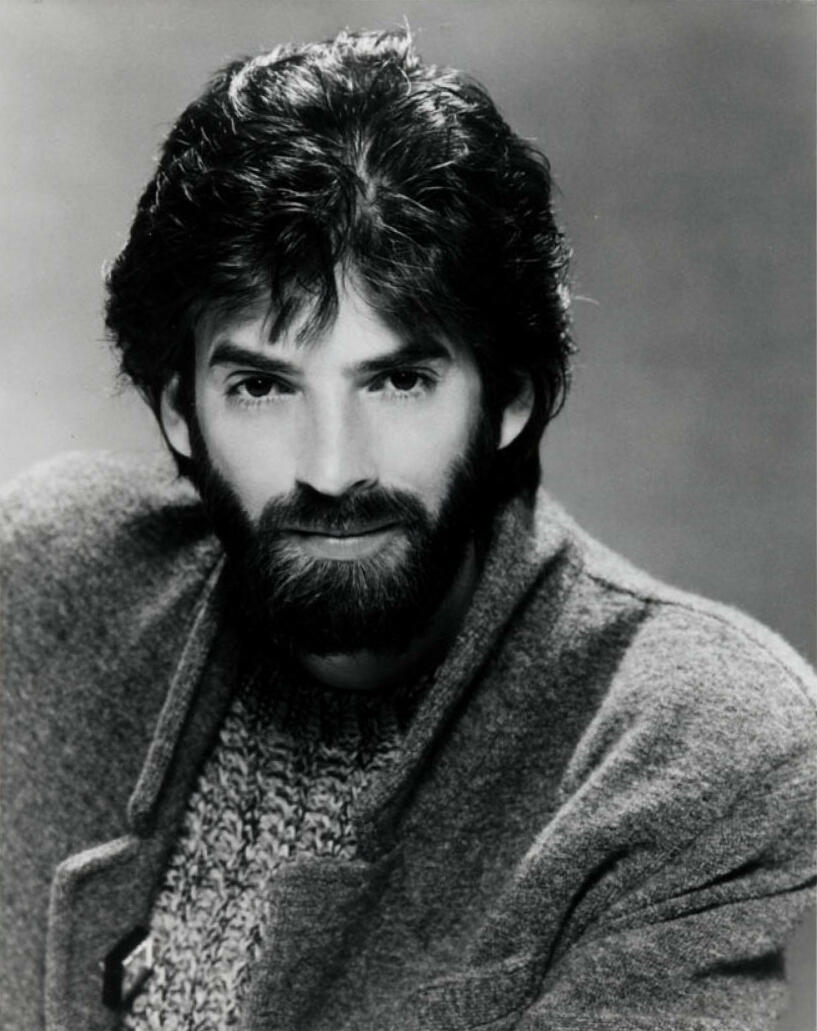
Put on a Kenny Loggins record and something happens almost instantly: the room brightens, the chorus arrives like an old friend, and suddenly you are back with the car windows down, the radio turned up, and life feeling just a little bigger. For classic hits listeners, Loggins is one of those rare artists who managed to be everywhere at once across the 1970s and 1980s — on the charts, in the movies, on the radio, and in the memories people still carry with them.
But there is more to Kenny Loggins than the high-octane rush of Danger Zone or the foot-stomping joy of Footloose. Behind those giant singles is a songwriter with a gift for warmth, melody, and emotional honesty, a performer who moved easily between folk-pop, soft rock, blue-eyed soul, and full-throttle movie anthems. His story is full of sharp turns, creative partnerships, and songs that have long outlived the moments that first made them famous.
California roots and a fast-growing love of music
Kenneth Clark Loggins was born on January 7, 1948, in Everett, Washington, and grew up in California, where the musical atmosphere of the 1950s and 1960s helped shape his imagination. Like many future stars of his generation, he came of age in a world where pop, folk, rhythm and blues, and rock were all colliding in exciting ways. Radio was not just background noise; it was a guidebook.
As a young man, Loggins was drawn to songwriting early. He was not simply interested in singing songs; he wanted to understand how they were built. Melody, harmony, and storytelling mattered to him. He absorbed influences from singer-songwriters and harmony-rich groups, developing a style that could be tender one moment and soaring the next.
Before mainstream fame arrived, he worked hard behind the scenes, writing and performing in smaller settings, learning the craft, and finding his voice. That apprenticeship period matters because it helps explain why his later hits sound so complete. Even the big crowd-pleasers are built with the care of a songwriter who knows exactly where a chorus should lift and where a lyric should land.
One often-overlooked part of Loggins’ appeal is that he always sounded approachable. Even when the production grew glossy and arena-sized, there was still a human quality in his voice — open, earnest, and quietly conversational. That quality helped him connect with listeners in a way that felt personal, not distant.
The partnership that changed everything
Before Kenny Loggins became a major solo star, he found success in one of the most fruitful partnerships of the 1970s: Loggins and Messina. The duo came together almost by accident. Jim Messina, already respected for his work with Buffalo Springfield and Poco, was initially involved as a producer for Loggins. What began as a professional collaboration soon turned into a full partnership.
That partnership proved to be a breakthrough. Loggins and Messina blended rock, folk, country flavours, and polished vocal harmonies into a sound that fit the era beautifully. Their records felt easygoing but musically sharp, relaxed on the surface yet full of detail underneath.
Songs such as House at Pooh Corner, Danny’s Song, and Your Mama Don’t Dance helped establish Loggins as a writer and performer with real range. Danny’s Song, in particular, remains one of his most beloved compositions. Although many listeners first came to know it through Anne Murray’s hit version, Loggins’ own connection to the song gave it a special intimacy. Its gentle optimism and domestic warmth revealed a softer side that would remain central to his music.
Your Mama Don’t Dance, on the other hand, showed that he could lean into a looser, more playful groove. That contrast became one of his strengths. He was never boxed into a single mood for long.
Loggins and Messina became a major live act, and their concerts helped deepen the bond with audiences. They were the kind of artists people returned to again and again, not just for one hit but for the feeling they created. For radio listeners, that catalog still carries the glow of a time when melody and musicianship sat comfortably side by side.
Going solo and finding a bigger stage
When Loggins moved into his solo career, he did not simply continue where the duo left off. He expanded. His solo work allowed him to explore a broader emotional and musical range, and in the late 1970s and early 1980s he began building the version of Kenny Loggins that many classic hits fans know best.
One of the key songs in that transition was This Is It, a sleek, soulful hit co-written with Michael McDonald. It carried a sense of adult confidence and emotional resilience, wrapped in a polished arrangement that fit perfectly with the radio sound of the era. The song became a major success and announced that Loggins was no nostalgia act from a former duo. He was evolving.
Then came Whenever I Call You Friend, his duet with Stevie Nicks. Warm, melodic, and full of chemistry, it became another signature hit. The pairing worked beautifully because both artists brought a certain emotional directness to the performance. It sounded less like a studio exercise and more like a genuine conversation set to music.
By this point, Loggins had become one of those artists who could thrive in multiple lanes at once: singer-songwriter, radio favourite, collaborator, and increasingly, a master of the movie anthem.
The king of the movie song
If Kenny Loggins has a crown in popular culture, it may well read: king of the soundtrack anthem. Few artists became so closely associated with hit songs from films, and even fewer did it with such consistency.
The run is remarkable. I’m Alright from Caddyshack brought a sly, carefree energy. Footloose turned a film title song into a global event. Danger Zone gave Top Gun its pulse-racing musical identity. Meet Me Half Way from Over the Top added another memorable chapter. Time after time, Loggins delivered songs that did more than accompany a movie — they helped define how audiences remembered it.
Footloose is perhaps the clearest example. It is impossible to hear that opening without feeling a jolt of energy. The song is all movement: crisp rhythm, bright hooks, and a vocal performance that sounds like pure release. It became one of the defining singles of the 1980s and remains a staple on classic hits radio because it still works instantly. No explanation required.
Danger Zone is a different kind of thrill. Where Footloose dances, Danger Zone charges forward. It is bold, dramatic, and built for adrenaline. Interestingly, the song had a path to Loggins that involved some behind-the-scenes twists, as other artists were considered before he recorded it. In the end, his voice was exactly right: urgent, muscular, and just polished enough to keep the whole thing radio-ready.
That success gave Loggins a reputation he embraced with humour. Over the years, he has shown a willingness to laugh at his own image as the man who seemed to soundtrack every major movie moment. That self-awareness has only made audiences warmer toward him.
“Footloose” and “Danger Zone” may be giant cultural landmarks, but they also reveal something important about Kenny Loggins: he could deliver spectacle without losing personality.
The songs listeners keep coming back to
Classic hits radio thrives on songs that still create an immediate emotional response, and Kenny Loggins has plenty of them. Some are explosive. Some are gentle. All of them carry his unmistakable sense of craft.
- Footloose – a burst of joy and motion, still one of the most recognisable opening riffs on radio
- Danger Zone – high-energy, cinematic, and forever linked with speed and swagger
- This Is It – smooth, assured, and one of his strongest adult contemporary-era triumphs
- Whenever I Call You Friend – a duet with real heart and easy warmth
- I’m Alright – playful and breezy, with a wink in its delivery
- Danny’s Song – tender, hopeful songwriting that shows his emotional range
- House at Pooh Corner – nostalgic and reflective, beloved by listeners who appreciate his gentler side
- Celebrate Me Home – a graceful, heartfelt song that has become a seasonal favourite for many
Celebrate Me Home deserves a special mention. Though not always the first title named in a quick list of Loggins hits, it has become deeply cherished over time. Rich, emotional, and welcoming, it is the kind of song that seems to grow more meaningful with age. That is often the mark of a lasting artist: not just the ability to score giant hits, but to create songs that settle into people’s lives.
A style built on heart, hooks, and versatility
Part of what makes Kenny Loggins so fascinating is how naturally he moved between styles. He could write introspective material with singer-songwriter sensitivity, then turn around and deliver a full-power pop-rock anthem. He could sound earthy, polished, soulful, playful, or reflective, often without losing his core identity.
His voice played a huge role in that versatility. It had clarity without coldness, strength without harshness. He could push into a big chorus, but he also knew how to hold back and let a lyric breathe. That balance made him a dependable radio artist. Programmers could place him next to soft rock, pop, or more energetic rock-leaning tracks, and he still made sense.
As a songwriter, he had a gift for directness. His songs rarely feel cluttered. Even when the production is lush, the emotional message comes through cleanly. That is one reason his music has aged so well. The arrangements may evoke a particular era, but the songwriting remains sturdy.
His influence can be heard in artists who blend sincerity with strong pop instincts, and in the continued importance of the movie theme song as a major cultural event. Long before soundtrack singles became a carefully engineered marketing machine, Loggins showed how a film song could stand on its own as a radio classic.
Stories, surprises, and the man behind the hits
There is a charming contradiction at the centre of Kenny Loggins’ career. He became famous for some of the biggest, boldest songs of the 1980s, yet he often comes across as thoughtful, grounded, and deeply interested in the craft rather than the pose of stardom. That contrast has always made him appealing.
He has also been notably collaborative. Working with artists such as Stevie Nicks and Michael McDonald, and building his early career with Jim Messina, Loggins showed that he thrived in creative partnership. He was not a solo star who needed to dominate every room. He seemed genuinely energised by musical exchange.
Another lesser-known point is just how strong his songwriting reputation has been among fellow musicians. Even listeners who first discovered him through blockbuster film songs sometimes do a double take when they dig deeper and realise how much of his legacy rests on beautifully structured, emotionally intelligent writing.
And then there is his lasting pop culture presence. New generations continue to discover him through films, television, streaming playlists, and affectionate references in comedy and entertainment. He is one of those artists whose image has stayed alive not because of nostalgia alone, but because the songs remain useful, quotable, and instantly enjoyable.
Why Kenny Loggins still matters on classic hits radio
Why does Kenny Loggins still fit so perfectly on classic hits radio today? The simplest answer is that his songs still deliver. They are familiar without feeling worn out, polished without feeling sterile, and emotional without becoming heavy-handed.
He also represents something listeners value deeply: range. In one hour of radio, you might hear the exuberance of Footloose, the sleek confidence of This Is It, or the reflective warmth of Danny’s Song. That variety keeps his catalog fresh. He is not just one mood, one decade, or one type of memory.
For many listeners, his music carries personal associations — school dances, road trips, movie nights, family gatherings, first loves, and long summers. Classic hits radio lives in that emotional space, where a song is never just a song. It is a doorway. Kenny Loggins has recorded a remarkable number of those doorways.
And behind all of it is a quality that never goes out of style: generosity. There is generosity in the melodies, in the choruses, in the open-hearted performances. His records invite people in. Decades later, they still do.
That is why Kenny Loggins remains such an essential artist in the classic hits universe. Not just because he had major hits, though he certainly did. Not just because he helped define an era, though that is also true. He matters because his music still feels alive — ready to lift the mood, spark a memory, and make the next three minutes on the radio feel unforgettable.