
After Midnight, Turn It Up

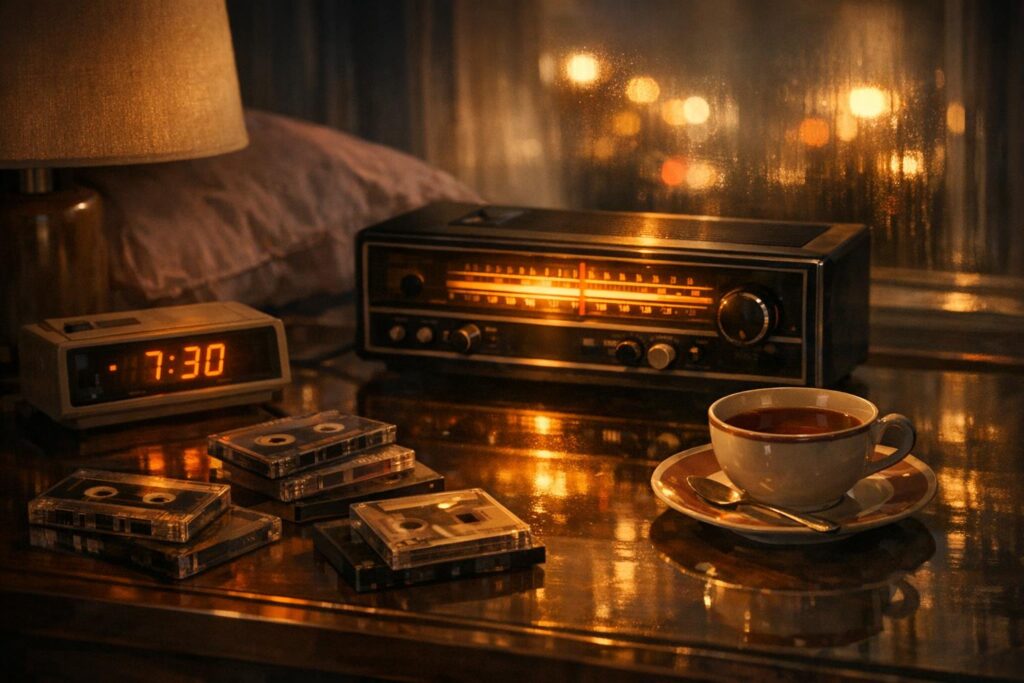
Past midnight, the house had gone quiet except for the soft hum of the radio dial and the glow of a bedside clock. Somewhere between the last cup of tea, the streetlights outside, and a DJ lowering their voice for the overnight crowd, late night radio in the 70s and 80s became its own little world. It was intimate, slightly mysterious, and wonderfully human.
For many listeners, those hours felt different from daytime broadcasting. The playlists could stretch out. The presenter sounded less like a public announcer and more like a friend keeping you company. A soul ballad could drift into a soft rock favourite, followed by a dedications segment, a weather update, or a thoughtful story from someone driving home on an empty road. It was radio at its most personal, and that is exactly why its magic still lingers today.
When the airwaves felt like a secret club
Late night radio in the 70s and 80s had a texture all its own. In the daytime, stations often moved at a brisk pace, with busy news bulletins, traffic reports, competitions, and chart countdowns. After dark, things loosened up. Songs were given room to breathe. Presenters could let a long intro play, share a memory, read a listener letter, or simply pause before the next record. Those pauses mattered. They created atmosphere.
It was also the perfect setting for the era’s most evocative music. Think of the warm ache of Fleetwood Mac, the silky confidence of Sade, the neon romance of Phil Collins, the late-hour soul of Marvin Gaye, or the glossy pulse of Roxy Music. These were records made for dim rooms and reflective moods. Even upbeat tracks seemed to shimmer differently after midnight.
There was something democratic about it too. Shift workers, students, taxi drivers, new parents, lonely hearts, and insomniacs all tuned into the same frequency. For a few hours, they shared a mood. Before streaming services and endless playlists, that connection felt special. You did not just choose a song. You entered a moment curated by someone else, and often that was the point.
Late night radio was never just background noise. It was company.
The 70s and 80s revival is more than a passing trend
The fascination with the 70s and 80s is everywhere now, and not only in music. Fashion has brought back satin bomber jackets, high-waisted denim, oversized knitwear, trainers in bold colourways, and gold jewellery with a little swagger. Interior design has revived smoked glass, chrome finishes, warm wood, house plants, record storage, and statement lamps that cast a honey-coloured glow. Even technology has gone nostalgic, with people collecting cassette players, analogue radios, vinyl turntables, and chunky hi-fi systems that look as if they belong in a stylish city flat from 1983.
Part of this revival is visual. The era had confidence. Album covers were tactile and dramatic. Radio studios looked busy and alive, full of sliders, meters, headphones, paper playlists, mugs, and handwritten notes. There was no sleek invisibility to it. You could see the machinery of broadcasting, and that made it feel real.
But the comeback is emotional too. The 70s and 80s offered a blend that still feels irresistible: glamour and grit, polish and personality. Music could be lush and cinematic one moment, direct and homemade the next. Radio reflected that mix beautifully. A presenter might play a polished chart hit, then follow it with a listener dedication that felt wonderfully unscripted. It was professional, but never sterile.
Why retro aesthetics still feel so comforting
Modern life is fast, bright, and always on. That is one reason retro aesthetics have such appeal. They suggest a slower rhythm. A softly lit room. A physical object in your hands. A familiar voice on the radio instead of an algorithm nudging you to skip ahead.
Late night radio from this era also reminds people of a kind of listening that was more attentive. You waited for songs. You learned the shape of a presenter’s style. You recognised station jingles instantly. You might keep a cassette ready in case a favourite track came on, finger hovering over the record button while hoping the DJ would not talk over the intro. It was a small ritual, but those rituals made music feel earned.
There is also the romance of limitation. You could not instantly summon every song ever recorded. That meant surprise still had power. Hearing a deep cut at 12:40 in the morning could feel like a gift. So could a dedication read out on air, or a presenter choosing a slightly left-field track because it suited the mood. In a world of infinite choice, that kind of curation now feels luxurious.
Scenes from the golden hours
Ask people what they remember most, and the answers are wonderfully vivid. A parent washing up after a dinner party while the radio played in the kitchen. A teenager under the covers with a portable set pressed to one ear. A long-distance driver crossing a quiet motorway with nothing but dashboard lights and a steady voice coming through the speakers. A student revising, pretending not to be tired, suddenly revived by a favourite song.
Popular culture knew the power of these moments too. Films and television from the period often used radio to signal intimacy, freedom, or late-night possibility. The radio was where characters heard the song that changed their mood, the dedication that made them smile, or the news bulletin that shifted the scene. It was not just a prop. It was part of the emotional architecture of everyday life.
And then there were the presenters, those unseen stars of the small hours. The best of them understood that late-night broadcasting required a different touch. Less rush, more warmth. Less performance, more presence. They knew how to make a listener feel personally addressed, even through a simple line like, wherever you are tonight, this one is for you. It sounds modest now, but it was powerful.
How to bring that late-night feeling into life today
You do not need a time machine to recapture some of that atmosphere. A few thoughtful choices can bring the mood back surprisingly easily.
Set the room like it is 1981
- Lower the lighting. Use lamps instead of overhead lights. Warm bulbs make a huge difference.
- Add texture. Think wood, metal, glass, a woven throw, and a comfortable chair by the radio or stereo.
- Keep a few analogue touches. A clock radio, vinyl stack, cassette case, or old music magazine instantly changes the mood.
Listen with intention
- Choose a late hour. The atmosphere matters. Even 10:30 p.m. can feel different if the room is quiet and the phone is out of reach.
- Play a full sequence. Instead of dipping in and out of songs, let an album side or a carefully chosen playlist run.
- Leave space between tracks. Part of the magic was the pacing. Do not rush to fill every second.
Dress the part, just for fun
Retro style can be playful rather than theatrical. A satin shirt, soft denim, trainers with a vintage profile, or a classic knit can put you in the spirit without turning the evening into a costume party. The point is not strict historical accuracy. It is the feeling.
Make it social, or make it beautifully solitary
Invite a friend over for a late-evening listening session, complete with old magazines, simple snacks, and a themed playlist. Or keep it personal: one chair, one drink, one radio, and a little time to think. Late night radio always made room for both moods.
The charm behind the scenes
Part of what makes this era so endearing is knowing how much craft went into it. Before digital automation took over large parts of broadcasting, overnight radio often relied on sharp instincts, physical media, handwritten running orders, and presenters who could read the room without seeing it. They had to imagine the listener: tired, alert, emotional, lonely, cheerful, restless. Then they had to choose the right record for that invisible audience.
There is a lovely humility in that. A great late-night presenter did not need fireworks. They needed timing, taste, and trust in the music. The crackle of a line, the rustle of paper, the tiny imperfections of live broadcasting, all added to the sense that something real was happening in that moment. Today, when so much media is polished to perfection, those rough edges feel almost luxurious.
That may be the true secret of late night radio’s lasting appeal. It captured people as they really were: winding down, driving on, missing someone, falling in love, working late, dreaming big, or simply not ready for sleep. The songs mattered, of course. So did the style, the technology, the fashion, and the unmistakable cool of the era. But above all, late night radio offered companionship wrapped in music.
And perhaps that is why we still chase it. Not only the sound of the 70s and 80s, but the feeling that somewhere out there, a voice understands the hour, the mood, and exactly which record to play next.