Simply the Best
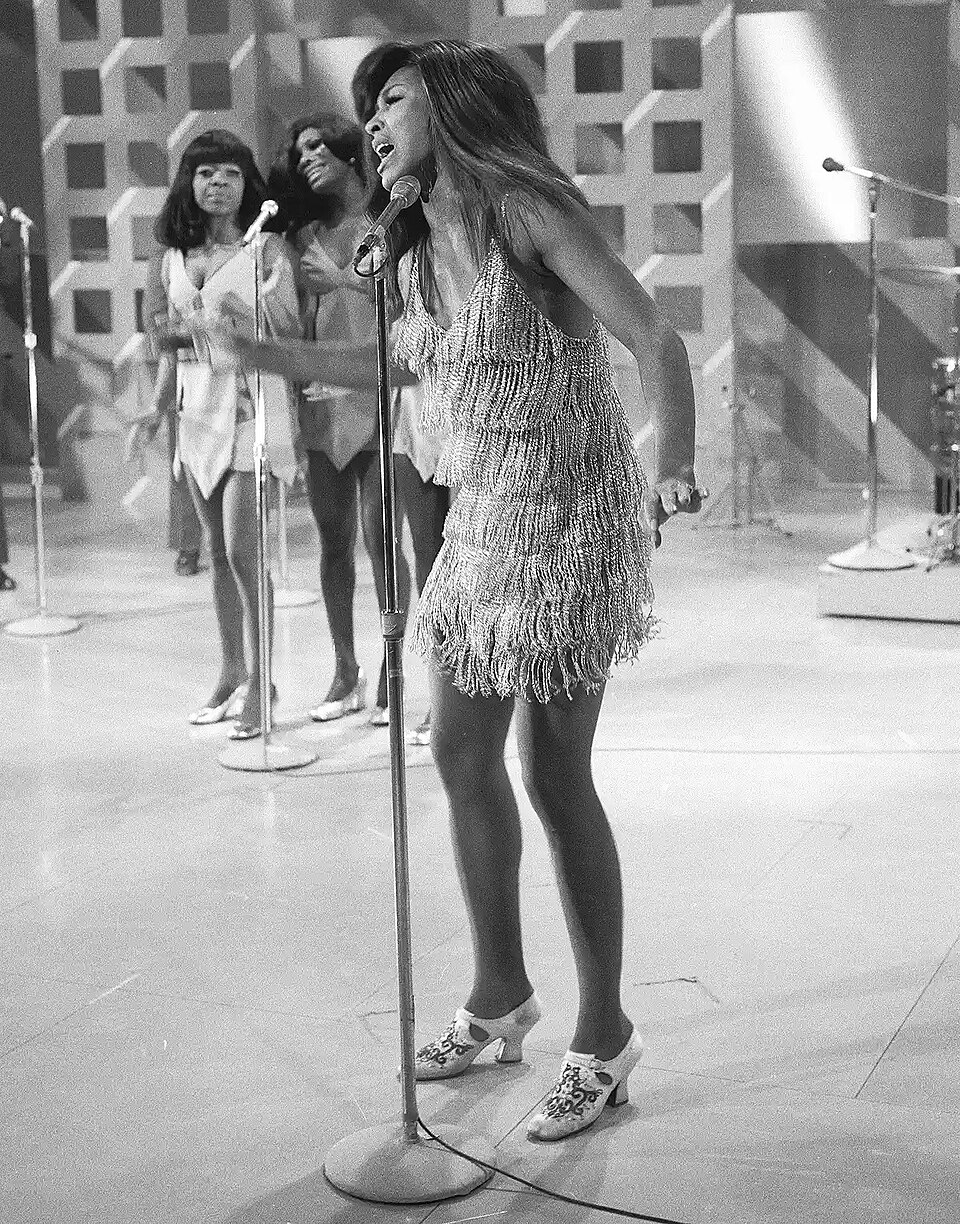
Fringe flying, heels striking the stage, and that voice cutting through the air like pure electricity — Tina Turner made every performance feel larger than life. Her journey from Nutbush to global icon remains one of music’s most powerful comeback stories.
Few artists have ever owned a stage quite like Tina Turner. The voice arrived in a rasp, a growl, a burst of fire; the legs seemed to move with a rhythm all their own; and the energy could make even a radio speaker feel like the front row. For classic hits listeners, Tina is more than a star with a stack of famous songs. She is one of popular music’s great survivors, a performer who turned hardship into power and built one of the most thrilling second acts in music history.
Born Anna Mae Bullock, built for the spotlight
Tina Turner was born Anna Mae Bullock on November 26, 1939, in Nutbush, Tennessee, a small rural community she would later immortalise in song. Her early life was not easy. She grew up in modest surroundings, spent time living with relatives, and sang in church as a child. That church background mattered. It gave her a grounding in emotional, full-bodied singing, the kind that reaches beyond technique and heads straight for the heart.
As a teenager, she moved to St. Louis, where the city’s rhythm and blues scene opened up a new world. One night, she went to see Ike Turner and his band, the Kings of Rhythm. The story has become part of music legend: when she got the chance to sing, her voice was so powerful that it changed the room. Ike recognised immediately that this young woman had something extraordinary. Anna Mae soon became Little Ann, then Tina Turner, and before long she was at the centre of a fast-rising musical partnership.
It is worth remembering just how unusual she sounded. At a time when many female singers were expected to sound polished and sweet, Tina brought grit, urgency and raw excitement. She did not simply sing a lyric; she attacked it, teased it, shouted it, bent it into shape. That edge would become one of the most distinctive sounds in popular music.
The Ike and Tina years: explosive records, electric performances
In the 1960s and early 1970s, Ike and Tina Turner became one of the most dynamic live acts in music. They blended rhythm and blues, soul, rock and pop with a fierce stage show that audiences never forgot. Tina, backed by the Ikettes, was a whirlwind in motion. Sequins flashed, hair flew, heels pounded, and every song felt like it might burst out of the speakers.
The breakthrough came with A Fool in Love in 1960, a record that introduced Tina’s astonishing vocal force to a wide audience. More hits followed, including It’s Gonna Work Out Fine, I Idolize You and River Deep – Mountain High. That last one, produced by Phil Spector, is often cited as one of the great pop records of its era: huge, dramatic, emotional, and driven by Tina’s fearless performance.
Then came their roaring take on Proud Mary, first made famous by Creedence Clearwater Revival. Tina and Ike transformed it completely. The slow opening gave way to a fast, pounding second half that became one of the defining performances of her career. It won a Grammy and remains one of the all-time great examples of an artist taking a familiar song and making it unmistakably their own.
Yet behind the success, Tina’s personal life was deeply troubled. In later years, she spoke openly about the abuse she endured in her marriage to Ike Turner. Her decision to leave in the mid-1970s, with very little money and only her stage name as a major asset, was an act of enormous courage. It changed not only her own life, but the way many people understood strength, resilience and reinvention in the music business.
The comeback that became music history
If Tina Turner’s story had ended there, she would still be remembered as a remarkable performer. But what happened next is what lifts her story into another category altogether. She rebuilt her career almost from scratch, playing clubs, television shows and smaller venues, determined to keep going. There was no guarantee of a return to the top. In fact, many in the industry had written her off.
Then came the comeback, and it was enormous.
Her 1984 album Private Dancer turned Tina Turner into an international superstar all over again, this time as a solo artist and, crucially, on her own terms. The album sold in huge numbers and delivered a run of songs that still light up classic hits radio: What’s Love Got to Do with It, Better Be Good to Me, Private Dancer and Show Some Respect.
What’s Love Got to Do with It became her signature solo hit, a cool, clever, slightly sceptical pop song elevated by her voice into something unforgettable. There is a wonderful irony in the fact that a singer famous for volcanic intensity scored one of her biggest hits with a performance so controlled and conversational. She sounds amused, wise, wounded and untouchable all at once.
That reinvention mattered. Tina was in her forties when Private Dancer made her a global solo sensation, smashing ageist assumptions in an industry obsessed with youth. It remains one of the greatest comeback stories ever, and one of the most inspiring.
The songs that keep the speakers warm
Ask ten listeners for their favourite Tina Turner song and you may get ten different answers, which tells you a great deal about the depth of her catalogue. Some songs are giant radio staples; others are beloved because they capture a particular side of her artistry.
- Proud Mary – explosive, theatrical and impossible to sit still through.
- Nutbush City Limits – autobiographical, funky and proudly rooted in her Tennessee beginnings.
- What’s Love Got to Do with It – sharp, stylish and one of the defining hits of the 1980s.
- Private Dancer – moody, sophisticated and haunting.
- Better Be Good to Me – tough, punchy and full of attitude.
- We Don’t Need Another Hero – cinematic, dramatic and instantly recognisable.
- The Best – a full-throated anthem that became bigger and bigger with time.
- I Don’t Wanna Lose You – warm, romantic and beautifully sung.
- Steamy Windows – swaggering, playful and packed with groove.
- Typical Male – witty, catchy and full of character.
The Best, in particular, has had an extraordinary afterlife. Written by Mike Chapman and Holly Knight and first recorded by Bonnie Tyler, it became inseparable from Tina after she gave it that towering vocal performance. It is now one of those songs that seems to arrive already carrying a sense of triumph.
A voice like weather, a stage presence like lightning
Tina Turner’s musical style was never easy to box in, and that is part of what made her so compelling. She could sing rhythm and blues with deep conviction, attack rock songs with thrilling force, deliver pop hooks with precision, and bring soul ballads to life with emotional authority. She was one of the rare artists who felt equally at home in several musical worlds.
Her voice was the key. It was rough-edged but controlled, fierce but vulnerable. She could rasp through a line as if she were tearing it open, then suddenly soften into something intimate and tender. There was always movement in her singing. Even on record, you can hear the dancer in her phrasing.
And then there was the visual side. Tina changed what a female live performer could look like. She made motion part of the music. The mini dresses, the fringe, the high heels, the famous hair, the athletic power of her dancing, all of it created a style that countless performers would borrow from. You can see traces of Tina Turner in generations of artists who followed, from rock singers to pop superstars to soul belters.
“I never said I wanted to be alone,” she sang in one of her best-known lines, and in Tina’s voice even a simple sentence could sound like lived experience.
She influenced not just singers, but performers. Artists learned from her that stamina, drama and emotional honesty could all exist in the same performance. She proved that glamour did not have to come at the expense of grit.
Stories behind the legend
Some of the most fascinating Tina Turner stories reveal just how hard-won her success was. During the rebuilding years before Private Dancer, she took work wherever she could get it, appearing on television variety shows and in venues far removed from the superstar status she would later reclaim. There is something moving about that chapter because she refused to disappear. She kept showing up, kept singing, kept believing there was another act still to come.
Another lesser-known point is how broad her appeal became. Tina was admired by rock audiences, pop fans, soul lovers and even people who did not follow charts closely but knew greatness when they saw it. Few artists could open for the Rolling Stones, score pop chart smashes, and become a symbol of resilience all at once.
She also had a memorable screen presence. Her role as Aunty Entity in Mad Max Beyond Thunderdome introduced her to film audiences, while We Don’t Need Another Hero showed again how naturally she could deliver a big, dramatic song.
In later life, Tina found peace away from the relentless pace of the spotlight, eventually settling in Switzerland. Her memoirs and interviews added more layers to the public image: thoughtful, spiritual, funny, disciplined and deeply aware of what she had overcome. When audiences cheered her strength, they were not responding to a slogan. They were responding to a life honestly lived.
Why Tina Turner still matters on classic hits radio
Tina Turner remains essential to classic hits radio because her records still feel alive. They have rhythm, drama, personality and that invaluable quality every programmer hopes for: the ability to grab attention within seconds. You hear the opening of What’s Love Got to Do with It, Proud Mary or The Best, and the song does not drift past in the background. It arrives.
She also connects across generations. Long-time listeners remember where they first heard those songs, whether on a car radio, at a party, on television, or blasting from a summer fairground ride. Younger listeners discover her and immediately understand the appeal. Great Tina Turner records do not require explanation. They run on instinct and emotion.
For radio, that matters enormously. Her songs can lift the mood, spark memories and add a shot of energy to any hour. But beyond the hits, there is the story. Tina represents endurance without self-pity, glamour without distance, and star power earned the hard way. Listeners respond to that authenticity.
In the end, Tina Turner’s legacy is not only that she made great records, though she certainly did. It is that she made people feel stronger. She turned pain into performance, survival into style, and experience into songs that still leap out of the speakers. That is why her music endures, and why every time one of her classics comes on the radio, it still feels like an event.
Some artists are famous. Some are unforgettable. Tina Turner was both.