INXS in the late-80s spotlight
Breaking internationally in the mid-1980s and exploding with Kick, INXS turned tight groove-driven rock into one of the era's most magnetic sounds. Their story is one of friendship, charisma, hard-earned craft and songs that still light up the airwaves.
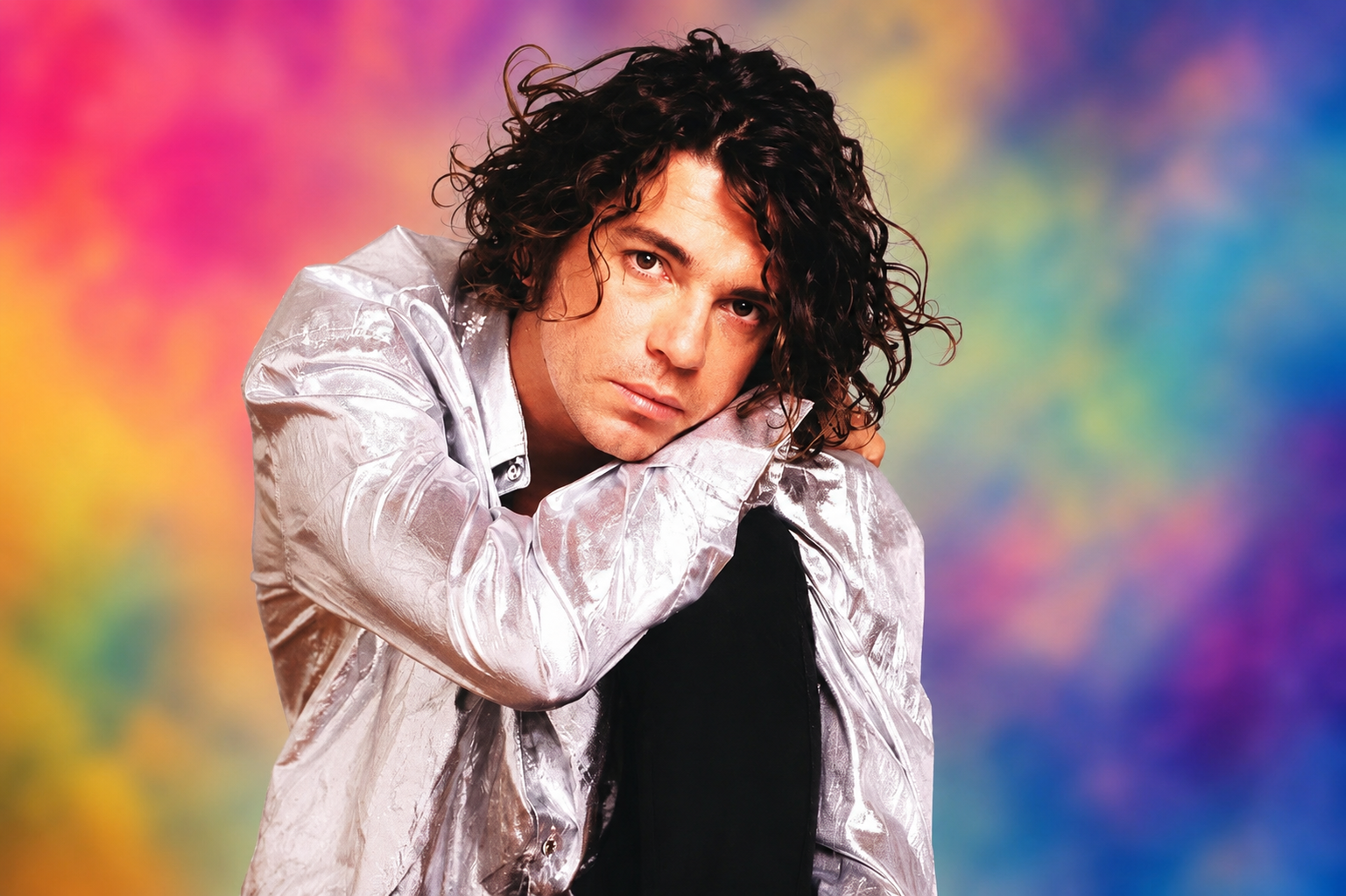
Few bands carried themselves with the kind of effortless magnetism INXS seemed to generate by instinct. They arrived from Australia with a tight, danceable rock sound, a sharp sense of style, and a frontman whose presence could light up a stage before he had even reached the microphone. But the real story of INXS is bigger than charisma alone. This was a band built on friendship, groove, hard touring, and the rare chemistry that happens when six musicians learn to move as one.
Six musicians, one shared spark
INXS formed in Sydney in 1977, though the roots go back even earlier. Brothers Andrew, Jon and Tim Farriss grew up in a musical household and were already playing together, while Michael Hutchence met keyboard player Andrew Farriss at school. Add saxophonist and guitarist Kirk Pengilly and bassist Garry Gary Beers, and the line-up that would become INXS was in place. Before the world knew the name, they performed under the wonderfully direct name The Farriss Brothers.
That early period mattered. This was not a group assembled by a manager or a casting process. They were friends, schoolmates, brothers, and local musicians developing their sound in clubs and pubs, night after night. You can hear that foundation in the records: the rhythm section feels lived-in, the arrangements are precise without sounding stiff, and there is always a sense that the band understands the value of space as much as impact.
They drew from rock, funk, new wave, soul and dance music, creating something that felt modern without chasing trends too obviously. Andrew Farriss became a key songwriting architect, shaping melodies and textures, while Michael Hutchence brought a dramatic, seductive vocal style that could shift from a murmur to a roar in a heartbeat.
Finding the sound that travelled
INXS built their audience steadily in Australia before breaking through internationally. Their early albums, including INXS (1980), Underneath the Colours (1981) and Shabooh Shoobah (1982), showed a band getting sharper with every release. Songs like The One Thing and Don’t Change helped define their identity: sleek guitars, restless rhythm, big hooks, and a vocalist who sounded both cool and emotionally charged.
Don’t Change in particular has become one of those classic hits that seems to gather more affection with time. It has urgency, romance and lift, all wrapped in a performance that still feels immediate decades later. For many listeners, it is one of the clearest early signs of what made INXS special: they could be atmospheric and anthemic at the same time.
The mid-1980s brought bigger stages and wider recognition. The Swing (1984) and Listen Like Thieves (1985) pushed them further toward the international front rank. Original Sin, produced by Nile Rodgers, added a stylish funk sheen, while What You Need gave them a major breakthrough in the United States. Suddenly, INXS were not just a strong band from Australia. They were a global force.
One of the important behind-the-scenes figures in this rise was producer Chris Thomas, known for his work with artists including Roxy Music and Pretenders. His collaboration with the band helped sharpen their attack without sanding away their personality. INXS already had the songs and the swagger; Thomas helped frame them for the widest possible audience.
The moment everything caught fire
If one album turned INXS into superstars, it was Kick in 1987. It is one of those records that feels packed with singles before the first chorus has even finished. Confident, polished and full of rhythmic life, it captured the band at exactly the right moment.
The run of songs from Kick remains remarkable:
- Need You Tonight – lean, hypnotic and instantly recognisable
- New Sensation – bright, driving and built for radio
- Devil Inside – moody, spacious and coolly menacing
- Never Tear Us Apart – grand, romantic and unforgettable
- Mystify – elegant pop with a dreamlike glow
That is not just a successful album. That is a cultural takeover. Kick made INXS one of the defining bands of the late 1980s, and it did so without abandoning the qualities that had brought them there in the first place. They still sounded like a real band, not a studio project dressed for the charts.
There is a famous story that their label was not initially convinced by Kick. It is one of those industry moments that now seems almost impossible to believe, given what happened next. But it says something useful about INXS: their greatness was not always obvious to the gatekeepers right away. They often worked by feel, groove and instinct, and those things do not always fit neatly into boardroom logic. Radio listeners, however, knew what they were hearing.
Michael Hutchence and the art of presence
Any profile of INXS has to pause and appreciate Michael Hutchence, because he was one of the great frontmen of the classic hits era. He had glamour, mystery, humour and danger, but he also had musical intelligence. He knew how to inhabit a lyric, how to hold back, how to let a line curl around the beat rather than overpower it.
What made him especially effective in INXS was that he never seemed separate from the band. Some charismatic singers dominate a group so completely that the musicians behind them become scenery. With INXS, the balance was better than that. Hutchence was the focal point, certainly, but the groove beneath him was always essential. Jon Farriss’s drumming, Garry Gary Beers’s bass lines, Andrew Farriss’s keyboards and songwriting, Tim Farriss’s guitar work, and Kirk Pengilly’s multi-instrumental colour gave the songs their pulse and shape.
INXS worked because style met substance. The image was striking, but the engine was musical.
That combination helped them cross formats and generations. Rock audiences liked the bite. Pop audiences loved the hooks. Dance-minded listeners responded to the groove. And radio embraced all of it.
The songs that keep returning
Classic hits radio thrives on songs that create a reaction within seconds, and INXS have a catalogue full of them. The opening riff of Need You Tonight is enough to change the mood in a room. New Sensation arrives with a burst of energy that still feels fresh. Never Tear Us Apart has become one of the great slow-burn emotional statements of its era, with its dramatic arrangement and aching vocal.
Then there are the songs that devoted listeners never stopped cherishing: Don’t Change, Listen Like Thieves, Original Sin, What You Need, Suicide Blonde, Disappear and Bitter Tears. Each one reveals a slightly different side of the band. Some lean into funk and dance rhythms, some into widescreen rock, some into emotional tension and release.
Suicide Blonde, from 1990’s X, showed they could carry their momentum into a new decade without sounding stale. Its slinky groove and sharp production kept the INXS identity intact while nudging the sound forward. That adaptability is part of why the band still fits so naturally on classic hits radio today. Their records sound rooted in their time, yes, but they also sound alive.
Behind the scenes: craft, chemistry and a few surprises
One of the lesser-known strengths of INXS was just how democratic the band could be creatively. While Hutchence and Andrew Farriss became the central songwriting team, the group identity was always larger than one or two personalities. That helps explain why the records feel cohesive. They were built by musicians who knew each other’s instincts.
Another detail worth remembering is that INXS were serious workers. Before the international fame, they earned their sharpness through relentless performing. That kind of apprenticeship used to matter enormously in rock music. By the time the world caught up with them, they were already seasoned enough to deliver under pressure.
There was also a cinematic quality to the band that made them ideal for the music video age. Hutchence, with his unmistakable stare and fluid movement, became one of MTV’s defining figures, but the whole group understood presentation. They looked contemporary without appearing manufactured. For a late-1980s audience, that was powerful.
And here is a telling contrast: for all the polish of their biggest records, many of the best INXS songs still feel driven by human touch rather than machine perfection. The swing in the rhythm, the breath in the vocal, the little push-and-pull in the groove: these details keep the music warm.
Loss, endurance and the shape of a legacy
The death of Michael Hutchence in 1997 brought a heartbreaking chapter to the INXS story. For many fans, it felt like the loss of a singular figure whose combination of vulnerability and star power could never really be replaced. Yet the band’s legacy did not fade with that tragedy. If anything, the songs took on even greater emotional weight.
In the years since, INXS have remained a touchstone for artists who want rock music to move as well as hit hard. You can hear their influence in bands that blend guitar music with funk rhythms, in frontmen who understand the power of suggestion as much as force, and in songwriters who aim for sophistication without losing accessibility.
Their catalogue also tells a larger story about Australian music on the world stage. INXS helped prove that a band from Sydney could compete with anyone, anywhere, and do it with a clear identity. They did not need to imitate London, New York or Los Angeles. They brought their own confidence and won audiences through performance and songs.
Why INXS still belong on classic hits radio
For classic hits listeners, INXS offer something especially satisfying: familiarity without staleness. Their biggest songs are beloved, but they do not feel worn out. Part of that is down to the band’s rhythmic sophistication. These are records that breathe. They are easy to sing along with, but they also make you want to move.
There is also a wonderful sense of occasion in INXS music. Put on New Sensation and the day lifts. Put on Need You Tonight and the atmosphere changes instantly. Put on Never Tear Us Apart and suddenly the room feels more reflective, more cinematic. Great radio records do that. They create a world in a few bars.
For listeners who lived through the 1980s and early 1990s, INXS can bring back nights out, road trips, first loves and favourite dance floors. For younger listeners discovering them now, the appeal is just as strong: these songs still sound stylish, confident and emotionally direct. That is the mark of a catalogue with staying power.
INXS mattered because they combined precision with pulse, glamour with grit, and pop instinct with band chemistry. They made records that looked sharp, sounded huge and felt human. Decades later, that mix remains irresistible.